Last week, guest speaker Sucharita Mulpuru, Vice President, Principal Analyst at Forrester Research joined us for our monthly webinar to discuss how the growth of mobile is creating opportunities (and challenges) for retailers. Read on for our takeaways on the state of mobile today, as well as 3 recommendations for brands and retailers looking to leverage the shift toward mobile.
Mobile is Growing — And Retailers Are Taking Note It’s no secret that mobile is growing quickly. For many retailers, mobile traffic is creeping up on desktop traffic. In fact, it’s not uncommon for a retailer to see 50% or more of its traffic coming from mobile. And mobile sales are making up an ever-increasing portion of overall online sales.
According to The State Of Retailing Online 2016: Key Metrics, Business Objectives, And Mobile, a February 2016 Forrester Research report based on a study conducted with Shop.org, mobile currently accounts for 44% of online traffic (with 29% coming from smartphones alone). And mobile (including phones and tablets) accounts for an average of 31% of online sales.
It’s clear retailers are taking note of this growth in mobile. The same report referenced above found that mobile tied with marketing for the top priority of surveyed retailers in 2015.
Consumers are Using Their Phone for Many Shopping Related Activities Consumers are using their phones throughout the purchase journey — even when they’re in a physical store. In-store shoppers are using their phones for research-related activities, including comparing prices, redeeming coupons, and looking up product information.
3 Recommendations for Retailers Sucharita gave 3 key recommendations for retailers looking to leverage the shift toward mobile.
Ensure your mobile content addresses shoppers’ questions. Now, more than ever, consumers are using their mobile devices to find information while researching products. Make sure it’s easy for shoppers to find all the information they’re looking for — including pricing, reviews, and store hours — regardless of the device they’re using.
Enable product information to be visible on third party sites, too. Shoppers aren’t just visiting brand and retailer sites to find product information. They’re also gathering information on search engines, maps, and third party shopping aggregators — just to name a few. Make sure the information your shoppers want is available on these third party sites.
Keep an eye on the bright, shiny objects. But don’t be distracted by them. It’s import to stay abreast of the latest trends and developments in retail and ecommerce technology. But that doesn’t mean you need to immediately invest in every new innovation you hear about. Sometimes, it pays to wait it out.
Launched at eTail West 2016, new study explores how reviews differ by origin and subsequently impact sales
FEBRUARY 23, 2016 – CHICAGO – As the credibility of review content becomes increasingly important, more companies are instituting systems to ensure that the consumer who purchased a product is the same as the person who reviews it. However, little is known about how reviews from verified buyers differ from those left by anonymous consumers and how those differences impact conversions.
Working with Northwestern University’s Medill IMC Spiegel Digital & Database Research Center, PowerReviews, a leading provider of ratings, reviews and question-and-answer technology to more than 1,000 global brands and retailers, found that reviews from verified buyers tend to be substantially more positive, with higher average star ratings and more positive tags, than those written by anonymous consumers. The full study, “Self Motivated Versus Prompted Reviews,” which further explores how reviews from these two sources differ, will be released in tandem with eTail West in Palm Springs, Calif., February 22-25, 2016.
The study found that reviews from anonymous consumers often have more extreme, and often negative, opinions, which researchers believe may be a factor of social bias. Since anonymous reviewers have to navigate to the retailer site, they’re able to see reviews that have already been written about a product, which can influence their review. For example, if a consumer sees a high average star rating for a product they had a poor experience with, they’re more likely to give the product an even lower rating than initially planned to bring the average star rating down.
Implications for Retailers It’s a well-established fact that products with more positive ratings and reviews tend to see better sales. Since reviews from verified buyers tend to not only be more positive but also come from credible sources, this content is an essential part of a retailer’s content mix.
“Reviews from verified buyers not only build credibility for retailers by capturing the opinions of customers who’ve actually used the product but also help drive sales with consistently positive sentiment,” said Theresa O’Neil, Senior Vice President of Marketing at PowerReviews. “It’s essential for retailers to develop a strategy to request reviews not only from shoppers who buy online, but also those who buy in-store. Actively requesting reviews from verified buyers will provide a more accurate representation of consumer sentiment.”
Other key findings of the study include:
The average star rating for reviews from verified buyers remains steady over time, while the average star rating for reviews from anonymous consumers tends to decline over time.
Reviews from verified buyers have 6.5% more product “pros” and 50% fewer product “cons.”
Reviews from anonymous consumers are 85% longer than those from verified buyers.
Members of the PowerReviews team will showcase the benefits of its platform and discuss these research findings at eTail West, booth #801.
About PowerReviews PowerReviews works with more than 1,000 global brands and retailers to collect and display ratings and reviews on 5,000 websites. Ratings and reviews are an essential resource for consumers as they search and shop online and in-store: they drive relevant traffic, increase sales, and create actionable insights to improve products and services. PowerReviews’ mobile-friendly rating and review and Q&A software is fast to implement and simple to customize, making it easy for brands and retailers to generate more authentic content that is seen by more consumers. The PowerReviews Network is the largest in the industry, reaching 2,500 retailers and more than 700 million in-market shoppers every month, giving retailers and brands the power to reach shoppers wherever they are. For more information, visitwww.powerreviews.com.
For additional information: Meghan Spork Walker Sands Communications 312-241-1474 Meghan.spork@walkersands.com
How Brands and Retailers Can Kick-Start Their Centennial Strategy
Centennials. Generation Z. Regardless of what you choose to call them, the next generation of shoppers, age 13-18 and born around the turn of the century, are growing up fast. Today, this generation has $44 million in annual spending power. And this number will continue to grow as Centennials age and enter the workforce.
Now is the time for brands and retailers to better understand the shopping habits of Centennials and start thinking about how to be successful with the next generation of shoppers. Read on for four steps to kick start your Centennial strategy, based on data from our recent Centennial Shopper Study.
1. Put review content front and center on your website
95% of Generation Z shoppers read reviews prior to making a purchase and 64% read at least four reviews before they buy. It’s clear that the next generation is hungry for information, so it’s important to make it easy for Centennials to find what they’re looking for. Prominently display review content on the category and product details pages of your website, rather than burying it behind tabs or at the very bottom of the page.
2. Optimize your website for mobile
More than half of Centennials prefer to browse for products on a laptop or desktop computer, but mobile phones are a close second. In fact, 37% of Centennial shoppers prefer to browse for products on a mobile phone. It’s essential that your website is optimized for mobile so shoppers can find the information they’re looking for and have a positive experience on your website — regardless of the device they’re using to browse and purchase.
3. Collect photos and videos as part of reviews.
It’s clear that reviews are an important part of the purchase journey for Centennials. But when it comes to review content, don’t just look at using text. Centennials want to see photos of the product in action — how other people like them are using the product in real life. In fact, 40% of this generation won’t purchase a product if there are no photos of people using the product. So, it’s important to allow your shoppers to submit a photo or video as part of their review.
4. Insist on transparency and authenticity
Centennials are smart. They know that a product can’t be all things to all people, and if all the reviews for a product are positive, they get suspicious. In fact, nearly half of Centennials said they wouldn’t trust a product’s reviews if there were no negative reviews present. Consumers trust reviews as the true voice of other consumers, so it’s key to have measures in place to ensure your reviews are transparent and authentic. For starters, don’t delete negative reviews. And identify reviews that resulted from promotions or free samples. Embrace transparency and trust consumers to make up their own minds.
If your brand making it a priority to engage Centennial shoppers? Please share in the comments below.
Featured Presenter
Kristopher Bober | Senior Manager, North America Lead | Accenture Interactive: Social Media and Collaboration
Kristopher’s experience includes advising clients how to best leverage and integrate social media to deliver end-to-end customer centric and omni-channel solutions that drive business transformation, and guide priorities and investments.
He works cross-functionally to identify the most relevant social technologies to help clients manage the increasingly complex and fast-evolving social business landscape. Kristopher provides a blend of strong social business acumen, technology-driven expertise, and deep professional consulting knowledge to Fortune 500 organizations across numerous industries to include Consumer Package Goods, Automotive, Media and Communications, Finance, Industrial Manufacturing, Technology, Healthcare, and Travel and Hospitality.
Companies are now competing in a time when technology and society are evolving faster than the ability of many organizations to adapt, which negatively impacts their profitability and leads some to extinction. Social Media is an enabler of this paradigm shift and will continue to disrupt markets and transform business practices.
Guest speaker, Kristopher Bober from Accenture Interactive will be joining us for this session.
During this webinar, attendees will:
Discover the threats and opportunities in social media disruption
Learn how to focus and prioritize investments for evolving current technology and business strategies
Understand how social media is ultimately ushering in a new generation of business models and practices.
Next week, part of PowerReviews team will be heading to sunny Palm Springs, CA for eTail West, an annual conference for ecommerce and multichannel executives. Each year, eTail provides an unmatched opportunity to connect with industry professionals and learn about the latest in marketing, analytics, mobile, social, email, personalization and more.
This year will be no exception, with an agenda chock full of great keynotes and breakout sessions led by thought leaders (and PowerReviews clients) including Fanatics, Nine West, Rock/Creek, Aeropostale, and evo, just to name a few. Conference attendees are sure to leave eTail West with new connections (there will be 2,500 professionals in attendance!) and lots of practical ideas to implement to improve their business.
Stop By Our Booth If you’re attending eTail West next week, I hope you’ll take the opportunity to connect with PowerReviews. Stop by booth #801 in the Exhibit Hall to discuss your business’ challenges, learn what’s new at PowerReviews, see our products in action, and get a free consultation. The Exhibit Hall will be open:
Tuesday, February 23 from 7:25am-6:25pm
Wednesday, February 24 from 7:45am -5:35pm
In addition, we’ll be releasing a new study we conducted with Northwestern University, which explores how reviews vary depending on whether they’re written by verified buyers or anonymous consumers. We’re looking forward to sharing the results with you.
We hope to see you next week in Palm Springs!
How Reviewer Self Selection Impacts Star Ratings
Reviews originate from two sources: verified buyers and anonymous consumers. While reviews from verified buyers can be tied back to a specific transaction, reviews from anonymous consumers cannot. How do the characteristics of these two types of reviews vary?
PowerReviews partnered with Northwestern University’s Spiegel Digital and Database Research Center to examine how reviews differ based on who writes them, and how this impacts sales. Download volume 2 of our guide to learn:
How reviews vary: written by verified buyers or anonymous consumers
How reviews from verified buyers influence purchase
How brands and retailers can preserve credibility of reviews
Last fall, Amazon.com made waves when they opened their first brick and mortar retail location, joining a growing list of other online retailers that have opted to open physical store locations — Warby Parker, Birchbox, and Rent the Runway, just to name a few.
And it seems the company’s first store, called Amazon Books, has been a success. Last week, the CEO of General Growth Properties, a real estate investment trust that owns and manages shopping malls, made a statement on an earnings call indicating that Amazon plans to open between 300 and 400 new locations. General Growth Properties later issued a retraction, saying the CEO’s initial statement “was not intended to represent Amazon’s plans.”
Amazon’s response to this statement? “No comment.” The company is keeping their expansion plans (or lack thereof) under wraps. This isn’t surprising, considering Amazon’s secrecy around other initiatives, including the opening of their first store location.
Only time will tell what Amazon’s plan is for additional store locations, but it’s looking like the eCommerce giant plans to add at least a few more retail locations. One of the biggest clues is that Amazon is actively recruiting for a location in La Jolla, California.
Regardless of whether Amazon open 3 or 300 stores, there are plenty of lessons brands and retailers can learn from Amazon’s foray into brick and mortar.
There’s Value in a Physical Storefront
Everywhere we turn, we hear about the growth of digital and mobile. In fact, a recent report from Forrester Research predicts that online sales will grow by an average annual rate of 9.32% over the next 5 years.
But today, the majority of retail sales still happen in a store. A brick and mortar presence allows customers to experience a brand’s products firsthand before making a purchase. In a store, consumers can hear the sound quality of a TV, sit on a chair to feel how comfortable it is, or determine if a pair of boots runs true to size. Plus, in-store shoppers can experience instant gratification. They see something they want, and they can take it home that day.
In addition, physical stores add a human element to a brand. A consumer’s connection with a sales associate in a brick and mortar store can not only lead that consumer to make a purchase, but also turn her into a brand advocate.
And it’s not just the older generations who are opting to shop in-store. A recent survey we conducted of Generation Z (age 13-18) shoppers found that while nearly all of them do their shopping research online, 46% prefer to make the actual purchase in store, compared to 37% of Millennials who prefer to purchase in-store.
Reviews are Key For In-Store
It’s largely understood that reviews play a key role in converting online browsers to buyers. But remember: reviews are also important for in-store purchases. A survey we conducted last year found that 70% of shoppers want to access product ratings and reviews while shopping in a store.
Reviews play a starring role in Amazon’s storefront location. For starters, the books available in the store are chosen primarily based on reviews — most items in the store have an average star rating of at least 4 stars on Amazon.com.
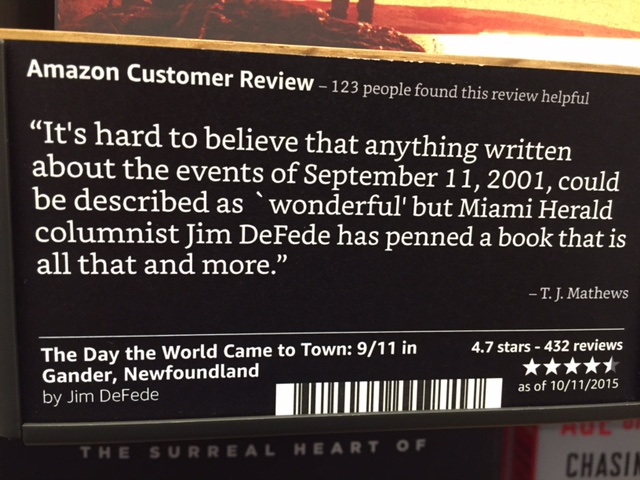
In addition, Amazon prominently displays reviews for the books available for purchase in their store. A review card is displayed under nearly every book with a star rating, a review from someone who purchased the item from Amazon.com, and a barcode. The barcode, when scanned using the Amazon app, takes the consumer to the item’s product page on Amazon.com so he or she can see the reviews for the item.
Amazon clearly understands the importance of providing shoppers with all the information they’re looking for, regardless of whether they’re shopping online or in-store.
Online and In-Store Should Complement, Not Compete
Stop thinking about brick and mortar and online retail as competitors and start thinking about how the two can work together to provide a great experience for your customers.
Multi-channel retailers can use online and in-store purchases to better target their marketing efforts. For example, ask your in-store associates to capture customer emails through your existing rewards program. That way, you can send post purchase emails asking for reviews for those products, along with promotions and offers that are relevant to shoppers that purchase a particular product. I’m willing to bet that if you purchase a book from Amazon Books, that item will be factored in to the recommendations Amazon offers up the next time you sign on to their website.
What do you think Amazon’s plans are for expansion? Please share your thoughts in the comments below!
Soft Surroundings is a leading women’s clothing and bedding retailer, with more than 30 store locations throughout the United States. Reviews play a key role in Soft Surroundings’ business. Because the company designs and makes their merchandise in-store, they rely on the insights gleaned from reviews to improve products and better serve customers.
However, Soft Surroundings wasn’t happy with their former ratings and reviews provider and saw this as an opportunity to find a solution that would better suit their needs. After a few initial meetings, the company decided to partner with PowerReviews.
The Implementation Process PowerReviews and Soft Surroundings worked together to ensure the implementation process was simple and straightforward. Open communication allowed for a seamless process, and the team at Soft Surroundings was pleased to find that the implementation caused very little disruption to the team.
“Since we finished the implementation with PowerReviews, things have been running really smoothly,” said Gail Buffington, eCommerce Manager at Soft Surroundings. “And we’ve been able to get any outstanding items resolved quickly.”