Are you looking to get the word out about your new products? Do you want the attention of your everyday shoppers without the huge celebrity endorsements? More likely than not, someone on your marketing team has recommended dipping into the power of micro-influencers.
We all know that Instagram influencer marketing is on an uptick. This type of strategy has been on the short list of a lot of major brands. But as we get deeper into the world of influencers, how do brands know what works best when it comes to influencers, micro-influencers and now even nano-influencers?
That’s a lot of different names for what you truly want–brand advocates.
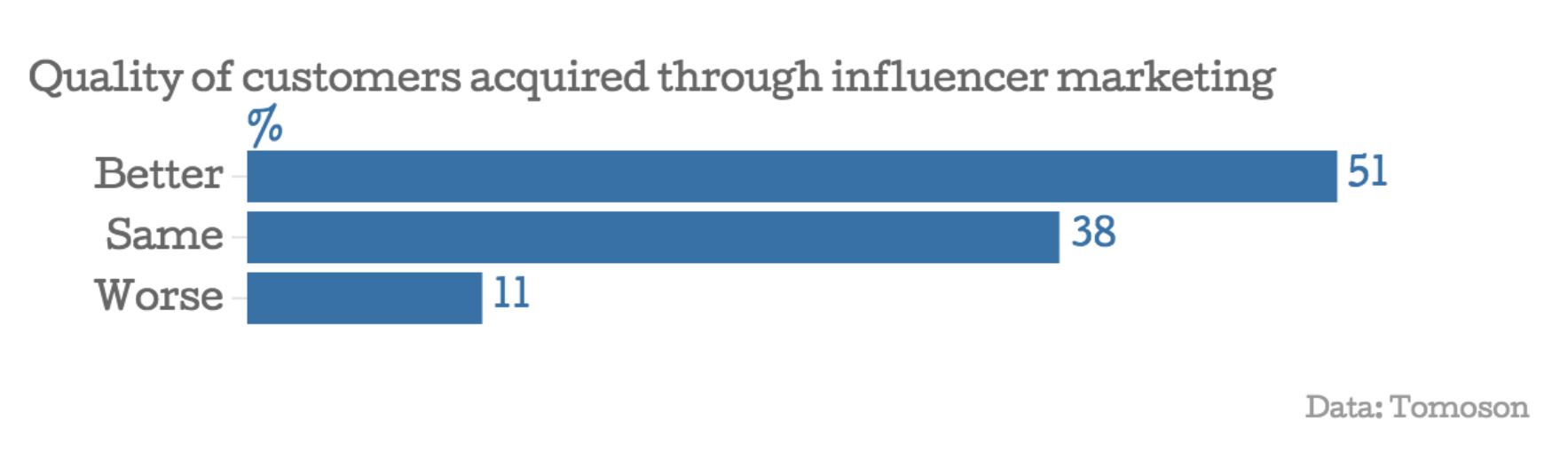
But we’ve already seen success with using influencers to drive product awareness and increase sales. A study by Tomoson found businesses make an average of $6.50 for every $1 spent on influencer marketing and attract higher quality customers at the same time.
The problem is most influencers–and those inspiring to be influencers–have begun to realize their own worth. And now they’re getting expensive.
So, what if your brand doesn’t want to spend major marketing budgets on influencer partnerships? It’s time to dive deeper and work with micro-influencers who simply reach their smaller inner circles of friends and family to influence purchasing decisions.
What Are Micro-Influencers?
Micro-influencers are a type of brand advocates that have much smaller followings and use word-of-mouth marketing to recommend products and services to their followers, which typically only consist of friends and family members. The goal of an everyday influencer is to be a more reliable source of truth with your product or service than the opinions of major social media influencers and celebrities.
Micro-influencers have day jobs. They don’t rely on mass amounts of free samples and paid content opportunities. Instead, these are your everyday, run-of-the-mill shoppers who actually buy from you or would be your target demographic.
Why You Should Work With Micro-Influencers
You might be thinking, if these people have smaller followings, why would you want to have them market your business? But as it turns out, micro-influencers have significant–and sometimes specific–benefits to generate buzz about your products and services.
Here’s just a few reasons why you should work with micro-influencers on your next product launch or marketing campaign:
Attract a Smaller, But More Targeted Audience
Oftentimes, micro-influencers are 100% targeted to a specific niche inside a general product demographic that a larger influencer might not have credibility. Think about it–could Huda Kattan, an extremely popular makeup Instagram influencer, sell fishing and tackle gear to her 33.7 million followers?
https://www.instagram.com/p/BuljCEQh8-k/
While we certain she would drive a ton of traffic to any site she mentions, a brand like Catch Co., which sells monthly fishing gear boxes, would over pay and see a huge drop in cost-per-click (CPC) and cost-per-acquisition (CPA), Instead of relying on mass follower counts, micro-influencers target everyday fishers who can get the word out about your products to a loyal and interested few thousand users.
As they say–fish where the fish are biting.
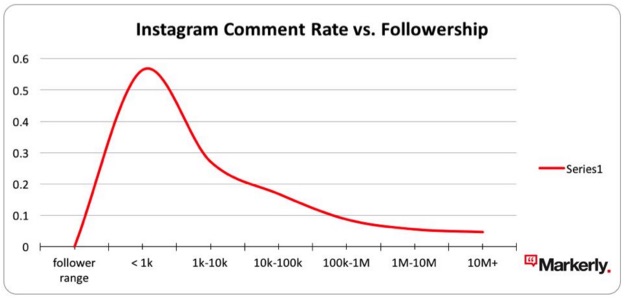
A more targeted audience also leads to more engagement. In fact, a study by Markerly found Instagram influencers with less than 1,000 followers received likes 8% of the time on their posts and comments at 0.5%.
In comparison, larger influencers with more than 10 million followers received only 1.6% of likes and less than 0.04% for comments. These numbers show micro-influencers have the ability to generate better engagement with their audience than mass-follower counterparts.
Higher Trust Rate in Products
Providing trust in your products is the key to obtaining new customers and limiting obstacles in the path to purchase for those considering you. Brands have to build trust by opening communication and giving customers confidence in your products.
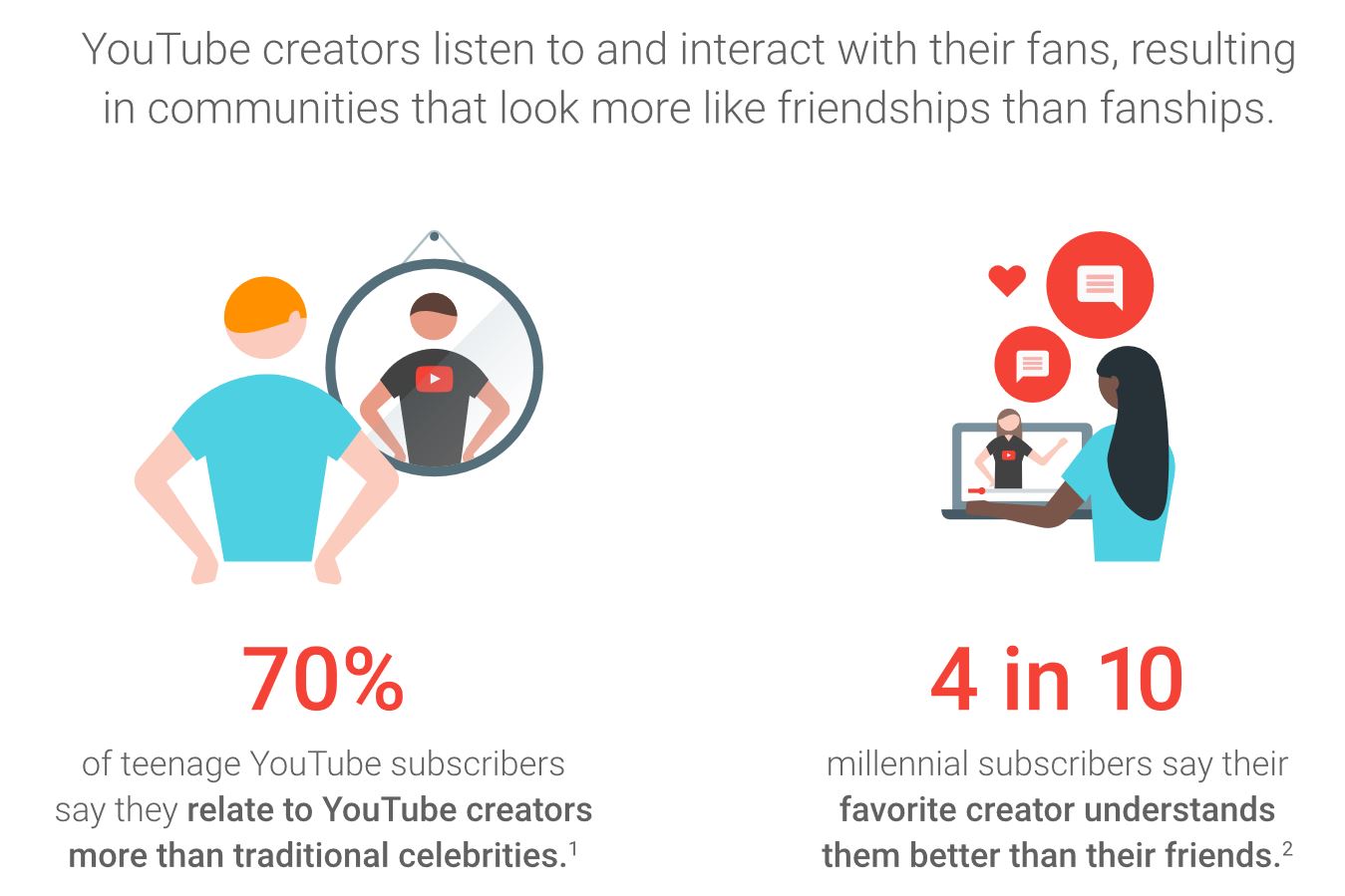
Did you know that 4 in 10 millennials on YouTube believe their favorite influencer understands them better than their friends? That level of trust is incredible.
Stats like this should show everyone the impact of major influencer opinions and how they affect their audiences. But when it comes to micro-influencers, this idea is even more relevant.
While large influencers are extremely relatable to consumers, so are everyday influencers to their own groups. There’s plenty of research showing consumers trust each other over brand messaging–even on social media.
And for everyday influencers, their trust is present because of their friends and family. People constantly seek out recommendations from peers, which means the trust factor is much higher when it’s a friend or family member making a product recommendation.
Put Your Marketing Dollars to Work
Celebrity-level influencers are expensive. Some of the top influencers charge up to $25,000 per social media post to promote a brand or product.
These costs are typically well over brands’ marketing budgets. This has more companies turning to micro-influencers, which typically cost closer to $500 per promotion.
However, there’s another cost-effective way to get the most out of your everyday influencers. PowerReviews Influencer and Sampling Suite provide brands with the opportunity to reach a massive community of brand advocates, micro-influencers and authentic shoppers.
With the help the largest network of pre-qualified everyday influencers, brands increase trust and product awareness with simple product sampling solutions.
In fact, our community delivers more than an 80% delivery-rate on average, which lets brands gain authentic ratings and reviews content, product insights, visual content and valuable customer feedback.
Want to see how you could benefit from a product sampling campaign? Reach out to our team and request a demo to gain more insights!
3 Tips to Scale Your Micro-Influencer Strategy For More Wins
Now that you know a few reasons why you should work with micro-influencers, how do you go about scaling your marketing strategy and overall implementation? We’ve got you covered with three quick tips to get your campaign off on the right foot.
1. Sharpen Your Search Skills to Find Relevant Micro-Influencers
Where in the world are the best micro-influencers for your brand?
To scale your efforts and maintain your budget, you need to sharpen your search skills. Before you start, think about where your target audience lives online.
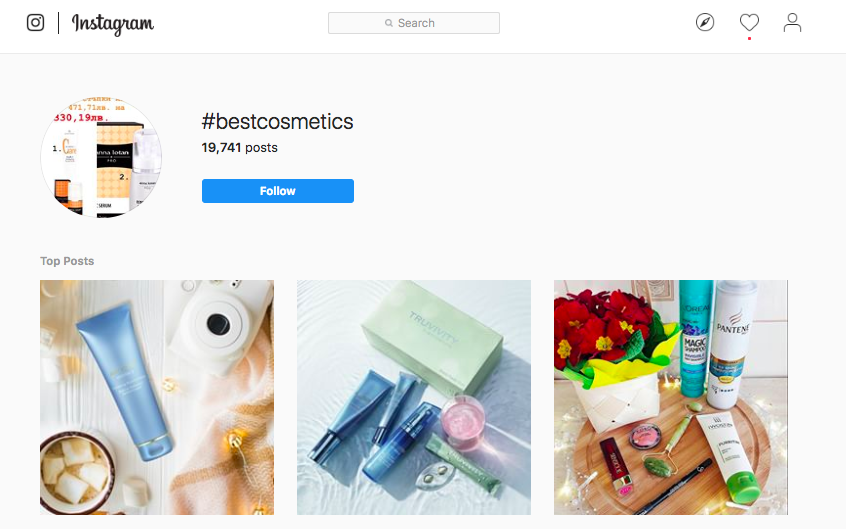
For example, do a hashtag search for some keywords that not only fit within your niche product, but also words associated with the pain points your product or service resolves. The challenge is finding a hashtag that ins’t too large (think less than 200,000 posts) but isn’t too small where you’ll have any reach.
If you’re a local business, you can also try searching for posts in your physical location.
Another way to search for micro-influencers is by sorting through people who already follow you, use your products and mention your brand on social media. There’s a huge amount of user-generated content on social media that could help increase purchasing decisions when people see visuals of people like themselves on your product pages.
That’s why our Visual and Social Suite is trusted by brands and retailers who know the value of user-generated content. Our software allows companies to easily collect, curate and get approval for user-generated content and then display it across product pages.
2. Assess Your List of Micro-Influencers
Once you start your search, it’s time to narrow down your most relevant influencers.
First, look through their content and see if it aligns with your business. See if the majority of a users’ content is related to your business or would be in the same field.
Next, set requirements that your ideal micro-influencers must have, such as a minimum or maximum amount of followers, follows a certain amount of brands or posts a specific amount of days in the week. Think about your goals and how they could relate toward your specific requirements.
https://www.instagram.com/p/BuhqkzvhC7b/
For example, if your goal is to get better visual content related to your brand, make sure the influencers on your list produce above-average content. We can see the higher quality image in the example above, which is likely why Heritage was more inclined to use this influencer.
It’s also important to check for vital signs. Is the influencer actively posting as well as conversing with their audience? Are they taking their status as an influencer seriously?
Measure their engagement rates across the channels you’re promoting and make sure you’re seeing the numbers that make sense. As we said, micro-influencers normally have much better engagement than larger influencers, but this is just an average and therefore isn’t always true for specific micro-influencers.
Unfortunately, with the rise in popularity of influencers, there are plenty of people trying to game the system. Some buy social media followers in mass and expect brands won’t check to make sure their 2,000 followers are mostly real people.
You can resolve this by calculating the engagement rate of their posts. If they have 10,000 followers, but only get 20 likes and no comments on their posts, something is off.
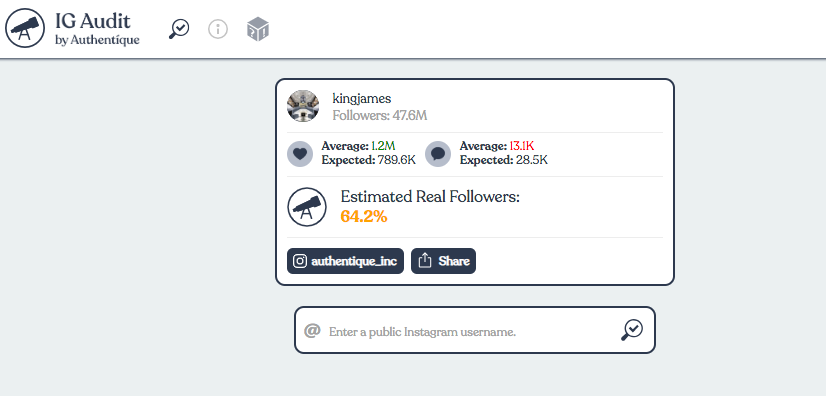
Additionally, you can use tools like IG Audit (for free) or FakeCheck.co to audit their Instagram followers so you know they have real reach.
3. Ensure Authenticity Within Posts
While the overall authenticity of your influencers is important, you’ll also want to make sure that the actual posts they create for you are authentic.
When scoping out influencers, it’s important to see what kind of comments they write for their posts. Are they just blindly promoting any brand that contacts them? Or are they providing genuine value to their audience in their recommendations?
https://www.instagram.com/p/Bc5CctxgGVa/
For example, audiobook provider Audible used micro-influencer Jesse Driftwood to promote their company. The honest feedback is what helps drive trust in the first place.
This is one of the best benefits of Instagram. It’s easy to spot credible content. Always look for honesty and avoid hiding your more negative feedback.
We know the Proven Power of Reviews study says 82% of shoppers actually look for negative reviews of a product before purchasing.
It’s Time to Get Started
Targeting your core audience comes with a lot of challenges, but there are tools out there that can help you. As we’ve covered, there are several benefits your brand could see with micro-influencers promoting your products or services.
Whether it’s sharpening hashtag search skills or running engagement numbers on posts, make sure your micro-influencers align their with your brand and have the potential to increase visibility. By keeping your team organized, there’s a lot your marketing team can do on a budget.
Conventional wisdom tells us that businesses should prioritize metrics over emotions, right? But what if your customers’ thoughts and feelings were a measurable data point?
Enter the world of customer sentiment analysis.
Listen: customers are sounding off online like never before. And even more so, customers want to hear each other’s thoughts about your products–whether it’s good or bad.
That’s probably why the PowerReviews Snapshot of Ecommerce report showed a staggering 82% of shoppers specifically seek out negative reviews before making any sort of purchase.
Between on-site reviews, social media and third-party review sites, the amount of potential data we can gather from customer feedback is absolutely insane. Through customer sentiment analysis, businesses can take that feedback and translate it into action.
What is Customer Sentiment Analysis?
Customer sentiment analysis examines the emotions, impressions and attitudes surrounding your business to make sales and marketing decisions.
Think about it like this: every time somebody writes a review or gives your business a shout-out, there’s an opportunity to gather data.
What products are your audience most hyped about?
How often are your customers complaining versus singing your praises?
Based on these data points, you can learn more about what customers want and expect. Sentiment has a direct impact on how you position your business and market your products.
Digging into your review data allows you to assess your customers’ feedback and put it into a decision-making context. That’s customer sentiment analysis in a nutshell.
Why Does Sentiment Analysis Matter, Though?
Chances are you’re already monitoring your fair share of metrics.
Hey, we totally get it.
Even so, deeper customer sentiment analysis within your specific products should still make the short list of your consumer analysis. That’s why we’re going to provide some key reasons why more brands are taking customer sentiment analysis to the next level:
Make More Informed Business Decisions (Trust the Data)
This is the big one.
There’s no need for businesses to second guess what products and services their customers want: people are telling you–directly.
And nobody knows your products better than your customer base. Rather than rely on gut reactions and assumptions, customer sentiment analysis answers clue you in on exactly what your customers want.
We doubt you expected green tea chocolate, but when there’s enough sentiment around these keywords, why not provide your loyal customers with what they want?
Continuously Improve Your Products & Services (Keep Them Happy)
Just as your customers’ behaviors and expectations evolve, so should your business.
Collecting feedback and conducting sentiment analysis can help you uncover new products and ideas and features that folks actually want to see. Encouraging ratings and reviews creates a direct line between you and what your customers are thinking.
Listening to your customers and improving your products impacts your bottom line too–and in a positive way! The more details you collect from consumer feedback, the easier it is to make your products. And in the end, the better your products, the fewer product returns you’ll see.
Easily Manage Your Online Reputation (Don’t Let the Haters Win)
As noted earlier, those recommendations are scattered across the web. And while many brands look for the hottest Instagram influencer marketing techniques, more likely than not, you already have your own set of micro-influencers talking about you.
The trick is to find this community and provide them a better avenue to get their voices heard. That’s where our very own BzzAgent comes into play. Through our Influencer and Sampling Suite, we connect brands to a trusted community of more than 200 million followers to spread the word of your products and to write honest and trustworthy feedback about your products.
It’s an effective one-two punch of collecting reviews and getting your products out in the masses between your community of everyday influencers.
And as you generate conversations around your product, customer sentiment analysis helps capture those moments rather than let them slip through your fingers. This results in a more holistic view of your online reputation that keeps your business from living in a bubble.
How to Do Sentiment Analysis the Right Way
Now that you understand the basics of customer sentiment analysis, the question remains: how do you get started with all of this stuff?
There is no “right” approach to customer sentiment analysis as different businesses emphasize different channels of customer feedback. That’s why we’ve outlined the series of suggestions below that you can choose from based on your company:
1. Take Advantage of Intelligence Tools
Sentiment analysis is tricky to do “by hand” because there’s so much to sift through.
At the same time, emotions can be difficult to quantify at a glance.
To overcome these challenges and streamline your sentiment analysis, we recommend taking advantage of tools such as the PowerReviews Intelligence Suite. Our intelligence engine takes care of the legwork involved in sentiment analysis by aggregating loads of data from your business’ reviews and industry at large.
In addition to positive versus negative reviews for individual products, the suite also tracks keywords and terms that customers use to describe those same products. This information is crucial for marketing and discovering the quirks of your products that create positive sentiment.
If you want a comprehensive understanding of customer sentiment minus all the digging, an intelligence tool is a must-have for those looking to uncover incredible product insights.
2. Monitor Your Mentions With Social Listening
Social media is an ever-so-popular place for customers to sound off regarding products these days.
Whether it’s a shout-out or customer service concern, social media is a fast-moving channel that likewise represents a treasure trove of information when it comes to sentiment.
Through social listening, you can collect your brand mentions (including reviews) to assess your brand health in the social space.
In a day and age where one interaction can squander your entire customer satisfaction campaign, social sentiment is worth tracking. And there are plenty of ways to monitor and listen to social cues.
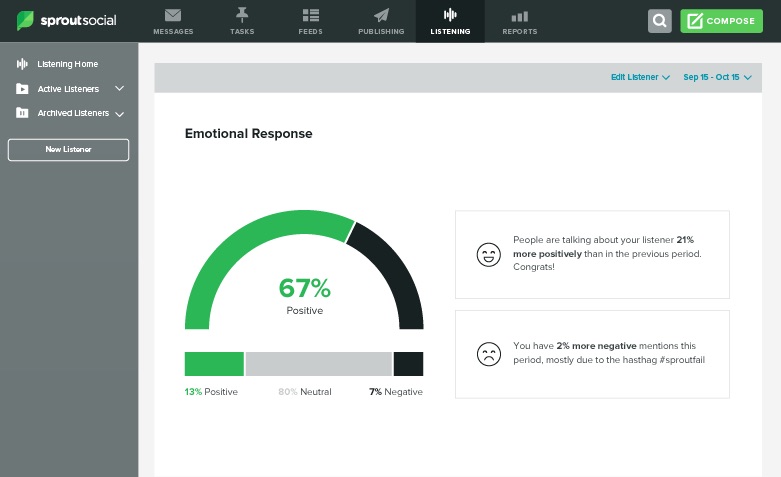
Tools like Sprout Social boast listening features that assess positive versus negative sentiment across social networks in addition to individual mentions. At the same time, brands and retailers can listen to similar sentiment with review content.
More often than not, brands have products sold across their own and other retailer sites. But who’s in charge when a customer asks a question about your product when you have the best answer?
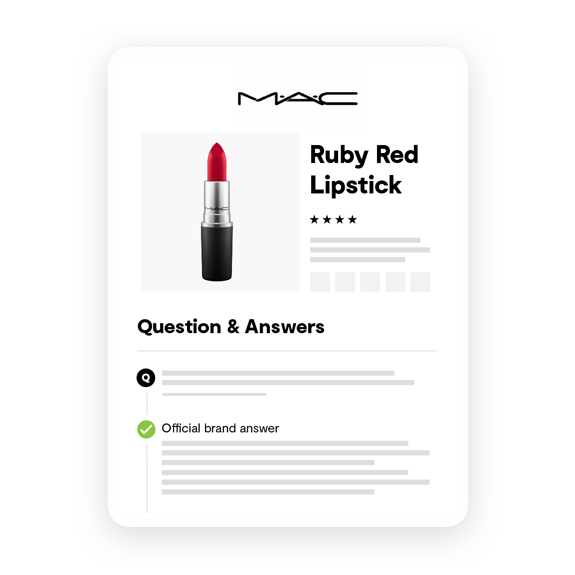
To provide a direct line to consumers across numerous sites, PowerReviews Questions and Answers software gives access to a brand to answer potential purchase-blocking questions.
Our Brand Engage tools let your team answer questions with a badge so customers know the answer is verified and from your brand. When you listen to customers, you have to open your ears to every place where customers talk about you.
Want to see a demo of Brand Engage in action? Request a demo today and see how your brand can improve listening across the web!
3. Curate Feedback From Your Email List
The more reviews on hand, the more accurate your customer sentiment analysis will be.
Given that 70% of buyers will leave reviews when prompted, there’s arguably no better place to curate more reviews than your email list.
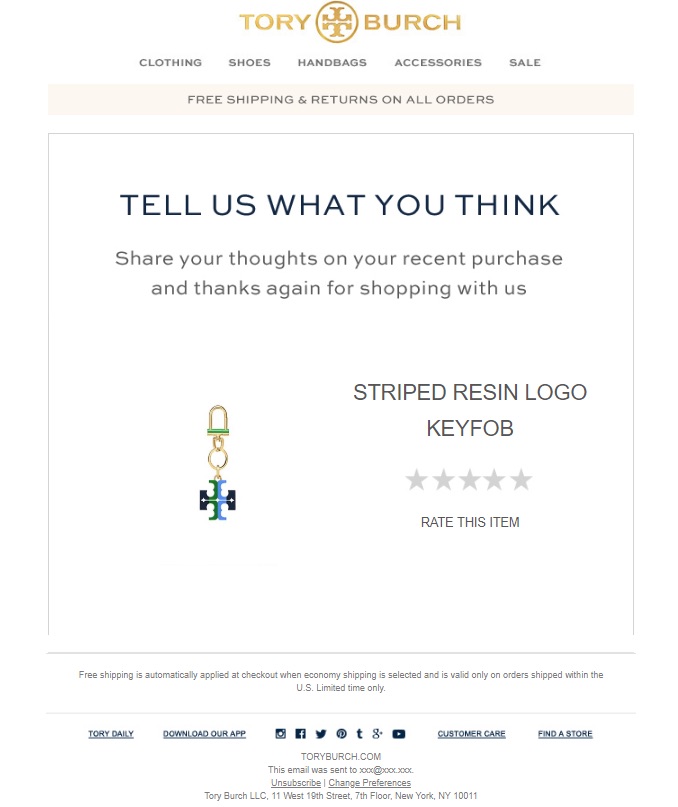
Through questionnaires, surveys and post-purchase emails, you pick your existing customers’ brains to figure out what you want to see from you in the future. For example, West Elm does a great job at re-engaging customers with a survey.
In an effort to passively curate reviews, you might also consider setting up post-purchase autoresponder messages to encourage more feedback. You’d be surprised at how receptive your customers are when you simply ask for something.
Anyone who takes the time to respond is obviously invested in your business and therefore valuable to your sentiment analysis efforts.
And hey, that actually leads us to our next point.
4. Be Sure to Weigh Your Customer Feedback
Remember that not all reviews are created equal.
There’s a big difference between a review from a long-term customer and someone who’s purposely nitpicking or trolling your business.
As a result, don’t be shocked by outliers during your sentiment analysis and read into the context of your analysis itself.
Don’t shy away from negative feedback. Thoughtful criticism is incredibly valuable for learning how to improve your products to score more business in the future.
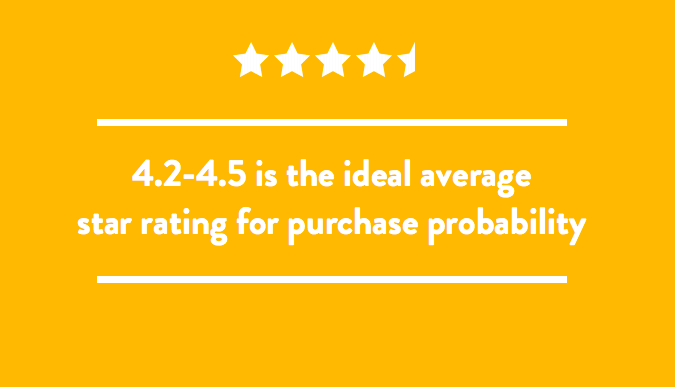
The previously mentioned Snapshot of Ecommerce report also found most consumers prefer to buy products with an average star rating of 4.2 and 4.5 stars. So what does this mean?
Embrace your customer sentiment and learn from it–don’t hide it. Trust is all about open communication, so be sure to listen to your customers.
What Happens After You Collect Customer Data?
Let’s say you’ve gotten your feet wet with customer sentiment analysis and are trying to figure out what to do next.
No matter what sort of reviews you already have, your ongoing goal should be to improve your customer sentiment. Also, don’t just collect data and do nothing with it! Below we give a few ways your business can use sentiment analysis data once your process is underway:
Brainstorm Marketing & Product Ideas
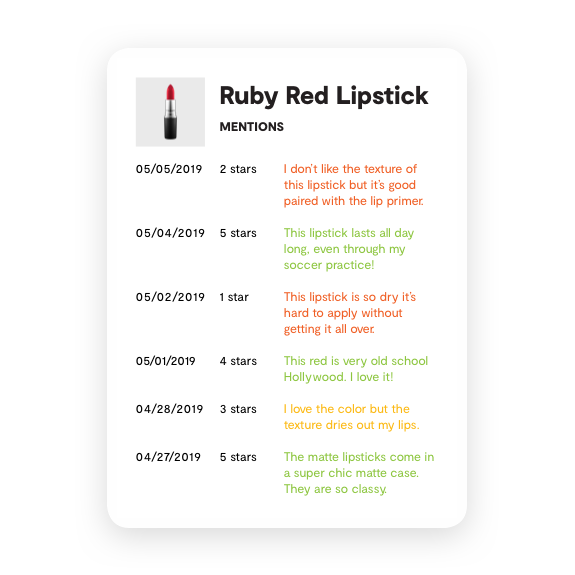
After analyzing your reviews, you might come to realize that your customers have mixed feelings about a certain product. As a result, you can start stressing those high-points in your marketing and consider changes to future products based on the low-points.
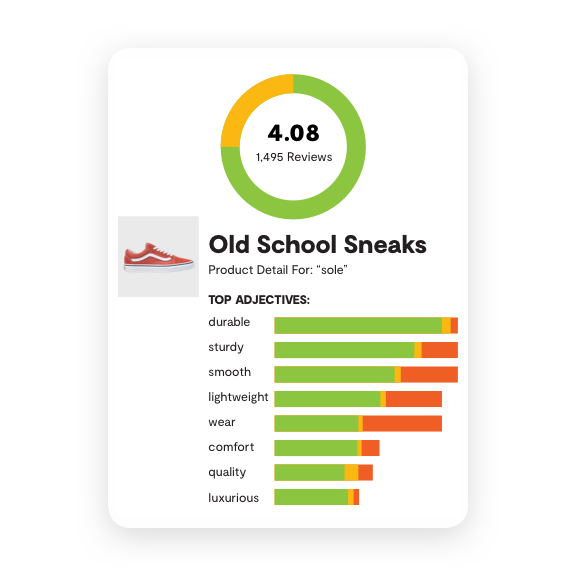
Here’s an example from our intelligence suite to illustrate what we’re talking about.
Again, sentiment analysis is something that you’ll be doing for the long-term. Although you don’t need to make any immediate decisions based on your data, you should at least start thinking about changes to make in the future.
Communicate Openly With Your Customers
Like we mentioned before, perhaps the most straightforward way to improve your standing with customers is by communicating with them. Opening up a dialogue not only allows you to gain more insight from your customers but also makes your business seem more authentic and transparent.
Some key ways to communicate with your customers include:
Responding to ratings and reviews
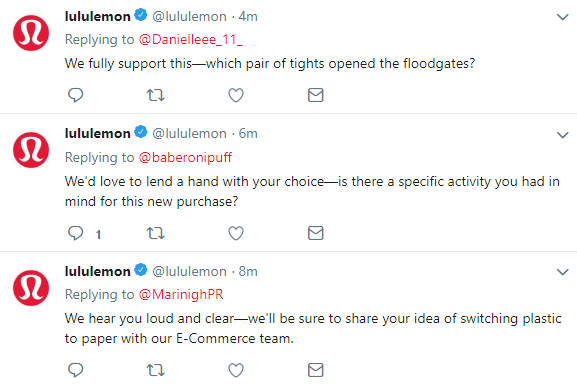
Replying to social mentions and call-outs
Answering more product questions across various sites
Make Positive Feedback Part of Your Marketing Campaigns
If you have customers showing serious love for your business, make a point to show them off in your marketing. For example, you can include testimonials or positive reviews on-site or as part of your email campaigns to serve as social proof.
Another smart move is to integrate customer photos and user-generated content as part of your social strategy. Your satisfied customers are arguably your best billboards on social media and even your own product pages!
https://www.instagram.com/p/BsyYSYFllQf/
Talk About Sentiment Analysis With Your Coworkers
Lastly, customer sentiment shouldn’t be measured in a vacuum.
While front-facing reviews are insightful, chances are you can learn a thing or two about what customers want from your coworkers and colleagues. For example, consider how various departments and teams can contribute to sentiment analysis:
Marketing: details your biggest challenges with soliciting reviews in the first place
Sales: highlights the most common sales objections for existing and new customers
Customer satisfaction: notes the most frequent complaints they receive from customers
Gathering this internal information helps you flesh out your customer sentiment analysis strategy to paint the most complete consumer profile possible.
And with that, we wrap things up!
Are You On Board With Customer Sentiment Analysis?
Breaking down what your customers want is a no-brainer, but how you do it is what requires a conscious effort on the part of your business. With so much customer data and feedback already out in the open, the information you need to start analyzing sentiment is more than likely there.
And with the help of tools like PowerReviews, you translate those reviews into action sooner rather than later. The end result is a data-driven approach to growing your business and more satisfied customers in your pipeline.
Jon oversees the success of the Olapic’s 240+ clients through a growing team of account managers and strategists. Olapic leads the visual marketing space and empowers brands across apparel, luxury, beauty, consumer electronics, CPG and travel to leverage user generated photos to drive sales and increase customer engagement. Prior to joining Olapic in early 2014, Jon worked at Salesforce.com as a Senior Client Success Manager in the Marketing Cloud, and prior to that he spent over seven years helping nonprofits define and execute technology solutions.