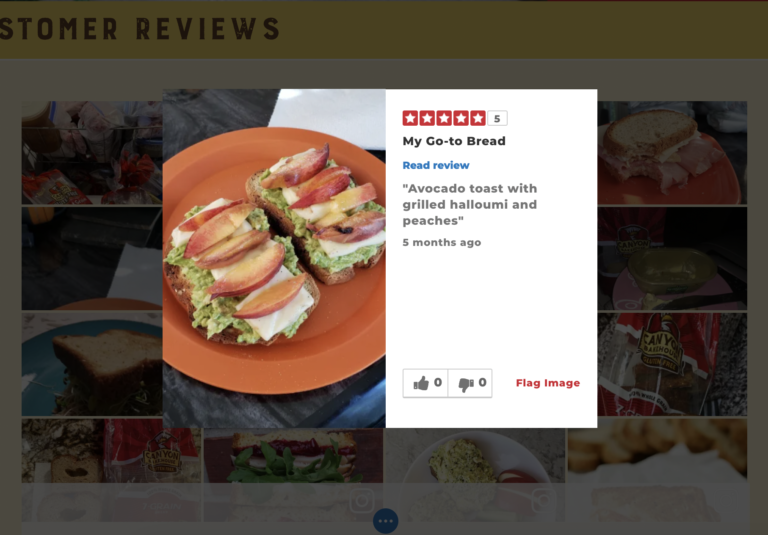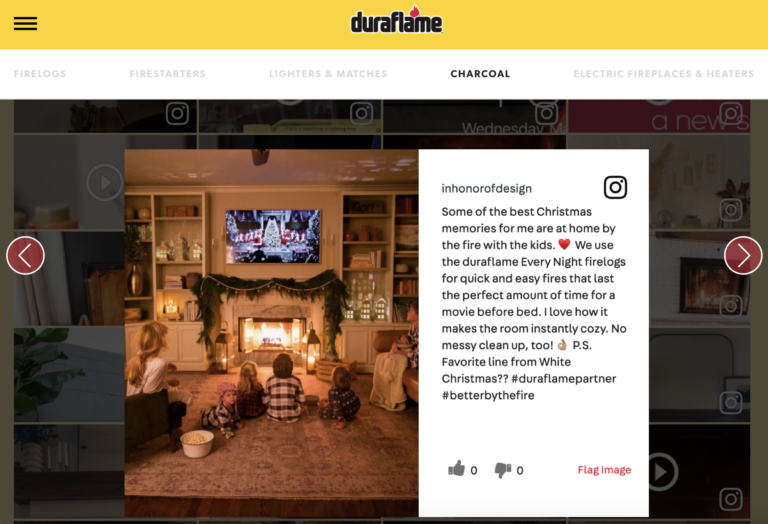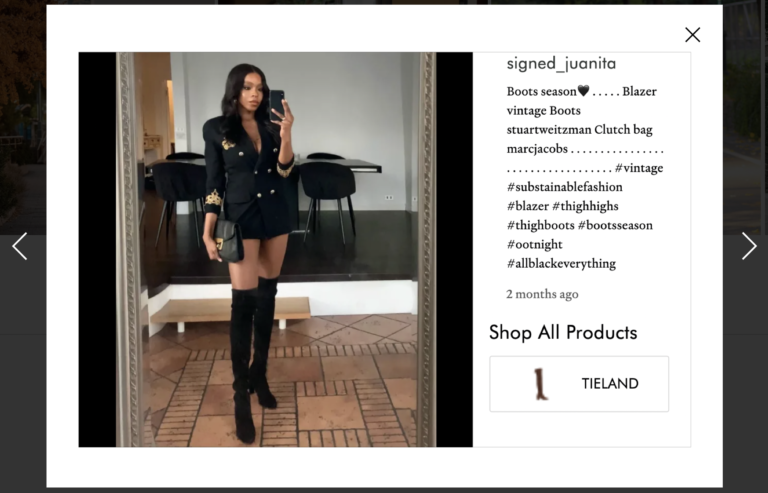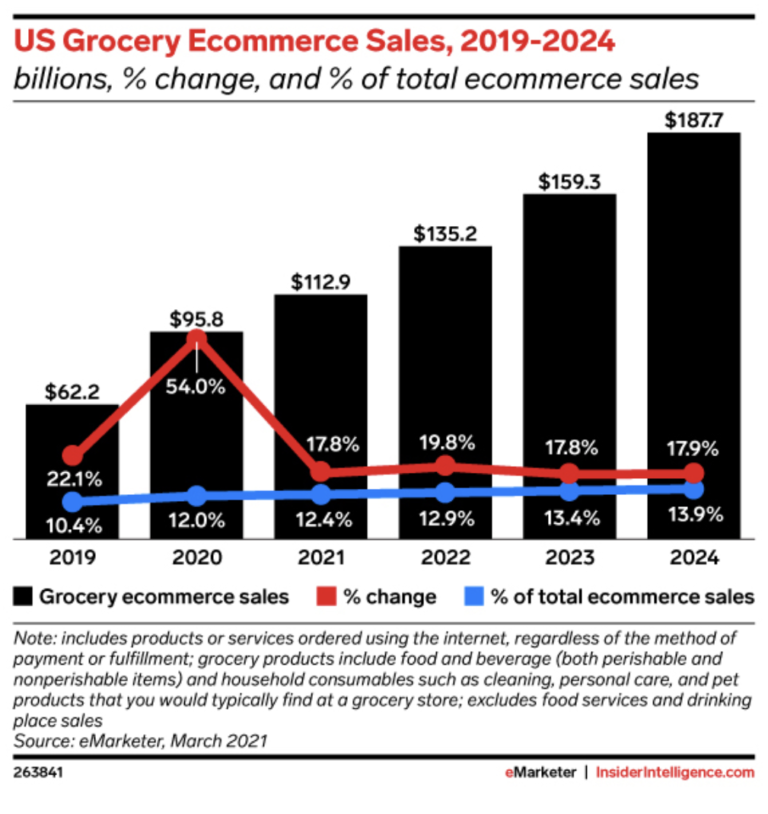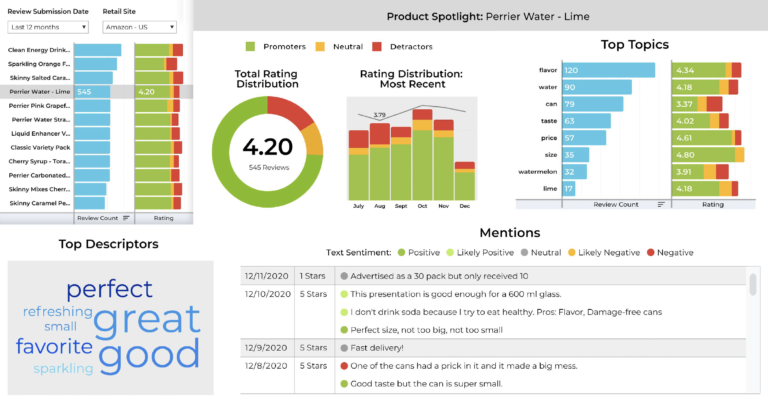
A comprehensive breakdown of how various components of user-generated content impact conversion rates, based on an analysis of 1.5MM online product pages from over 1,200 brand and retailer sites during 2021.

Research at a Glance:

The Conversion Impact of User-Generated Content: The Complete Breakdown for 2022 is based on an analysis of 1.5MM online product pages from over 1,200 brand and retailer sites throughout the course of 2021 (and is an update of the previous version of this same research). Here’s a snapshot of our key findings.

The Very Presence of UGC Has a Positive Impact on Conversion
  • There’s an 8.5% increase in conversion among visitors who are served up some form of UGC on product pages.

  • The conversion lift is significantly larger – 100.6% – among visitors who interact with the UGC in some manner.
Reviews Double Conversion
  • Visitors who interact with ratings and reviews convert at a rate that’s 108.3% higher than average. 

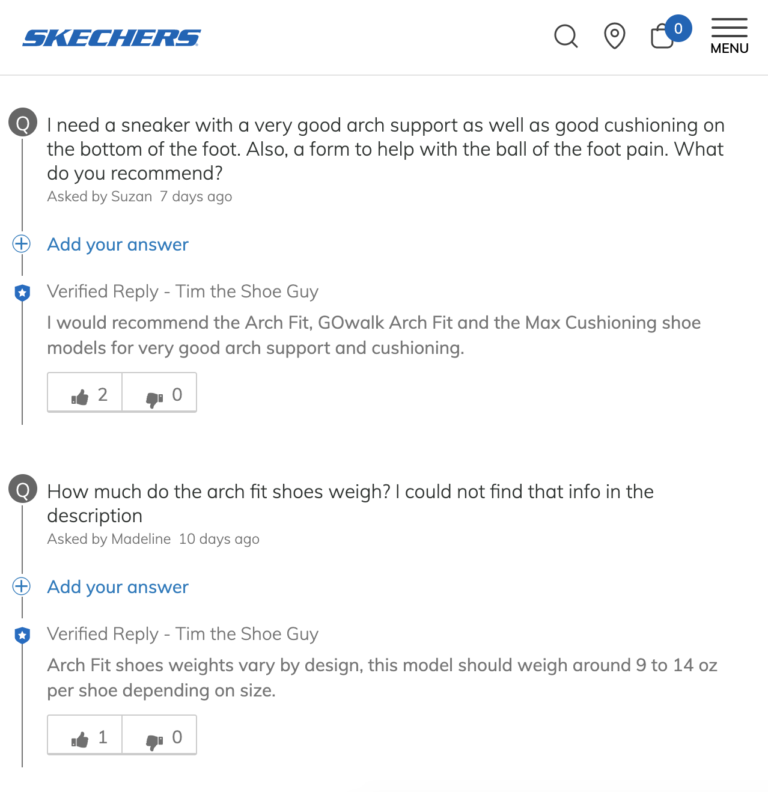
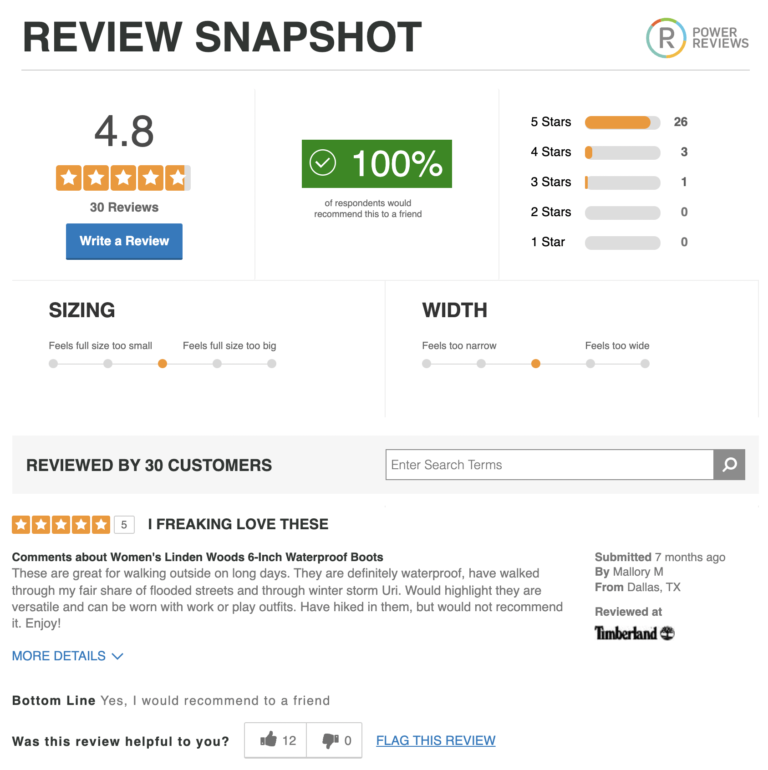
  • Specific review features lead to even larger conversion lifts, including Helpful Yes votes (414.3%), Helpful No votes (292.9%), and Review Search (260.7%) – among others. We’ve included examples of these features in action later on in this report. 

  • 61.6% of visitors who interact with star rating filters specifically filter to see one-star reviews. These visitors still convert at a rate that’s 85.7% higher than average, proving that negative reviews aren’t conversion killers.
Q&A Remains the Most Powerful Form of UGC – and Its Impact Continues to Grow
  • In 2021, there was a 194.2% lift in conversion among visitors who interacted with Q&A content, making it the type of UGC that impacts conversion most. This is up significantly from a 157.1% conversion lift among Q&A interactors in 2020. 

  • Q&A features that have a particularly high impact on conversion include Show More Answers (217.9%), Click Read Answers (192.9%), and Answer Helpful voting (192.9%). Later on in this report, we’ll share real-life examples of each.
User-Generated Imagery Strongly Impacts Conversion
  • There is a 106.3% lift in conversion among visitors who interact with user-generated imagery on a product page, up significantly from a 91.4% lift in 2020.
  • Imagery interactions that are particularly impactful on conversion include clicking on the image gallery (110.7%), clicking to view the next image/video (103.6%), and clicking to see the previous image/video (96.4%)
Find What Works for Your Business
  • When it comes to displaying UGC on your product pages, best practices are a great place to start. However, there’s no “right” way to do it.

  • Instead, analyze your UGC performance regularly and then optimize your strategy accordingly.
Chapter 1

Introduction

UGC Has Become an Expected Part of the Purchase Journey

When consumers are researching products and services, they’re no longer satisfied to hear from the brands and retailers that sell them. Instead, they want to hear from the real experts: those who have purchased and used the product or service in question.

In fact, user-generated content, including ratings & reviews, questions & answers, and visual content has become an essential component of the shopping journey for modern consumers. If there’s any doubt in your mind, consider these statistics:

of consumers read reviews when shopping online at least sometimes
0 %
of consumers read Q&A at least occasionally; 68% have submitted their own questions
0 %
of consumers regularly or always seek out visual content from other consumers prior to making a purchase
0 %

But What’s the Conversion Impact of UGC?

Collecting and displaying user-generated content is an important way to meet shoppers’ expectations. However, before investing in UGC, brands and retailers (understandably) want to know what’s in it for them. In other words, how does the presence of this content impact one of their most important metrics: conversion?

Now, we have a definitive answer.

We analyzed activity on over 1,200 brand and retailer sites over the course of 2021 to pinpoint the conversion impact of three key types of UGC: ratings & reviews, Q&A, and visual content. We also examined how that impact has changed in the year since our last analysis

Of course, each UGC display is different. While a visually appealing, on-brand UGC display is typically a priority for many, the ultimate aim must be to create a display that has the greatest conversion impact. For this reason, we have examined how specific features of each type of UGC impact conversion.

Measure and Optimize UGC Regularly to Unlock the Biggest ROI

While understanding how UGC elements impact conversion is important, it’s only the beginning. That’s because each business is different. And while one feature may be particularly impactful for some brands and retailers, it might not be as effective for others. 

Ultimately, you’ve got to determine what works best for your business. 

Start with best practices, and test new features and functionality that are shown to impact conversion. Then, measure your UGC performance on a regular basis and use those insights to optimize your UGC display for even better results. 

Chapter 2

Methodology & Definitions

This report is based on an analysis of 1.5MM online product pages from over 1,200 brand and retailer sites over the course of 2022. Here is a key of terminology to refer back to when reading the report:

Time period for analysis
This data was pulled for the period from January 1, 2021 to December 31, 2021.
Websites analyzed
Activity on more than 1.5 million product detail pages across 1,200 ecommerce websites. These websites run the gamut of ecommerce categories.
Visitor conversion
The visitor conversion metric, used as the baseline for this report, is calculated based on conversions from individual visitors within a 24 hour period. A new visitor session starts every 24 hours, with all accompanying downstream implications on the conversion metric.
Ecommerce UGC page visitor overall
Calculated for any consumer visiting a product detail page that runs PowerReviews UGC display analytics technology.
UGC impression
Calculated based on unique visitors who have scrolled a product page enough to be served an impression of at least one type of UGC (review, Q&A, or imagery). The review snippet (the UGC element used at the top of PDPs to display a summary of the average star rating, number of reviews, etc.) is excluded from the UGC impression metric. Throughout this report, we use this metric to more closely examine the different types of UGC – specifically reviews, Q&A, videos and imagery.
UGC interaction
A metric calculated based on visitors who interact with UGC. Some examples of UGC interactions include clicking “read more” on a review, opening a user-submitted photo, or using the search box to run a search within review content.
Chapter 3

A High Level View of How UGC Impacts Visitor Conversion

The Mere Presence of UGC on a Product Page Positively Impacts Conversion

During 2021, there was a 2.8% conversion rate on the 1,200 sites we analyzed that run PowerReviews’ UGC technology. 

This may be slightly higher than benchmarks you’ve seen from other sources. There are a couple reasons for this variance.

  1. We base conversion on visitors rather than sessions. See above for more information on our methodology.

  2. Assuming the PDP is built this way (which most are), all shoppers in the sample we analyzed are served up some form of UGC above the fold. Typically, this is a summary that includes average star rating and review distribution. Again, see the methodology section for more details on what we classify as a UGC impression or UGC interaction. 

When a visitor scrolls to a point where they see some form of UGC, they’re more likely to convert. In fact, there’s an 8.5% lift in conversion when a visitor is served up some form of UGC. In comparison, UGC impressions resulted in a 4.3% lift in conversion in 2020.

UGC Interactions Significantly Boost Conversion

When site visitors actually interact with UGC, the impact on conversion is even more significant. There’s a 100.6% lift in conversion among those who interact with UGC, down slightly from a 108.4% lift in 2020. 

We’ll dive deeper into how consumers interact with UGC throughout this report.

How UGC Impacts Conversion
2020
Ecommerce UGC Page Visitor Overall Conversion Rate
3.4%
UGC Impression Conversion Rate
3.6%
4.3% conversion lift from UGC Impression
UGC Interaction Conversion Rate
7.2%
108.4% conversion lift from UGC Interaction
2021
Ecommerce UGC Page Visitor Overall Conversion Rate
2.8%
UGC Impression Conversion Rate
3.1%
8.5% conversion lift from UGC Impression
UGC Interaction Conversion Rate
5.7%
100.6% conversion lift from UGC Interaction

By simply displaying UGC (including reviews, Q&A and visual content) you can experience a notable lift in conversion. However, UGC interactions drive an even larger impact. 

Chapter 4

How Review Interactions Impact Conversion

Reviews Double Conversion Rates

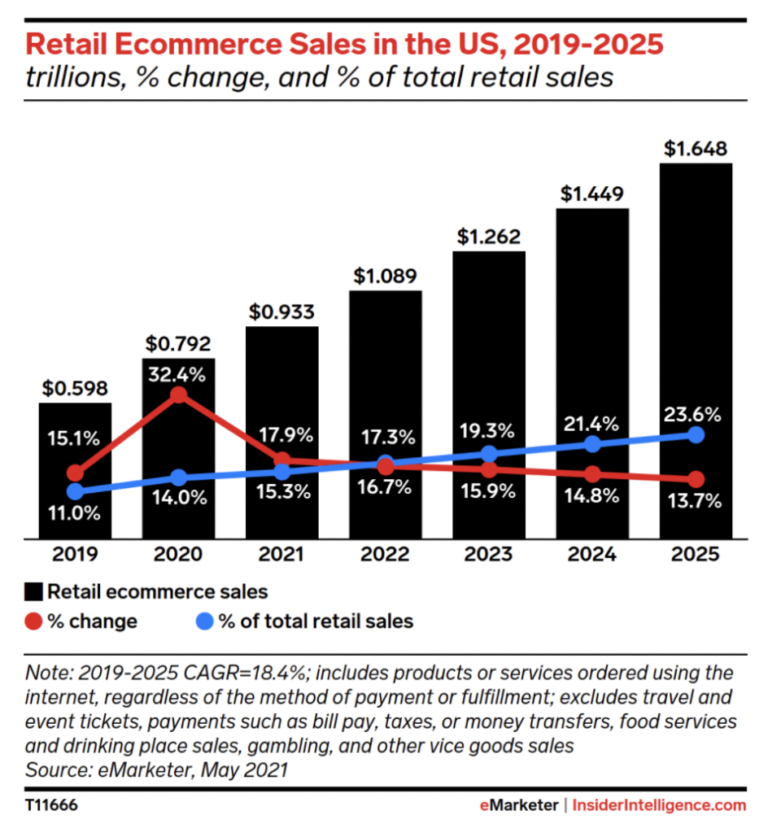
It’s no secret that a growing portion of consumers are shopping online – a trend that is unlikely to slow down. Statista forecasts that ecommerce will make up nearly a quarter of total retail sales worldwide by 2025. 

While online shopping is convenient, it also involves a level of risk. That’s because it’s impossible to know for certain that a product will fit one’s needs – especially without seeing it in person first.

Reviews can help shoppers overcome this risk and increase their likelihood of making a purchase. There’s a 108.3% lift in conversion among visitors who interact with reviews.

The Impact of Review Interactions on Conversion
Lift in conversion when visitors interact with reviews
2020
120.3%
2021
108.3%

The Impact of Various Review Features on Conversion

How Various Review Features Impact Conversion
The conversion lift for visitors who engaged with each ratings and reviews feature, compared to the standard conversion rate for the same pages
2020
Helpful Yes
314.7%
Helpful No
182.4%
Review Search
202.9%
Footer Page Previous
288.2%
Footer Back to Top
129.4%
Review Snippet
129.4%
Faceoff Positive
138.2%
Footer Page Next
182.4%
Faceoff Negative
120.6%
Review Sort
109.7%
Filter Stars
111.8%
Filter Tag
35.3%
More Details
105.9%
2021
Helpful Yes
414.3%
Helpful No
292.9%
Review Search
260.7%
Footer Page Previous
242.9%
Footer Back to Top
178.6%
Review Snippet
164.3%
Faceoff Positive
128.6%
Footer Page Next
117.9%
Faceoff Negative
114.3%
Review Sort
114.3%
Filter Stars
89.3%
Filter Tag
78.6%
More Details
50%

Helpful Votes

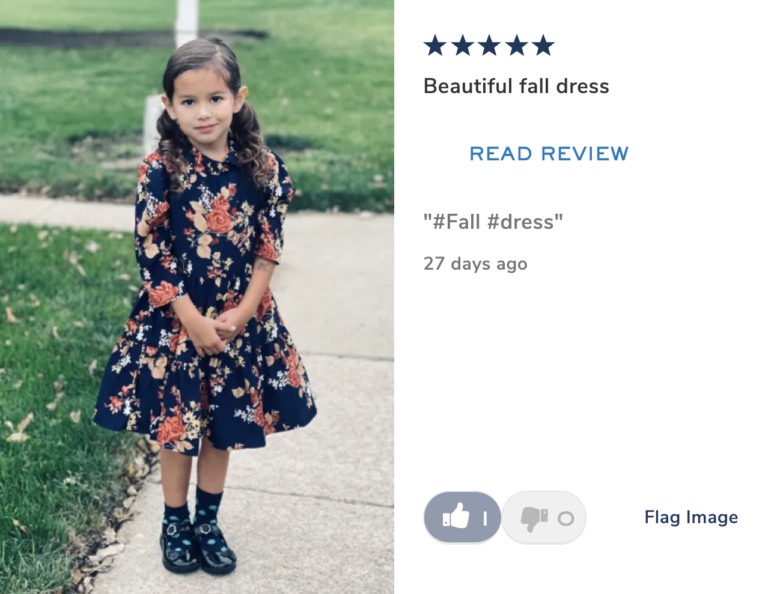
While some reviews are helpful when a shopper is making a purchase decision, others simply aren’t. A visitor can indicate if a given review is helpful (or not) by clicking on the thumbs up or thumbs down icon.
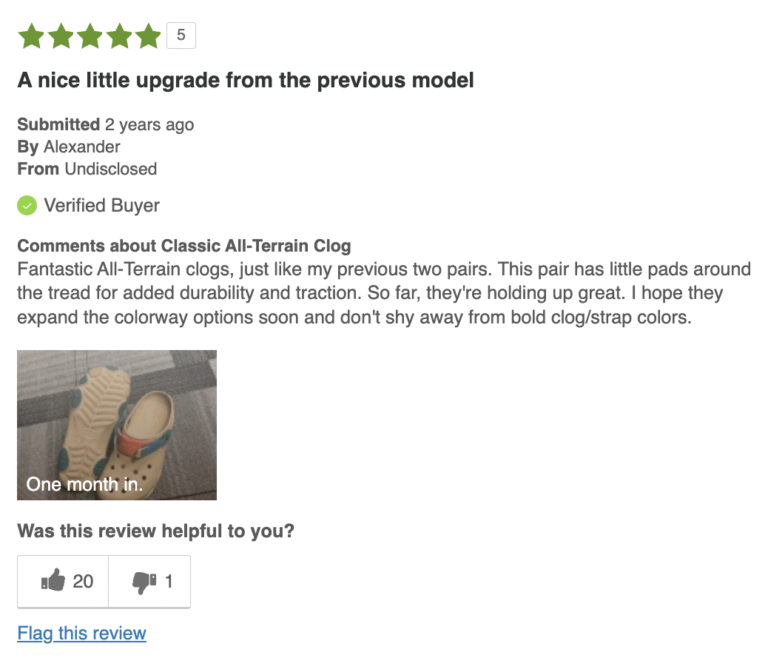
Helpful voting is the review interaction that impacts conversion most. There’s a 414.3% lift in conversion among visitors who click the thumbs up icon. In comparison, there was a 314.7% lift in conversion as a result of this interaction in 2020.

Interestingly, there’s also a large conversion lift – 292.9% – among visitors who click the thumbs down icon on a review. While a specific review might not be particularly helpful, it doesn’t necessarily deter a shopper altogether.

Review Search

Typically, a consumer doesn’t read every single review for a given product. Instead, they seek out content that’s relevant to them. One way they can do this is by typing a search term into the review search box.
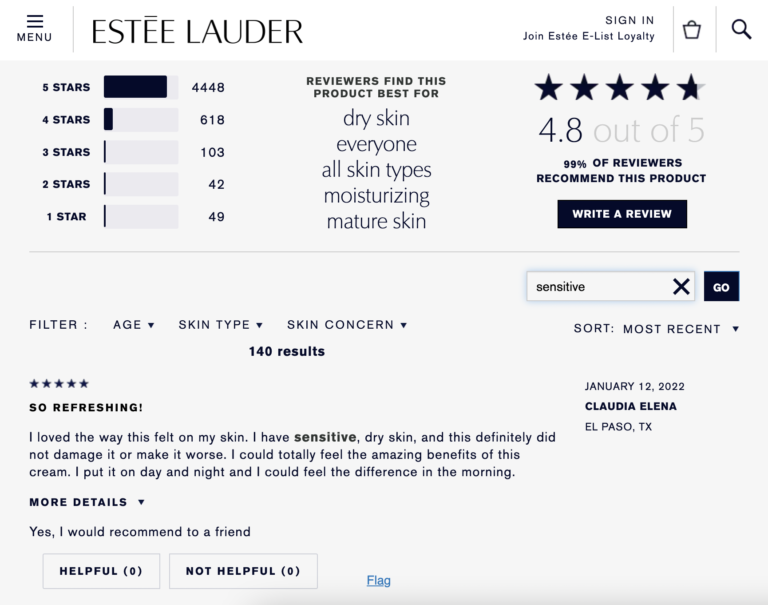
There’s a 260.7% lift in conversion among visitors who interact with the review search feature, up from 202.9% among those who took this action in 2020. 

Footer Page Actions

Once a visitor has scrolled to the bottom of a review display, they have the opportunity to take a few different actions. They can go to the next page of reviews, return to the previous page, or return to the top.
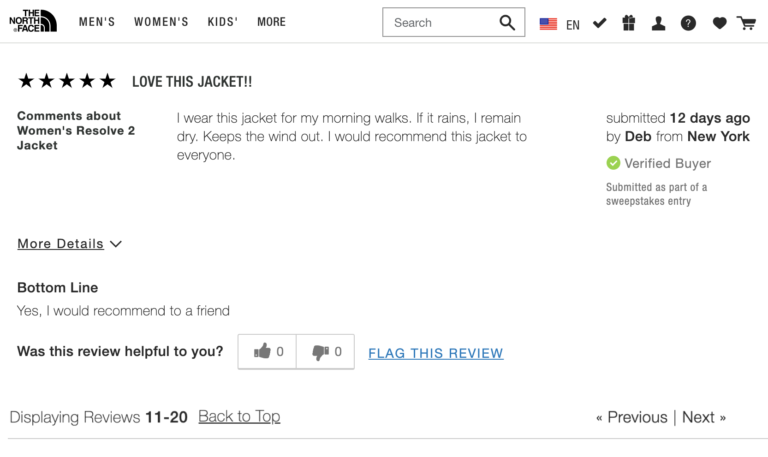
Here’s a snapshot of how these footer actions impact conversion – both in 2020 and in 2021. Notably, “back to top” is the footer action that’s garnered the largest year-over-year lift in conversion. 

How Footer Actions Impact Conversion
2020
Previous
288.2%
Next
182.4%
Back to Top
129.4%
2021
Previous
242.9%
Next
117.9%
Back to Top
178.6%

Review Snippet

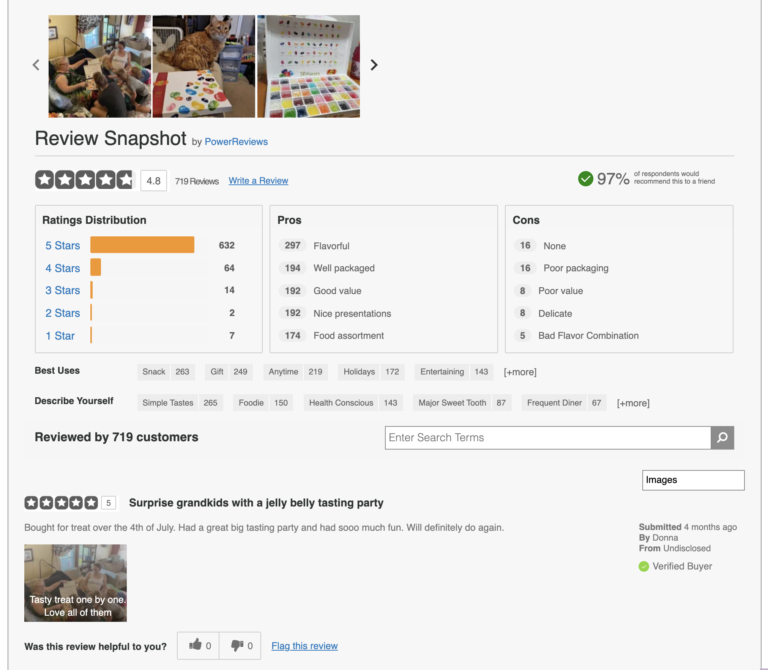
It’s considered a best practice to display a review overview (also known as a snippet) at the top of product pages. The snippet provides a high level overview of the review content for a product and typically includes information such as the average star rating and the number of reviews available for the product.
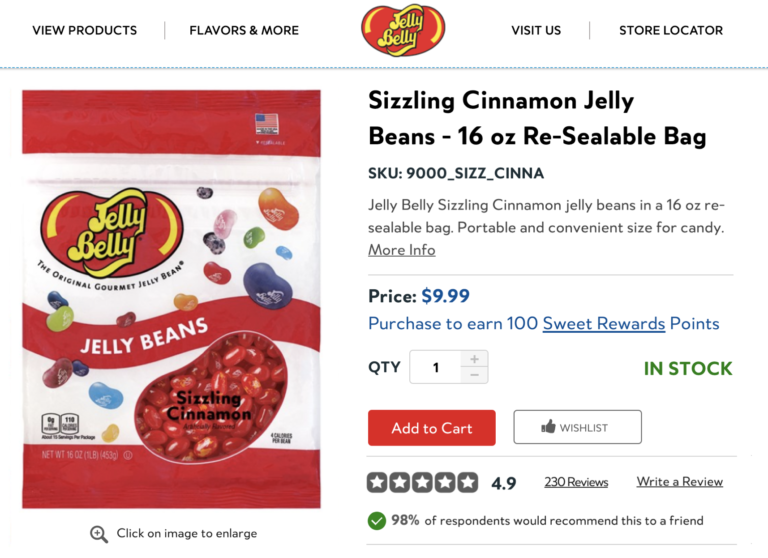
If a visitor clicks on the snippet, they’re taken to the full review display, where they can read individual reviews, as well as sort and filter content to find what’s most relevant to them. There’s a 164.3% conversion lift among consumers who click the review snippet, up from a 129.4% lift in 2020. 

Review Faceoff

Some brands and retailers display a product’s most liked positive review alongside its most liked negative review one. This is referred to as a review faceoff, and it’s a great way for shoppers to quickly determine the best case and worst case scenarios of a given product.
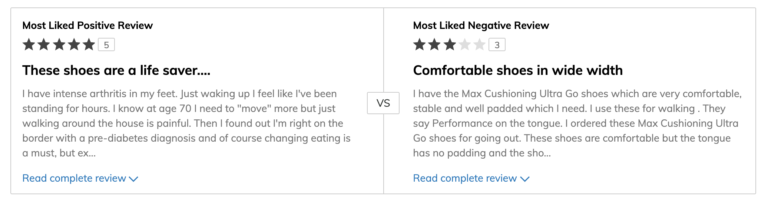
There’s a 128.6% lift in conversion when shoppers click to read the entire positive review that’s featured in the snapshot. 

What’s perhaps more interesting is that there’s a 114.3% lift among shoppers who click to read the entire negative review. This is proof that negative reviews don’t necessarily deter shoppers. Instead, this content allows consumers to understand the worst case scenario of a given product. If it’s something they can live with (or that simply isn’t relevant to them), they’re still likely to move forward with the purchase. 

Review Sorting

The best review displays allow visitors to easily sort reviews to surface what matters most to them. For example, a visitor might sort content based on recency, helpfulness, or the availability of visual content.
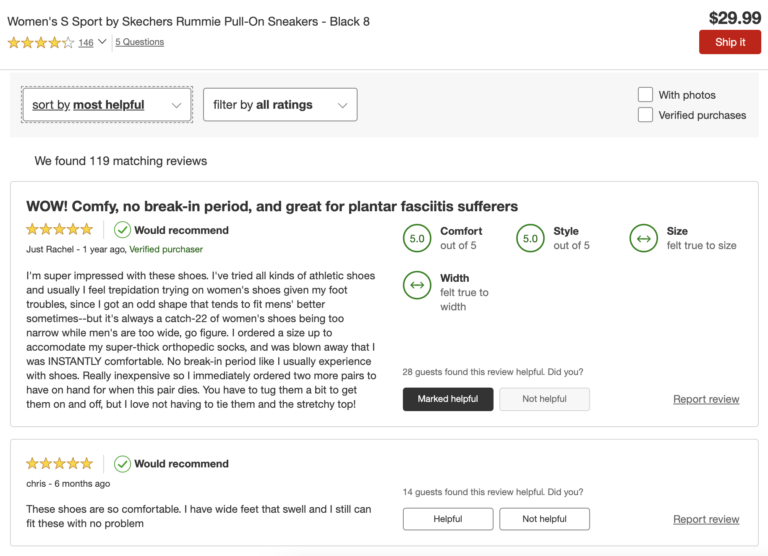
There is a 114.3% lift in conversion among shoppers who click to sort reviews. This is up slightly from 2020, when there was a 109.7% conversion lift for this type of interaction. 

Here’s a closer look at how different types of sorting behavior impact conversion – both in 2020 and 2021.

Conversion Lift by Type of Review Sorting Behavior
2020
Review Sort Most Recent
73.5%
Review Sort Highest
158.8%
Review Sort Most Helpful
200%
Review Sort Oldest
108.8%
Review Sort Lowest
102.9%
Review Sort Images
170.6%
2021
Review Sort Most Recent
196.4%
Review Sort Highest
142.9%
Review Sort Most Helpful
121.4%
Review Sort Oldest
110.7%
Review Sort Lowest
103.6%
Review Sort Images
89.3%

Star Filters

Many brands and retailers include a feature in their review display that allows shoppers to see how many reviews were written for each star rating. Shoppers can then click on a specific star rating – and just the content submitted with that particular rating will be displayed.
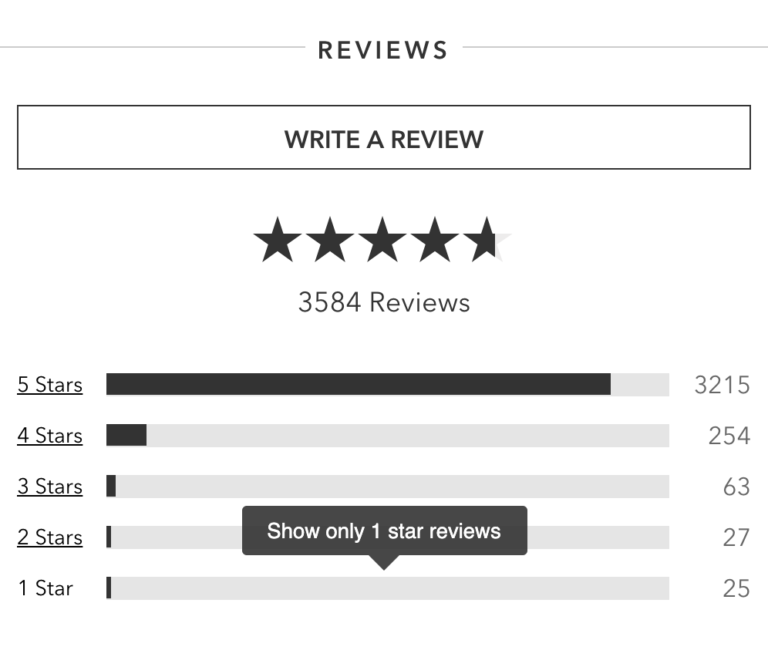
There’s a 89.3% lift among shoppers who click to filter by star rating. 

Let’s zoom in further to see how many visitors filter reviews by each star rating – and how it impacts conversion.

Conversion Lift by Type of Review Sorting Behavior
5 Stars
Star Interactors Engage
29.3%
Conversion Lift
139.3%
4 Stars
Star Interactors Engage
20.3%
Conversion Lift
146.4%
3 Stars
Star Interactors Engage
22.4%
Conversion Lift
121.4%
2 Stars
Star Interactors Engage
22.4%
Conversion Lift
107.1%
1 Star
Star Interactors Engage
61.6%
Conversion Lift
85.7%
Note: Star interactors typically filter by more than one rating.

The most common way to filter by star rating is to see only one-star content. This isn’t surprising, as previous research found that 96% of consumers specifically seek out negative reviews – with over half (52%) explicitly looking for one-star content.

What is surprising is that those who filter to see one-star content still convert at a rate that’s much higher than average. In fact, there’s a 85.7% lift in conversion among those who filter to see one-star reviews. Again, this is proof that the presence of negative reviews isn’t enough to deter many consumers. Rather, negative reviews are a tool that consumers depend on to make more informed purchase decisions.

Filter Tags

Some brands and retailers ask those writing reviews to select “tags” related to the product. These might include pros, cons and best uses of a product – among others. 
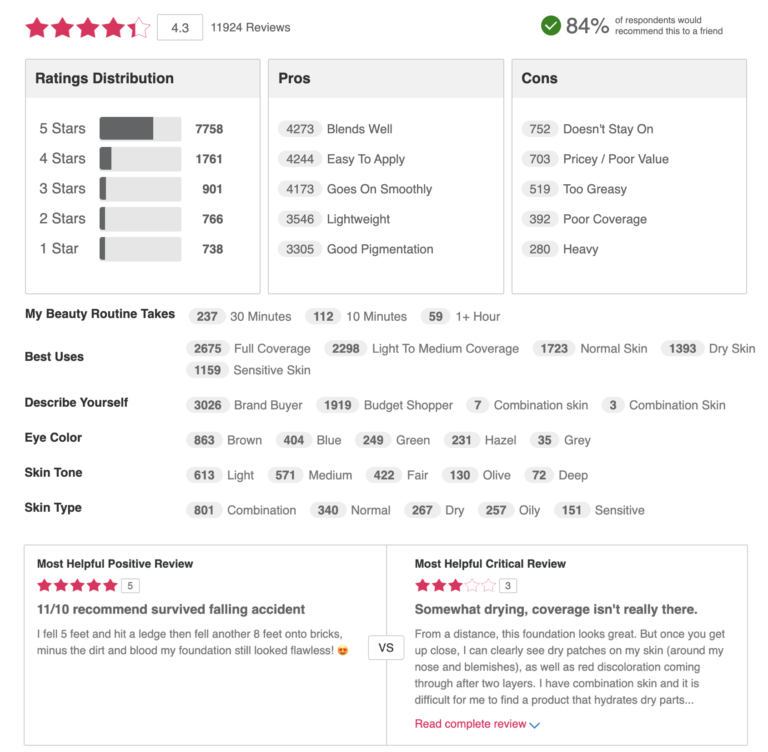
These brands and retailers then allow future shoppers to filter reviews by these specific “tags.” 
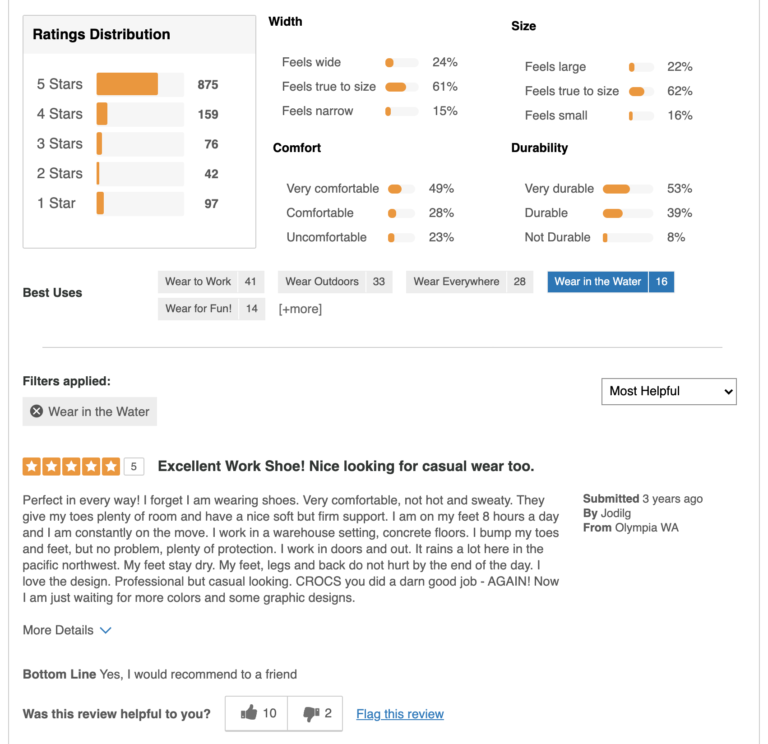
Visitors who filter reviews by tags convert at a rate that’s 78.6% higher than average. This is up significantly from 2020, when there was a 35.3% conversion lift among visitors who filtered reviews by tags. 

More Details

When a visitor is reading a review, sometimes they have the opportunity to expand it to get additional details about the shopper that wrote the review and their experience with the product.
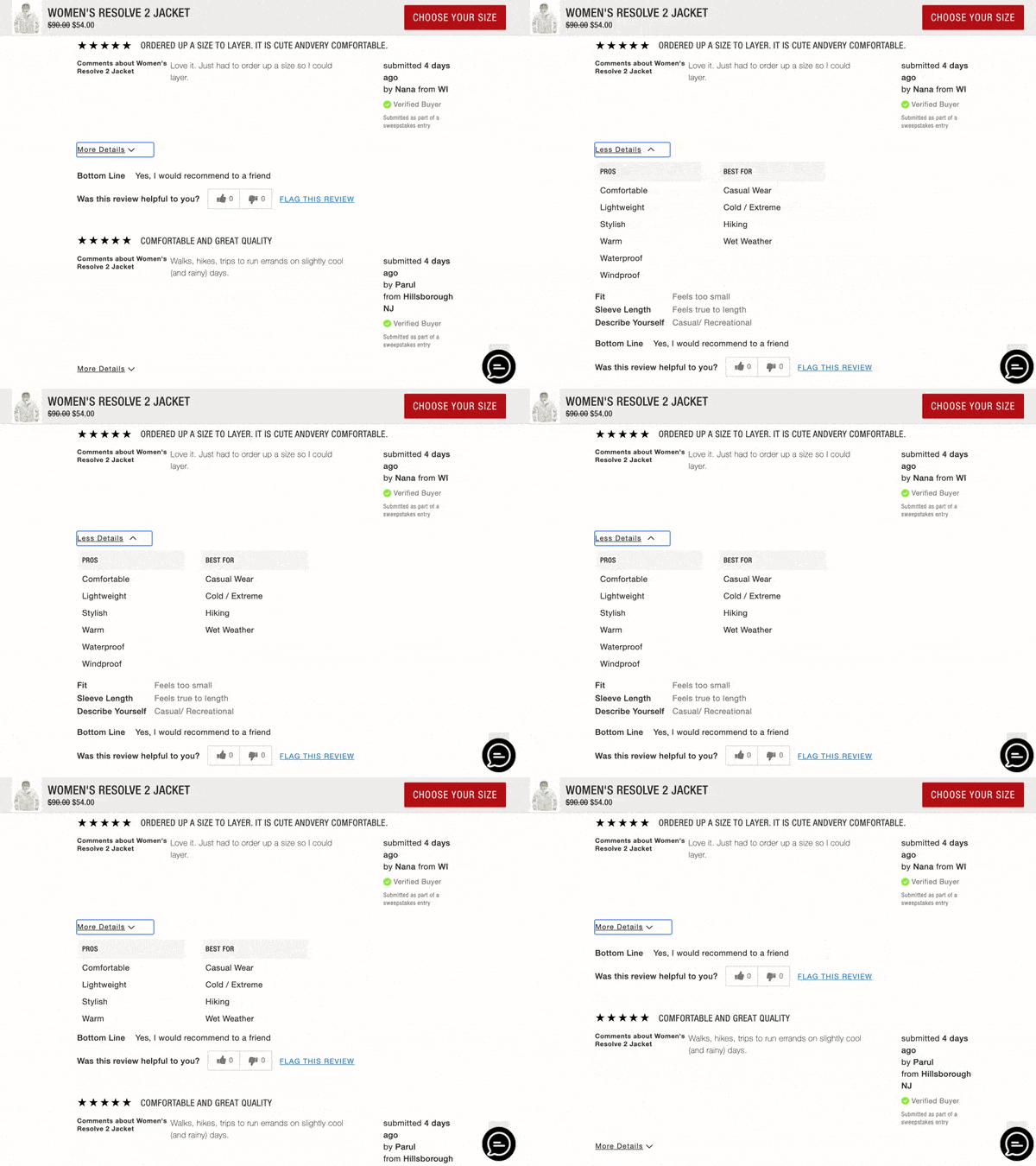
There’s a 50% lift in conversion among shoppers who click to expand a given review to read more details. 

Chapter 5

The Growing Impact of Q&A Interactions on Conversion

When a consumer is shopping in a store, they can reach out to a sales associate to ask questions and get product recommendations. That’s not possible for online shoppers. 

Instead, many of these consumers scroll the product page to find the questions and answers (Q&A) portion of the page. There, they can see if other shoppers have already submitted similar questions – and gotten answers. If not, they can submit their own. 

Q&A Continues to be the Most Impactful Kind of User-Generated Content – And its Impact is Growing

When we analyzed 2020 data, we found that of the types of UGC, Q&A had the largest impact on conversion. 

This continues to be the case. In fact, the impact of Q&A on conversion continues to grow. In 2021, there was a 194.2% lift in conversion among those who interacted with Q&A content, up significantly from a 157.1% conversion lift in 2020.

Impact of Q&A on Conversion
Lift in conversion when visitors interact with Q&A
2020
157.1%
2021
194.2%

Many Types of Q&A Interactions Positively Impact Conversion

A typical Q&A display includes various features and functionality. Let’s examine how interacting with key features impacts purchase behavior. 

How Key Q&A Features Impact Shopper Behavior
Conversion lift among visitors who engaged with each Q&A feature
2020
Show More Answers
164.7%
Click Read Answers
158.8%
Answer Helpful
141.2%
Answer Question
111.8%
Ask Question Snippet
137.1%
Ask Question Header
79.4%
2021
Show More Answers
217.9%
Click Read Answers
192.9%
Answer Helpful
192.9%
Answer Question
150%
Ask Question Snippet
139.3%
Ask Question Header
100%

Show More Answers

On a typical product page, a set number of questions and answers appear. If there is more Q&A than what is initially displayed, the shopper can click on text that reads “Show more Q&A” to access it. 

If a shopper seeks out additional Q&A beyond the content that’s initially displayed, it’s clear they’re interested in learning a lot about a given product. They’re also more likely to convert. In fact, there’s a 217.9% lift in conversion among shoppers who click “Show more Q&A.” This is up significantly year-over-year. In 2020, there was a 164.7% conversion lift when shoppers clicked to show more Q&A.
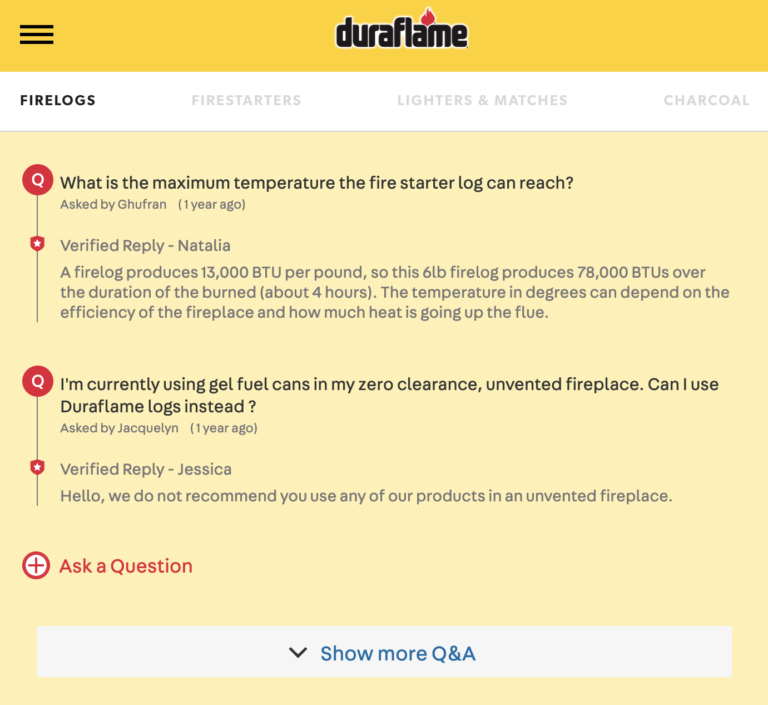
Click Read Answers

By default, a single answer is usually displayed for a given question submitted via Q&A. However, there are instances when there might be multiple responses to a single question. For example, a question might have an official response from the brand, as well as from someone who purchased the product. The visitor can click “show more answers” to see any additional responses. 
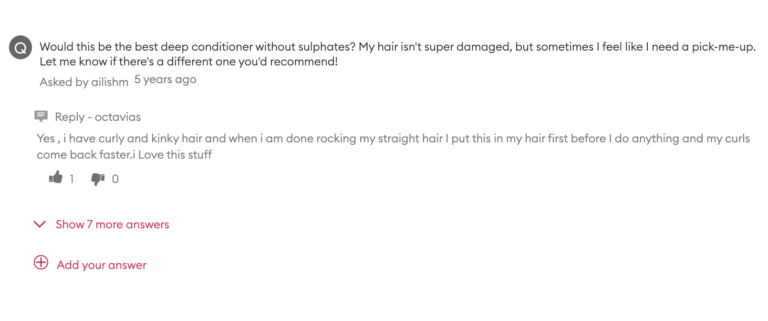
There’s a conversion lift of 192.9% among visitors who click to show more answers. In 2020, the lift for this action was 158.8%

Answer Helpful

If a shopper finds a response to a previous customer’s question to be particularly helpful, they might opt to tap or click the thumbs up icon.
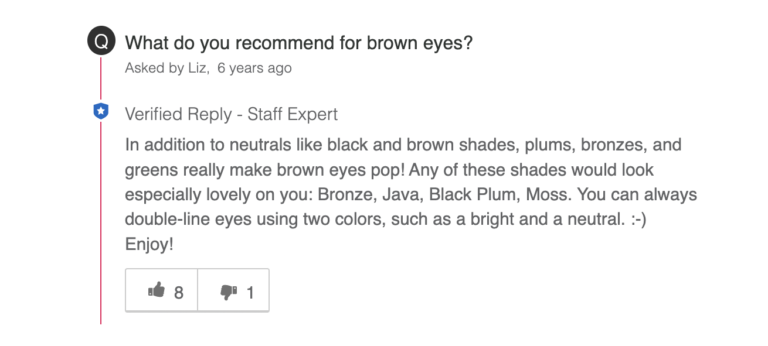
Those who click the helpful icon convert at a rate that’s 192.9% higher than average. This is up significantly from 2020, when there was a 141.2% lift in conversion among visitors who took this action.

Answer Question

Our previous research found that 94% of shoppers value answers to Q&A that are posted by verified buyers who have already purchased the product in question. So it’s not surprising that a growing number of brands and retailers allow different experts to post answers to Q&A – including existing customers. 

A site visitor can post an answer to an existing question by clicking on the text that says “add your answer.” 
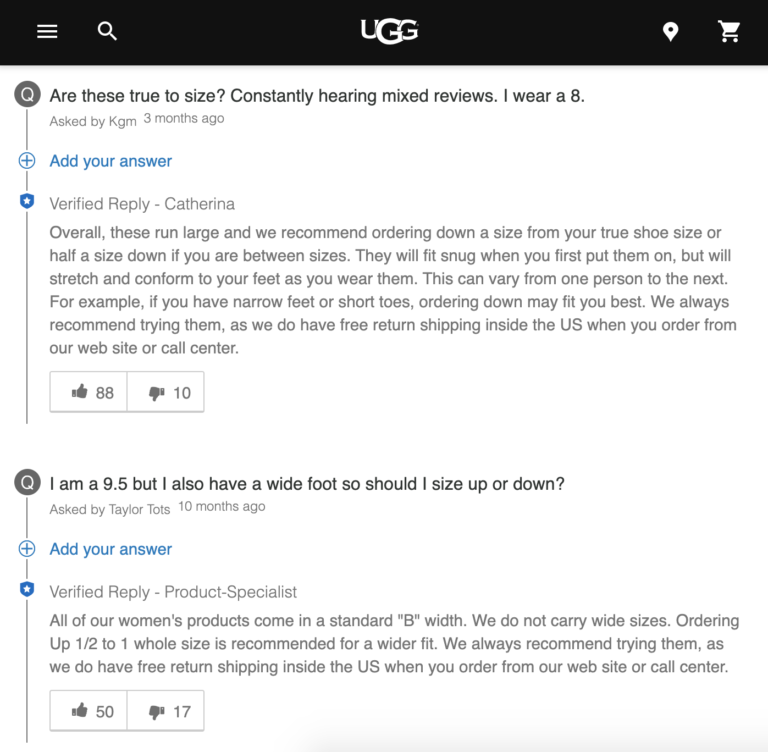
There’s a 150% lift in conversion among visitors who take this action. This is up significantly from 2020, when there was a 111.8% lift in conversion among visitors who clicked “add your answer.” 

Ask Question Snippet

On some brand and retailer sites, shoppers see an overview – or “snippet” – at the top of product pages. This snippet provides shoppers with a high-level overview of the UGC available for that particular item, and it may include a link a visitor can click to submit their own question.
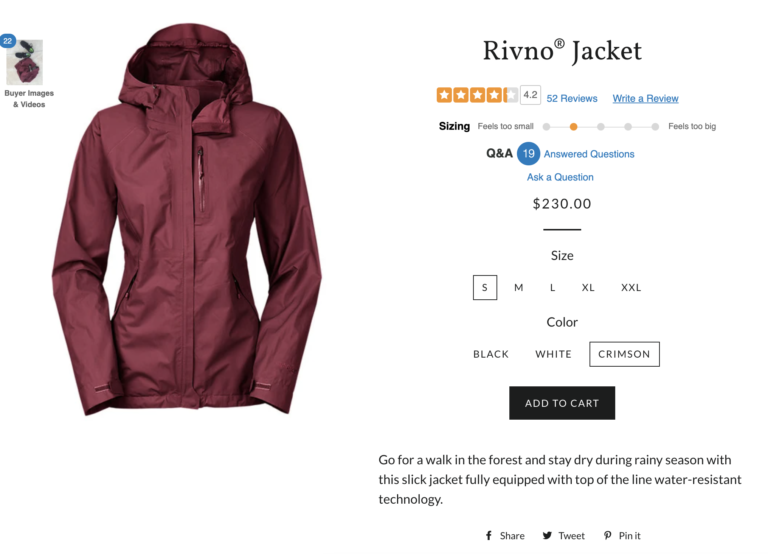
Visitors who click on “Ask a Question” in the UGC snippet convert at a rate that’s 139.3% higher than average. This is up slightly from a 137.1% lift in conversion among visitors who took this action in 2020. 

Ask Question Header

Visitors can also submit questions by clicking or tapping the “Add a Question” button that’s part of the Q&A header. 
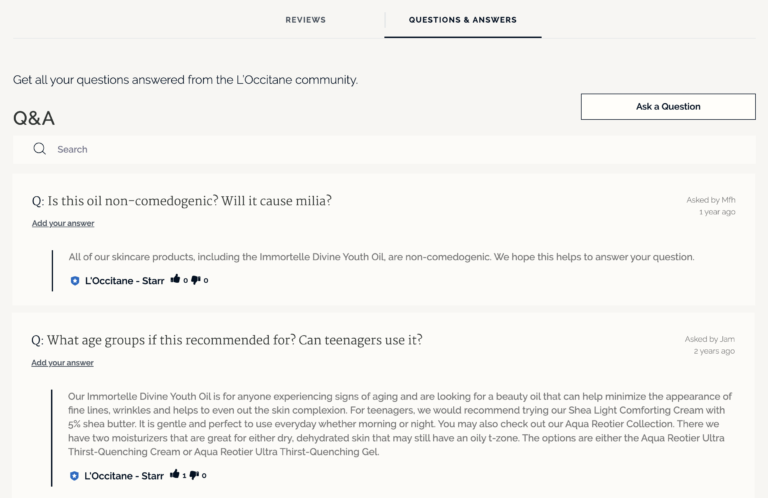
In 2021, there was a 100% increase in conversion among visitors who clicked “Add a Question” from the Q&A header, compared to a 79.4% lift among those who took the same action in 2020.

Chapter 6

How User-Generated Imagery Impacts Purchase Behavior

Shoppers Who Interact With User-Generated Visual Content are (a Lot) More Likely to Convert

During 2021, the overall conversion rate across the brand and retailer sites we analyzed was 2.8%. However, that rate is significantly higher among visitors who interact with user-generated photos and videos on a product page: 5.9%. That’s a huge 106.3% lift in conversion.

How Interactions with User-Generated Visual Content Impact Conversion
Lift in conversion when visitors interact with user-generated imagery
2020
91.4%
2021
106.3%

User-generated visual content continues to have an increasingly large impact on conversion. For the sake of comparison, there was a 91.4% lift in conversion among visitors who interacted with this content in 2020.

How Various Interactions with User-Generated Visual Content Boost Conversion

There’s no denying that those who interact with photos and videos submitted by other consumers are a lot more likely to make a purchase Now, let’s explore how different types of visual content interactions impact conversion.

2020
Image Gallery
94.1%
Image Gallery Next
91.2%
Image Gallery Previous
79.4%
2021
Image Gallery
110.7%
Image Gallery Next
103.6%
Image Gallery Previous
96.4%

Image Gallery

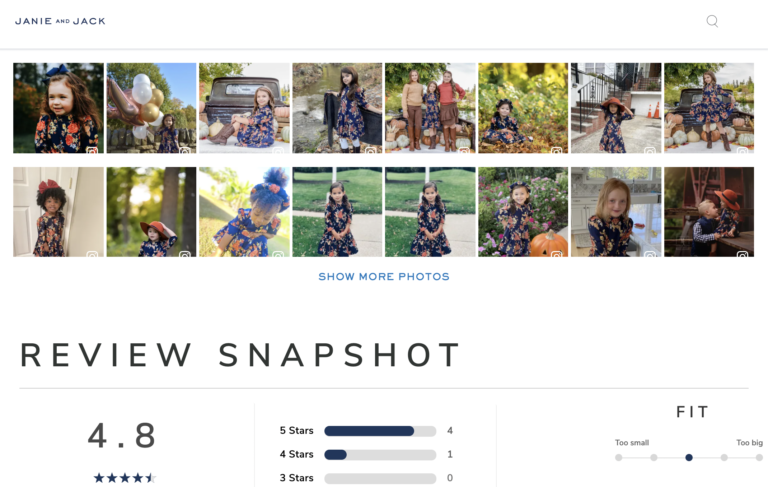
Once you’ve started to collect photos and videos from your shoppers, it’s a best practice to showcase it in a visual content gallery on the appropriate product page. Our analysis found there’s a 110.7% conversion lift among shoppers who click on any image within such a gallery – up from a 94.1% lift in 2020. 

Image Gallery Navigation

Once a visitor has clicked on an image or video in an imagery gallery to enlarge it, they typically have the option to navigate to other imagery by clicking on the forward and back arrows.

There’s a 103.6% lift in conversion among visitors who click to see the next image. The conversion lift is 96.4% among those who click the arrow to view the previous image.

Notably, both forward and back navigation in the image gallery had a larger impact on conversion in 2021 than they did in 2020. 

Chapter 7

5 Key Takeaways

The impact of UGC can no longer be denied. Modern consumers expect it, regardless of what they’re shopping for. And those who interact with it are more likely to make a purchase. 

Here are our 5 key takeaways from our latest analysis.

One
The Very Presence of UGC Impacts Conversion

If a shopper scrolls a product page long enough to be served up some form of UGC, there’s a 8.5% lift in conversion. The impact is significantly higher – 100.6% – among visitors who interact with user-generated content.

UGC is no longer optional. It’s essential for any brand or retailer looking to grow sales in an increasingly competitive market. If you’re not already collecting and displaying this content, you’re leaving money on the table. 

Two
Reviews Fuel Confident Purchase Decisions

There’s risk involved with purchasing a product online, sight unseen. However, reviews can help shoppers overcome this risk – and increase the likelihood they’ll make a purchase. In fact, there’s a 108.3% lift in conversion among shoppers who interact with reviews on product pages. 

Start collecting reviews. And prominently showcase this content so it’s easy to find and consume, whether a shopper is using a computer or their mobile device. In addition, consider adding features and functionality to your review display that make it easy for your shoppers to sift through content to find the reviews that are most relevant to them. 

Three
Q&A is (Still) the Most Impactful Type of UGC on Conversion

Online shoppers don’t have the opportunity to ask questions and get recommendations from an in-store associate. Instead, many turn to the Q&A portion of a product page to read questions that have already been submitted – and pose their own. 

There’s a 194.2% lift in conversion when shoppers interact with Q&A content, making it the type of UGC that has the largest conversion impact. 

It’s essential to provide online shoppers with a means to get answers to outstanding questions. Add a Q&A section to your product pages, and be sure to equip it with plenty of features that make it easy for shoppers to sift through existing questions – and ask their own. 

Four
User-Generated Visual Content is No Longer Optional

A growing number of consumers specifically seek out visual content from other shoppers before making a purchase. And this content has a large (and growing) impact on conversion. There’s a 106.3% lift in conversion among visitors who interact with imagery submitted by shoppers – which is up from a 91.4% lift the year prior. 

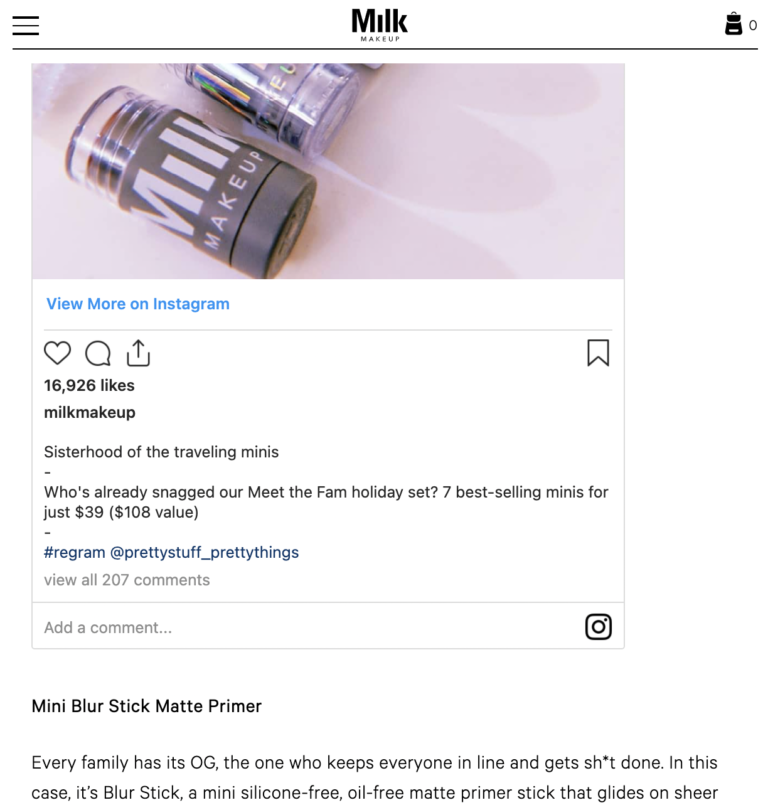
If you’re not already, start collecting photos and videos from your shoppers, both natively and via Instagram. Then, showcase it in a visual content gallery on your product pages that’s easy to find and navigate.

Five
Ongoing Measurement and Optimization is Key to Maximizing the Potential of Ratings & Review Programs

Throughout this report, we’ve explored the features of UGC that have the largest impact on conversion overall. However, it’s important to remember there’s no “one size fits all” UGC display that’ll work for all businesses. Rather, a feature that’s a powerful conversion-driver for one brand may have very little impact for another.

As such, it’s essential to continuously measure the performance of your UGC program. Your UGC partner should make it easy to determine which UGC features are driving conversion – and which aren’t. You can use those insights to make impactful changes to your display that’ll help you drive an even larger lift in conversion – and help you grow your sales and market share.
In a rather uncertain world, there are some things we can be sure of. Caffeine is life. Change is inevitable. And reviews are a really big deal. 

Reviews, which were once a “nice to have” are now a must-have, regardless of whether a consumer is looking for a new couch for their living room, a new beach read for an upcoming vacation, or even a new sitter to watch their kids while they enjoy a night out.

But – digging deeper – what exactly are they looking for when they browse reviews on a product page?

A key insight from our recent research is that consumers consider a bunch of different factors when reading reviews – and deciding whether to purchase the product in question. But there are two factors that rise to the top: review volume and review recency.

Review Volume and Recency Defined – and Why These Factors Matter

Before we dive into a discussion about when review volume and recency are particularly important, let’s get aligned on what these terms mean – and why they’re important.

What is Review Volume?

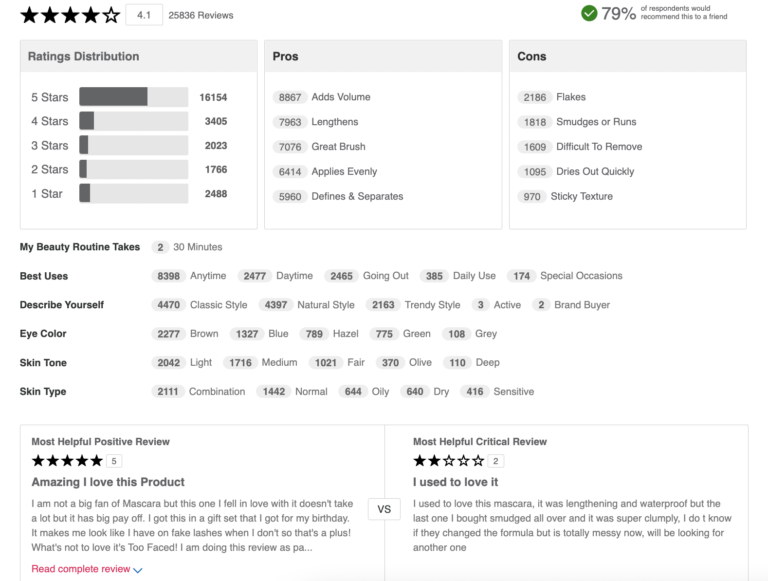
As you might have guessed, review volume is a term used to describe the number of reviews available for a given product. Let’s say a consumer is shopping for mascara. They come across one product with three reviews, and another with over 25,000 reviews.

Do they notice the difference in quantity? And do they care? 

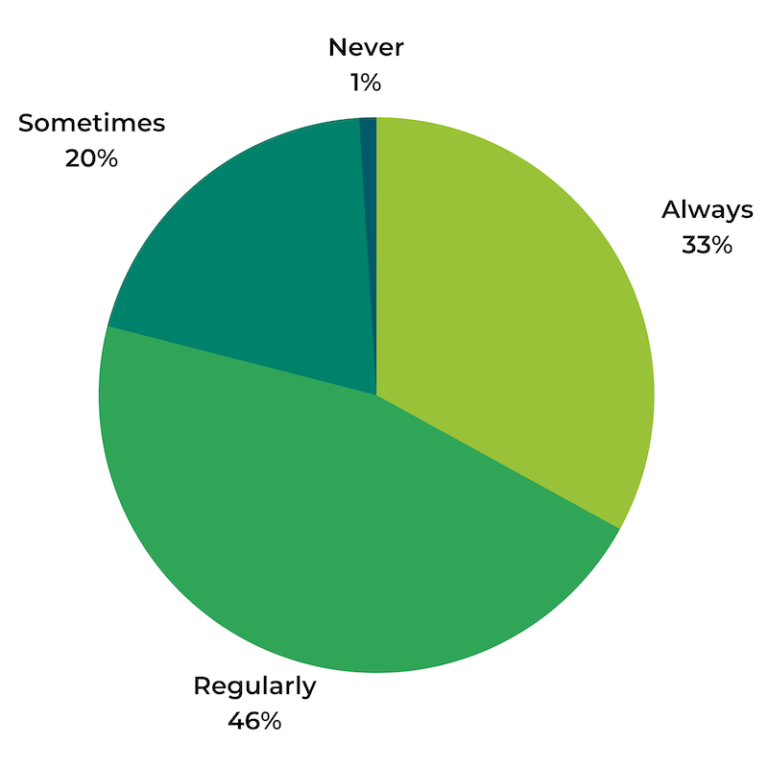
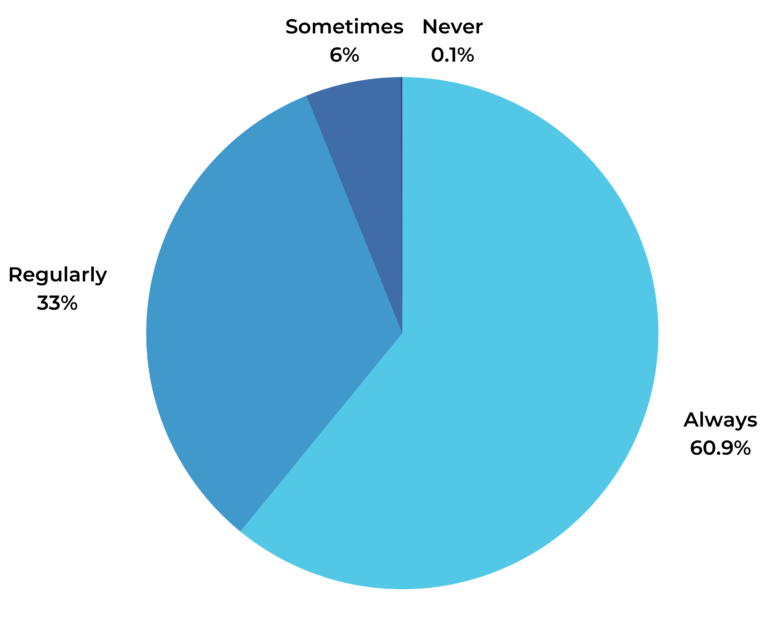
Absolutely! Our recent research found that a whopping 79% of consumers consider volume regularly or always when reading reviews. 

Importance of Review Volumes
When reading product reviews, how often do you consider how many reviews the product has?

Our own analysis of consumer activity across more than 1.5MM online product pages from more than 1,200 brand and retail sites further proves that more reviews = more sales.

Conversion Lift Relative to Number of Reviews Displayed
0 Reviews Displayed
0%
1-100 Reviews Displayed
76.7%
101-250 Reviews Displayed
143.2%
251-500 Reviews Displayed
166.4%
501-1000 Reviews Displayed
172.1%
1001-5000 Reviews Displayed
224.7%
5000+ Reviews Displayed
292.6%

If you’re interested in digging deeper into the importance of review volume (and are curious how many reviews you need for your products), check out this recent post

What is Review Recency?

Review recency is (yup, you guessed it) how recently a review was written. 

Do consumers notice that one of these reviews was written 3 years ago, while the other is from last week?

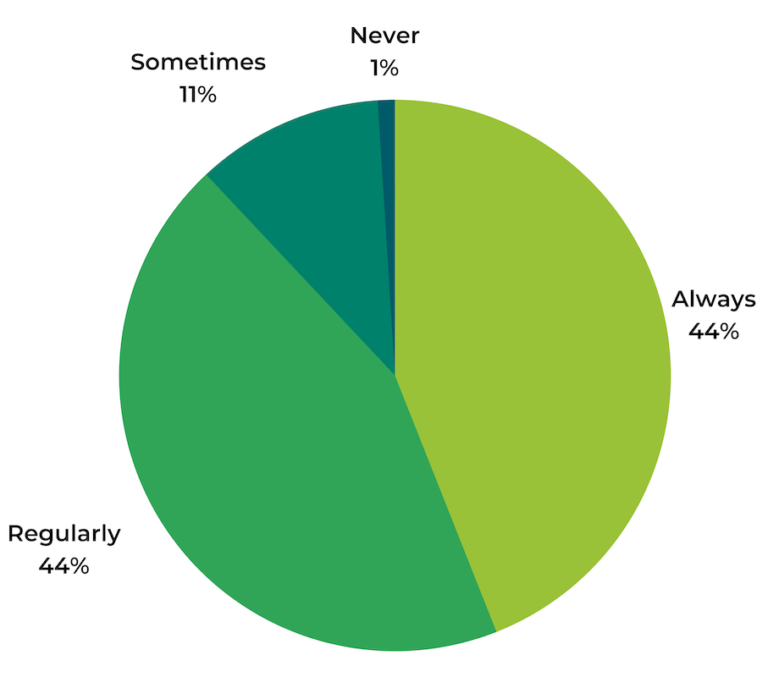
Yes! Per our research, 88% of consumers consider when a given review was written. 

Consumers Frequently Consider Review Recency
When reading product reviews, how often do you consider when the review was written?

In fact, recency actually outweighs volume for many shoppers. 64% indicate they’re more likely to buy a product with fewer, more recent reviews than one with a high volume of reviews that were published 3+ months ago. 

Now that we’ve defined volume and recency – and why brands and retailers should care – let’s explore  when these factors are most important.

When Review Volume Matters Most

We’ve established that consumers pay attention to the volume of reviews for a given product. And, there are three circumstances when review volume is especially important to shoppers. 

1. When They’re Purchasing New or Unknown Products or Brands

There are certain products you probably buy time and again, without giving it much thought. Maybe it’s dog food or skincare products or items on your grocery list. You’re not taking chances when you buy these products; you’ve used them in the past and know exactly what to expect.

But then there are those times when you feel like branching out and trying a new (or new to you) brand or product. There is risk involved here, because you don’t have any experience with the product. You could get it and end up hating it. 

What helps shoppers overcome the risk of purchasing an unknown product? Reading a bunch of reviews. 71% indicate review volume is more important when considering a new product or brand. This number is especially high – 84% – for Gen Z’ers. 

So make it a priority to boost your volume of reviews – especially if you’re releasing new products or are a relatively new brand to the market.

2. When They’re Purchasing Products in Certain Categories

Let’s be clear: review volume matters for all product types. But, there’s also no denying that volume is especially important when consumers are shopping for products within certain categories. Four categories, in particular, rise to the top. 

Consumer electronics and appliances

80% of consumers consider review volume when purchasing these types of products. And this totally makes sense. Products in these categories are typically higher priced, which (as we’ll explore more in a bit) presents risk. Reading a high volume of reviews can help shoppers overcome that risk. In fact, there’s a 174.3% lift in conversion among those exposed to 5,000+ reviews for electronics and appliances, when compared to those exposed to no reviews.

Health and beauty

There are products that work largely the same – regardless of who purchases them – for example, a vacuum cleaner. Then, there are products like health and beauty items that are highly personal; they work differently for different kinds of people. For example, a concealer might work well for someone with combination skin – but not so great for someone with dry skin. 

Review volume is super important for those shopping for health and beauty products; 71% of consumers consider volume when purchasing products in this category. And the more reviews, the better. There’s a 367.3% lift in conversion among health and beauty shoppers exposed to 5,000+ reviews, when compared to those exposed to no reviews. 

Why? Most likely, because shoppers exposed to a ton of reviews are better able to find content that’s most relevant to their needs and use cases. And this gives them the confidence to purchase.

Clothes, shoes, and accessories

This is another example of a product category that’s highly personal. For example, a dress is going to fit and look different depending on a person’s height and body type. 

63% of shoppers consider review volume for products in this category. Again, this is likely because those shopping for these products want to find a high volume of reviews so they can then narrow down to find content submitted by others like them. And displaying a high volume of content for products in this category pays off. Our analysis found that there’s 179.7% lift in conversion among clothing, shoe, and accessory shoppers exposed to 5,000 or more reviews.

Home improvement, decor, and furniture

Consumers’ homes reflect their unique personalities. And many spend time researching decor, furniture, and other items that’ll work best for their spaces. They depend on reviews to find the right items, and they pay attention to the quantity of reviews. 57% of consumers consider review volume when shopping for products in this category. 

Similar to other categories, a high volume of reviews helps those shopping for home improvement, decor, and furniture to sort, filter, and search to hone in on content that was submitted by those with similar spaces, tastes, and needs. And the sweet spot seems to lie between 501 and 1,000 reviews. Those exposed to between 501 and 1,000 reviews convert at a rate that’s 154.9% higher than those exposed to no reviews. 

Sure, review volume is particularly important for the four categories we explored above. But, it’s important to remember that a good portion of shoppers pay attention to review quantity for many categories, as outlined below.

Importance of Review Volumes by Product Category
For which of the following product CATEGORIES do you consider review volume?
Consumer Electronics and Appliances
80%
Health and Beauty
71%
Clothes, Shoes, and Accessories
63%
Home Improvement, Decor, and Furniture
57%
Pet Products
43%
Toys
41%
Perishable Products/Groceries
37%
Dry Goods/Consumer Packaged Goods
35%
Baby Products
34%

Prioritize collecting a high volume of reviews for the categories for which it matters most. But, the ultimate goal should be to have lots of reviews across all product categories. 

3. When They’re Purchasing Certain Types of Products

The value shoppers place on review recency also varies by product type. And there are two types of products for which volume is especially important.

High price point or luxury products

73% of shoppers say that volume is important when they’re considering an expensive or luxury product. And for good reason! If you’re about to sink a lot of money into a purchase, you probably want to know it’ll be a good fit for your needs. Reading a lot of reviews can boost a shopper’s confidence in their purchase decision.

New arrivals

As we mentioned before, there’s risk involved with purchasing a new product. Reading a lot of reviews can help shoppers overcome that risk. So it’s probably not surprising that 67% of consumers say they consider review volume when purchasing new arrivals. Prior to launching a new product, consider doing a product sampling campaign. That way, when you officially launch the product, there will already be plenty of reviews in place. 

Other product types

Sure, review volume is especially important for high price-point and new products. But as you can see in the chart below, a good portion of shoppers also consider volume for items with a high purchase frequency, items that have been around for a long time, and non-season specific items. So while it certainly makes sense to make it a priority to collect a high volume of reviews for expensive items and new arrivals, the end goal should be to have a lot of reviews across all product types. 

Importance of Review Volume by Product Type
For which of the following product TYPES do you consider review volumes?
High price-point or luxury
73%
New arrivals
67%
Items with a high purchase frequency
47%
Items that have been around for a long time
40%
Non-season specific items (that may have a longer shelf life)
39%

When Review Recency Matters Most

We know shoppers pay particularly close attention to review volume when they’re buying new (to them) products, as well as when they’re shopping for specific categories and types of products. But when does recency matter most?

By and large, recency matters in the same circumstances in which volume matters – but it matters even more. Let’s explore two of those instances. 
1. When They’re Considering a New (to them) Product

Review volume is particularly important when consumers are considering a new (or new to them) product or brand. As it turns out, this is also a circumstance when review recency is especially important. 86% of shoppers say that review recency is more important when considering a product or brand they haven’t purchased before. 
I can’t stress this enough: it is so important to generate a steady volume of fresh reviews – especially if you’re a newer brand or are releasing new products. That way, consumers (especially those who haven’t shopped with you before) can always find lots of fresh content to boost their confidence.
2. When They’re Purchasing Certain Categories of Products

Remember how we said review volume is particularly important when shoppers are purchasing products within certain categories? Namely, consumer electronics and appliances, health and beauty, apparel and shoes, home improvement and decor? 

Well, recency is of the utmost importance for these exact same categories. 

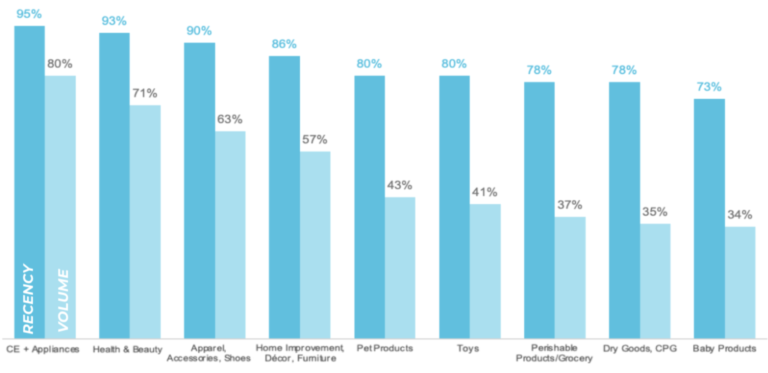
Take a look at the chart below and you’ll see that the categories for which recency matters most are ranked in the exact same order as the categories for which volume matters most. However, you’ll probably also notice that in every category, recency actually matters more than volume. And in some cases, it matters A LOT more. Take, for example, grocery products. While 37% of shoppers say volume matters in this category, over twice that amount – 78% indicate recency is important.

Importance of Recency vs Volume by Category

So while recency is especially important for consumer electronics and appliances, health and beauty, apparel, accessories and shoes, and home improvement decor, and furniture, the reality is, it’s super important across every single category in the list. 

If you sell any of these product types, you’ve got to make it a priority to generate a steady stream of reviews so shoppers can always find recent content. Otherwise, you risk losing them to a brand with fresher content.

It’s Time to Prioritize Review Volume and Recency

Consumers consider many factors when reading reviews. But volume and recency rise to the top. 

Review volume and recency are particularly important in certain circumstances, including when shoppers are considering new (to them) products and purchasing items in certain categories. So be sure to prioritize these types of products.

But make no mistake: review volume and recency are key factors across all product categories. So the end goal should be a high volume of recent reviews across your entire product catalog. The good news is, by generating a steady stream of reviews, you can achieve both your volume and recency goals. By doing so, you’ll better meet shopper expectations – and grow your sales.

Check out our Complete Guide to Ratings and Reviews

for practical tips to collect more and better reviews.

Alyson Fischer

Alyson Fischer is our Product Marketing Manager, obsessed with using data-driven storytelling to deliver a best-in-class customer experience and inspire dynamic engagement across channels. When she’s not agonizing over writing this bio, you can find her exploring Chicago with her furry sidekick or watching a true crime documentary on Netflix.

Let’s just cut to the chase: reviews are important.

But how important? 

Super important. Our recent survey of more than 6,500 online shoppers found that 99.9% read reviews at least sometimes; 57% do so when shopping in brick-and-mortar stores.

How Often Online Shoppers Read Reviews

In fact, reviews have grown to be the most important factor impacting purchase decisions, surpassing other important factors including price and free shipping. 

How many reviews is enough?

The power of reviews (see what we just did there?) is abundantly clear. By now, the majority of brands and retailers recognize the value of this content – and have started to collect and display reviews. Those that do are rewarded with more traffic, more conversion and sales, and a load of insights to improve products and customer experiences. 

But one of the most common questions we get is, “How many reviews do I need?”

The easy answer is, as many as possible. Think of reviews like cookies or cat videos. You can never have too many!

(above) Me searching for highly-rated cat videos.

But let’s be real: a vague answer like “as many as possible” isn’t exactly helpful when you’re determining your review generation goals. Sure, one is better than none. But what number will ensure you achieve maximum ROI from your efforts? 

Spoiler alert: there’s no one “magic” number of reviews to shoot for. That’s because the ideal number of reviews depends on a variety of factors, including product category and type, among others. 

Read on as we take a deep dive into how many reviews you need – as well as some tips for generating more of this conversion-boosting content. 

No Reviews = No Good

Let’s start by considering the worst case scenario. A shopper is considering a product, and it has no (zero, zilch, zip) reviews. What happens next? 

The answer here is obvious: the shopper is less likely to buy it. And our most recent research backs this claim. A staggering 80% of consumers indicate they’re less likely to buy a given product if it has no reviews. This number is even higher among Millennial and Gen Z shoppers.

Impact of No Reviews on Purchase Likelihood
If there are no ratings and reviews for a product, would you be less likely to buy it?
Overall
80%
Boomers
70%
Gen X
78%
Millennials
86%
Gen Z
90%

In case you need further proof that a lack of reviews deters shoppers (and sinks conversion rates), a previous survey found that 44% flat out won’t buy a product without reviews. Again, this number is even higher among younger shoppers. 49% of Gen Z’ers and 48% of Millennials will abandon a purchase if there are no reviews. 

If you’re not generating any reviews, you’re most assuredly losing prospective customers – and leaving a ton of money on the table. So what are you waiting for?

Having Some Reviews is Better Than Having None at All

Consumers depend on reviews, and a lack of them can hurt conversion rates. But if you’re just getting started with reviews, it can seem overwhelming to generate a high volume across your entire catalog.

Well, take comfort in the fact that generating even a few reviews is going to have a positive impact on conversion. Recently, we analyzed activity across 1.5MM+ ecommerce product pages on 1,200 brand and retailer sites and found there’s a 76.7% lift in conversion when visitors are exposed to at least one review, compared to those exposed to none.

Conversion Lift Relative to Number of Reviews Displayed
If there are no ratings and reviews for a product, would you be less likely to buy it?
0 Reviews
0%
1-100 Reviews
76.7%

Why the conversion lift? Because reading even a single review helps boost shopper confidence. And confident shoppers are more likely to convert. 

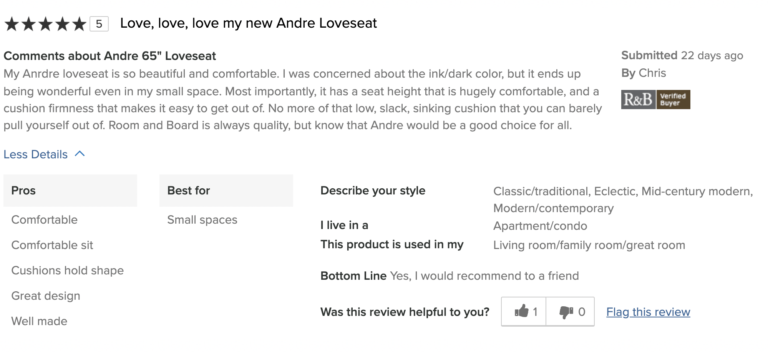
Consider a consumer shopping online for a new sofa. They don’t have the luxury of trying out their options prior to making a purchase. Of course, they read product descriptions and check out brand-supplied imagery to narrow down their options.

But the purpose of this content is to portray the product in the best light, and the consumer is concerned the product won’t live up to the hype. So they’re hesitant to buy it. As a next step, they seek out feedback from others like them by reading reviews.

Once they read reviews, they’re able to determine that other consumers find this option to be good quality and comfortable. So they confidently make the purchase.

Conversion rates increase when shoppers are exposed to even a single review. So does this mean you can generate just one review for each of your product catalogs and then call it a day? Not quite – if you want to see the largest ROI. 

More Reviews = More Impact on Conversion

OK, so we know consumers actively seek out reviews – and that even a single review can boost conversion.

But do shoppers care about the number of reviews available for a given product? And does quantity have an impact on conversion?

Consumers Pay Attention to Review Quantity

First things first: review quantity does indeed matter to shoppers. Our research found that 99% of consumers pay attention to the number of reviews available for a product, at least to some extent. 

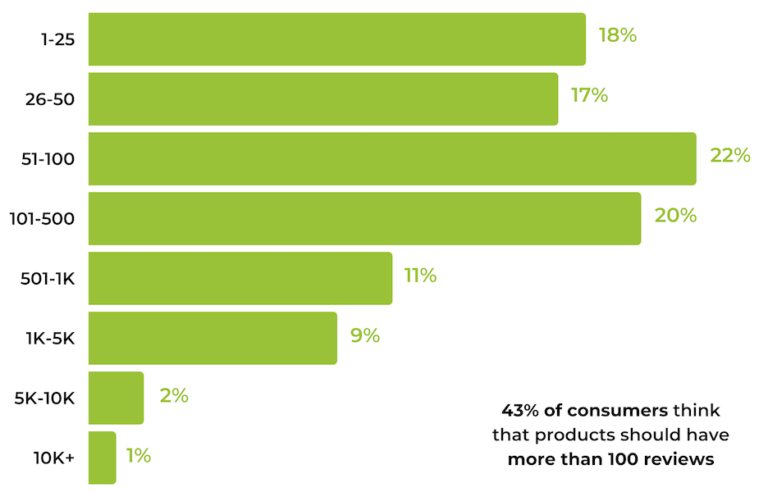
So, how many reviews do shoppers want? In an ideal world, 43% indicate a given product should have more than 100 reviews.

Consumers Review Volume Expectations
What is the IDEAL number of reviews a product should have in your opinion?

However, consumers tell us that an especially high volume of reviews can have a big (and positive) impact on their likelihood of making a purchase. 64% of those we surveyed said they’re more likely to buy a product if it has 1,000+ reviews than if it has 100. And 54% are more likely to buy a product if it has 10,000+ reviews than if it has 1,000. 

A High Volume of Reviews Means Higher Conversion

Sure, shoppers say quantity matters. But does the volume of reviews actually impact the metric that matters most: conversion? In other words, is it worth the effort to continue to collect reviews, even after you’ve generated a decent amount across your catalog? 

Absolutely! Our analysis found that the more reviews a shopper is exposed to, the greater the impact on conversion. And the greatest impact is seen when the shopper is exposed to 5,000 or more reviews. 

Take a look at the chart below and you’ll see there’s a nearly 3X conversion lift when shoppers are exposed to 5,000+ reviews, compared to those exposed to none.

Conversion Lift Relative to Number of Reviews Displayed
0 Reviews Displayed
0%
1-100 Reviews Displayed
76.7%
101-250 Reviews Displayed
143.2%
251-500 Reviews Displayed
166.4%
501-1000 Reviews Displayed
172.1%
1001-5000 Reviews Displayed
224.7%
5000+ Reviews Displayed
292.6%

But how does the conversion rate of those exposed to 5,000+ reviews compare to those exposed to a much smaller volume (1-100) of reviews?

Again, this is a case of the more reviews, the merrier. There’s a 122.1% conversion lift among shoppers exposed to 5,000 or more reviews, compared to those exposed to between one and 100 reviews.

Conversion Lift Relative to Number of Reviews Displayed
1-100 Reviews Displayed
0%
101-250 Reviews Displayed
37.6%
251-500 Reviews Displayed
50.7%
501-1000 Reviews Displayed
54%
1001-5000 Reviews Displayed
83.7%
5000+ Reviews Displayed
122.1%

While More is More, But There’s No One-Size-Fits All “Ideal” Number of Reviews

When it comes to reviews, the general rule is “more is more.” You are not going to maximize potential sales without a healthy review presence.

However, it’s important to remember that the right number of reviews for achieving maximum ROI depends on a variety of factors.

These factors include product category (think toys vs apparel), product type (think new vs. older product), and sales channel – among many others.

For example, a shopper will likely pay more attention to review volume when purchasing a new (or new to them) product than they will when they buy a habitual product.

The resources you have at your disposal will also obviously have an impact. The more resources you have (be this budget, people or whatever), the more you’ll be able to focus on collecting reviews in higher volumes, quicker.

What’s important is that you make review collection a priority and then set realistic goals for you – whatever these may look like.

Perhaps you might want to analyze the review presence of your competitors, or maybe you want to take a look at norms on your main retail or marketplace sites. What would showing up where it’d be most impactful for you actually take?

Once you’ve figured out realistic but challenging targets, you’ll want to tap into some common tactics for achieving them…

6 Practical Pointers for Generating a High Volume of Reviews

When it comes to reviews, quantity matters – a lot. Consumers pay attention to the number of reviews available for a product, and a high volume is proven to have a large, positive impact on conversion. 

Of course, there’s no magic “one size fits all” recommendation of how many reviews you should have for your products. But one thing is clear: more is more. 

How can you generate a high volume of reviews that satisfies shoppers – and helps you achieve the biggest lift in conversion? Here are 6 tips.

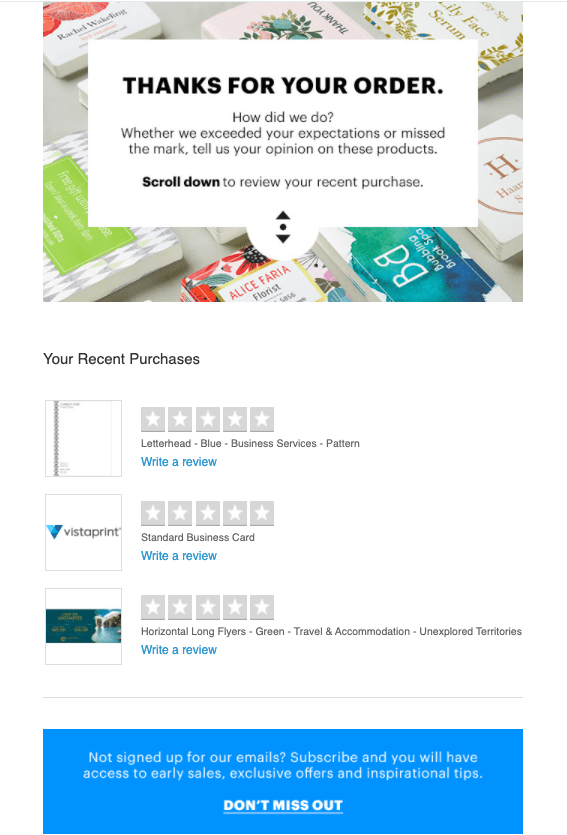
1. Send Post Purchase Emails

A lot of shoppers are happy to write reviews – but they need to be asked to do so. The most effective way to do that is to send a post purchase email, asking them to review their recent purchases. In fact, research tells us that up to 90% of reviews are the result of a post purchase email.

Use a compelling subject line to entice shoppers to open the email. And be sure the email is easy to read from any device – with a clear call to action.

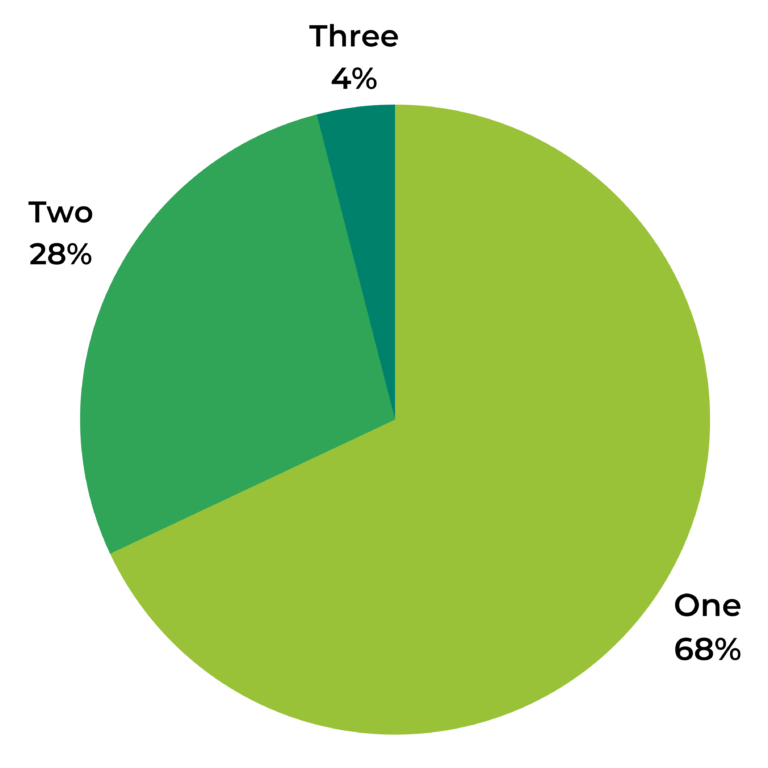
In addition, don’t give up if your first attempt doesn’t result in a review. Nearly a third of consumers (32%) say they need to be asked at least twice before they’ll contribute a review; be sure to send at least two post purchase emails.

Number of times consumers need to be asked for a rating/review

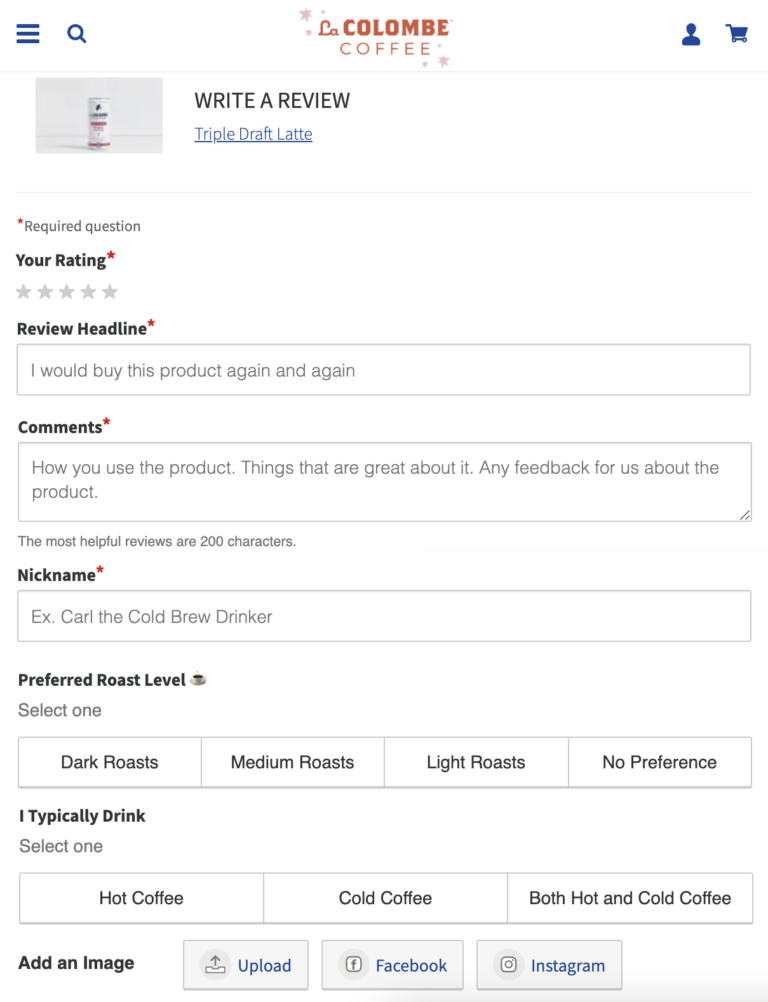
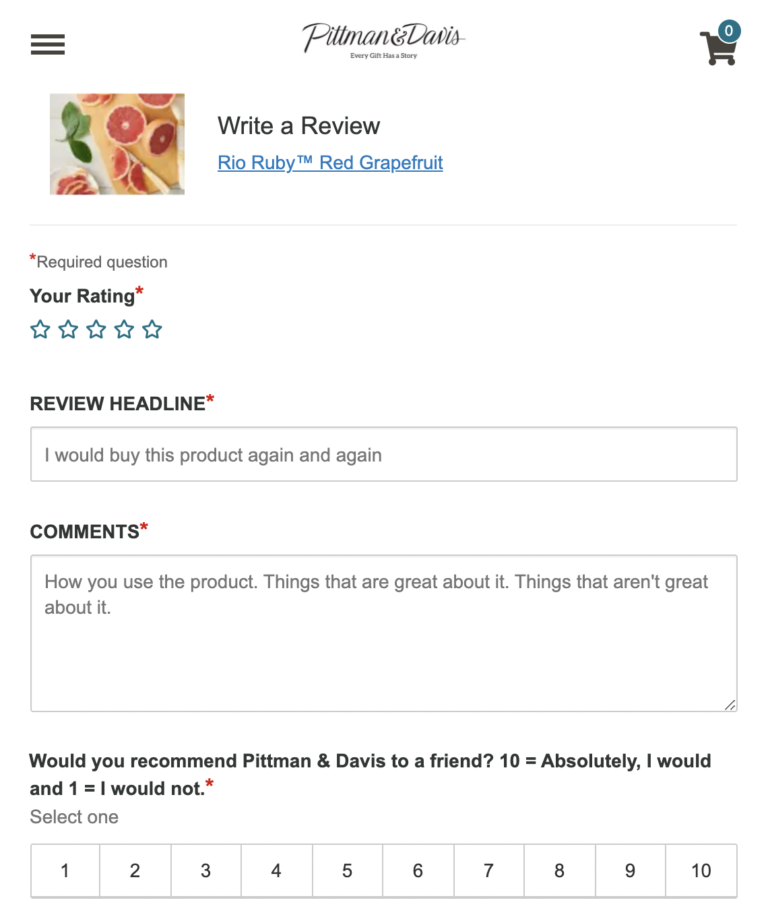
2. Employ a User-Friendly Write a Review Form

If a shopper runs into any trouble when submitting a review, they’re likely to abandon the process altogether. 

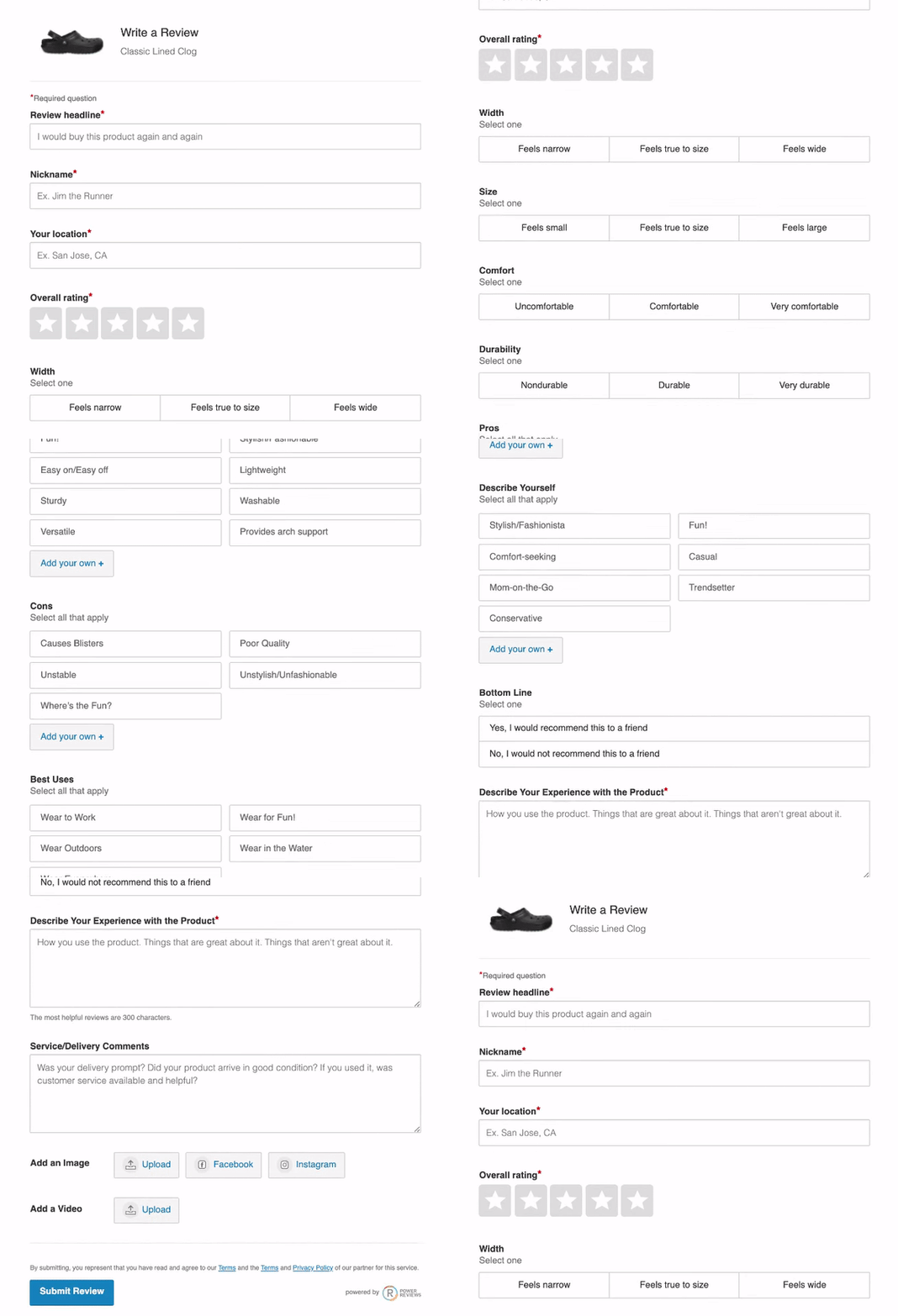
Simple and intuitive is the name of the game here. Make sure the entire process for writing a review is easy to complete from any device. And make it easy for shoppers to write reviews for multiple products from a single page, rather than navigating to a different page for each review. 

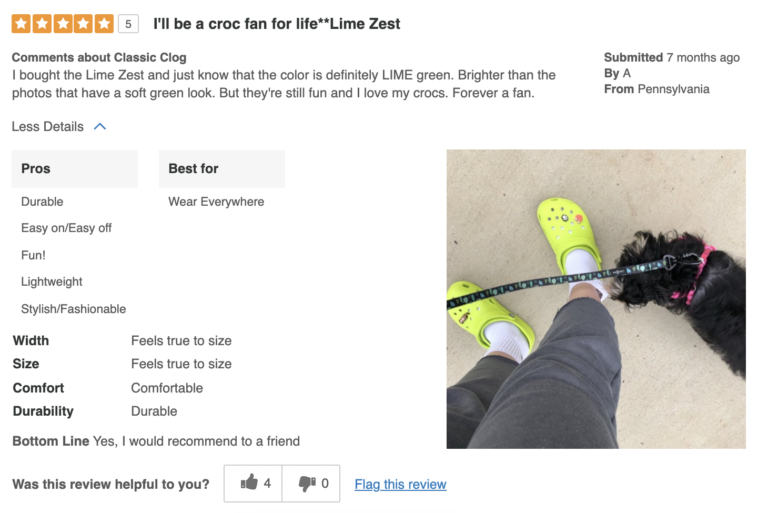
Crocs allows reviewers to click existing options for pros/cons, demographic information, and size/fit, or even add their own in order to generate detailed reviews with minimal effort.

3. Collect Reviews from Online and In-Store Shoppers Across Channels

Collecting reviews from your own direct-to-consumer channel is important. But your products are likely being purchased via retailers and marketplaces, too. So make sure you’re collecting reviews from online and in-store shoppers, regardless of where they buy your products.

One powerful way to do that is to leverage purchase history data from retailers and marketplaces that sell your products. By doing so, you can generate more verified reviews from real customers. 

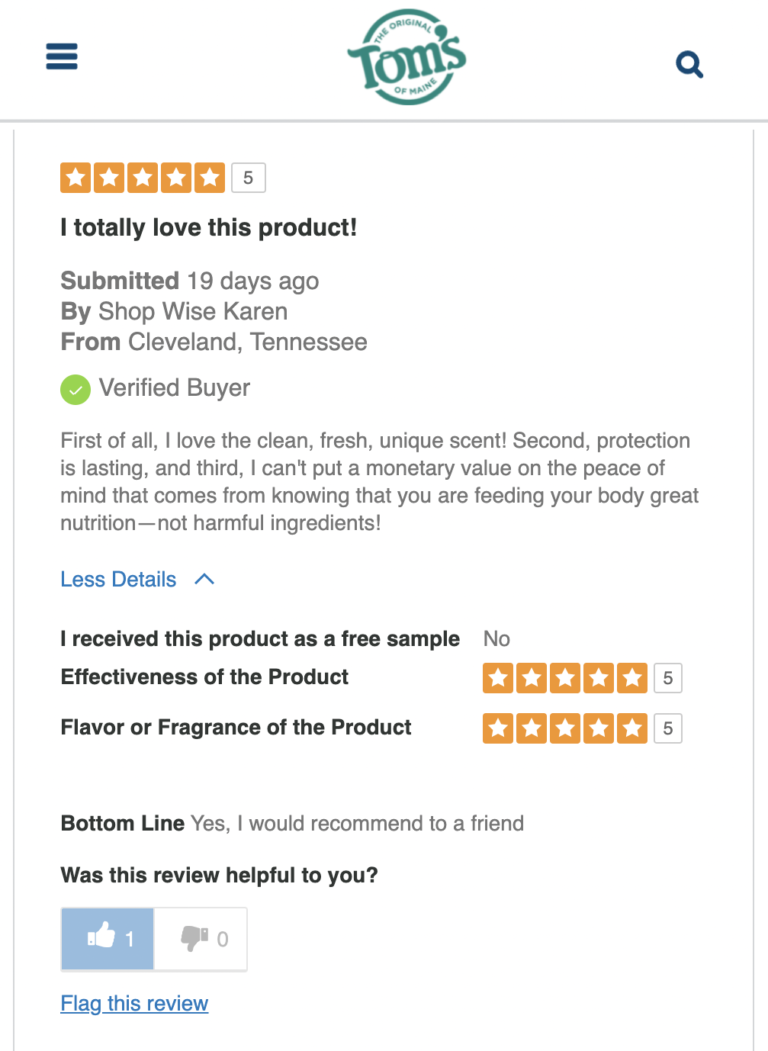
For example, “Receipt. Review. Collect.” allows brands to tap into receipt uploads from 12 million consumers across multiple retailers and marketplaces to generate a steady stream of reviews from verified buyers. Tom’s of Maine, a personal care brand, was able to grow their review volume by 18,600% in just 21 days as a result of “Receipt. Review. Collect” program. Learn more about how it works.

4. Offer an Incentive

For some shoppers, a great experience is enough of a motivator to write a review. But sweetening the deal with the right incentive can increase the volume of reviews you collect. After all, a recent survey found that nearly three-quarters (73%) of consumers indicate they’d be motivated to write a review if they were offered an incentive in return.

There are a number of different incentives that can help boost the volume of reviews you collect – including loyalty points and entry into a sweepstakes. But one stands above the others: free samples. 

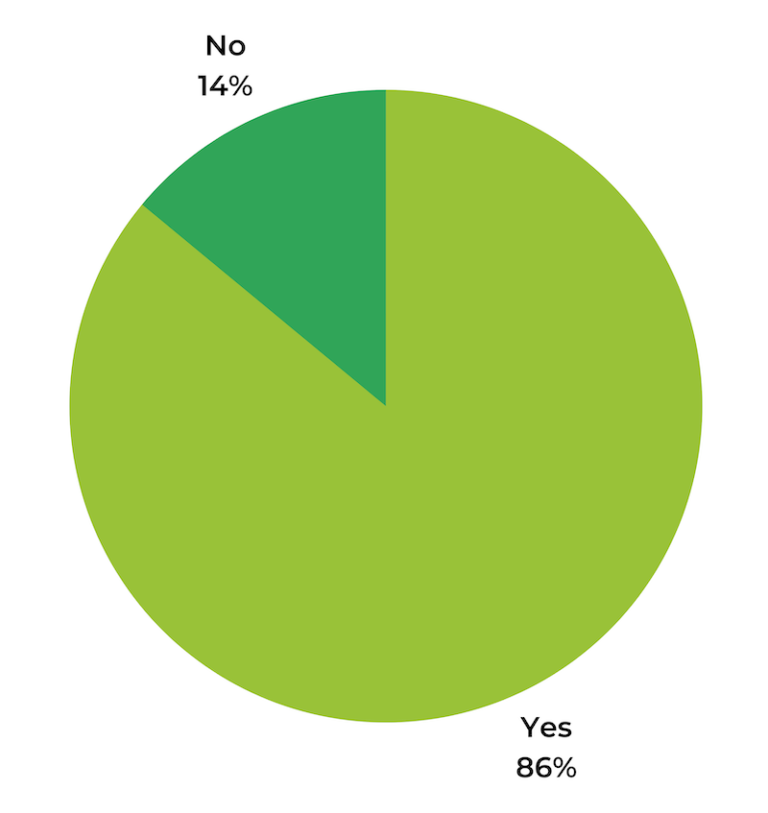
91% of consumers say they’d be motivated to write a review if they received a product free of charge. What’s more, we’ve found that brands and retailers that partner with PowerReviews experience an average response rate of 86%. In other words, 86% of those who receive a free sample go on to write a review. Clearly, product sampling can be a great way to generate a high volume of reviews – quickly. 

Incentives Leading to Review Submission
If there are no ratings and reviews for a product, would you be less likely to buy it?
Loyalty points with store or brand
59%
Discounts with store or brand
67%
Receiving a product before it's publicly available
85%
Receiving a product free of charge
91%

5. Syndicate Content Across Channels

It’s important to generate a high volume of reviews to boost conversion on your own dot com. But if you’re a brand, you probably also sell your products through other channels – such as retail partners and Amazon. It’s critical that shoppers can find plenty of review content for your products, wherever they shop for them.

Your ratings and reviews partner should make it easy for you to share – or syndicate – your review content to your key retail partners and Amazon. So be sure to ask them about it. 

6. Measure and Optimize to Boost Conversion

It’s important to continuously measure the success of your review collection efforts. Otherwise, it’s impossible to see what’s working well – and what’s not. You can then use these insights to improve your collection efforts. 

For example, if your collection rate isn’t as high as you’d hoped, you can make data-based optimizations to your write-a-review form – and then measure to see how (or whether) this impacts your collection rates.

It’s Time to Prioritize Review Volume

Review volume matters to consumers. And a high volume of reviews is proven to positively impact conversion rates – a lot. 

Make it a priority to collect a high volume of reviews across your product catalog. Schedule a demo with PowerReviews to see firsthand how we can help.

Alyson Fischer

Alyson Fischer is our Product Marketing Manager, obsessed with using data-driven storytelling to deliver a best-in-class customer experience and inspire dynamic engagement across channels. When she’s not agonizing over writing this bio, you can find her exploring Chicago with her furry sidekick or watching a true crime documentary on Netflix.

Power Points:

  • 97% of consumers consider review recency to be at least somewhat important when considering a purchase.

  • 86% of shoppers feel that review recency is more important when considering a product or brand they haven’t purchased before.  

  • Review recency is considered most important when shopping for products in the Consumer Electronics and Appliances, Health and Beauty, and Clothes, Shoes, and Accessories categories.

It’s not rocket science. To grow revenue, you need to either:

Get your existing customer to buy more, more often
- OR -
Acquire new customers

In a world where consumers have almost endless choices of where to purchase, the latter has become increasingly difficult, not to mention extremely expensive. 

If you want to capitalize on every dollar spent on acquisition, one of the best things you can do is to ensure you are constantly sourcing new reviews on your products so that there is always recent content for customers to reference. Without recent reviews, you’ll have a tough time convincing customers to try your product, according to our recent consumer survey of more than 9,000 consumers and analysis of activity across 1.5MM+ ecommerce product pages on 1,200+ brand and retailer sites.

86% of consumers told us they find review recency to be more important when considering a brand or product they haven’t purchased before. This makes sense, as there’s risk involved with purchasing a new or unknown brand or product. Fresh, relevant reviews help shoppers overcome that risk to make a confident purchase. 

According to McKinsey, 36% of Americans tried a new brand during the pandemic, marking an unprecedented shift in brand loyalties. The pandemic radically changed consumer shopping behavior, and statistics like these only demonstrate that consumers are more receptive than ever to try new brands.

However, it’s up to brands and retailers to win them over. According to our latest research, fresh reviews are essential to doing so. Read on as we explore the significance of these findings and share proven best practices for consistently generating fresh reviews — even for products you haven’t launched yet.

Recency Matters More for New or Unknown Brands or Products

Nearly all – 97% – of consumers consider review recency to be at least somewhat important when weighing a purchase decision, including 88% who say they always or regularly consider the recency of reviews. 

For new brands or products, review recency is even more important. Nearly nine in ten shoppers said that review recency matters more when they’re considering a brand or product they haven’t purchased before.

Recency Matters More for New or Unknown Brands or Products
For a brand or product you haven't purchased before, do you consider review recency to be even more important?

Clearly, review recency is a critical consideration for shoppers when considering a new product or brand. More recent reviews increase consumer confidence and likelihood to purchase. 54% of consumers say reading more recent reviews make them feel more confident about a purchase

When a brand or product doesn’t have recent reviews, on the other hand, it can actually make shoppers more likely to walk away. Four in ten (38%) of consumers say if a product only has reviews that were written three months ago or more, they would explore an alternative product from a competitor with more recent reviews.

Review Recency Is Important Across Categories

Across the board, consumers in our survey rated review recency as a critical consideration when making a purchase decision. However, review recency becomes more important when trying new brands or products in certain categories.

Importance of Review Recency Across Product Categories
When shopping for products in each of the following categories, is it more important to have recent reviews available?
Consumer Electronics and Appliances
95%
Health and Beauty
93%
Clothes, Shoes, and Accessories
90%
Home Improvement, Decor, and Furniture
86%
Pet Products
80%
Toys
80%
Perishable Products/Groceries
78%
Dry Goods/Consumer Packaged Goods
78%
Baby Products
73%

Consumers rated review recency as more important when shopping for products in the Consumer Electronics and Appliances (95%), Health and Beauty (93%), and Clothes, Shoes, and Accessories (90%) categories. 95% of consumers shopping for Consumer Electronics and Appliances said it was more important to have recent reviews available, while only 5% said it made no difference.

However, even in categories where review recency was considered less important, the majority of consumers said it was more important to have recent reviews. For example, seven in ten (73%) of consumers felt it was more important to have recent reviews available when considering Baby Products, and 78% said the same for Dry Goods or Consumer Packaged goods. 

The bottom line: No matter what type of product a shopper is looking for, they want to see recent reviews. To maximize conversions — and prevent losing shoppers to competitors — brands and retailers must consistently collect fresh reviews for all of their products.

7 Tips to Generate and Leverage Recent Reviews

Customers seek out recent reviews whenever they’re considering a new product or brand. To ensure reviews positively impact purchasing decisions, brands and retailers must implement strategies to consistently bring in a steady stream of fresh reviews, and make those reviews easy for customers to find.

Get started with the following best practices.

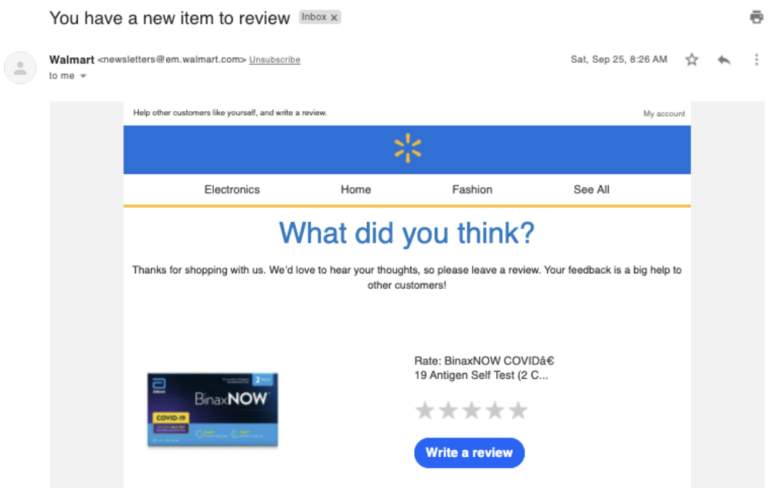
1. Follow Up Each Purchase with a Review Request

The best way to guarantee consistent review collection is to put it on auto-pilot. By following up with each customer to ask them to review their purchase, you can keep customers engaged and remind them to leave a review while the product is still top of mind.

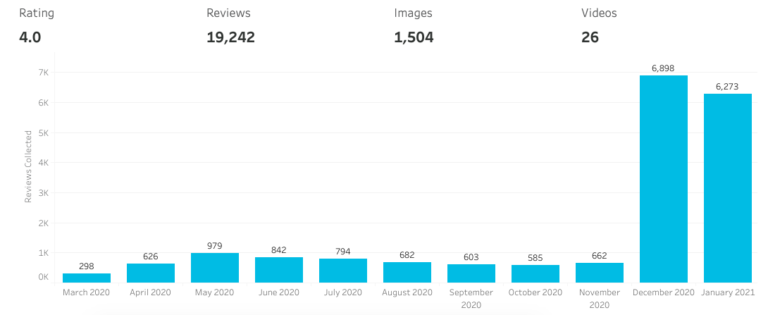
Our research shows that 80% of all reviews come from an email request. Here’s an example from one PowerReviews client. Once they implemented post-purchase emails, their average monthly review numbers grew nearly tenfold.

A client’s review numbers surged after implementing post-purchase review requests in December 2020.

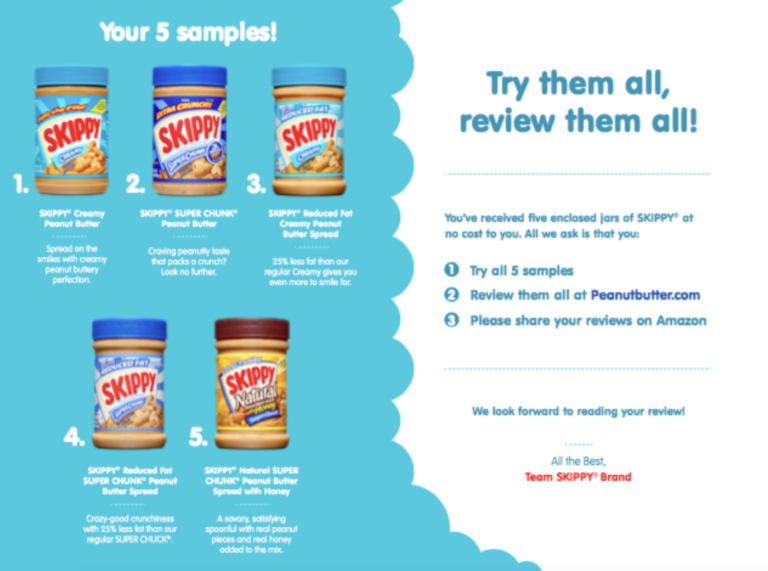
2. Share Product Samples to Generate Reviews for New Products

Conversion rates and reviews share a positive relationship — the more reviews a product has, the higher its conversion rate. Simply taking a product from 0 to 1 review can provide a 76.7% lift in conversion.

So, in order to maximize success, it’s essential that new products launch with reviews. Fortunately, this is possible to do with a product sampling campaign. Doing this kind of campaign prior to launch can make customers feel special, strengthening their loyalty to your brand. Plus, since they’ve already received a free product, they are more likely to write a review as a thank you.

Product sampling campaigns have a 86% review submission rate.

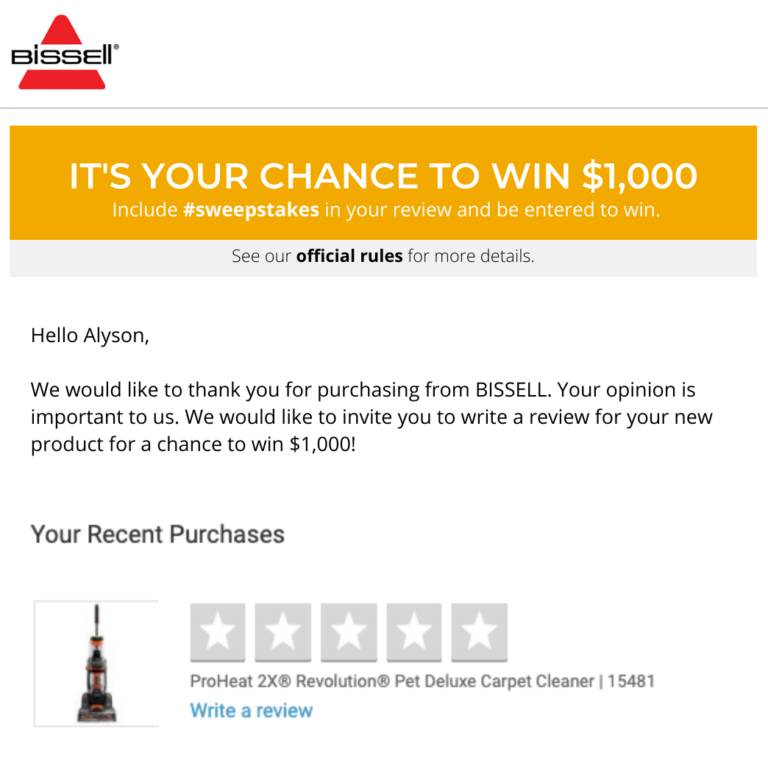
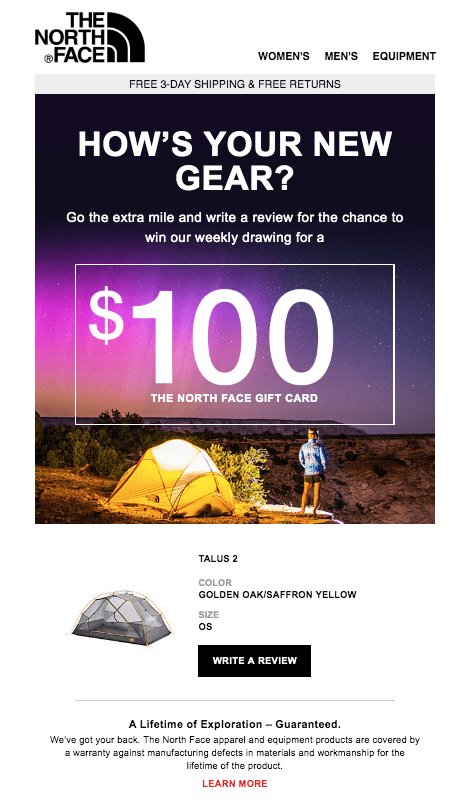
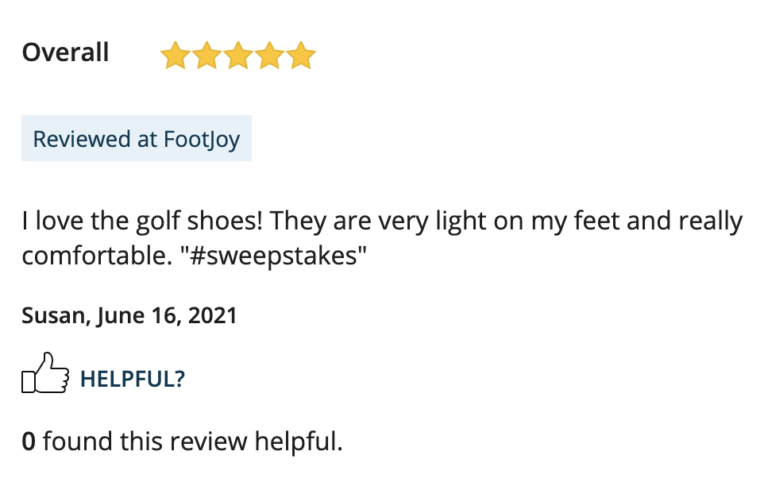
3. Run a Sweepstakes to Boost Review Numbers

Sweepstakes campaigns have equally high success rates, and can spin up fresh reviews for products with low review numbers. On average, PowerReviews clients see an 83% increase in review completion rates when they run a sweepstakes. 

The rules of a sweepstakes campaign are simple: each review a customer writes counts as an entry to win. One of our apparel clients saw a 290% increase in review collection in just 45 days thanks to this strategy!

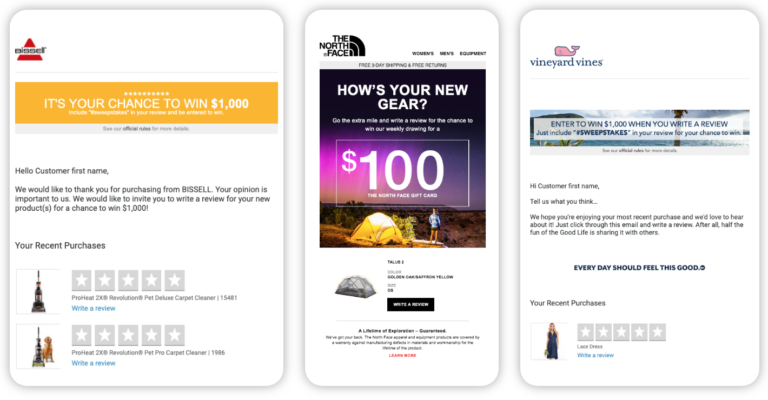
Review sweepstakes campaigns encourage customers to write reviews in return for a chance to win a gift card or cash prize.

4. Incentivize Reviews With Your Loyalty Program

Some shoppers need a nudge to write a review. In fact, most do. Nearly three-quarters (73%) of consumers say they need an incentive to write a review

If you have a customer loyalty program, include review submission as a point-earning activity. If a customer can earn loyalty points each time they leave a review, they’ll be a lot more likely to write reviews.

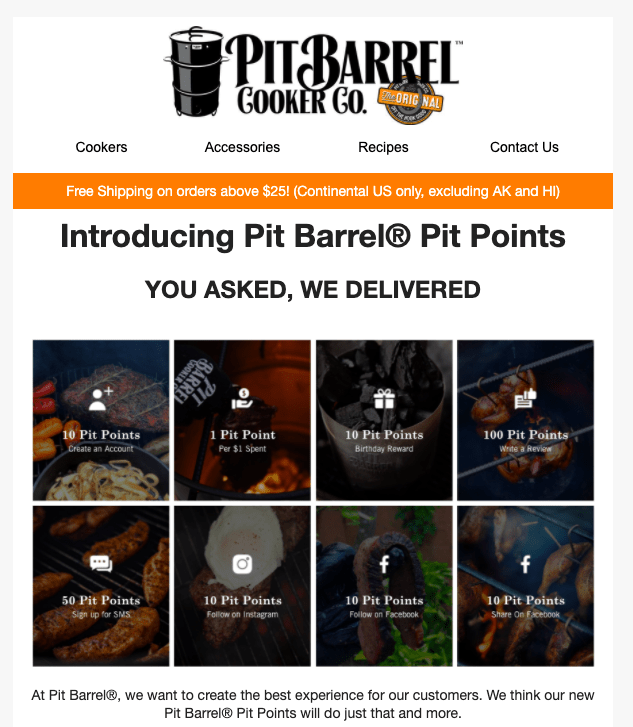
Loyalty programs offer rewards points in exchange for submitting a review.

5. Make It Easy to Leave a Review

It may sound obvious, but the easier it is for customers to write a review, the more likely they are to actually do so. Ensure your review form is user-friendly, mobile-optimized, and easy for customers to fill out.

If you collect reviews via email, streamline the process even further by allowing customers to begin typing their review within the body of the email.

For orders with multiple products, invite customers to review everything in one fell swoop. When one PowerReviews customer implemented this feature, their review collection rates increased by 54% in the next month.

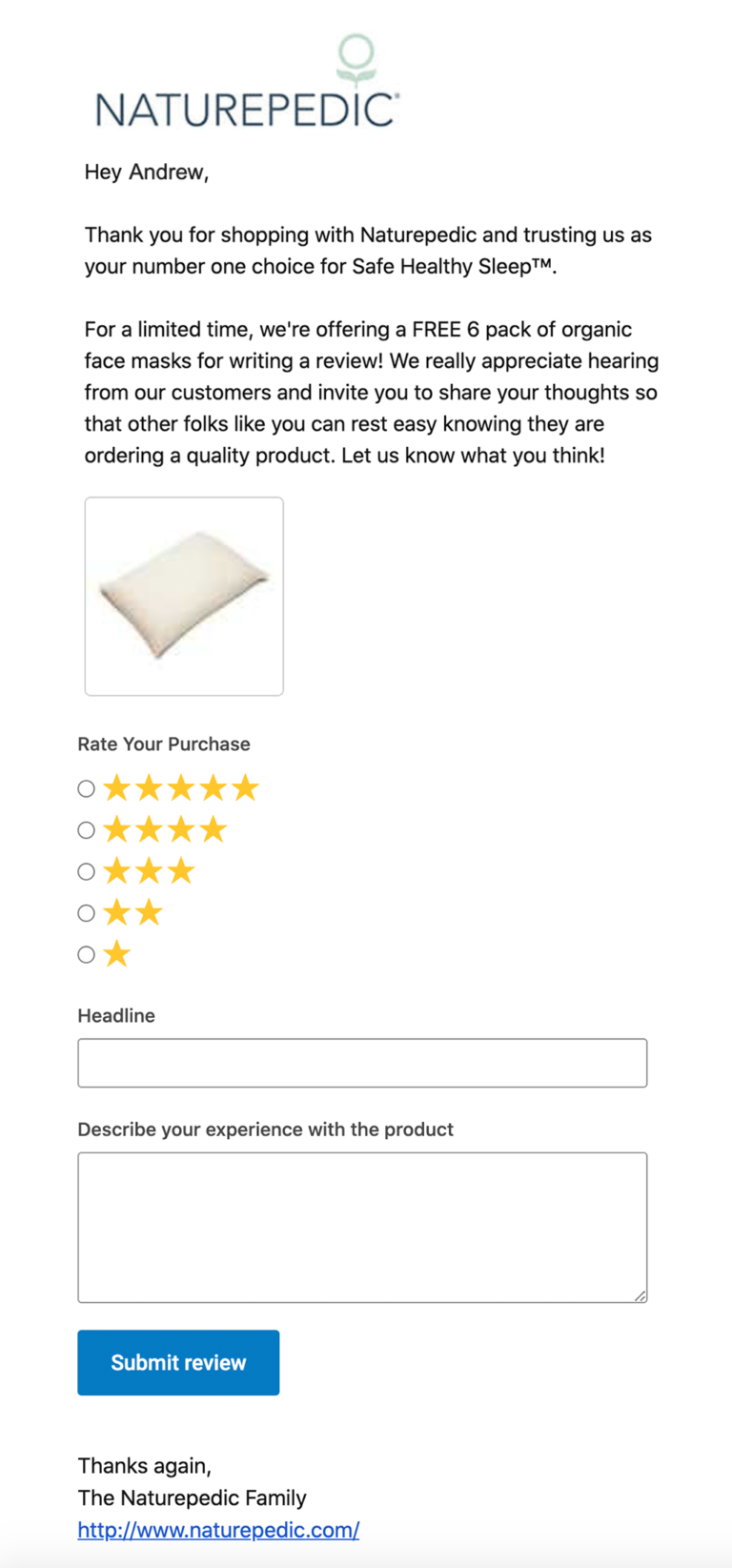
Customers can select a star rating and type their review in the body of the email.

6. Prioritize Recent Reviews on Your Product Page

The majority of consumers actively seek out recent reviews when considering a brand or product they haven’t purchased before. Make recent reviews easy to find with an optimized review display. Include the date the review was submitted in a prominent place alongside each review.

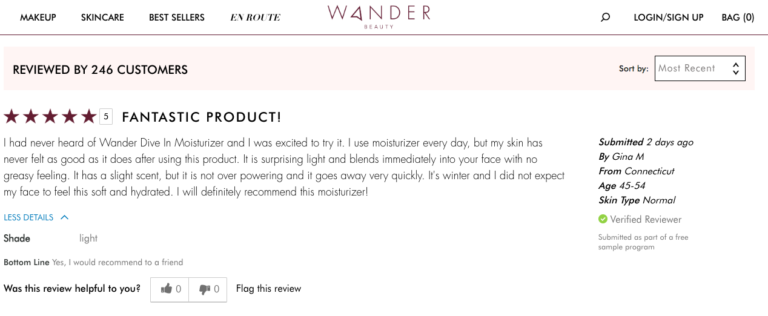
Always include the date a review was submitted next to the review.

In your Review Display, default reviews to sort by Most Recent. You can include a drop-down menu so consumers can choose a different way to sort, such as Most Helpful. However, review recency is a primary consideration for most consumers, so it should be prioritized.

6. Prioritize Recent Reviews on Your Product Page

The majority of consumers actively seek out recent reviews when considering a brand or product they haven’t purchased before. Make recent reviews easy to find with an optimized review display. Include the date the review was submitted in a prominent place alongside each review.

Recent reviews are essential to building consumer confidence and reducing their hesitation to purchase. Encourage conversions by prioritizing review collection efforts across your products and brands. Use post-purchase emails, sweepstakes, and sampling campaigns to ensure new reviews keep coming in, and optimize your review displays to make them easy for customers to find. 

Alyson Fischer

Alyson Fischer is our Product Marketing Manager, obsessed with using data-driven storytelling to deliver a best-in-class customer experience and inspire dynamic engagement across channels. When she’s not agonizing over writing this bio, you can find her exploring Chicago with her furry sidekick or watching a true crime documentary on Netflix.

Power Points:

  • Nearly all (97%) of consumers consider review recency to be at least somewhat important when weighing a purchase decision.

  • 64% of consumers said they would be more likely to buy a product with fewer, more recent reviews than one with a large volume of reviews older than 3 months.

  • Ideally, nearly half (44%) of consumers prefer to find reviews written within the last month.

  • 62% of consumers will not purchase a product if the only reviews available were published a year or more ago.

  • 64% of consumers indicate they’re more likely to buy a product with fewer, more recent reviews than one with a large volume of reviews older than three months.

  • 86% of shoppers feel that review recency is even more important when considering a product or brand they haven’t purchased before.

By now, we’re all in agreement that reviews matter. They’re the single most important factor that impacts purchasing decisions, according to consumers — even above price and recommendations from family and friends. 

But, are all reviews created equal? Do recent reviews carry more weight than older reviews? How important is review volume? Is it better to have fewer, more recent reviews or more, older reviews?

To find out the answers to these questions and more, we surveyed 9,012 consumers across the United States. We also analyzed consumer activity across more than 1.5MM online product pages from more than 1,200 retail and brand sites over a six month period, from May 1st, 2021 to November 4th, 2021.

Our research revealed that both of these elements are extremely important to consumers. Today, we’re focusing on review recency. To learn more about the importance of review volume (and get tips for increasing yours), read our full report on The Power of Review Volume & Recency.

Review Recency Matters to Consumers — A Lot

Review recency, or how long ago reviews were published for a given product, is a major consideration for consumers. Nearly all (97%) of consumers consider review recency to be at least somewhat important when weighing a purchase decision: 

Importance of Review Recency
How important is the recency with which reviews are written to you when considering buying a product?

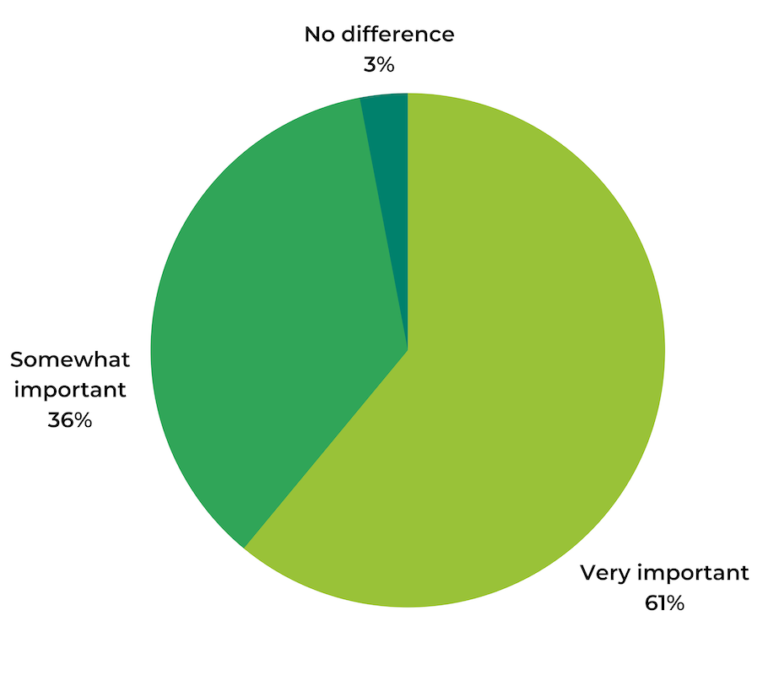
When we asked customers how much they considered the recency of reviews when buying a product, 97% said it was at least somewhat important, with six in ten saying it was very important.

When it comes to recency vs. volume, the majority of consumers said they were willing to trade a large volume of reviews for content that is more current. 64% of consumers said they would be more likely to buy a product with fewer, more recent reviews than one with a large volume of reviews older than three months.

This becomes evident when we break it down by product category. Across the board, we see that consumers tend to rate review recency as more important than review volume.

Importance of Recency vs Volume by Category

In some categories, such as Consumer Electronics and Appliances, both recency and volume are valued highly by consumers — 95% of consumers say recency is important, while 80% say volume is important. However, in several categories, the discrepancy between these two becomes more pronounced. For example, twice as many consumers say that recency is important when considering products in Toys and Grocery. For categories like Dry Goods/CPG and Baby Products, they’re more than twice as likely.

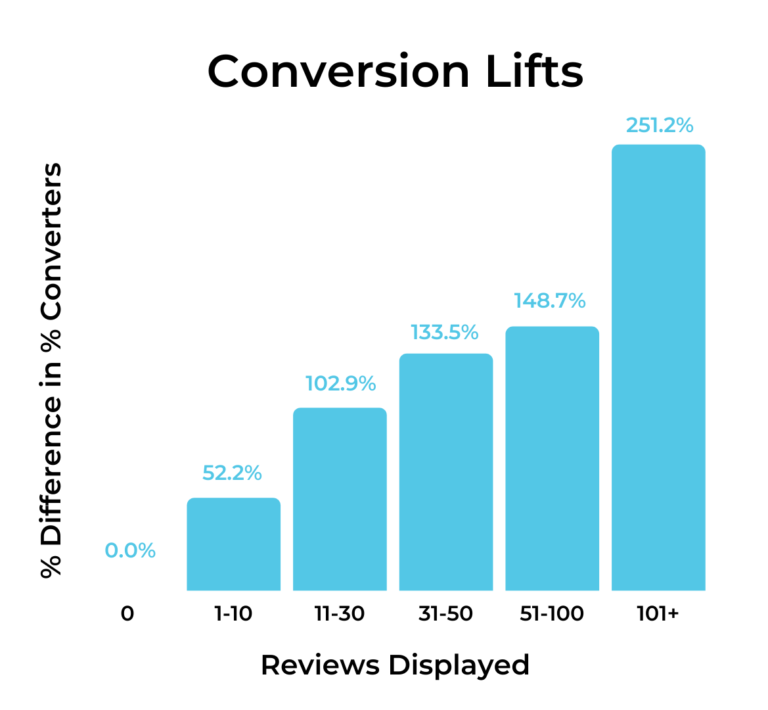
That’s not to say that review volume isn’t important. It is. There is a direct, positive correlation between the number of reviews a product has and its conversion rate. When a page goes from 0 to 1 reviews, its conversion rate lifts by over 50%. Add more than ten reviews, and the conversion lift increases by 255%.

So, what’s a retailer to do? Is it better to focus on driving recency or volume?

The good news: Brands and retailers don’t have to sacrifice volume for recency, or vice versa. By their nature, the two are interlinked. Focus on improving one, and you’ll improve the other as well. For example, if you consistently drive new reviews, you’ll naturally boost your review volume at the same time.

Impact on Review Recency on Purchasing Decisions

In the eyes of consumers, more recent reviews are always better. But, how recent is recent enough? And perhaps more importantly, can having too few recent reviews actually dissuade customers from making a purchase? 

Our research says yes.

Whether Consumers Consider Alternative Product if all Reviews are 3+ Months Old
If all reviews on a product you are considering buying were published THREE MONTHS AGO OR MORE, would that make you more likely to consider purchasing an alternative product from a competitor that has more recent reviews?

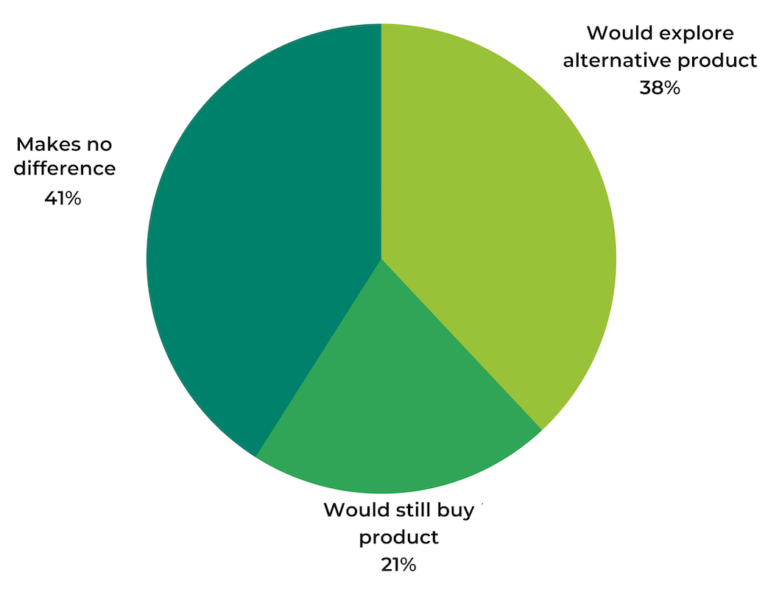
We posed a hypothetical scenario to our survey respondents: If all the reviews for a product you are considering were published three months ago or more, would that make you more likely to consider purchasing an alternative product from a competitor that has more recent reviews (assuming both products have the same average star rating and total number of reviews)?

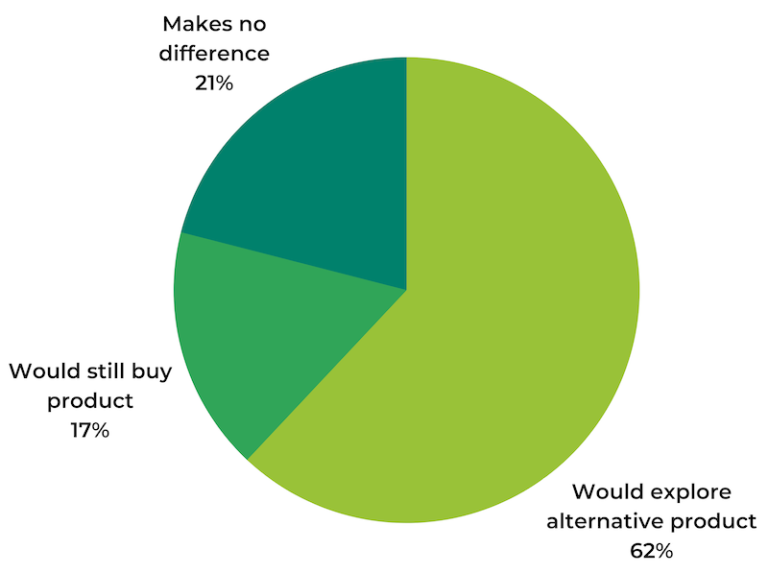
Over a third of those we surveyed (38%) indicated that if all reviews for a product were published three months ago or more, they’d be more likely to purchase a different product from a competitor with more recent reviews. If all the reviews were even older (published 1 year ago or more), the percentage of consumers who would consider an alternative product jumps to 62%.

Whether Consumers Consider Alternative Product if all Reviews are One Year Old+
If all reviews on a product you are considering buying were published ONE YEAR AGO OR MORE, would that make you more likely to consider purchasing an alternative product from a competitor that has more recent reviews?

The bottom line: If your product has no recent reviews for a consumer to consider, you may lose them to a competitor. The older the available reviews are for a product, the more likely a consumer is to purchase an alternative product.

Overwhelmingly, Consumers Prefer More Recent Reviews

Clearly, having an absence of recent reviews can dissuade customers from purchasing — particularly if there’s a competing product with more recent reviews. So, how can brands and retailers ensure they meet consumer expectations for review recency? 

In an ideal world, the vast majority (97%) of consumers said that they would like to see reviews that are no more than one year old.

Specific Review Recency Expectations for Consumers
In an ideal world, how recently do you like to see that review content was left on a specific product when assessing whether to purchase it?

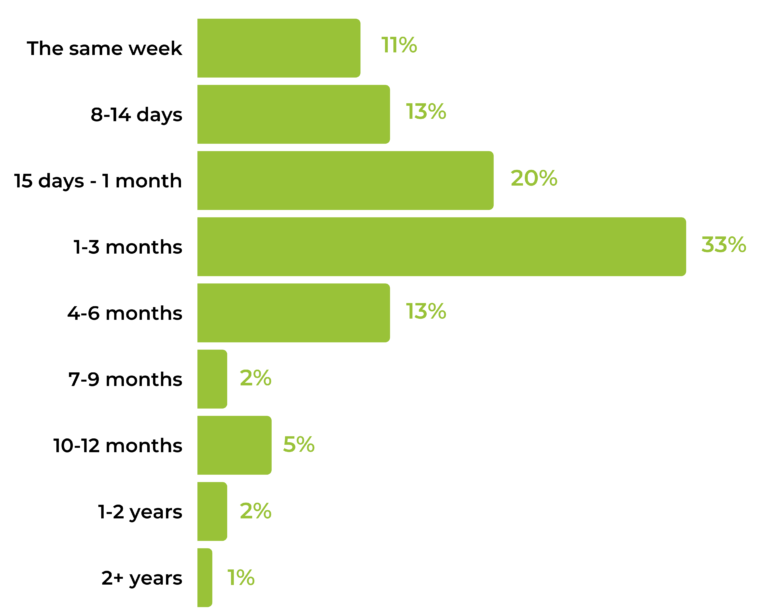
However, most consumers prefer review content that is even fresher than that. Over three-quarters (77%) of consumers prefer to see reviews that are three months old or younger. Nearly half (44%) want to see reviews published within the last month, and 11% of consumers seek out reviews written that same week.

Why Are Recent Reviews Important to Consumers?

Shoppers value recent reviews for a number of important reasons. 

Consumers Value Review Recency for a Number of Reasons
Which of the following reasons explain why when a review was written is important?
More accurate indicator of quality of the product
70%
Makes me feel more confident about my purchase
54%
Makes the review more relevant to me
53%
Recent reviews are more trustworthy
23%

The main reason consumers value recent reviews is that they provide a more accurate indicator of the product’s quality. Additionally, more recent reviews increase the customer’s confidence about their purchase, and make the reviews feel more relevant and trustworthy.

Given the importance of review recency to consumers, it’s critical that brands make it easy for them to find fresh reviews for the products they’re considering.

4 Tips for Generating Fresh Reviews

If the data tells us anything, it’s that recent reviews matter — a lot. For brands to maximize their review content, it’s important that they not only have a lot of reviews, but that they have a lot of recent reviews. Here are three ways brands and retailers can consistently generate fresh reviews.

1. Put review collection on auto-pilot with a post-purchase email campaign

Our research shows that 60% to 90% of all reviews originate from an email request. Set up a post-purchase email campaign that emails customers after their purchase requesting a review. 

2. Launch new products with reviews with a product sampling campaign

86% of consumers consider review recency to be even more important when they’re considering a brand or product they haven’t purchased before. So, make sure to launch new products with a good number of reviews.

How can you collect reviews before the product has even launched? With a product sampling campaign. Prior to launch, distribute physical samples to customers along with a request that they share their feedback via a review.

Customers love pre-launch product sampling campaigns because it makes them feel like a VIP. Plus, they get something for free. All that goodness puts them in the mood to write a review — enabling new products to launch with recent reviews. 

3. Offer loyalty points for reviews

Do you have a customer loyalty program? Make reviews a point-earning activity. Allow customers to earn points each time they review one of your products.

4. Leverage retail purchase history data

Yes, you read that right. Leverage purchase history data from retailers and marketplaces that sell your product to generate verified reviews from people who have actually bought your product. Expanding your review solicitation methods outside of your own DTC channel has always been a bit of a holy grail. And now you can.

Your Goal for 2022: Focus on Review Recency

If your brand needs a New Year’s resolution, make it this: invest in review recency. Review collection isn’t a one-and-done process. Our data consistently shows that customers highly value recent reviews. Having more recent reviews can increase consumer confidence, build their trust, and encourage them to click the “buy” button. Having too few recent reviews, on the other hand, can encourage them to check out your competitor instead.

Avoid losing customers to the competition. Set yourself up for success by always collecting fresh content. Start now with post-purchase email campaigns for your existing products, sampling campaigns for new products, and incorporating reviews into your loyalty program. 

Alyson Fischer

Alyson Fischer is our Product Marketing Manager, obsessed with using data-driven storytelling to deliver a best-in-class customer experience and inspire dynamic engagement across channels. When she’s not agonizing over writing this bio, you can find her exploring Chicago with her furry sidekick or watching a true crime documentary on Netflix.

Power Points

  • Stronger ratings and reviews can lift conversion rates, mitigate returns, and fuel product innovation for footwear brands.

  • Review collection strategies for footwear brands include post-purchase email campaigns, review sweepstakes, and product sampling campaigns.

  • Footwear brands can optimize their review display through a customized review form, customer Q&A, and size fit sliders. 

  • Tools like product sentiment and review search analytics can help footwear brands glean more insights and value from their reviews.

Reviews have always been important. They increase consumer confidence, lift conversion rates, and boost SEO.

But now, as ecommerce becomes more ubiquitous, they’re absolutely essential. 

According to our latest survey of over 6,500 consumers across the United States, ratings and reviews have become the single most important factor impacting purchase decisions, ranking above price, free shipping, brand, and recommendations from family and friends. A staggering 86% of online shoppers (and 51% of those who shop in-store) say they simply won’t buy products without reading reviews first. 

In a world where commerce is increasingly conducted online, reviews and user-generated content can give consumers the information they need to make confident decisions. 

For footwear brands, reviews can answer questions about size, fit, durability, and more. They can provide information beyond a simple product description, arming consumers with feedback from shoppers just like them.

Below, we share best practices for collecting, displaying, and leveraging reviews in the footwear space, using real-world examples from successful brands.

Collecting Reviews: Best Practices for Footwear Brands

From email campaigns to sweepstakes and product sampling, savvy footwear brands are finding effective ways to generate reviews.

Ask your customers for reviews via email

Email is one of the most popular avenues for asking for reviews — and one of the most successful. Our data shows that 80% of all reviews originate from a post-purchase followup email. After implementing review request emails, one PowerReviews customer saw over a 1,000% increase in review volumes the very next month!

After implementing review request emails, this company's review volumes increased by 1,042% in one month!

With results like that, you’d be crazy not to email your customers asking for reviews.

Set up a post-purchase drip campaign for review collection, and you’ll never miss an opportunity to follow up with a customer for their feedback. You’ll always have a steady stream of fresh reviews trickling in.

Run a review sweepstakes

50% of consumers claim they need to be incentivized to write a review, so give the people what they want!

By incentivizing your clients to leave a review, you can grow your review volumes for a low cost and minimal effort. Plus, our data shows that brands see a 260% increase in collection when they incentivize their consumers. 

Throw a review sweepstakes, where each review counts as an entry. One of our apparel clients saw a 290% increase in review collection in just 45 days thanks to this strategy!

Review sweepstakes may offer a gift card as the prize.

With PowerReviews, you can even tag your syndicated reviews. For example, this review at Zappos originally came via a sweepstakes on the FootJoy website:

Generate reviews for new products with a sampling campaign

Our data shows that there’s a direct, linear relationship between the number of reviews a shopper is exposed to on a product page and the lift in conversion rate. When just one review is added to a product page, the product’s conversion rate lifts by 52.2%. Add ten more reviews, and it increases by 102.9%! 

Higher review volumes are associated with higher conversion rates.

There’s only one problem: all new products start out with zero reviews. Fortunately, you can spin up reviews quickly with a sampling campaign. Sampling is a great way to incentivize reviews, especially for newly launched products. Here’s how it works.

  1. Offer customers a free product sample, physical coupon, digital promo code, or gift card to redeem a product for free.
  2. Tell customers that you are looking for their feedback. 
  3. Sit back and wait for the reviews to come in.

Because you’ve already given customers a free product, they’re more likely to return the favor with a review. We’ve found that review submission from a product sampling campaign can range from 60% to 90%. Great, right?

Displaying Reviews: Best Practices for Footwear Brands

Now that you know how to generate reviews, let’s talk about displaying them for maximum impact. 

Customize your review form for better results

The basic review form asks shoppers to provide an overall star rating and describe their thoughts. That works fine for some brands, but footwear shoppers have much more to consider. 

Athletic or running shoe shoppers may wonder how heavy a shoe is, and if it’ll be a pain to carry around in their gym bag. Dress shoe shoppers may need to know whether the shoe can stand a night on the dance floor, or if the color truly matches the product photos.

You can address these concerns with a custom review form. At PowerReviews, we call these merchant-specific questions. They offer two benefits: You can collect more data around your consumers, while at the same time, helping future customers make more confident purchasing decisions. This leads to better conversions and fewer returns. It’s a win-win. 

Take a look at how Crocs does this:

Shoppers can quickly assess the width, size, comfort, and durability of a shoe they’re reviewing, list pros and cons, and describe themselves.

By inviting customers to click on a selection rather than fill in the blank, it’s easy for customers to quickly check off what feels true to them. It also primes them to write a more detailed review.

Once the review is published, all of the reviewer’s selections show up on the product page:

They also appear in summary form at the top of the reviews. This information helps shoppers answer critical questions about a shoe. They can even click on the filters to find reviews from people with similar size and style concerns:

Allow shoppers to filter review content by fit, comfort, and use case.

Invite discussion with Q&A

Even with a stellar review form like Crocs, a review can only answer so many questions. Shoppers will still have additional questions they want to ask. That’s where Q&A comes in.

Q&A gives footwear retailers a chance to connect with consumers during crucial purchase blocking times. Customers may have questions about material, size, or feel. By inviting customers to ask questions and allowing others to answer, footwear brands can mitigate cart abandonment — both for this shopper and future shoppers with similar concerns. 

Tim the Shoe Guy is Skechers' dedicated question-answerer.

Reduce returns with crowdsourced size and fit information

Clothing and footwear brands have some of the highest return rates across industries. According to a report by Footwear News, 57% of footwear is returned because it didn’t fit. Stop the bleeding by helping consumers choose their best fit with a Size/Fit Slider on your review display. 

This simple feature can work wonders for reducing return rates. Customers can rate the size and width of a shoe. Here’s an example of the Size/Fit Slider in action, via Shoe Carnival:

The size fit information appears in the Review Snapshot as well as the individual review.

Leveraging Reviews: Best Practices for Footwear Brands

Reviews can be leveraged throughout your marketing. Here are three smart ways footwear brands can get more use from their ratings and reviews. 

Feature reviews in your email marketing efforts

Reviews provide powerful social proof. Boost sales by featuring them in emails advertising your holiday promotion or latest footwear line. Need to remind shoppers of your best-sellers? That works, too.

Mine customer reviews for new SEO keywords

One of the pillars of SEO is using the same keywords your customers use. But language is always evolving, and sometimes we marketers make the wrong assumptions. 

Stay in lockstep with your customers by regularly reviewing your reviews for key phrases and terms that keep popping up. Are you speaking to these terms in your product descriptions? If not, they may be due for an update.

In this sample review search data for a running shoe brand, terms like size, arch, water, and waterproof, come up often — indicating concerns about fit and pronation as well as interest in how suitable these shoes may be for running in the water.

Understand customer sentiment around your products

Reviews provide direct insight into how your customers feel about your products. By looking at the reviews for a particular shoe, you can see how your customers feel currently, and whether their sentiment has changed over time.

Footwear brands can use sentiment to innovate product design, update their catalog, and determine where to invest their marketing budget next. For example, a shoe with low ratings and countless reviews mentioning “small fit” may be in need of a retooled product description, or a more material change like a redesign. Once the brand makes those improvements, they can track customer sentiment through their reviews. 

Here’s an example of a dashboard generated from review content received:

Example Product Sentiment Analytics data for a footwear brand

Reviews and Footwear: A Perfect Fit

Ratings and reviews are an essential part of retail. Footwear brands can squeeze more value from their reviews by leveraging the best practices above. Increasing review collection, optimizing your review display, and leveraging those review insights in your marketing and product development are key to a successful footwear strategy.

Savannah Claspell

Savannah is an Enterprise Customer Success Manager, passionate about using data and analytics to empower brands to grow their business. When she isn’t helping brands increase and leverage their UGC you can find her deep in a good book, running, or mountainside skiing.

Power Points:

  • Recently, the FTC sent a warning to over 700 brands and retailers regarding penalties for fake endorsements and reviews.

  • Content moderation is an essential tool for ensuring that user-generated content — including reviews, photos, videos, and Q&A — is authentic and fraud-free.

  • Follow these best practices to prevent fake reviews

If you partner with influencers, you’ve likely become aware of the recent announcement the Federal Trade Commission (FTC) sent to over 700 brands and retailers regarding penalties for fake endorsements and reviews. While this notice primarily references influencer content and testimonials, you may be wondering how it applies to your customer reviews. 

Today, nearly all shoppers depend on user generated content (UGC) — including reviews, Q&A, photos and videos — to make informed purchase decisions.

For this reason, every brand and retailer wants to have a positive ratings and reviews footprint. It can therefore be tempting to selectively block negative reviews or manufacture positive review content.

Don’t even think about it. It’s a very bad idea. And again for anyone at the back who didn’t hear: DON’T DO IT.  Why?  Number one: it’s completely unethical and goes against the whole ethos of why shoppers read reviews in the first place when making purchase decisions. Number two: sooner or later, shoppers will figure it out. And when they do, they won’t be happy.

Ask yourself: Do you really want to jeopardize consumer trust and your brand equity? Artificially manufacturing your review footprint is simply not a long-term strategy for success.

Unfortunately, fake reviews have become more prevalent in recent years. According to research from BrightLocal, four in five shoppers say they’ve encountered a fake review in the last year. One in three have seen multiple.

With the rise in fake reviews — and widespread knowledge of them —  it’s essential that brands earn consumer trust by displaying authentic reviews, written by actual customers who have actually purchased and used your products. 

But it’s critical to have a solid moderation process in place to ensure this content is, in fact, authentic. The risk is high for brands that don’t, from lost customers to upwards of $43,000 in fines from the FTC.

Does your existing Ratings & Reviews vendor take authenticity seriously?

As we said,  authenticity is important. Whichever vendor you work with when it comes to UGC or Ratings and Reviews, you need to be asking questions about how they account for this. (Spoiler alert: At PowerReviews, we take authenticity seriously. Very seriously.)

For example, at PowerReviews, we have an entire Authenticity Policy dedicated to it. There, we state our commitment to collecting, displaying and sharing user-generated content from our clients that is authentic and fraud-free. That means we only publish content that hasn’t been modified, made up, fraudulently collected, or selectively curated.

By screening reviews for authenticity first and foremost, we ensure that any UGC collected and displayed through our platform follows the latest FTC guidelines on endorsements and reviews.

Key questions to ask:

So, how do you ensure you promote UGC that’s authentic? And how do you prevent the publishing of fake reviews? It all comes down to content moderation.

A four-step, best practice content moderation process

What does a best-in-class ratings and reviews moderation look like? 

First of all, it needs to account for each and every piece of content submitted by your shoppers. Every user-generated review, photo, video, question, or answer — should go through an extensive moderation process to confirm it’s authentic, appropriate, and fraud-free. Each piece of content should also not be altered in any way.

All content that is published should appear as it is originally written, including typos and grammatical errors. This ultimately is critical to authenticity and snuffling out fake reviews.

Step 1: Fraud Detection

Displaying fake reviews directly violates FTC guidelines. So it’s important to keep this content off your website.

To safeguard against this threat, industry-leading fraud technology can analyze the device fingerprint data used to submit a piece of UGC. This data identifies the device ID associated with a review, such as a smartphone or tablet and helps to identify suspicious device or IP information. By using this technology, you’re able to prevent all different types of fraudulent reviews, including spam, duplicate content, and promotional content.  

For example, if it detects a large number of reviews coming from a single device, those reviews get flagged for potential fraud. Of course, there is a possibility it’s just a customer who’s particularly zealous about reviewing every single product they bought for Black Friday. Most times, however, this kind of activity indicates fraud. Either way, the tech applies a “fraud” tag to it, flagging it for review – potentially by human moderators (more on them in step 3).

Step 2: Automated Filtering

Beyond fraud, systems can also scan each piece of content through an automated filtering process to catch additional authenticity issues, from profanity to personally identifiable information. When a potential issue is detected, a tag is added to that content so that it can be later reviewed by a human. 

Examples of the types of content tagged:

  • Content about the wrong product or retailer
  • Contradictory content, e.g. a rave review with a 1-star rating
  • Duplicate content
  • Foreign language
  • Medical advice
  • Personally identifiable information
  • Profanity
  • Violent content
  • Website URLs

For some tags, such as profanity, the content can be automatically rejected for publication. For others, it can be passed to a human moderation team. 

A best-in-class vendor will enable you to add additional words or phrases to the profanity filter. It will also make regular updates to these filters, based on emerging slang terms or political slogans, to ensure nothing profane gets published.

(PowerReviews applies observations tags, which we detail in our Moderation Policy)

Step 3: Human Moderation

For many businesses and Ratings and Reviews vendors, the moderation process stops at step two. But relying solely on technology can leave you vulnerable to some of the exact issues that violate the FTC guideline –  like deceptive performance claims, medical advice, and other forms of misrepresentation. 

Human moderation adds an additional layer of protection for this very reason. Technology can help prevent fraud and profanity, but humans are better equipped to review for nuance, innuendo, and context.

To meet the high standards for authenticity required to successfully snuff out fake reviews (and not to mention the FTC Guidelines), a moderation process powered by both human and artificial intelligence is ideal.

For example – at PowerReviews, our human moderators review every piece of UGC in our secure portal. All content flagged as an observation by our automatic filtering process will be highlighted, such as profane language or reviews that don’t discuss the products.

Upon reviewing all of the Observations, the moderator will determine whether the review should be published. If a review is rejected for publication, it will not be published and will subsequently not be syndicated (if a brand or retailer using our solution chooses to override this decision, the review will only publish to their site — not to any syndicated retailers).

Also of note: our moderators work on several teams. Some moderators work on all English content, while some review content that needs to follow a specific set of guidelines, such as herbal supplements or financial products (PowerReviews can also facilitate an exclusive moderator to review their content for additional concerns, such as medical advice).

Step 4: Badging and Displaying Content

Once a piece of content passes steps 1-3, it’s ready to be displayed on your website. Woohoo! But remember: it’s important to use accurate badging and disclosure codes that indicate the source of the content. 

This added layer of transparency shows details such as:

  • Where a review came from
  • Whether or not it has been verified i.e. written by a person who actually purchased the product
  • If it’s been syndicated from another site
  • If it was collected via a sampling campaign or was shared as a contest entry
  • If the review was submitted by a company employee

PowerReviews offers the following options which serve as a best practice example.

Verified buyers

A “Verified Buyer” badge should be assigned to reviews written by someone who has actually purchased the product they are reviewing, as identified through their purchase history. This builds consumer confidence, and it also ensures you don’t run afoul of Section 5 of the FTC Act, which prohibits “misrepresenting an endorser as an actual, current, or recent user” of a product.

Sweepstakes & product sampling

The FTC also frowns upon failing to disclose whether an endorsement is paid. In the world of influencers, the proper way to do this is by clearly stating that a post or endorsement is sponsored, e.g. with a #sponsored or #ad hashtag at the top of a post. 

A review might be considered a paid endorsement if the reviewer received the product for free, such as through a sweepstakes or product sampling campaign. Here are some examples of special badges that identify this type of content:

Syndicated reviews

The second example above is also an example of you should badge syndicated reviews. All review content that is syndicated beyond the client’s original website must be badged appropriately (at PowerReviews, we do this by including the name or logo of where the review was originally written – at Too Faced as above, for example).

Staff reviews

Finally, reviews that are written by someone who works for a brand or retailer must also be disclosed, as these people may naturally have a more biased opinion of a brand. For these reviews add a “Staff Reviewer” badge.

It’s important to share as much context as possible about your UGC, as this fosters trust with online shoppers. And in many cases, it’s also required by the FTC (Learn more about PowerReviews Badges).

Preserve the Authenticity of Your UGC Through Moderation

Consumers turn to user-generated content because it’s an authentic, unbiased source of information about products and brands from other people like themselves. Consumers trust UGC.

But simply collecting and displaying UGC isn’t enough. Brands must make it a priority to preserve the authenticity of this content. If you’re relying on a UGC vendor, like most brands and retailers, you need to ensure your UGC vendor has effective and powerful capabilities that prevent fake and inauthentic reviews from sneaking.

Content moderation is an essential tool in this process. By ensuring that every piece of UGC that gets published to your site is authentic, brands and retailers can win the trust of both customers and the FTC.

The multi-step content moderation process at PowerReviews helps retailers publish content that is authentic and meets the FTC’s standards for consumer endorsements. Learn more.

Devin Kerr

Devin joined PowerReviews in 2016 as a Project Manager, assisting customers with their integration. She managed that team for 2 years, and now oversees Content Moderation and various wings of technical support.

Power Points

  • The majority of shoppers plan to increase their holiday shopping this year, and 63% plan to do “most” or “all” of their holiday shopping online. 

  • UGC imagery isn’t just a nice-to-have; it’s a key element of the sales process. 99% of consumers specifically seek out photos and videos submitted from other customers at least sometimes. When visitors interact with UGC media on a product page, the product experiences a 91.4% lift in conversion.

  • Brands can leverage user-generated social images to provide social proof on product pages, curate shoppable galleries throughout their website, and amplify marketing efforts.

As a consumer, shopping online is easy if you know exactly what you are looking for. But what about when you don’t know? What is the digital equivalent of window shopping or walking the aisles in a store? In other words: what makes shopping fun. 

Fortunately, there’s social media. 

Social media caters to our desire as shoppers to explore. It allows us to experience the joy of discovery in a digital environment. For brands looking to increase online sales, having a strong social strategy will likely be a large part of your success.

Social media is a visual medium. It lives and breathes on images. Consequently, having  a library of product and lifestyle photos is now a critical element of success — especially those taken by your customers.

Today, nearly nine in ten shoppers say they are more likely to buy a product when it features user-generated photos and videos.

Clearly, user-generated photos are what the people want. Fortunately for brands, UGC images are easy to source. Curating images from social media is a great way to celebrate your community and to reinforce your customers’ loyalty to your brand. Best of all, you can leverage those social images to sell on non-social channels like your website, emails, in-store , and advertising campaigns.  

Read on as we review the power of socially generated UGC, and how brands can leverage UGC imagery to boost sales this holiday season.

3 Reasons Why UGC Imagery is Critical to Ecommerce Success

Let’s start by reviewing the latest stats that demonstrate how UGC imagery drives value, trust, and conversions.

1. Your customers expect to see it.

Today, nearly every consumer (99%) says they specifically seek out photos and videos submitted from other customers at least sometimes. Almost eight in ten shoppers (77%) say they regularly or always seek out UGC images when shopping online. 

Why? 80% of consumers find photos from other customers more valuable than photos from brands or retailers. This is a significant increase from 2016, when only 44% indicated they valued user-generated photos more than brand-supplied visual content (almost a 100% increase). 77% regularly or always do.

Types of Photos Consumers Value More

What kind of product photos are more valuable to you: professional photos supplied by the brand/retailer, or those supplied by another customer?
Pro Photos
2016
56%
2021
20%
Customer Photos
2016
44%
2021
80%

Also of note: younger consumers are most likely to value user-generated photos over those provided by brands and retailers. 91% of Gen Z shoppers and 85% of Millennials value user-generated photos more than professional ones.

2. UGC imagery drives conversions.

UGC images aren’t just a nice-to-have; they are proven to drive sales. . When visitors interact with user-generated photos and videos on a product page, the product experiences a 91.4% lift in conversion (based on our recent analysis of 1.5MM online product pages from more than 1,200 brand and retailer sites

Younger shoppers are especially swayed by visual content. 99% of Gen Z shoppers and 89% of Millennials are more likely to purchase products that have reviews that feature photos and videos.

I’m More Likely to Buy a Product That Has Reviews that Feature Photos and Videos

Boomers
77%
Gen X
83%
Millennials
89%
Gen Z
99%

While the presence of UGC images can lift conversions, their absence can have the opposite effect. In fact, a third of Gen Z consumers and nearly a quarter (21%) of Millennials won’t purchase a product if it doesn’t have photos or videos from other consumers who have purchased it.

3. A (UGC) picture is worth a thousand words.

In the ecommerce world — where customers can’t see, touch, and feel a product — UGC imagery serves a particularly important function. It helps customers confirm that the product looks and works the way it appears in the brand’s photos. 

It’s no surprise, then, that the #1 reason why consumers value user-generated media is that it allows them to see what the product looks like in real life.

Top Reasons Consumers Value User-Submitted Photos and Videos
To see what the product looks like in real life
86%
To get a better sense of the size or sizing of the product
75%
It’s more authentic and “real” than standard brand-created imagery
65%
To understand how the product performs
58%
To see if the product fits your own personal need
56%
It creates trust in the product and/or brand
42%

UGC imagery answers important questions about look and feel. It also enables customers to hear from other customers who have similar needs. That’s probably why customers feel UGC visual content provides value for a wide range of product categories — not just obvious ones like clothing and electronics, but also groceries.

Consumers Consider User-Generated Visual Content Helpful for Many Product Types
Clothing
78%
Electronics
70%
Appliances
63%
Home & Garden
62%
Health & Beauty
60%
Shoes
59%
Toys
48%
Computers
48%
Groceries
30%

6 Ways to Leverage Social Curated Images to Drive More Sales Online

Ecommerce has grown steadily year-on-year since pretty much the turn of the century. But Covid gave it a shot in the arm like no other event in history.

After growing 32.4% in 2020, US ecommerce sales are projected to continue to grow by double digits, up 17.9% in 2021 to $933.30 billion. Additionally, penetration of online sales  will continue to increase, more than doubling from 2019 to 23.6% in 2025.

With nearly six in ten shoppers reporting that they plan to shop directly from brand websites (as opposed to retailers like Amazon) in 2021, an increase from 2020, it’s especially important for brands to put their best foot forward. Here are six ways you can use social user-generated images this season.

1. Highlight social media images on your product pages.

On your product pages, create galleries highlighting a mix of user-generated images from social media as well as those submitted with a review, like Janie and Jack does:

For those that accompany a review, include a link so customers can click through to read the review.

2. Curate galleries for your home and category pages.

Your homepage can feature a broad selection of customer-generated images from social media, whether it’s your favorite images or the most recent. On your category pages, you can curate a more relevant selection of images.

For example, the UGC gallery on Janie and Jack’s homepage features both boys and girls, while the gallery on their Girls Clothing page features only images of girls:

3. Amplify your content marketing.

Let’s face it. Keeping up with the constant demand for new content can be exhausting. Give yourself a break and let your customers do some of the work! 

You can repurpose social media images from your customers throughout your content marketing campaigns — on your blog, emails, and social channels. Consider featuring product images in Holiday Gift Guides or Shop the Look posts. 

Here’s an example from Milk Makeup, who regrammed one of their customer’s posts to feature in a holiday blog:

4. Convince shoppers to buy online and in-store.

As essential as UGC images are to driving online purchases, they can also be used to influence purchases in-store. 57% of shoppers consult UGC on a brand’s website while shopping in-store. 

Social media images can suggest different use cases for your product that may not be mentioned in the product description, thereby encouraging more purchases. Check out these examples from Shure. Customers used their microphones for practicing music, recording radio shows, and online teaching.

UGC images from social media can offer styling tips for apparel brands, or recipe inspiration for food brands, like this example from Canyon Bakehouse:

As the Canyon Bakehouse example shows, brands don’t have to offer a transactional ecommerce experience to benefit from using social images and UGC on their website. Even B2B brands enjoy all the benefits (including the ROI boost) of UGC. Read more in our blog. 

5. Celebrate the holidays with influencers.

Just like reviews, UGC images are powerful social proof. Make sure to highlight influencer posts in your social media gallery, like Duraflame does:

6. Make social images shoppable.

Does your brand leverage in-app shopping on Instagram or Pinterest? You can do the same thing with your UGC galleries. On their website, Stuart Weitzman features a Style Gallery composed of images from social media. When customers toggle through the photos, they can see the specific products featured in the photo, and click through to purchase.

Get in the social spirit this holiday season

Your brand can use social media to lift conversions, strengthen customer loyalty, and spread awareness.

Brands and retailers which use PowerReviews Social Curation collect and display 221% more images and videos, and experience up to a 9.6% lift in conversion rate. 

Explore our Social Curation solution now.

Alyson Fischer

Alyson Fischer is our Product Marketing Manager, obsessed with using data-driven storytelling to deliver a best-in-class customer experience and inspire dynamic engagement across channels. When she’s not agonizing over writing this bio, you can find her exploring Chicago with her furry sidekick or watching a true crime documentary on Netflix.

There was a time when the only way to stock up on food, beverages and other essentials was to browse the grocery store aisles. But that’s no longer the case. 

Of course, the brick-and-mortar grocery store is still a viable option. But today, consumers have access to a large (and growing) number of digital grocery shopping options — including pickup and delivery from local grocery stores, online-only services (such as Thrive Market), meal boxes, and third party services like Instacart that pair consumers with a personal shopper. And that’s just to name a few. 

Online grocery services have experienced steady growth; however, when the COVID-19 pandemic hit, that growth went into overdrive. According to eMarketer, online grocery sales reached $95.82 billion in 2020, which was a 52% year-over-year increase. And our own survey of grocery shoppers found that 73% of respondents said they had purchased groceries online in the most recent 90 days, compared to 17% who said this was the case in 2017. 

Growth of Online Shopping
Have you or anyone in your household made an online grocery purchase in the last 3 months?
2017
17%
2021
73%

And it seems shopping online for groceries isn’t just a passing fad that’ll go away once the pandemic is behind us. Quite the opposite; eMarketer predicts that online grocery sales will reach $187.7 billion by 2024. 

While the places consumers are shopping for groceries are changing, so too is the information they’re using to make purchase decisions. Notably, grocery shoppers are relying more on user-generated content, including reviews, photos and videos — whether they’re shopping online or in a brick-and-mortar store.

Grocery shopping behavior is undergoing a massive shift, which means strategies that were effective just two years ago may no longer cut it. Grocery brands and retailers must adapt to changing shopping behaviors. And one component to this is to make UGC a key component of their digital and in-store strategies. 

In this guide, we’ll explore why UGC matters for grocery, as well as how to build an effective UGC program that helps you attract and convert grocery shoppers — wherever they choose to shop for your products.

Why UGC Matters for Grocery Brands and Retailers

Before we cover the steps of creating a best-in-class UGC program for grocery, let’s take a step back to explore why UGC matters for grocery products in the first place.

By now, it’s well understood that consumers depend on reviews and other types of UGC when shopping for just about anything. This is especially true when consumers are shopping online and don’t have the opportunity to see and experience a product before making a purchase. 

Consumers shopping for groceries are no exception.

Grocery Shoppers Seek Out UGC

Our research found that the vast majority (82%, to be exact) of online grocery shoppers read reviews at least occasionally; 42% do so always or regularly. In addition, 36% value user-generated imagery when shopping online for groceries, and 16% find user-submitted videos to be useful. 

Shoppers are actively seeking out UGC for grocery products. If they can’t find that content on your website, they’re likely to look elsewhere. And if they do, they probably won’t return. 

UGC Boosts Conversion for Grocery Products

Collecting and displaying reviews for your grocery products is also a powerful way to boost your bottom line. That’s because a lot of consumers are more likely to try out a grocery product they haven’t used before if they’re able to read reviews for it. This is true whether they’re shopping online or in a brick-and-mortar store. Our survey found that 78% of online grocery shoppers are more likely to purchase an unknown grocery item they’re considering if there are customer reviews for it. 64% say this is the case when they’re shopping in-store. 

Reviews are Essential for Grocery Shoppers
0 %
of online grocery shoppers read reviews at least occasionally.
0 %
of online grocery shoppers are more likely to buy a new-to-them grocery item if there are reviews available.
0 %
of in-store shoppers are more likely to purchase an unknown grocery item if there are customer reviews for it.

UGC has the power to attract grocery shoppers — and increase the likelihood that they’ll make a purchase. Collecting this content is a must for grocery brands and retailers. Those that fail to leverage reviews and other types of UGC are quite literally leaving money on the table. 

How to Build a UGC Program that Attracts and Converts Modern Grocery Shoppers

Modern grocery brands and retailers must incorporate ratings and reviews into their digital and in-store strategies if they expect to attract and convert shoppers. But building a UGC program can seem like a tall order. 

The good news is, it doesn’t have to be. 

Here’s a 8 step framework to help you start building your program. It’s based on our extensive experience helping top brands and retailers (both inside and outside grocery) maximize the impact of UGC — as well as our most recent research into the grocery shopping habits of modern consumers.

1. Establish Your Goals

Before you start building your UGC program, you’ve first got to take a step back and determine your goals. In other words, you’ve got to decide what it is you hope to accomplish with UGC. After all, without a clear goal, it’s impossible to measure success.

For example, your top objectives might be to drive more traffic to your product pages — and increase conversion on those pages.

If you’re just getting started with UGC, your goal might be to achieve a certain level of review coverage. Review coverage is the percentage of products in your catalog with at least one review. So, for example, you might aim for 50% of your products to have at least one review or whatever makes sense for you depending on your UGC maturity level. 

If you’ve been collecting reviews for a while, your goal might be to increase the volume of reviews for certain products — for example, those with a high volume of traffic, but low conversion. Because UGC is especially important for new products, another goal could be to generate x number of reviews for five products you’re releasing within the next 12 months. 

Of course, UGC isn’t limited to ratings and reviews. If you value visual content (and you should!), you might make a goal to increase the volume of user-generated photos and videos you collect, as this content is proven to boost conversion.

2. Create Your UGC Collection Game Plan

If you want to get great results from your UGC program, the first step is to generate plenty of this conversion-boosting content. This seems simple enough, but there’s actually a lot to consider when developing an effective collection strategy for grocery products.

Ask for UGC from Your Grocery Shoppers

A lot of grocery shoppers are willing to write reviews, but they won’t do so automatically. Instead, they need a friendly reminder. The best way to provide it is to send a post purchase email, asking the shopper to submit reviews (or visual content) for the products they’ve recently purchased. If the first post purchase email doesn’t work, don’t hesitate to send a second. A recent survey found that nearly a third of consumers need to be asked to leave a rating and review at least twice before they’ll actually do it. 

Make it Easy for Shoppers to Submit UGC

Once a shopper has clicked through the post purchase email, it’s important that the process for submitting UGC is easy to complete. If they get hung up on a step, they’re likely to abandon the process altogether. 

Consider your goals when setting up your UGC submission form. For example, if your goal is to generate more photos and videos, consider asking for that content first — and allow shoppers to submit it without any accompanying, written review. However, if reviews are your top priority, make sure you ask for that content first.

Also, remember that online grocery shoppers typically purchase several products in a single transaction. So make it as easy as possible for those shoppers to write reviews for multiple products from a single page. If you require them to navigate to a separate page to write each review, they won’t do it.

Offer an Incentive

If you’re not generating as much content as you’d like, consider sweetening the deal with an incentive. A few incentives that are especially enticing to shoppers include:

For the sake of transparency, be sure to disclose when a reviewer received an incentive in exchange for their content. 

Don’t Overlook In-Store Shoppers

Finally, remember that while a growing number of consumers purchase groceries online, brick-and-mortar is still thriving. Our research found that 93% of consumers had shopped in-store for grocery products within three months of being surveyed. So don’t overlook these in-store shoppers as a source of UGC! 

There are a few effective ways to generate reviews from in-store grocery shoppers. One way is to include language at the bottom of store receipts, asking shoppers to submit reviews. Or, you can have store associates verbally remind shoppers to submit UGC. 

Another – more direct – way to generate more reviews from in-store grocery shoppers is to leverage a service like “Receipt. Review. Collect.” from PowerReviews – which has just hit the market. This leverages extensive consumer (online and in-store) purchase history data (from more than 100 million monthly receipt uploads) to generate verified buyer reviews by UPC. Tom’s of Maine used the program to grow review volumes by 18,600% in 21 days (yes, that’s a real stat).

Designed specifically for CPG Brands – which typically struggle to generate reviews in the quantities needed to move the needle – it enables them to consistently refresh review collection to solve the huge review recency problem (71% consider recency when reading product reviews, with 34% looking for reviews that are between a week and a month old).

3. Consider Product Sampling for New Products

As we already highlighted: our research shows that the presence of reviews can increase the likelihood of a shopper purchasing a new (or new to them) grocery product, whether they’re shopping online or in a store. So if you’re releasing new grocery products, it’s important to have this content in place.

But how do you generate those critical first reviews?

Through product sampling. 

If you’re launching new products, consider doing a pre-launch sampling campaign. This involves sending samples to consumers and then asking them to submit a review. It’s an effective way to ensure the product page has reviews from day one — as long as you work with the right UGC partner. Here at PowerReviews, we’ve found that on average, 86% of consumers who receive a free sample go on to write a review.

Product sampling can also be a great way to generate reviews (or other types of UGC) for existing products — including those with a low volume of reviews or no recent reviews. 

Again, it’s important to remember to disclose when a reviewer received a free sample.

4. Display UGC Online

Nearly all grocery shoppers are looking for reviews when shopping online. And they don’t want to look hard to find it. In fact, the vast majority (80%) want to find reviews directly on the grocery website or app they’re using to shop. 

So be sure it’s easy for shoppers to find reviews and other types of UGC, wherever they shop for your products online.

Display UGC on Your Own Website and Mobile App

The best place to start is to prominently showcase reviews on your own dot com and mobile app. At a minimum, you’ll want to display this content on product pages. For example, this product page displays the average star rating and review volume right at the top of the page. And then the visitor can scroll down to sort and filter content to find information that’s most relevant to them.

In addition, look for opportunities to leverage UGC on category pages and other areas of the website. For example, this beverage brand showcases the average star rating and an excerpt from a review for a featured product — right on their homepage.

Also, be sure to prominently showcase the user-generated visual content you’ve collected. For example, Canyon Bakehouse displays user-generated photos and videos in a gallery to show shoppers the delicious creations customers are making with their products. 

Display UGC on Key Retailer Sites, as Well as Amazon

If you’re a grocery brand that sells through a network of retailers and Amazon, it’s also important to ensure your product pages on those sites have reviews and other UGC. Ask your UGC provider if they provide a way for you to share or syndicate reviews collected on your website to other key sites where your products are sold. For example, this toothpaste review was written on Colgate.com — and then syndicated to retailer websites including Target.com. That way, shoppers can find reviews for the product, wherever they choose to shop for it. 

5. Make UGC Available In-Store

An in-store grocery shopper is unlikely to consult reviews when shopping for their habitual items — for instance, the granola bars, yogurt and cereal they add to their cart on a weekly basis. That’s because they already know they like these products. 

However, this same shopper is likely to turn to reviews and other types of UGC when considering a product they’ve never purchased before. In fact, 83% of in-store grocery shoppers are interested in accessing product ratings and reviews when considering an unknown product. And 64% indicate that the presence of ratings and reviews increases the likelihood that they’ll purchase said unknown product.

Consumer Interest in Reviews When Considering a New Product In-Store
When considering a new grocery product, how interested are you in accessing product ratings and reviews while shopping in a grocery store?

As such, it’s important to ensure in-store shoppers can easily access reviews and other types of UGC. But what’s the best way to get this content into the hands of in-store shoppers? 

The greatest share of in-store shoppers (49%) want to access ratings and reviews via the store’s mobile app — so that’s a great place for grocery businesses to start. A good portion of shoppers also want to access reviews in the store itself, so look for opportunities to display this information on shelf tags, store signage and on the packaging of the product itself.

Where In-Store Grocery Shoppers Want to See Ratings and Reviews
When receiving communications from a grocery provider or shopping in a grocery store, where do you want to see ratings and reviews?
Through the store's app
49%
The shelf tag
35%
Social media
31%
On the item's packaging
30%
Emails from the store
26%
Mailed ads & promotional materials
25%
Display boards around the store
16%

6. Uncover Actionable Insights from UGC

Sure — UGC helps drive traffic and sales. But this content is also a rich (yet often underused) source of insights brands can leverage to improve products and customer experiences. For example, a grocery brand might notice that they’re getting a lot of negative reviews for a squeezable peanut butter product they offer. They dig in deeper and see that consumers seem to love the product — but often complain that the squeeze top doesn’t work. This is an opportunity for the brand to improve their packaging — and boost customer satisfaction.

Manually sorting through reviews to identify opportunities for improvement isn’t exactly an easy endeavor, though. Instead, ask your UGC provider what kind of reporting and analytics they provide to make it easier to gauge shoppers’ feelings about your products — and shed light on opportunities to improve. 

7. Optimize Your UGC Program on the Regular

OK, you’ve successfully launched your UGC program. Now’s the time to sit back and watch the content pour in, right? Wrong.

Instead, it’s important to regularly measure the performance of your UGC program. Doing so helps you understand whether you’re achieving the goals you created in step #1. Regular measurement also helps you identify opportunities to optimize and improve your UGC program to achieve even greater results — and larger ROI. 

Be sure to ask your UGC provider what types of data they provide to help you measure your success — and optimize your program appropriately.

8. Partner with a UGC Provider that’s an Expert in the Grocery Space

A great UGC program has a lot of moving pieces. Sure, you can create and execute your UGC program on your own. But let’s be real: that takes a lot of time — on top of your other job responsibilities. And it involves a lot of trial and error to determine what works (and what doesn’t). 

A better approach is to leave it to the experts by partnering with the right UGC provider.

Any UGC vendor you’re considering should offer innovative tools that empower you to collect, display, share, and analyze UGC. It’s also important to find a vendor with extensive experience driving bottom line results for grocery brands and retailers. These are the vendors that can share best practices to get you the best results as quickly as possible.  

Here at PowerReviews, we partner with leading grocery brands and retailers to help them attract and convert more customers with UGC. Ready to see what we can do for your brand? We’d love to help. Contact us today to schedule your free, personalized demo.