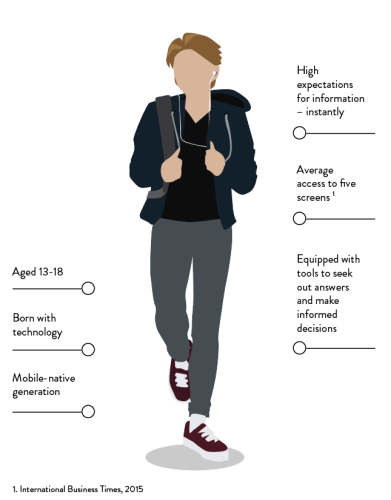
While marketers were busy figuring out how to connect with Millennials, the next generation started growing up. The Centennials — age 13-18 — are mobile native, savvy consumers, empowered with the tools to make their own decisions and find solutions. Already this generation has $44 million in annual spending power. And this number will continue to grow as Centennials age.
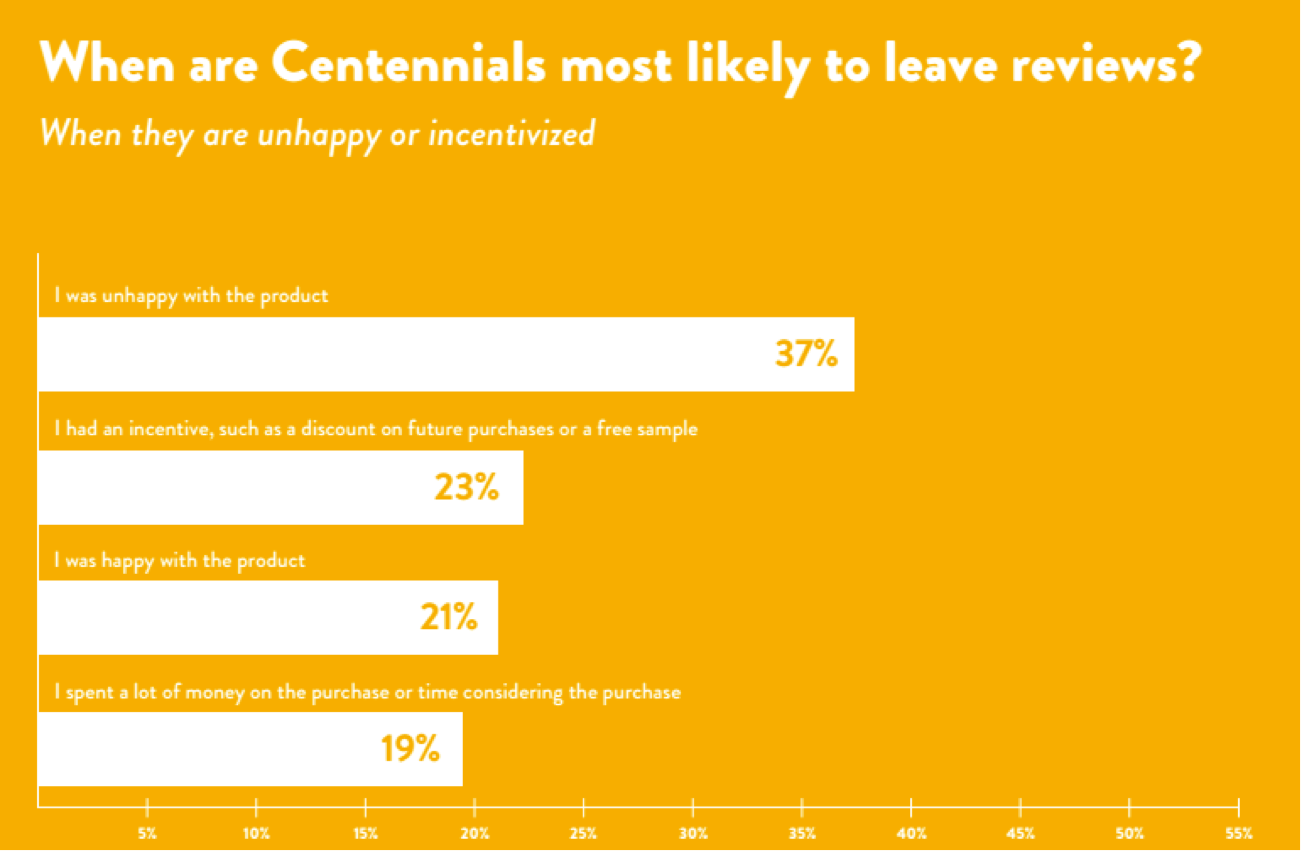
Centennials Are Reluctant to Engage With Brands In the past month, 62% of Centennials haven’t written an online review — despite the fact that 95% read reviews before making a purchase and 64% saying they read at least four reviews before they buy. Unfortunately for retailers, Centennials are most likely to leave a product review if they’re unhappy than any other reason.
What can brands and retailers do to generate more positive reviews? 23% of Centennials said they would be most likely to write a review if they were given an incentive. Centennials crave information and want to verify that they’re making the right purchase decision. And, there are ways to leverage this opportunity without compromising on your brand’s integrity.
Centennials Respond to Incentives One way of overcoming the challenge of securing reviews is through product sampling. Using this tactic, consumers are sent samples and asked to submit online reviews. Sampling also has the added benefit of promoting brand loyalty — something which technology has helped erode by providing unlimited opens to consumers. This allows retailers to build relationships with existing customers by rewarding loyalty while generating review content. Sweepstakes are another way to incentivize consumers. After all, everyone wants a chance to win big!
Remember: when incentivizing shoppers to write reviews, transparency is key. Ask your reviews software partner if they allow you to indicate whether a reviewer received a sample or another incentive for writing a review.
Negative Reviews Play a Key Role in the Purchase Journey of a Centennial Late last year, there was a lot of media buzz after Amazon.com filed a lawsuit against more than 1,000 people for writing fake product reviews ontheir website. Inauthentic reviews break down trust and have the potential to tarnish a brand’s image, and this case was a good reminder to brands and retailers to have measures in place to ensure review content is authentic.
Through our survey of Centennial shoppers, we found that negative reviews actually have a key part to play in the shopper journey. For starters, nearly half of Centennials said they wouldn’t trust a product’s reviews if there were no negative reviews present.
And 60% of Centennials read negative reviews first. Consumers look for negative reviews to validate their purchasing decisions, so retailers and brands need to embrace transparency and trust consumers to gather information and make up their own minds.
4 Tips for Retailers to Engage with Generation Z Centennials are reluctant to engage with brands and retailers. But there are things brands and retailers can do to better engage with these savvy shoppers.
Incentivize reviews: Offer customers a discount on future purchases or a free sample to encourage them to write a review. It’s a low-cost investment that will help generate future sales.
Be responsive: If Centennials are talking about you and your products in reviews, engage with them. And, empower customers to answer questions from other shoppers.
Be transparent: Don’t mislead consumers by removing negative reviews. And be sure to indicate if incentives were provided to the review writer. Otherwise, you’re likely to lose shoppers’ trust and risk breaking the law.
Clean up: Fake reviews can damage your brand, so real reviews need to be verified and false reviews protected again. Be sure to ask your ratings and reviews provider what measures they have in place to ensure reviews are authentic and fraud-free.
Remember: the purchasing power of Centennials will only continue to grow. Now’s the time to get a better understanding of the way this generation shops and use that information to hone your marketing plans to better reach this demographic.
As our newest generation of shopper, Centennials (also known as Generation Z) have high expectations. Armed with technology, they have the power to source information and make decisions without the influence of retailers. How can brands and retailers better connect with this next generation of shoppers? The first step is to understand how Centennials are browsing and shopping for products.
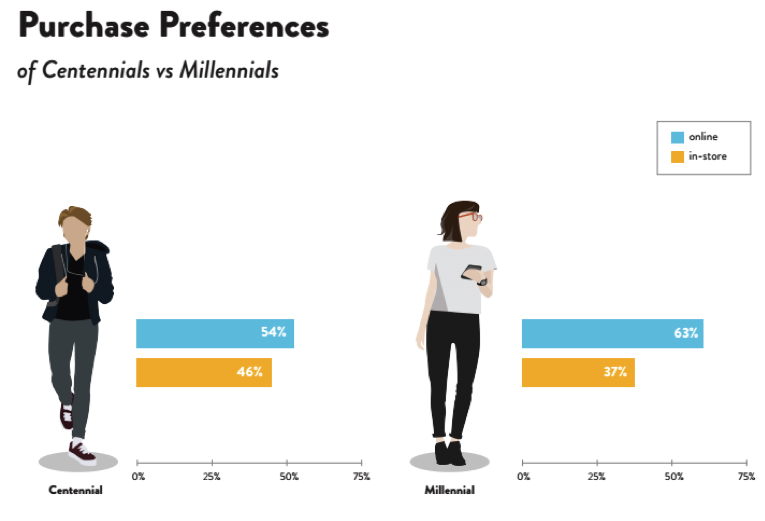
Back In-Store? When doing their research and browsing for products, 94% of Centennials and 96% of Millennials do so online. That probably comes as no surprise. Then, when it comes time to purchase, 63% of Millennials say they prefer to stay online, with just 37% opting to go in-store. However, Centennials are far more likely to go in-store to purchase, with 46% saying that this was their preference.
Of course, it’s not the end of online shopping. Nearly half of the Centennials we surveyed said they’ve made up to three separate transactions online in the previous month. But could this indicate a future resurgence for in-store shopping? Time will tell.
What Can Retailers Do? Though Centennials may be leading a return to in-store shopping, that certainly doesn’t mean brands and retailers should devalue their online initiatives. Instead, smart retailers must be flexible enough to evolve to meet each generation’s shopping needs and keep fine tuning the relationship between online and in-store.
What can you do now? For starters, make sure it’s easy for all shoppers to find the information they’re looking for — regardless of whether they’re browsing and buying online or in-store. Make sure you have reviews available on your mobile site and via mobile apps, and be sure to use reviews in-store, either through print advertisements or digital displays. Remember — reviews aren’t just a tool for those who browse and purchase online. Previous PowerReviews research found that 70% of shoppers want to access product ratings and reviews while shopping in-store.
If you don’t provide shoppers with the information they need to make a purchase decision, you risk losing them to a competitor who will.
Why do you think Centennials are more likely to purchase in-store? Share your thoughts in the comments below.
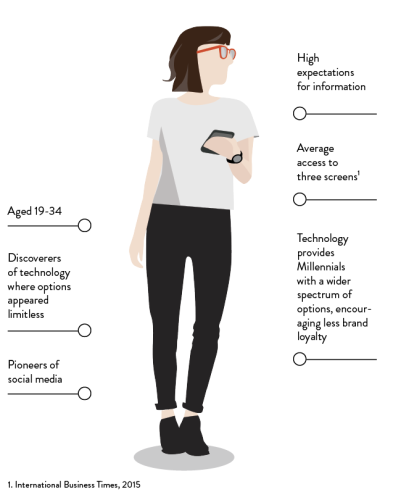
Over the past decade or so, there’s been a ton of commentary on the best way to engage with Millennials (consumers age 19-34). In fact, some claim that Millennials are the most studied generation ever. But while everyone’s been focused on the Millennials, the next generation of shoppers — the Centennials — have been growing up quickly.
Read on to learn how Generation Z is conducting product research prior to purchase, as well as 3 tips for better engaging with this generation while they’re doing their product research.
Centennials Research First, Spend Later Centennials have grown up in the worst recession on record, so it’s not surprising that they’re generally resourceful and practical when it comes to spending money. In fact, nearly three quarters of Centennials say they take their time with most purchases by researching price, reading product reviews, and exploring different brands.
In addition, Centennials are savers rather than spenders. In fact, three quarters of Centennials say they prefer to save money for the future rather than immediately spend on the products they want. And, they strive to be independent. When Centennials have a big purchase on the horizon, nearly half save up and buy it themselves. A third admit they do have help from their parents but still make a contribution. And just 13% of Centennials reported being treated to the product outright by their parents.
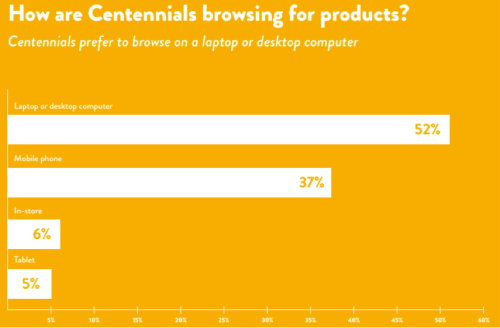
Centennials Prefer Browsing on Laptop and Desktop Computers According to the Pew Research Center, 85% of teens have access to a smartphone. So it comes as a surprise that more that half of Centennials prefer to do their product research on a laptop or desktop computer. The second most favored method for product research is the mobile phone, follow by the tablet. While Centennials do purchase in store, just 6% will do their research there. This is a clear warning shot that retailers should give Centennials lots of information early in their shopping journey.
Centennials Care About Quality The majority (70%) of Centennials say that quality is more important to them than price. So how do they determine quality? By reading online reviews. In fact, nearly half of Centennials say they won’t purchase a product if there aren’t enough reviews.
Reviews are now an expected part of the shopping experience with 95% of Centennials searching for and reading reviews to enhance and validate their product choice. The majority (52%) seek out reviews on third party blogs and websites. But a third want to see reviews directly on a retailer or brand’s website. It’s a new demand, which is on the rise. Retailer and brand websites that don’t have reviews are at a disadvantage and risk losing customers at a key part of their shopping journey.
Connecting With Centennials While They Browse How can brands and retailers better connect with Centennial shoppers while they’re conducting product research? Here are three key tips.
Emphasize quality and differentiation: Centennials seek quality over price. So make sure the reviews you feature discuss the quality of your products, rather than exclusively praising low pricing and delivery costs.
Engage early online: Nearly all Centennials are doing their product research online, so it’s key for brands and retailers to optimize their websites for browsing and purchasing. Centennials are hungry for information, so make sure you have lots of interesting and helpful product information, descriptions, sizing information, photos, and reviews.
Bolster your online presence: Centennials are using their desktop computers and mobile phones as a key part of their shopping experience. Ensure your website is optimized for mobile so it loads quickly and is easy to view and navigate, no matter where your customer is searching.
Now is the time to learn all you can about the next generation of shoppers and tailor your marketing strategy accordingly. Remember: If you fail to engage with this generation, they have the independence and control to conduct their entire shopper journey without you.
For the past several years, marketers have spent countless hours trying to figure out how to woo Millennials, that always-connected (and often criticized) generation of consumers age 19-34. Yet, most brands still haven’t managed to crack the code.
But enough talk about Millennials. The next generation of shoppers are growing up fast and could be set to change everything. Marketers, meet the Centennials.
Who are Centennials?
Centennials — also known as Generation Z — are a new generation of consumer who are self-aware, savvy and equipped with technology. Born around the turn of the century, they are the first mobile native generation. They don’t remember a time when a connected world wasn’t at their fingertips. Different from previous generations, technology isn’t exciting – it’s expected.
And they expect to access information instantly. The average Centennial has an attention span of eight seconds (one second shorter than the attention span of a goldfish). If you don’t manage to engage with Centennials in that short window of time, they’ll quickly move on to someone who will.
Distinguishing Centennials and Millennials While Centennials were born with technology, Millennials discovered it. Millennials grew up with the high-pitched tones of dial-up internet at home, they had their first mobile phones as teenagers and watched social media develop from MySpace to the vast social networks of today dominated by Facebook, YouTube, Twitter and Instagram.
Their discovery of technology impacted their consumption habits as well as their expectations. Millennials came of age during some difficult times; the recession began as many were starting their careers and they were also part of the credit era – with easy access to credit cards and loans making large purchases more attainable.
It’s no surprise that the demands of Centennials have naturally evolved from that of Millennials. Recently, PowerReviews surveyed more than 1,700 Millennial and Centennial consumers to better understand the differences and similarities in their shopping habits. We found that there is one major difference marketers need to be aware of: while nearly all Centennials do their shopping research online, more prefer shopping in-store. We also discovered that online reviews are more important to Centennials than Millennials with 95% reading reviews, and nearly two thirds reading at least four reviews before they buy.
Why Should Brands and Retailers Care About Centennials? Today, Centennials make up a quarter of the population, and already, these young consumers have $44 million in annual spending power. By 2020, this generation will make up 40% of the population, and their spending power will continue to grow exponentially.
Influencing Centennial conversation is key for brands and retailers looking to cultivate revenue and loyalty. Now’s the time to better understand the shopping habits of this next generation of consumers and use that knowledge to hone your marketing plans to best influence this demographic. Centennials are empowered with the tools to make their own decisions and find solutions, and unless brands and retailers work with them, they’ll be left behind.
By now, most brands and retailers recognize that reviews are a key component of a customer’s purchase process. After all, there’s nothing quite like hearing from another consumer who has already purchased and experienced a product. But consumers don’t just want to see reviews for products. They also rely on Seller Ratings to hear about other consumers’ overall experience shopping with a brand or retailer.
If you’re a brand with an ecommerce store, a consumer may never have shopped with you before. A strong Seller Rating can give buyers confidence that they’ll be able to have a smooth and secure checkout, receive their product quickly, and resolve any problems that may arise with customer service.
If you’re a retailer, there are usually a number of options where a consumer can buy a given product. A great Seller Rating helps you stand out versus your competitor and gives consumers a signal that your store is the best one to shop at for the given item they desire.
In addition to driving more qualified traffic and sales, Seller Ratings help brands and retailers identify ways to better serve their customers. Read on to learn 4 best practices that will help you generate more Seller Ratings and leverage them to drive sales and improve your business.
Ask for Feedback at the Right Time There are three main components to a comprehensive Seller Rating:
Shopping experience
Shipping
Service
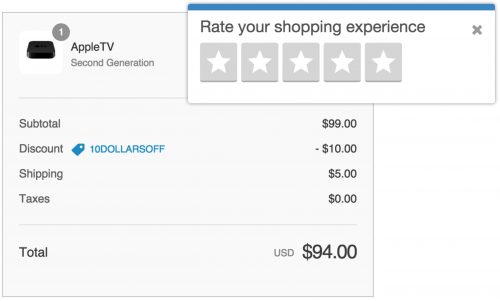
How can you generate this feedback from customers? It’s a best practice to grab a customer’s attention and ask them a question when they are in the context of each of these three components. For example, PowerReviews has a widget to ask about the customer’s buying experience right after purchase to get an answer while it’s fresh for the customer. Shipping should be asked via post purchase email after the product arrives. Brands and retailers should ask for service feedback after every experience over the phone or online.
Keep it Simple Make it as simple as possible for your shoppers to provide their feedback. Instead of asking for as much data as possible, boil down each component to a simple rating with the option for the shopper to provide additional, qualitative feedback.
Take Action on Insights Seller Ratings provide brands and retailers with a way to measure current performance, as well as actionable insights to better serve customers.
For example, let’s say a brand receives the following Seller Rating: “Site needs to give confirmation after I click on submit order.” After further digging into your Seller Ratings, you notice multiple customers mention this same frustration. You work with your web team so shoppers receive a confirmation after submitting an order, and watch how your rating changes over time.
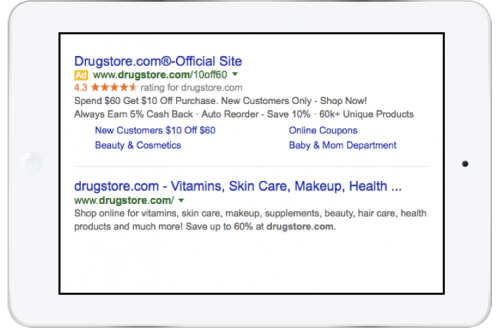
Add Star Ratings to Your AdWords Campaigns Including star ratings in your AdWords campaigns will help capture the attention of shoppers and entice them to click through to your website. In fact, it’s possible to achieve a 100% increase in click-through rates with Seller Ratings.
You work hard to earn the trust of your customers. With these best practices, you can leverage Seller Reviews to amplify that trust.
The holiday shopping season is officially upon us, which means shoppers are flocking to stores, their computers, and their mobile devices to browse and shop for holiday gifts. Think about all the rich data that you’ll be getting over the next several weeks and how it can help you after the holiday. If you’re using a post-purchase email (and you should be), reviews will continue to come in even after the holidays are over.
Make sure you’re taking advantage of that influx of content. Read on to learn four best practices that can help retailers maximize the impact of reviews generated during the holidays in order to drive more traffic and sales year-round.
Compile Review Data Into Shopping Guides Highlight the review content you generate during and after the holidays on your website to make it easier for shoppers to find top rated items. For example, compile lists of:
Top Products in a Category
Most Loved Gifts
Enhance Advertising With the Voice of the Consumer Consumers not only read reviews, they trust them. When compared to those over the age of 60, people under 45 are 61% more likely to trust consumer reviews more than the recommendations of family and friends. Positive reviews can give shoppers the boost of confidence they need to make a purchase, whether they’re buying for themselves or searching for a gift for a family member or friend. Use reporting to mine your review data and identify great reviews that can be used in advertising initiatives, including:
Print advertisements
Social media
Email marketing
Display advertising
3. Use Reviews In-Store If Amazon’s new brick and mortar store has taught us anything, it’s that reviews aren’t just a tool for online purchases. Reviews are also powerful for in-store purchases. In fact, PowerReviews research found that 70% of shoppers want to access product ratings and reviews while shopping in store. In addition to having mobile-friendly reviews on your mobile apps and websites, a best practice is to display reviews in-store, either through print advertisements or digital displays. Again, reporting is a great way to pull great reviews that will resonate with in-store shoppers.
4. Identify Areas for Improvement Reviews are chock full of powerful insights that can help you better serve your customers. Let’s say you’ve started selling a new purse on your website over the holiday season. Once the reviews start pouring in, you notice that several reviewers note that while they love the purse, the clasp doesn’t stay shut. You come to the manufacturer with this feedback and ask them to change the clasp. Once the clasp has been changed, make a note on the product page, and future reviews of the purse will likely improve. PowerReviews has lots of updates planned for our reporting system, which will make it even easier for clients to analyze and identify this powerful data.
Best of luck this holiday season!
Imagine you buy a new piece of luggage for an upcoming vacation. While you’re on vacation, one of the wheels falls off. You come home from your trip and write a 1 star review for the luggage. A few weeks later, you get a letter in the mail from the luggage brand telling you to take down your review or pay a steep penalty fee.
Sound unbelievable? It’s not. Today, some businesses are using non-disparagement clauses — also known as gag clauses — to prohibit customers from criticizing their company, notably, in the form of negative online reviews.
However, there’s currently a bill in process that would put an end to these bogus gag clauses. Known as the Consumer Review Freedom Act, the bill was approved by the Senate Commerce Committee last month, and it’s now on its way to the full Senate floor. If the bill passes, companies will no longer be allowed to prohibit their customers from writing negative reviews.
Receiving a negative review can certainly be disappointing. But the Consumer Review Freedom Act is a good reminder that it’s never a best practice to try to silence negative reviews. In fact, displaying all reviews — both negative and positive — helps you earn the trust of consumers. And trust is what drives sales and loyalty.
Negative Reviews Earn Trust PowerReviews research found that 86% of consumers say reviews are an essential resource when making purchase decisions. Why do consumers turn to reviews? Because of their authenticity. When a customer is researching a product, there’s nothing quite like hearing directly from another customer who has purchased the same product.
Your knee jerk reaction may be to delete negative reviews. But don’t do it. Our new Centennial Shopper Survey found that 44% of Centennials (age 13-18) would not trust product reviews that included no negative reviews. And 60% read negative reviews first. By displaying negative reviews, you’re showing consumers that your brand has nothing to hide.
Negative Reviews Help Consumers Make Smart Purchase Decisions Today’s consumers want all the information they can get about a product before making a purchase, and that includes negative reviews. In fact, 82% of consumers specifically seek out negative reviews. In addition to establishing trust and authenticity, negative reviews also help consumers determine whether or not a product is the right fit for them. Consumers will see the negative reviews, determine whether the setbacks are important to them, and make a more informed decision. Sometimes, a negative review can even lead to another consumer’s buying decision, as one person’s negative is a positive for someone else.
Negative Reviews Drive Sales Yes, you read that right. It might seem obvious that consumers are more likely to buy products with higher ratings. And that’s true…to a point. Consumers are more likely to buy a product with a 4 star rating than one with a 3 star rating. However, we recently partnered with Northwestern University and found that a perfect 5.0 star rating isn’t the most desirable. Instead, a consumer is most likely to purchase a product when its average star rating is between 4.2 and 4.5 stars. Why? Because a perfect 5.0 rating is seen as too good to be true. An average star rating of 4.2-4.5 stars, however, is seen as more transparent and balanced.
Negative Reviews Drive Improvement and Innovation Negative reviews can help you improve your business. How? By leveraging analytics and insights from user-generated ratings and reviews, you can shed light on opportunities for your business to better serve its customers.
For example, a PowerReviews customer had a watch on their eCommerce site with an average rating of 2.7 stars. The company took a closer look at their reviews and found that many customers commented that the clasp of the watch loosened after wearing it just a few times. The company worked with their manufacturer to improve the clasp, and the new version of the watch has an average rating of 4.3 stars. Without reviews (especially the negative ones), this company may not have identified that the clasp was causing issues.
Rather than trying to silence negative reviews, start embracing them. Negative reviews are an important way for both consumers and brands to listen and learn.
This is part two of a two part blog series on the power of using reviews in advertising.
In today’s transparency economy, customers have come to expect reviews for just about everything — from books and movies to hotels and experiences. In fact, Forrester research found that ratings and reviews are the most influential type of product content.
Consumers continue to trust the opinions of family and friends, but increasingly, they’re looking to strangers for guidance in their purchase decisions. After all, the most authentic voices are those of the people who have already purchased a product and shared their experiences online.
It makes sense, then, that more brands and retailers are exploring ways to integrate the voice of the customer into other marketing initiatives, like print and digital advertising. Using reviews data to substantiate claims in advertising, however, is a bit of uncharted territory, leaving many brands wondering how they can (or can’t) use this information in advertising. For example, when — if ever — can a widget company claim their product is the “Top Rated Widget”?
In a previous post, I focused on why ratings and reviews are so powerful. Today, I’ll focus on best practices for brands and retailers looking to integrate ratings and reviews into advertising initiatives.
Make Specific Claims There have been some recent instances of companies getting into hot water for making broad, general claims in their advertising based on the data from reviews. Rather than saying your blender is the “Highest Rated Blender,” consider touting it as the “Top Rated Blender on [Your eCommerce Site.]” Or, if you’re a brand that syndicates your content, it makes sense to say that your blender is the “Top Rated Blender on the PowerReviews Network,” as long as you have the data to back it.
Keep Reviews Authentic The power of reviews lies in their authenticity. Be sure you — and your reviews partner — have measures in place to preserve the authenticity of ratings and reviews on your site. For example, reviews should undergo a multi-step moderation process to ensure they’re authentic and fraud-free, including moderation by a real human. But don’t edit the actual content of the reviews. Shoppers’ voices should be heard as they really are.
In addition, don’t reject negative reviews simply because they’re negative. Negative reviews are powerful, as they can establish trust with your customers. And research from Northwestern University found that a 5.0 star rating isn’t the best for driving sales. Instead, an average star rating of 4.2-4.5 is ideal for purchase probability.
Generate More Reviews How many reviews do you have to have for a product before you can consider the feedback representative? Unfortunately, there’s no easy answer, and instead, it requires consideration on a case-by-case basis. The more reviews you have, however, the more representative the insights gained from them. Therefore, it’s key to consistently focus on generating more reviews, use data, and be specific in your claims.
Get Permission Let’s say one of your verified shoppers has submitted a well-written, positive review for a vacuum cleaner. Including this review in your advertising initiatives can be a powerful way to grab the attention of future shoppers. But before you use reviews or images in your marketing initiatives, get the contributor’s permission.
Partner With Legal Counsel If you’re considering an advertising initiative that uses ratings and reviews to substantiate claims, involve your legal counsel early on. He or she can provide guidance on the best way to incorporate this powerful content into your advertising.
Keep these best practices in mind to allow the voice of the customer to be heard in advertising, while also protecting your brand’s hard-earned reputation.
This is part one of a two part blog series on the power of using reviews in advertising.
Earlier this fall, Matt Moog, our CEO, was invited to speak on a panel about this topic at the Advertising Self-Regulatory Council’s (ASRC) National Advertising Division (NAD) Annual Conference in New York City. The panel explored how advertisers are finding new and creative ways to gather and use ratings and reviews as support for advertising claims. Matt — together with the panel members listed below — discussed the power of authentic feedback, as well as the legal issues of using ratings and reviews data in advertising.
John Feldman: Partner, Reed Smith, LLP
Mary K. Engle: Associate Director for Advertising Practices, Federal Trade Commission
Kelsey Joyce: Senior Director of Legal Affairs, T-Mobile
Hal Hodes: Staff Attorney, NAD
This post will focus on the power of authentic feedback, while a future post will provide tips and best practices for brands and retailers looking to integrate reviews into their advertising.
The Reliability of Reviews At the core of the panel discussion was the topic of reliability. Do reviews accurately represent the opinions of all customers? Are reviews less reliable because the writers are self-selected? And how many reviews need to be generated in order for a claim to be representative?
Those who write reviews are self-selected; consumers opt in to write a review. But the same is true for other data collection methods that we’ve come to rely on — such as customer surveys and awards based on consumer feedback. You’re shopping for a car and you check out the list of top rated SUVs from J.D. Power and reliability reports from Consumer Reports. Both are highly respected sources of information and both are based on feedback from consumers who opt-in to complete the surveys. Like these sources, reviews are authentic, trusted, and reliable sources of information that empower consumers to make better purchase decisions.
The Value of Reviews Today people review nearly everything: recipes, hotels, restaurants, movies, books, mobile apps, music, experiences, just to name a few. They expect to see reviews, star ratings and increasingly images and videos. In fact, according to a Forrester report, ratings and reviews are the most impactful type of product information for consumers.
Customers not only read reviews, they trust them — sometimes even more than they trust recommendations from family and friends. In a recent study, PowerReviews found that when compared to those over the age of 60, people under 45 are 61% more likely to trust consumer reviews than the recommendations of family and friends.
When consumers write reviews, they’re not just helping other consumers make informed purchase decisions. They’re also helping brands and retailers. Smart brands and retailers are using feedback collected in reviews to adjust their offerings to ensure their customers’ needs are met with better products, services, and shopping experiences. Reviews are becoming the primary tool that consumers and businesses use to listen and learn.
The Authenticity of Reviews People trust reviews as the true voice of other consumers. What makes them so powerful? Their authenticity. However, there’s been buzz in the media about fake reviews, which is why it’s crucial to take measures to ensure ratings and reviews are authentic.
Ideally, consumer reviews are un-edited commentary that’s been screened for fraud and moderated by a real human. All reviews submitted through the PowerReviews platform pass through a profanity filter and fraud detection technology, as well as a human moderation team. But we never edit the review content itself. Consumers’ voices are heard as they really are, which allows for a truly authentic experience for shoppers.
PowerReviews also encourages our customers to display all reviews — including the negative ones. It may seem counterintuitive, but negative reviews actually have an extremely positive impact because they help a brand establish trust and authenticity. A recent study we conducted with Northwestern University found that the ideal average star rating for a product is between 4.2 and 4.5 stars. A perfect 5-star rating is seen as inauthentic and too good to be true.
Authentic reviews are a powerful tool for both consumers and businesses to listen and learn.