Next week I’ll be heading to Las Vegas with a few members of the PowerReviews team for Shoptalk 2018, one of the largest retail and ecommerce events that focuses on the way consumers discover, shop and buy. This year Shoptalk is hosting 7,500+ attendees — including executives from established brands and retailers, startups, tech companies, investors, media and analysts.
The four-day event is filled with speaker presentations and keynotes, a wide range of exhibitors and countless networking opportunities. Some companies we’re looking forward to hearing from this year are:
Gap Inc.
Target
Ulta Beauty
Walmart Inc.
Hear from our CEO
If you’re attending Shoptalk, make sure to attend the Techtalk presentation by our CEO, Matt Moog. On Monday, March 19, Matt Moog will address the Open Network as well as PowerReviews’ newly released product and service offerings to increase content available for syndication across the Open Network.
Time: Monday, March 19 at 6:18 p.m.
Location: Stage 4, Booth #2445 in the Exhibit Hall
Stop by our booth
Stop by booth 2019 in the Exhibit Hall to discuss your business challenges, hear about our new product capabilities, and see firsthand how PowerReviews’ solutions can help you drive traffic, sales and insights. I’d love to talk with you about the opportunities and challenges you’re facing in 2018 and how we can help. The Exhibit Hall will be open:
Monday, March 19 from 8am-7pm
Tuesday, March 20 from 8am-7pm
Would you like to schedule time with us? Book an on-site meeting with us at Shoptalk today. We hope to see in Las Vegas!
Next week, members of the PowerReviews team will be heading to Palm Springs, CA foreTail West, an annual event that brings together the top minds in ecommerce and multichannel retail.
Each year, eTail West connects industry professionals with one another to discuss challenges and learn about the latest in marketing, analytics, mobile, social, email, personalization and more. It’s also a great opportunity to learn from some of the best in the industry, during keynotes and speaker presentations — this year there will be over 200 retail speakers presenting at the conference. We’re excited to hear from the all-star lineup of thought leaders including:
Jet.com
Sephora
Petco
GAP
Casper
Benefit Cosmetics
Esteé Lauder
Hayneedle
Crocs
Stop By Our Booth
If you’re attending eTail West in Palm Springs, be sure to stop by booth #507 for a free demo and to discuss how our solutions can help you generate more traffic, sales and insights. The exhibit hall will be open:
Tuesday, February 27 from 7:25am – 5:45pm
Wednesday, February 28 from 7:45am – 4:10pm
You can also contact us to schedule an on-site meeting, by sending an email to events@powerreviews.com.
See you in Palm Springs!
Why Negative Reviews are Good for Your Bottom Line
The power of online reviews
In the not-so-distant past, when a consumer was in the market for a product, she’d ask for the opinions of her family and friends. And though traditional word of mouth is alive and well, increasingly, consumers are seeking out the opinions other consumers — by reading product reviews. In fact, 95% of consumers consult customer reviews prior to purchase. And in a recent PowerReviews survey, consumers ranked the presence of ratings and reviews as the most important factor affecting purchase decisions behind only the price of the product itself.
Why 5 star ratings aren’t the best
It may seem obvious that the higher a product’s average star rating, the more likely a person is to purchase it. And that’s true — up to a point. PowerReviews recently partnered with Northwestern University and found that purchase likelihood for a product actually peaks when the average star rating of a product is between 4.2 and 4.5 stars — and starts to drop as the star rating approaches a perfect 5. In other words, a shopper is more likely to purchase a product with an average star rating between 4.2 and 4.5 than one with a 5 star rating, likely because consumers perceive a perfect five star rating as “too good to be true.” In addition, our recent analysis of 7.8 million reviews in the PowerReviews network found that one-star reviews generate more “helpful” votes than any other star rating, on average. Why? Because in addition to adding a level of authenticity to your review content, negative reviews steer consumers towards products that best fit their needs.Read on to learn more about why negative reviews are actually good for your business, and how to handle negative reviews if a customer leaves one.Who reads negative reviews? Why are negative reviews important for consumers? Reasons why negative reviews are important for businesses How to handle bad reviews How to respond to negative reviews Know when a response isn’t necessary
Who reads negative reviews?
The majority of consumers read through negative reviews to validate their purchasing decisions. In fact, we know from previous research that 82% of consumers seek out negative reviews. For consumers under 45 years old, that number jumps to 86%. What’s more, 60% of Centennials (age 13 to 18) read negative reviews first. [bctt tweet=”60% of Centennials read negative reviews first.”]
Why are negative reviews important for consumers?
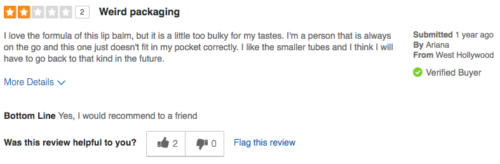
Negative reviews help consumers make smart purchase decisions, by letting them know everything about a potential purchase. Shoppers appreciate negative reviews and see them as an important element in their decision-making process, using them to hone in on the products that are right for them. In addition, it’s key to remember that one person’s negative might be completely irrelevant (or seen as a positive thing) to another person. For example, in the review below, a consumer gives a lip balm two stars. She mentions that she likes the formula of the lip balm, but the packaging is too bulky to fit in her pocket. A future shopper, who tends to store her lip balm in her purse, will find the negative comments irrelevant, and will proceed with the purchase.Consumers consider not only the review, but also the reviewer. If the author of a negative review seems unlike the reader, the reader may discount the authenticity of the review for them personally. For example, a vacationer leaves a review for a resort he recently stayed at, and mentions there being lots of kids as a negative. But a consumer who plans to travel with her children actually sees this as a positive thing.
Reasons why negative reviews are important for businesses
Establish Trust and Authenticity Displaying negative reviews on your site helps establish trust and authenticity with your customers. Seeing negative reviews assures consumers that the brand has nothing to hide, and therefore, is a brand that can be trusted. Consumers understand that a product can’t be all things to all people, and they appreciate negative reviews as an important element in their decision-making process.Increase sales Remember that the ideal star rating for a product is between 4.2 and 4.5 stars, and purchase likelihood starts to drop when a product’s average star rating reach a perfect 5. The occasional negative review gets your average star rating between 4.2 and 4.5 where purchase likelihood peaks. [bctt tweet=”The ideal star rating for a product is between 4.2 and 4.5 stars.”] Drive improvement and innovation Reviews — both positive and negative — are full of insights that can help you improve your products and your customers’ overall experience. If you’re not already, start monitoring what your customers are saying about your products, take their feedback into consideration, and pass it to the proper internal teams to guide improvements. For example, a PowerReviews customer had a watch on their ecommerce site with an average rating of 2.7 stars. The company took a closer look at their reviews and found that many customers commented that the clasp of the watch loosened after wearing it just a few times. The company worked with their manufacturer to improve the clasp, and the new version of the watch now has an average rating of 4.3 stars. Without reviews (especially the negative ones), this company may not have identified that the clasp was causing issues.
How to handle bad reviews
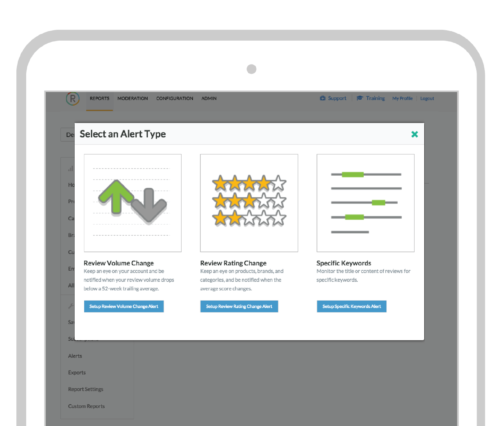
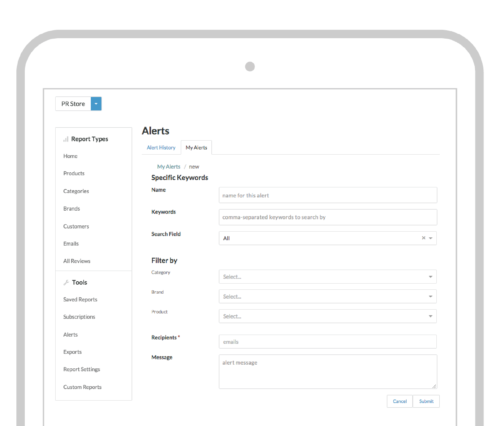
It might be tempting to delete a negative review, but don’t do it. Remember when we said that 82% of consumers read negative reviews? And 44% of Centennials wouldn’t trust product reviews if there aren’t any negative reviews present? By displaying negative reviews, you’re showing consumers that they can trust your brand because you have nothing to hide. When you respond to a negative review, you’re showing both the person who wrote the review — as well as future shoppers — that you truly care about your customers’ feedback. Make sure to monitor your reviews so you can quickly respond to one-star reviews, then leverage the feedback to improve products and the customer experience. If you’re a PowerReviews customer, make sure you’re taking advantage of our alerting capabilities. Set up alerts so you can quickly be notified when a specific keyword is used in a review or when there’s a significant drop in the number of reviews or average star rating you’re generating.
How to respond to negative reviews
It’s a best practice to respond to negative reviews, to let your customers know their feedback is appreciated. Those customers will feel empowered and future shoppers will see that your brand cares about its customers.
Five Suggestions for effectively engaging with customers who leave bad reviews:
Empathize with the customer’s frustration
Thank the customer for their feedback and let them know that you value their input
Provide a customer care phone number
Offer to let the customer return the item for a refund or exchange
Address a question or concern the customer has
Two Methods for responding to negative reviews:
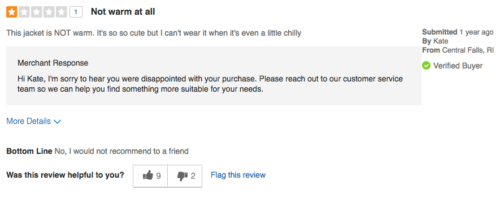
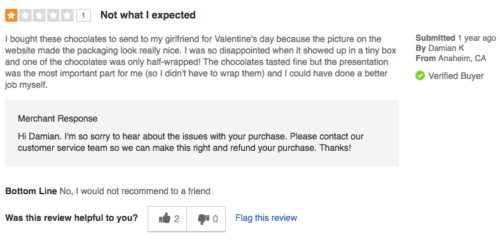
Post a public reply Posting a response shows customers that you’re listening to them and that you value their feedback. Public replies are particularly useful when a product defect or feature has been (or is in the process of being) fixed. Respond via email Another option for responding to a negative review is to email the reviewer directly. By directly reaching out to an unsatisfied customer, you are creating a more personal interaction and can quickly resolve issues while creating goodwill. The one downside of this option is that if you only respond to the customer directly, you are missing out on the opportunity for other customers to see your response.
Know when a response isn’t necessary
It’s beneficial to define a strategy around responding to negative (or positive) reviews on your site. While we recommend using this opportunity to address customers and acknowledge their feedback, it’s not necessary to respond to every negative review on your site. Understanding which reviews require a response, what your timing and solutions for a response will be, along with the response itself are all important components of a merchant response strategy.
Wrapping Up
Today, consumers have come to expect ratings and reviews when shopping for products in nearly every category. Brands and retailers need to prominently display ratings and reviews — both positive and negative — on their product pages, or risk losing customers to a competitor that provides this information. Rather than trying to silence negative reviews, start embracing them.
The following is a guest post from our partners at Workarea.
While Black Friday may be the “official” kickoff of the holiday shopping season, there’s plenty of sales to be made before and after Black Friday and Cyber Monday.
What days, devices and industries drove the greatest gains during the 2017 holiday season? The Workarea Commerce Intelligence Unit gathered insights from over 300 sites running on the Workarea Commerce Platform. Here are the highlights of Holiday 2017 from Workarea’s exclusive study.
Copy and paste this source code to embed this infographic <blockquote class=”embedly-card”><h4><a href=”https://hubs.ly/H09MbLL0″>null</a></h4><p>null</p></blockquote>
<script async src=”//cdn.embedly.com/widgets/platform.js” charset=”UTF-8″></script>
About Workarea
Workareais the modern commerce solution for medium to large businesses, with ecommerce, content management and analytic insights built as one platform.
The (Growing) Power of Reviews
There was once a time (in the not so distant past) when the idea of asking for feedback from consumers — then displaying that feedback for the world to see — was a pretty radical concept. But that has all changed — and quickly.
Today, consumers have come to expect easily accessible information to aid their purchase decisions. And brand-provided information isn’t enough. Increasingly, consumers want to hear about the experiences of others like them. They satisfy this need for information by reading ratings and reviews.
More than three years ago, PowerReviews set out to explore the role ratings and reviews play in consumer decision making and found that nearly all consumers (95%) read reviews and 86% considered them an essential resource when making purchase decisions. However, we recognize that in today’s fast-paced world, consumer behavior continues to evolve. That’s why we again conducted a survey of more than 1,000 American consumers to better understand how consumer dependence has changed over the past three years.
We recently hosted a webinar to share the results of this survey as well as provide practical recommendations for businesses looking to leverage ratings and reviews to better attract and convert shoppers. Read on to learn five tips that we shared.
1. Collect Reviews
Our latest research found that 97% of consumers read reviews, and 89% consider them an essential resource when making purchase decisions. The message is clear — if you’re not already, now is the time to start requesting reviews from your customers.
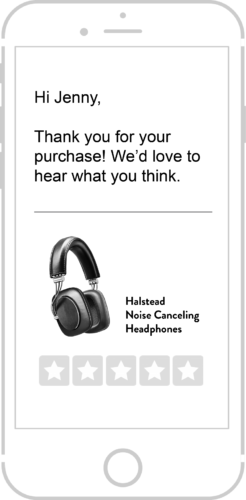
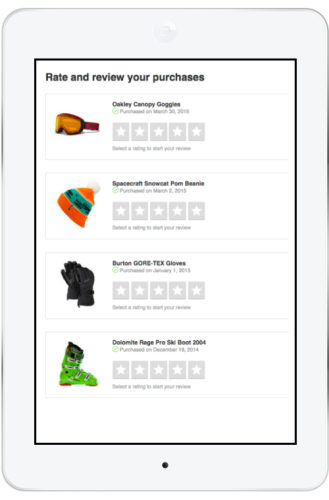
Remember: the most effective way to generate this content is to send a post purchase email, asking consumers to write reviews for recently purchased products. Make sure the entire process for submitting a review is quick, simple and can easily be completed from any device. Finally, ensure it’s easy for your consumers to review multiple products at once, rather than requiring them to navigate to separate pages to write each review.
2. Make Reviews Front and Center Online
When shopping online, 63% of consumers specifically seek out websites that have product reviews, up from 57% in 2014. And 77% of mobile shoppers are more likely to purchase an item if the website or app offers product reviews, up from 70% in 2014.
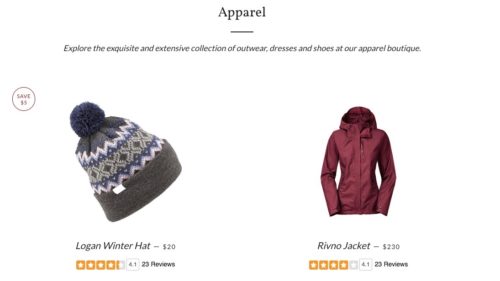
Once you’ve started generating reviews, start prominently displaying this content on your product pages so shoppers can easily find it, regardless of the device they’re using to shop. Look for opportunities to include ratings and reviews on other parts of your website too, including category pages and even your homepage.
3. Feature Reviews In-Store
A growing number of consumers are turning to reviews to inform in-store purchases. In fact, our latest research found that 39% of consumers won’t buy products in stores without first reading reviews.
In addition to ensuring this content is easy to find and read on your website from any device, look for opportunities to display review content in your brick-and-mortar store locations. For example, include star ratings and excerpts from reviews on signage alongside key products.
4. Syndicate Reviews
Syndication is the transfer of user-generated content (UGC) like ratings and reviews collected on a brand site to its retail partners.If you’re a brand that syndicates content to retail sites, you’ll benefit from getting this content in front of more shoppers in more places. And if you’re a retailer that accepts syndicated brand content, you’ll benefit from increased review coverage and depth, without having to generate that content yourself. Today, retailers receive an average of 58% of their review content from syndication.
5. Embrace Negative Reviews
85% of shoppers seek out negative reviews, up from 82% in 2014. Notably, this number jumps to 91% among consumers age 18-29, pointing to the growing demand for transparency, especially among younger consumers. In addition, our research with Northwestern University found that purchase probability peaks when a product’s average star rating is between 4.2 and 4.5.
No business should aim for negative reviews, but allowing them on your site adds a level of authenticity to your content and helps you build trust with shoppers. And, as our latest research found, shoppers are actively seeking out this content in order to make well-informed purchase decisions.
Learn More
Curious what else we covered during our recent webinar? Check out the on-demand session now!
Recently our competitor, Bazaarvoice, made an announcement that implied they, and not retailers, control what consumer review content appears on retailers’ websites. They announced that an “Open Network” is one where they continue to control access and charge access fees to the retailers in their network. PowerReviews defines an Open Network as one that permits content to flow without a gatekeeper and without access fees.
With so many eyes focused on the Open Network, I want to take this opportunity to provide clarity and certainty to the industry on how PowerReviews plans to protect the broad availability of consumer reviews.
Here are the facts.
What is well understood about review syndication?
As most brands and retailers know, review syndication is an important best practice that ensures optimal review coverage and depth. Brands collect reviews from their customers and syndicate those reviews to retailers for the benefit of consumers, the retailer and the brand. Brands and retailers count on companies like PowerReviews and Bazaarvoice to perform the mechanics of collection, moderation, syndication and reporting.
Most brands and retailers also know that for the last six years, Bazaarvoice and PowerReviews have “cross-syndicated” brand content to our respective retailers. And the industry is generally aware that Bazaarvoice was compelled to do so because a court determined they had violated the law and acted anti-competitively when they acquired and were subsequently forced to divest PowerReviews nearly four years ago.
What is not well understood about review syndication?
What most of the major retailers never fully understood or specifically agreed to, was Bazaarvoice’s practice of charging brands “access fees” for their reviews to appear on retail sites. These fees resulted in many brands not being able to afford syndication — and retailers, brands and consumers missing the benefit of better review coverage. It is common for retailers to charge fees to brands, it is unheard of for a third party technology company to do so without the explicit consent and knowledge of the retailer.
I liken this practice to a vendor who supplies shelves to a retailer and then decides, without consulting with the retailer, they are going to charge slotting fees to brands. Or an e-commerce technology platform vendor telling a retailer that brands that sell on the retailer’s site must pay the vendor a fee. Both of these examples seem absurd, but this practice of charging brands for access has been the Bazaarvoice business model for years. In fact, we estimate that Bazaarvoice has charged brands at least $100 million dollars in access fees over the past six years.
Not only has Bazaarvoice been charging exorbitant access fees to brands without informing the retailers of the practice, but for years they also required brands to use the Bazaarvoice collection platform if the brand wanted to syndicate review content. Under competitive pressure from PowerReviews and the industry, Bazaarvoice only just recently announced they would syndicate content from brands not using their platform.
They don’t want their technology vendors trying to lock their brands in to a specific technology platform, and they certainly don’t want their technology vendors charging exorbitant access fees which ultimately prevent them from receiving as much content as they could from their brand partners.
So what is PowerReviews going to do about it?
PowerReviews is making the following commitments to retailers and brands:
PowerReviews will not charge access fees
PowerReviews will continue to syndicate brand content to retailers who do not use our platform
PowerReviews will continue to accept syndicated content from brands that do not use our platform
PowerReviews will drive innovation and competition in this space
Should Bazaarvoice attempt to block access to review content we will work directly with retailers (as we already have been) to ensure they have access to the content, and we will make sure brands using Bazaarvoice’s technology have access to retailers using our technology. Our simple message to Bazaarvoice clients is “Bazaarvoice does not own your content and does not control what content appears on your site. You do.” Period. Full stop.
The agreement we currently have in place with Bazaarvoice has established methods of exchanging content, and we pay each other for basic services such as onboarding clients, moderating content when needed and product matching. We have nearly six years of operational experience with these methods. We have provided them with a proposal months ago to continue this relationship beyond July and thus far they have not responded.
We hope and expect that pressure from retailers and brands who do not want to see any interruption and see the power of choice and competition, will persuade Bazaarvoice to eventually agree to extend this agreement. However, for now it appears they are retaining a position that they can return to the old way of charging access fees.
So, to ensure continued syndication without access fees we are establishing direct connections with retailers and brands, and will be providing a solution that eliminates access fees and helps more brands and retailers benefit from syndication.
Some things you should know about PowerReviews
PowerReviews has over 1,000 customers who reach more than 500 million shoppers each month. We currently syndicate 60 million pieces of content, across 4 million products, from more than 500 brands, to more than 500 retailers. Brands and retailers that use our platform represent hundreds of billions in sales.
The direct syndication partnerships PowerReviews has in place with major retailers that do not use our technology help us reach another 500 million shoppers each month.
The PowerReviews platform is capable of efficiently and affordably servicing the smallest to largest retailers and brands. We are proud of our ability to handle global clients with hundreds of sites and brands while also working with new, innovative and emerging brands. Our goal is to introduce tens of thousands of brands and retailers to content syndication.
PowerReviews is based in Chicago, has 150 employees and has been in business for eleven years. We have an intense focus on the needs of our clients and a passion for the value of reviews and user generated content and feedback. We believe passionately in the power of transparency and accountability. And we have seen 95% net retention of our clients.
Nearly 200 Bazaarvoice customers have switched over to the PowerReviews platform over the last three years.
Over the last four years, PowerReviews has made substantial investments in the flexibility and sophistication of our moderation and matching technologies and services. We consider our capabilities to be best-in-class. And we have some new and innovative network-based services being released this year. We look forward to sharing those with you soon.
In conclusion, PowerReviews will operate a truly open syndication network that does not charge access fees, respects brand relationships with retailers and does not dictate to retailers what content can appear on their sites. We will accept content from brands that do not use our platform and we will syndicate to retailers who do not use our platform. This approach will benefit retailers, brands and consumers alike by encouraging competition and choice.
Adding Gift Givers to Your Holiday 2017 Review Strategy
When brands and retailers think about review collection, they traditionally focus on generating this content from product owners, or end-users. This makes sense, since end-users will have the most experience with the given product. However, insights from gift givers are also extremely valuable for future shoppers, as well as brands and retailers.
According to the NRF, holiday retail sales are expected to increase between 3.6 and 4 percent in November and December 2017, compared to the same period last year. That means there’s around $678.75 billion up for grabs this holiday season, a large portion spent by consumers purchasing gifts for family and friends. If you’re not incorporating these gift givers into your review collection strategy, you’re missing out on a big opportunity to generate a ton of review content.
Read on to learn four tips for capturing feedback from gift givers this holiday season — and throughout the year.
Four Ways to Generate Reviews from Gift Givers During Holiday 2017
1. Reframe the Wording of Post Purchase Emails At PowerReviews, we’ve found that more than 60% of reviews are written as the result of post purchase emails, so it’s essential that you send them. However, make sure the call-to-action in your emails is worded in a way that’ll allow you to collect feedback from both buyers and end users. Ask questions like “Why did you buy this product?” or “Who was this product purchased for?” to invite all types of consumers to provide their input.
2. Capture Feedback Immediately After Purchase Include a section on your “Thank You” page that allows shoppers to provide feedback immediately after purchase. For example, ask the consumer why they purchased the product. This makes it easier for shoppers to provide feedback while they’re still in your ecosystem and allows you to display additional insights directly on the product page.
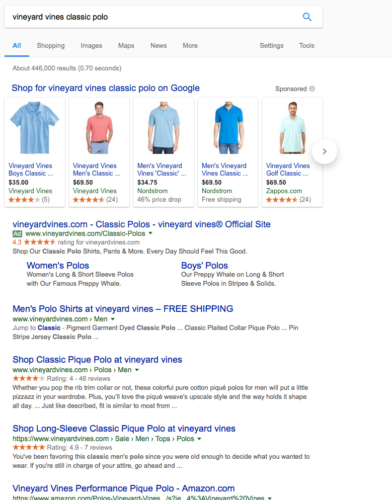
Also, consider asking for feedback on the consumer’s overall shopping experience by asking questions such as, “how was shopping with us?” Then, syndicate these Seller Ratings to Google to display star ratings in your Google ads.
3. Simplify the Collection Process The easier it is for a gift giver to write a review, the more likely they are to do it. Make the content collection process simple and mobile-friendly. Give shoppers the ability to choose star ratings or answer a few quick questions instead of writing lengthy responses. If you use a tag-based review system, add “great gift” as an option for best uses.
4. Incorporate In-store Shoppers Almost 90% of consumers will shop in-store this holiday season, according to research from PwC. Don’t miss out on an opportunity to collect reviews from these in-store shoppers. To generate feedback from this segment of customers, either tap into an existing rewards program or ask them to share their email addresses at the register. Then, send them a post purchase email asking them to provide feedback on their recent purchases. Consider offering an incentive, such as a coupon for a future purchase.
Wrapping Up
Reviews help future shoppers find the products that best fit their needs — and they help businesses identify areas to improve. This holiday season, make sure you’re generating as much feedback as possible by incorporating gift givers into your review strategy.
Meet the Team is a recurring series on the PowerReviews blog, allowing you to get to know the people behind our success.
We recently caught up with Susan Eckman to learn about her role as Legal Counsel, and to hear about her favorite PowerReviews moments so far.
How long have you been with the PowerReviews team? I’ve been with the company since June 2016.
Tell us about your (growing!) team and your role at PowerReviews. Being in-house counsel means I get to work with different PowerReviews departments on a daily basis to help them meet their business goals, while making sure we are in compliance with any applicable laws, rules, contractual obligations, etc. One thing I focus on, when working with the different departments, is knowing why we want to do something. Once I know the why, the majority of the time, I can help people get to their end goal (or at least close to it).
In September, Gina joined the legal team as a paralegal and I am so thankful to have her! Her strong work ethic, attention to detail, and desire and ability to learn things quickly have made her an invaluable part of the team.
What’s the best part of your job, as Legal Counsel? Getting to work with smart and passionate people everyday. Since everyone needs legal at some point, I get to know every department. It’s amazing how talented our teams are.
Can you tell us about one of your favorite PowerReviews moments? Our 2016 holiday party was amazing! Also the day finance “adopted” me as one of their own (even though I hate dealing with numbers), that was pretty fantastic as well. Do you have any hidden talents we might not know about? I played volleyball at Clemson University. Go Tigers!
Thanksgiving is already next week which means that the busiest shopping season of the year will soon be upon us. As you’re working hard to prepare your website and your stores for the surge in holiday traffic, be sure you’re factoring in the shopping habits of the newest generation of shoppers: Centennials (aka Generation Z).
Today, Centennials, who were born around the turn of the century, make up a quarter of the population. And already these young consumers have $44 million in annual spending power…not to mention a heavy influence on their parents’ spending.
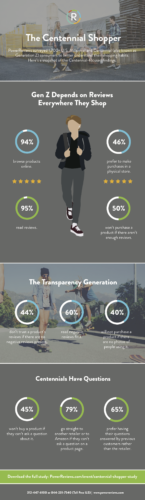
PowerReviews recently surveyed more than 1,000 Millennial and Centennial consumers to better understand their shopping habits. Check out the infographic below for a snapshot of the study’s key findings. Then read on for six tips based on this research for effectively reaching Centennial consumers this holiday season — and beyond.
1. Make Reviews Front and Center
Reviews are an expected part of the shopping experience for Gen Z. In fact, 95% of Centennials search and read reviews before making a purchase, and nearly two thirds read at least four reviews before converting. What’s more, nearly half of Centennials say they won’t purchase a product if there aren’t enough reviews.
This holiday season (and throughout the year), make sure product reviews are prominently featured on your website, both on the product page and beyond. In addition to providing young shoppers with the information they’re looking for, featuring reviews on your site also improves SEO. On average, when a product adds one or more reviews, the product page experiences a 108% lift in traffic.
2. Optimize Your Online Presence for Mobile
Centennials are connected consumers — most don’t remember a time before mobile phones, social media and the internet. Today, mobile accounts for 52% of their time spent online daily, which adds up to an average of 4 hours and 10 minutes spent on mobile each day. And this generation is using their mobile phones for just about everything — including shopping for products. In fact, 37% of Centennials prefer to research and browse for products on mobile devices.
In order to appeal to the next generation of shoppers, ensure your website is mobile optimized so it loads quickly and is easy to view and navigate wherever your customer is.
3. Feature User-Generated Visual Content
Visual content — such as photos and videos — have become an integral part of the lives of today’s consumers. This is especially true for young consumers, who are heavy users of visual-based social media channels such as Instagram and Snapchat. Gen Z shoppers have also come to expect visual content when they’re shopping for products — and they’re not satisfied by photos provided by the brand or retailer. In fact, 40% of Centennials won’t purchase a product if there are no photos of people using the product.
So don’t limit your consumers to text-only reviews, especially when targeting Gen Z shoppers. Make it easy for consumers to submit visual content, such as photos and videos, along with their reviews. Then, display this visual content in a compelling way on your product pages. Seeing other consumers using your products “in real life” will give young shoppers the confidence they need to convert.
4. Answer Centennials’ Questions
No matter how comprehensive your product information, consumers are going to occasionally have questions. And consumers want an avenue to get answers to these questions. Our research found that nearly half (45%) of Centennials won’t buy a product if they can’t ask a question about it. And 79% will go straight to another retailer or to Amazon if they can’t ask a question on a product page.
Add Q&A software to your website to allow your consumers — Centennials or otherwise — to get answers to the questions that stand in the way of making a purchase. Otherwise, you’ll lose them to a brand that does. And be sure to ask potential Q&A vendors if they allow previous customers to answer incoming questions, which is key because nearly two thirds of Centennials prefer having their questions answered by previous customers rather than the retailer.
5. Embrace Transparency
Why do Centennials turn to reviews? Because of their authenticity. While you never want to aim for negative reviews, displaying all reviews — both negative and positive — helps consumers identify the products that best fit their needs. And it also helps you earn the trust of consumers. In fact, 44% of Centennials say they wouldn’t trust a product’s reviews if there were no negative reviews present, and 60% read negative reviews first.
So be sure you’re displaying these reviews — regardless of sentiment. In addition, remember to badge all reviews that have been written as the result of a product sampling campaign or an incentive program so future shoppers have a clear understanding of who wrote each review.
6. Don’t Overlook Brick-and-Mortar
Our research found that while the majority of Centennials research and browse products online, when it’s time to make a purchase, 46% prefer to go in-store. And according to research from IBM, more Centennials shop in-store during the holidays than any other generation.
Look for opportunities to display user-generated content — such as ratings and reviews — in your stores to attract and convert in-store shoppers. For example, highlight star ratings and customer reviews alongside top-selling products to give your customers the confidence they need to make a purchase.
Wrapping Up
This holiday season, make sure you have a strategy in place to engage Centennial shoppers.

 Respond via email