How Experiential Retail is Building Connections with Consumers
Last month, I had the opportunity to attend Shoptalk, a retail and ecommerce conference focused on how consumers discover, shop and buy. The conference agenda was packed with impressive keynotes (Lionel Richie, anyone?) and breakout sessions led by professionals from leading global brands and retailers, including some of our very own customers such as Tumi, Perry Ellis and Ulta.
Throughout the event, I noticed a few key themes that came up time and again:
The interplay of online and in-store shopping
How experiential retail is building connections with consumers
The potential for artificial intelligence to change the way we shop
In my last post, I focused on the first theme: the interplay of online and in-store shopping. In this post, I’ll focus on how experiential retail is building connections with consumers.
Experiential Retail: Experience for Engagement Every day, it seems like there’s news of another retailer shutting its stores. But brick and mortar isn’t dying — physical stores still play a key role in the shopping journey. In fact, PowerReviews research found that 48% of shoppers who start their journey on a brand or retailer site prefer to make their final purchase in-store. And nearly half of Centennials (consumers at 13-18) prefer to shop in-store.
The brick and mortar retailers that are surviving — and thriving — are those that are providing rich, personalized experiences to their in-store and online shoppers. In order to offer great shopping experiences, it’s key for brands and retailers to arm associates with the tools they need to provide them.
Health and Beauty Providing Memorable Experiences Today, brick and mortar stores won’t survive simply by being a place to conduct a transaction. Stores must also be a place where shoppers can find entertainment and inspiration. One industry that’s excelling at leveraging stores to create experiences to connect with shoppers is health and beauty.
Health and beauty retailers are marrying online and in-store and providing rich experiences for their shoppers in many ways. For example, some beauty retailers are providing in-store stylings for shoppers — which isn’t a new concept. But then, the associate will email the shopper before and after photos — along with a list of the products used during the styling. This provides shoppers with not only products, but also a unique experience. It also encourages on-the-spot in-store purchases, as well as future purchases online.
Future Proof: Building a Fashion Brand for the Millennial Consumer For me, the most inspiring presentation of the conference was delivered by Uri Minkoff, Co-Founder and CEO of Rebecca Minkoff, the largest fashion brand founded by a Millennial female with some of the most digitally innovative stores. The session, titled “Future Proof: Building a Fashion Brand for the Millennial Consumer,” focused on the ways the brand is ensuring its success and connecting with its shoppers.
Rebecca Minkoff pioneered the business model of See, Buy, Wear, meaning clothing collections are immediately available to the public after appearing on the runway, rather than weeks or even months later. Minkoff says this business model shift has been “transformative” for the business.
Rebecca Minkoff leveraged the See, Buy, Wear model by hosting a fashion show at The Grove in Los Angeles earlier this year. The brand invited other brands to participate and provided shoppers with the opportunity to connect with brands, bloggers, and other fashion influencers. This event gave the brand a chance to truly connect with consumers and provided shoppers with a unique, memorable experience. And it boosted the brand’s revenue, too; after the show, sales were up 64% from same period last year.
Uri Minkoff also discussed how the brand is maintaining relationships with their shoppers in the era of the Internet of Things. For example, Rebecca Minkoff recently released a “Connected” handbag that, once purchased, puts the consumer into a loyalty program that provides exclusive offers, style recommendations, and even an invitation to a Rebecca Minkoff fashion show. Essentially, this handbag is the key to unlocking unique experiences and opportunities for the wearer.
Now is the time for brands and retailers to develop a strategy for providing their shoppers with a great customer experience, both online and in-store. Learn how user-generated content can help you connect with your shoppers by contacting us today.
Last month, we headed to Las Vegas for Shoptalk, a retail and ecommerce event that focuses on how today’s consumers discover, shop and buy. Shoptalk is only in its second year, but it’s already grown impressively. This year’s event had more than 5,500 attendees and 330 speakers including Lionel Richie, as well as executives from some of the largest global retailers including Walmart, Target, Kohl’s and Amazon.
During the event, we spent part of the time at the PowerReviews booth in the Exhibit Hall. We always enjoy attending shows like this so we can hear firsthand about the challenges brands and retailers are facing today and chat about how user-generated content can help them better connect with their customers.
We also spent part of the time in sessions hearing industry pros discuss a wide range of topics about online and in-store shopping across a variety of different categories. Throughout the event, we noticed a few themes emerge:
The interplay of online and in-store shopping
How experiential retail is building connections with consumers
The potential for artificial intelligence to change the way we shop
In this post, we’ll focus on the interplay of online and in-store shopping or what we call the new omnichannel. Future posts will focus on the other themes from Shoptalk.
The New Omnichannel
We’ve all seen the statistics about the growth of online shopping. With more and more consumers shopping online, does that mean traditional brick-and-mortar retail is a dying breed?
Brian Cornell, Chairman and CEO at Target, opened his keynote session about the future of retail in a connected world by comparing the question of “digital or physical” to the old Miller Lite question: “Tastes great? Or less filling?” It isn’t a question of either/or. Instead, both online and in-store play important roles in the customer journey. The challenge for retailers is to provide shoppers with rich experiences, regardless of how they choose to shop.
Physical Stores Driving Online Success
Throughout the conference, speakers shared examples of how brick and mortar stores can be a valuable asset for driving ecommerce sales. The key is to successfully connect the online and in-store experiences.
One way retailers are leveraging physical stores to drive online orders is by offering in-store pick up of ecommerce sales. Approximately 85% of Americans live within 15 miles of a Kohl’s store, and currently, around a third of online sales are fulfilled in-store.
And 50% of Americans live less than four miles from a Target Store, with 55% of all digital sales being fulfilled in store. The bonus for retailers is that when consumers pick up online orders in-store, it often drives additional in-store sales.
Emerging retailers talked about using physical stores, including pop-ups, to test products and branding, create buzz, and most importantly, to drive online sales. Apparel innovator ModCloth used pop-ups to test the radical idea that clothing for women of all sizes be displayed together– no “plus size” section. They described woman literally in tears because they felt included. For ModCloth, a pop-up tour validated their body-positive branding, created buzz, and fostered real emotional connections with shoppers.
Just days before ShopTalk, Walmart announced its acquisition of ModCloth, another bold move by the retail giant, who is aggressively working to complement their status in the physical retail space with key ecommerce acquisitions including Hayneedle, Jet, and now ModCloth.
The future of retail will be the best of both worlds. Retailers that successfully connect emotionally with shoppers and combine the online and in-store experiences will be those that are most successful.
Read on to learn why visual review content is key for apparel brands and retailers:
If you’re wanting to get in contact with our team, feel free to call us at 312-763-6406 to talk to our team!
Increase Conversions Today’s consumers have become accustomed to visual, engaging content, which is driving the demand to see a product being used before they buy. For apparel brands and retailers, visual content is no longer optional, it’s expected.
Photos provided by the brand or retailer have their part to play, but they’re not enough to satisfy today’s information hungry shoppers. Our Centennial Shopper Study found that 40% of Centennials (age 13-18, aka Generation Z) won’t purchase a product if there are no photos of people using the product.
People want to see photos of real people using a product. This is especially true when a consumer is purchasing clothing or shoes online without first trying on the product in a store. For example, let’s say a shopper is searching for a dress on a brand’s website, but she wants to know what a particular dress looks like on different body types. She notices several shoppers submitted photos of themselves wearing the dress as part of their reviews, so she clicks around and finds someone with a similar body type to hers. She also notices that the shopper paired the dress with a cardigan from the same brand. She confidently adds both the dress and the cardigan to her shopping cart.
Reduce Return Rates One of the biggest challenges apparel brands and retailers face is keeping return rates at bay. According to a study conducted last year by Shorr Packaging, consumers were predicted to return more than 30% of items purchased online during the 2015 holiday season.
The study found that the top two reasons people choose to return a product are:
“The product was not what I expected.”
“My product did not fit properly.”
It’s key, then, for brands and retailers to provide shoppers with an accurate picture of what to expect from a purchase so there are fewer surprises when the item arrives in the mail. The professional photos you feature on your site are a great start, but allowing reviewers to submit their own photos allows future shoppers to see what a product looks like “in real life.” For example, a shopper looking for a new handbag can get a better idea of what the bag looks like on a real person who has actually purchased the handbag rather than an anonymous model or mannequin. Armed with this visual information, the shopper can make a well informed purchase…and be less likely to return the product she purchases.
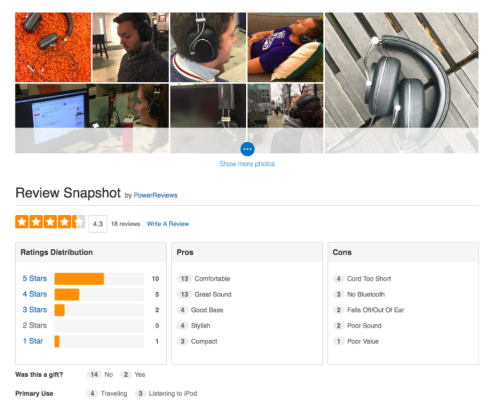
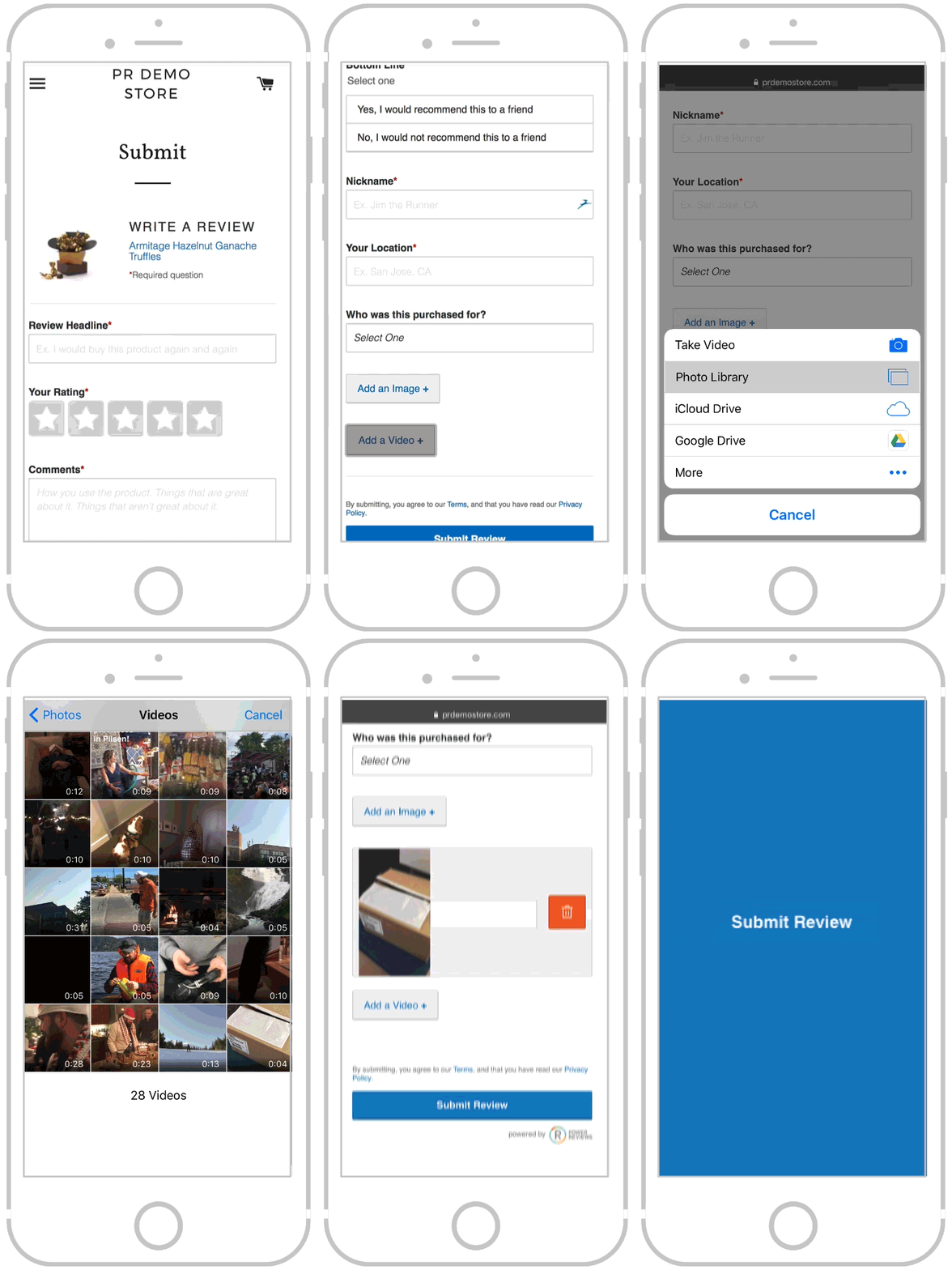
Get Started Collecting More Visual Review Content Collecting visual review content doesn’t have to be difficult. In fact, the PowerReviews write-a-review form is an easy way for consumers to submit authentic, visual UGC along with their written review. Visual UGC enriches your product details pages, while providing consumers with multiple examples of your product being used by real buyers. If you’re an existing PowerReviews customer, ask your Client Success Director or Community Manager about some upcoming enhancements that will make image collection even easier.
Meet the Team is a recurring series on the PowerReviews blog, allowing you to get to know the people behind our success.
We recently sat down with Arend Henderson, our SVP, Analytics, to chat about how he likes to take risks and use his creative side – to improve a client’s understanding of how analytics can be used to improve business, and to improve a wicked barbecue sauce at a 4th of July party.
With about 20 years in a leadership role in analytics at other firms, what brought you to PowerReviews? On one hand, I was working heavily in the advertising industry, and this allowed me a new and interesting challenge on the consumer side of things. On a higher level, my decision to come here was a combination of data, the people here, and the untapped potential that analytics presents for the customers here.
Looking at report data can be overwhelming for non-technical folks. What do you love about it? It’s funny, compared to many others in my field, I fall more on the creative side of things. But those on the outside still see what I do as very technical. What we can do is very special – the data available from ratings and reviews can tell a retailer or brand what people think of their products, and even how they rank compared to the competition. This is information that industries spend a lot of time and money trying to obtain, and we can coax this all from the data. That’s exciting.
How do you approach the practical benefits of analytics with your clients? I find that the basics cannot be underrated, and that the focus needs to be on the business questions, with an eye to continuously refining those questions. While some folks can be dazzled by a new technique, or want to see some sort of chart that shows them some aspect of data, I may challenge them by asking what they are looking to do with the data. Our goal here is to provide more insightful solutions, and not just necessarily respond to a specific request when we may have more to offer our clients.
Do you find your clients utilize their reporting capabilities to their greatest advantage? We have some great products, but sometimes the most useful tools are already right there, built into the reporting. The core value is in the tracking of site behavior and conversion, combined with the ratings and review information. We’re always available to talk to our clients, to dig deeper in order to bring out the most beneficial data, including how to act upon what is discovered.
How do you explore your creative side outside of the office? In my free time I like to relax with my wife and two sons. I especially enjoy photography, and making a fantastic barbecue for friends and neighbors. I love when I can try something new and get an unexpected, delicious result.
It’s no secret that visual content is becoming an integral part of the lives of today’s consumers. Photography — once limited to those with an expensive camera and extensive training — is now available to anyone with a mobile device. In fact, Deloitte predicted that in 2016, 2.5 trillion photos would be shared or stored online, a 15% increase from 2015. And it’s estimated that over 90% of those photos will be taken on a mobile device.
Visual content is also becoming a key part of the path to purchase. A recent PowerReviews study found that 72% of shoppers say they’re more likely to buy a product that has reviews that feature photos and videos in addition to written text. And increasingly, consumers are using photos and videos to express their opinions about products.
[bctt tweet=”72% of shoppers are more likely to buy a product that has reviews that feature photos & videos.” username=”powerofreviews”]
Visual content is changing the way consumers browse for and purchase products. With that in mind, PowerReviews released new capabilities to help brands and retailers leverage visual content in order to increase consumer engagement and conversion. Read on to learn more about two of our new visual content capabilities.
Image Gallery PowerReviews research found that 40% of consumers prefer to find visual content directly on a brand or retailer website. In comparison, 29% prefer to see photos or videos of products on Amazon, and 26% want to see this visual content on a third party review site.
Our new Image Gallery allows retailers and brands to showcase user-submitted photos in an engaging gallery where consumers prefer to find it — directly on product pages. With the new Image Gallery, brands and retailers will increase the visibility of the visual content they collect, leading to higher engagement on product pages and greater purchase likelihood. In addition, this new feature eliminates the extra step of having to curate images from other sources, freeing up your internal teams to dedicate time to other projects.
Native Video Consumers are seeking out video content from other consumers. So it’s key for brands and retailers to make it as easy as possible for shoppers to view this rich media.
To answer consumers’ demand for video content, PowerReviews is the first in the industry to introduce Native Video capabilities, which allows consumers to easily upload videos directly from their mobile devices. By allowing consumers to submit and view video directly on brand and retailer sites, rather than redirecting them to YouTube or other third party sites, brands and retailers are able to generate a higher volume of video content which will then drive more traffic and sales.
If consumers can find all of the product information they’re looking for directly on your site, they’ll stay engaged and be more likely to convert. And since the video is submitted as part of a review, the brand or retailer owns this content.
Not yet a client? If you’re not currently a PowerReviews customer but interested in learning more, contact us to schedule a demo.
Driving traffic, sales and loyalty with user generated content
Earlier this month, I had the opportunity to escape the cold Midwest weather to head to Austin for South by Southwest (SXSW), a massive, annual conference that celebrates the convergence of the interactive, film and music industries.
On Saturday, I spoke on a panel with leaders from other leading software companies including ReviewTrackers and IBM on how to maximize and optimize the customer journey. My portion of the panel focused on advocacy and how identifying and engaging with brand advocates can help brands drive traffic, sales and loyalty. Read on for the three steps I shared for engaging with and leveraging brand advocates.
1. Identify existing and potential advocates.
Start off by taking a look at transaction history for your customers. In addition to overall dollars spent, also consider the specific products someone has purchased. For example, if you want to find someone who will promote baby products to expecting and new parents, the first step is finding someone who has purchased these types of products.
You’ll also want to take a closer look at the reviews your potential brand advocates have submitted. In addition to the number of reviews they’ve written, also consider how frequently their reviews are voted as “helpful” by other shoppers. You’ll also want to determine whether a potential advocate has submitted visual content such as photos and videos as part of their reviews. User generated photos and videos are becoming more and more valuable to brands, with 88% of consumers specifically looking for photos and videos submitted by other consumers prior to making a purchase. Consumers who take the time to submit visual content are highly engaged and are likely good candidates to become your next brand advocates.
2. Collect content from advocates.
After you’ve identified existing or potential advocates, ask them to contribute content to your ecommerce site such as ratings and reviews, photos and videos. In order to generate a large volume of reviews, make sure the process for submitting and reading reviews is mobile friendly from start to finish. Advocates should be able to easily write reviews and upload photos or videos directly from their phones.
In addition, potential advocates are likely to purchase multiple items in one transaction, so it’s key to make it easy for them to review multiple products from one page. PowerReviews customers have experienced a 36% increase in product coverage by doing this.
Also, remember that your advocates may need a little encouragement to submit review content. PowerReviews research found that more than half of consumers not writing reviews cited needing motivation to do so. Consider offering incentives such as free, faster shipping, loyalty points, early access to sales or products, entry into a sweepstakes, or free samples in exchange for a review. Just be sure to badge these reviews appropriately so future shoppers understand that these reviews were generated in exchange for an incentive.
3. Leverage content from your advocates
Once you’ve generated content from your advocates, identify ways to amplify that content. For starters, you can leverage this content on other areas of your website, including your homepage, category pages, and campaign-specific landing pages.
You can also include review content from brand advocates on your in-store signage. For example, Amazon has display cards throughout their brick and mortar stores that feature reviews from real consumers.
Finally, think of ways to amplify the visual content your advocates submit in print and digital marketing initiatives. For example, Apple has an ongoing campaign that features user photos taken using Apple products.
If you haven’t developed a brand advocacy program, now’s the time to start. While loyalty programs reward and incentivize one shopper at a time, advocate programs have the power to inspire thousands of shoppers through the influence of one person.
Later this month, I, along with a few members of the PowerReviews team, am heading to Las Vegas forShopTalk, one of the largest retail and ecommerce events that focuses on the way consumers discover, shop and buy.
Last year’s inaugural ShopTalk event provided the opportunity for attendees to network with 3,100 industry professionals while hearing from some of the biggest global brands and retailers. And this year’s event will be even larger, with 5,000+ attendees and an agenda packed with powerful keynotes, focused breakout sessions, and plenty of networking opportunities. Attendees will leave the conference with new connections and lots of ideas to better connect with consumers as they browse and purchase products.
We’re especially looking forward to hearing from some of our own clients, including:
Tumi
Perry Ellis
Ulta
And more!
If you’re attending ShopTalk 2017, I hope you’ll take advantage of one (or both) of these opportunities to connect with me and the PowerReviews team to learn about product updates that’ll help you drive even more traffic, sales, and insights with user generated content.
Hear from our CEO It’s no secret that consumers are seeking visual content such as photos and videos prior to making a purchase. And while professional photos and videos produced by brands and retailers have their role to play, a growing number of consumers specifically want to see visual content from other consumers. In fact, PowerReviews research found that 88% of consumers look for visuals — such as photos and videos — submitted by other consumers prior to making a purchase. And 72% of shoppers say they’re more likely to buy a product that has reviews that feature photos and videos in addition to written text.
Join PowerReviews CEO Matt Moog in Track Room 5 at 8:40 on Monday, March 20 to hear about new product capabilities that will allow brands and retailers to better connect with consumers through user generated photos and videos.
Stop By Our Booth Stop by booth #1213 in the Exhibit Hall to discuss your business challenges, hear about our new product capabilities, and see firsthand how PowerReviews’ solutions can help you drive traffic, sales and insights. I’d love to talk with you about the opportunities and challenges you’re facing in 2017 and how we can help.
The Exhibit Hall will be open:
Sunday, March 19 from 6:30pm-8:30pm
Monday, March 20 from 8:30am-7:30pm
Tuesday, March 21 from 8:30am-6:00pm
You can also contact us now to schedule an on-site meeting.
We hope to see you later this month in Las Vegas!
How Brands and Retailers Should Approach the Increasing Use of Mobile in the Shopping Experience
Mobile shopping continues to be on the rise. So it comes as no surprise that brands and retailers continue to invest more and more into this shopping channel. Recently, Shop.org surveyed brands and retailers to better understand their plans for 2017, and found that nearly 40% plan to focus a majority of tech investments on mobile.
Read on for four tips to ensure you’re ready to meet your shoppers’ expectations via mobile.
1. Ensure Your Site Provides a Great Mobile Experience These days, your beautiful, functional website must also be mobile-compatible. Up to 53% of shoppers abandon a website that takes more than 3 seconds to load, so have your site primed for mobile users. Don’t forget to test it from several mobile platforms to prevent customer frustration.
2. Pay Attention To Your Millennial and Centennial Shoppers These younger shoppers are more likely to research and purchase products on their mobile devices than their older counterparts. PowerReviews found that 37% of Centennialsprefer to browse and research products from a mobile phone. Technology is the norm for these young shoppers, so the mobile shopping experience must be seamless.
Meanwhile, ensuring the review collection process is mobile optimized can help brands and retailers collect more reviews from shoppers. evo, a leading online retailer of outdoor gear and fashion apparel, increased the number of reviews written on mobile by 204% when they switched to a mobile-friendly post purchase email.
4. Consider Offering Extras to Your Mobile Users In the battle with Amazon over free perks (see our latest whitepaper), it’s become clear that brands and retailers need to continue to offer more to their customers. This includes anything special for your mobile users, as discounts are a top motivating factor.
Increased use of mobile in the shopping journey can be a real opportunity for brands and retailers. Learn some other tips for making the most of mobile in your reviews and ratings.
In our last two blog posts, we detailed the state of retail and also how user generated content plus perks can attract and win shoppers. It’s clear the challenges that retailers face. But what’s the solution? Read on for seven tips to compete (and win) against Amazon.
1. Fill the Product Page with Details PowerReviews research found that poor product information tops consumer irritations both pre- and post-purchase. In fact, more than 43% of shoppers were irritated by poor product descriptions when researching products. A product not meeting expectations was cited by 21% of shoppers as a top post-purchase irritation, tied with size and fit. Retailers and brands must comprehensively describe the product or service. If selling apparel, improve product descriptions by including fit and size information as part of a review form.
2. Cultivate Trust Through Authentic and Transparent Reviews Customers won’t typically be swayed by any one review, positive or negative. Average star ratings allow shoppers to get a sense of the overall customer experience, with nearly two-thirds of shoppers citing they are ‘very important’ or ‘important’ aspects of their purchase decisions. Shoppers will go to Amazon if they don’t find enough reviews for the products they are considering.
3. Use Reviews and Q&A to Improve Products and Information Reviews and Q&A give brands and retailers a direct line of feedback with consumers. Allowing shoppers to ask questions helps to be sure you are meeting their expectations and they are getting exactly what they signed up for, taking some of the risk out of online shopping. Reviews can also alert the brand or retailer to flaws in a product that can be fixed to satisfy consumers.
4. Add Consumer Submitted Videos and Images to Product Pages Ask for images and videos and display them on the product and category pages: 88% of consumers specifically look for visuals such as photos or videos submitted by other consumers prior to making a purchase. Allow purchasers the opportunity to submit their own images to create content from real customers—meeting customer demands for more information and managing purchase expectations.
5. Welcome Negative Feedback Shoppers are suspicious of a squeaky clean rating and want to be trusted to make their own judgments on others’ negative experiences. Of consumers, 82% specifically seek out negative reviews and consumers are most likely to purchase a product when its average star rating is between 4.2 and 4.5 stars. Accept the negative feedback and take steps to correct it publicly when it makes sense. Use negative reviews to improve product descriptions and to improve poor performing products.
6. Redefine Loyalty and Reward Advocates Consumers who are passionate about a brand or product are highly valuable. Ease and loyalty top the list of reasons why consumers choose to start shopping on a retailer or brand website, with 48% stating it as the top reason. These loyalists will not only purchase on the site, they will be brand advocates willing to answer questions and provide detailed product reviews. Amazon’s Vine program identifies loyalists not by spend, but by content generation, offering free samples to members to write reviews. Identify advocates through both content generation and by spend. Of consumers, 33% want free products as a reward for loyalty. Retailers and brands should offer samples to generate reviews, photos, and images and identify content from verified buyers or associated with free samples, which shoppers cite as the most important factor in building trust.
7. Leverage Physical Stores Many retailers have assets that Amazon is only starting to build: physical stores. Retailers and brands should leverage physical stores not only as a revenue channel, but also as a way to display and drive content. In its Seattle area bookstore, Amazon displays star ratings and review excerpts for books using simple shelf tags. Brands can also include reviews in their mobile app to influence the in-store experience. Retailers can generate reviews from in-store purchases by emailing loyalty program members after a purchase, asking them to contribute reviews, photos and videos.