

How to build your UGC program and strategy
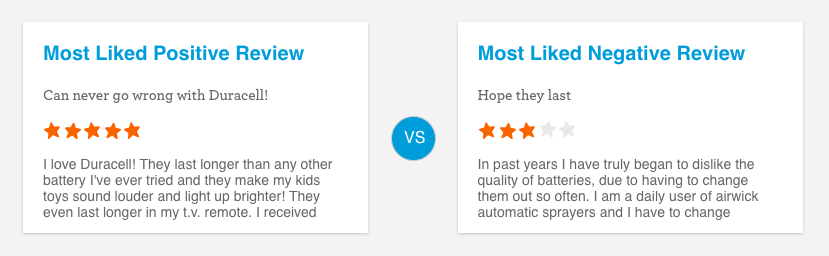
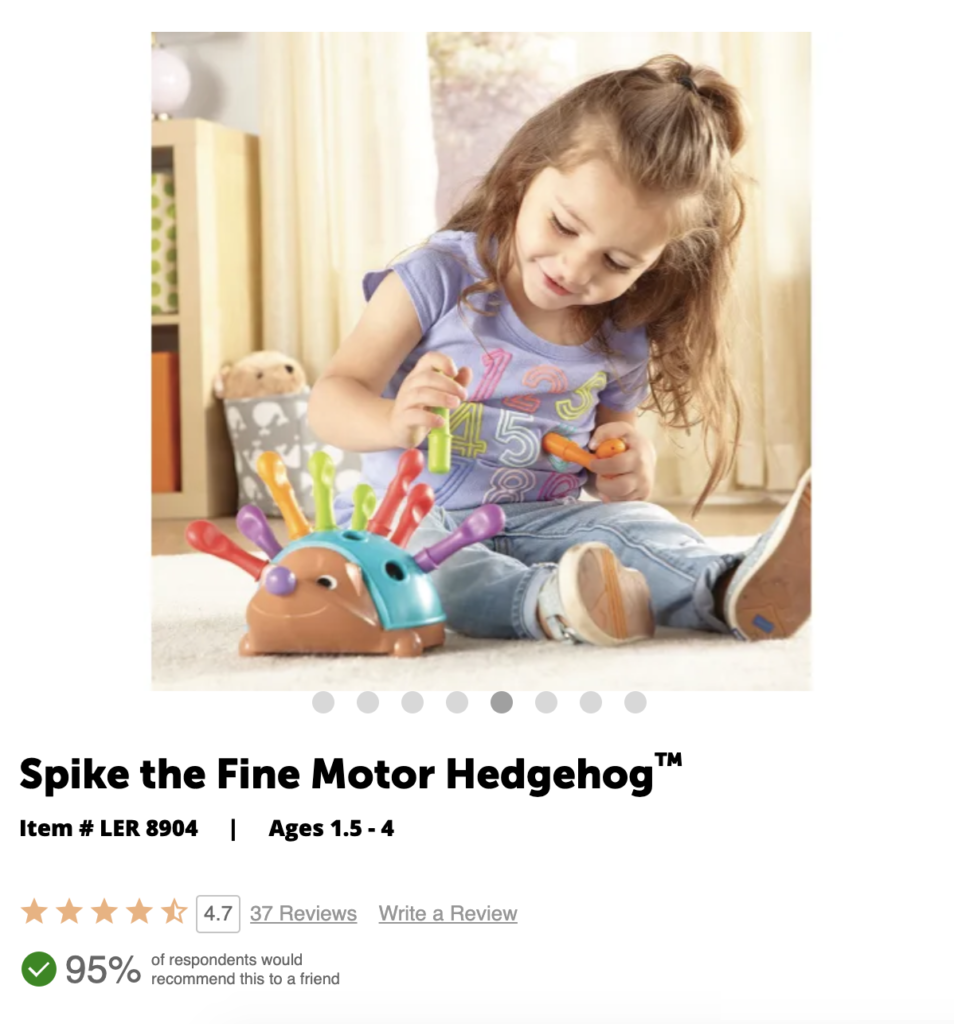
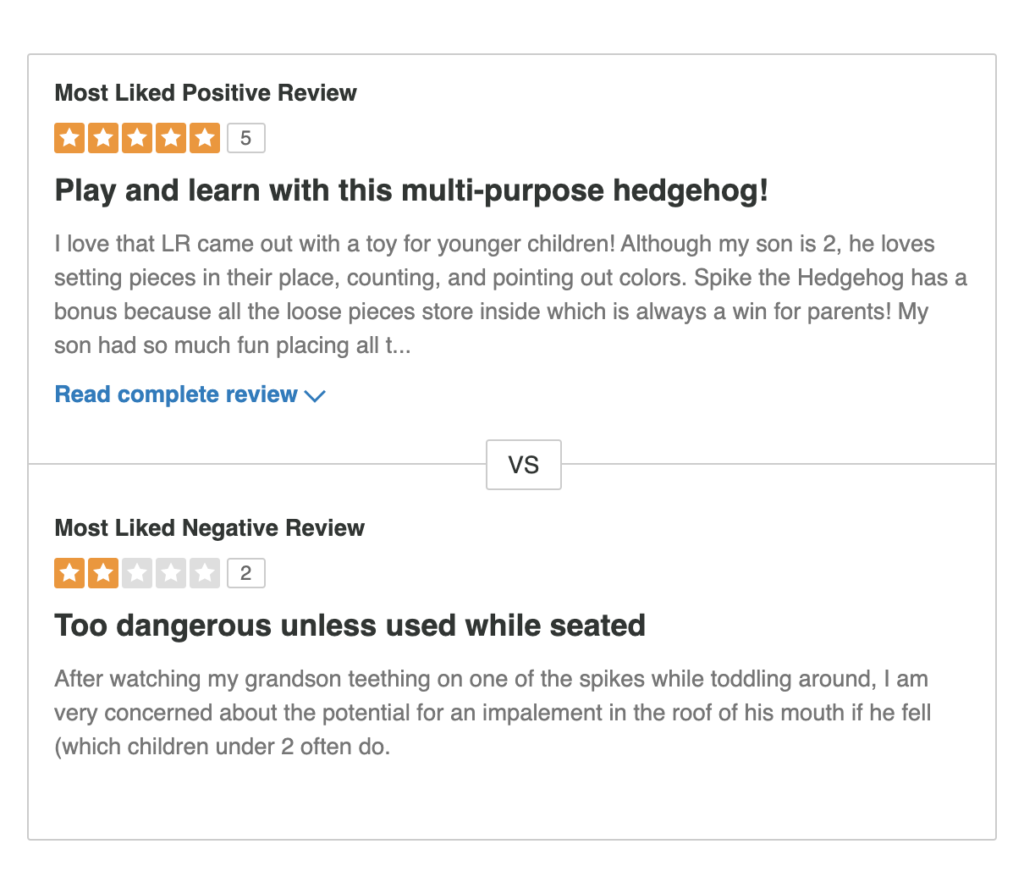


By now the value of User-Generated Content (or UGC for short) on website product pages is well known. Ratings, reviews and consumer imagery/video are all highly valued social proof points for shoppers as they progress through the customer journey on the path to purchase.
But despite the extensive positive impact the UGC they capture has on sales and traffic, and even the more qualitative benefits like shopper confidence, few brands and retailers analyze UGC on a deeper level. Either as insight to drive product portfolio improvements or enhance their customer experience.
Why?
They haven’t had access to an intelligence engine powerful enough to take all of the rich sentiment data (from the thousands of UGC they’ve collected across the web) and turn it into clear, actionable insights.
Well, we at PowerReviews can very confidently say: all that has changed now.
UGC offers a ton of context-rich and actionable insight voluntarily provided by your customers. The sort of information organizations otherwise have to go to great lengths to capture through surveys or other methods. What makes UGC so powerful?
UGC is a datasource with incredible potential but has up to now been completely underutilized. It’s time to unleash it.
We built UGC Analytics with input from today’s top brands and retailers. Over the past year, as we were building and improving upon this suite of analytics products, we asked for feedback from our customers — who also knew their review data was a goldmine of incredible insights just waiting to be discovered.
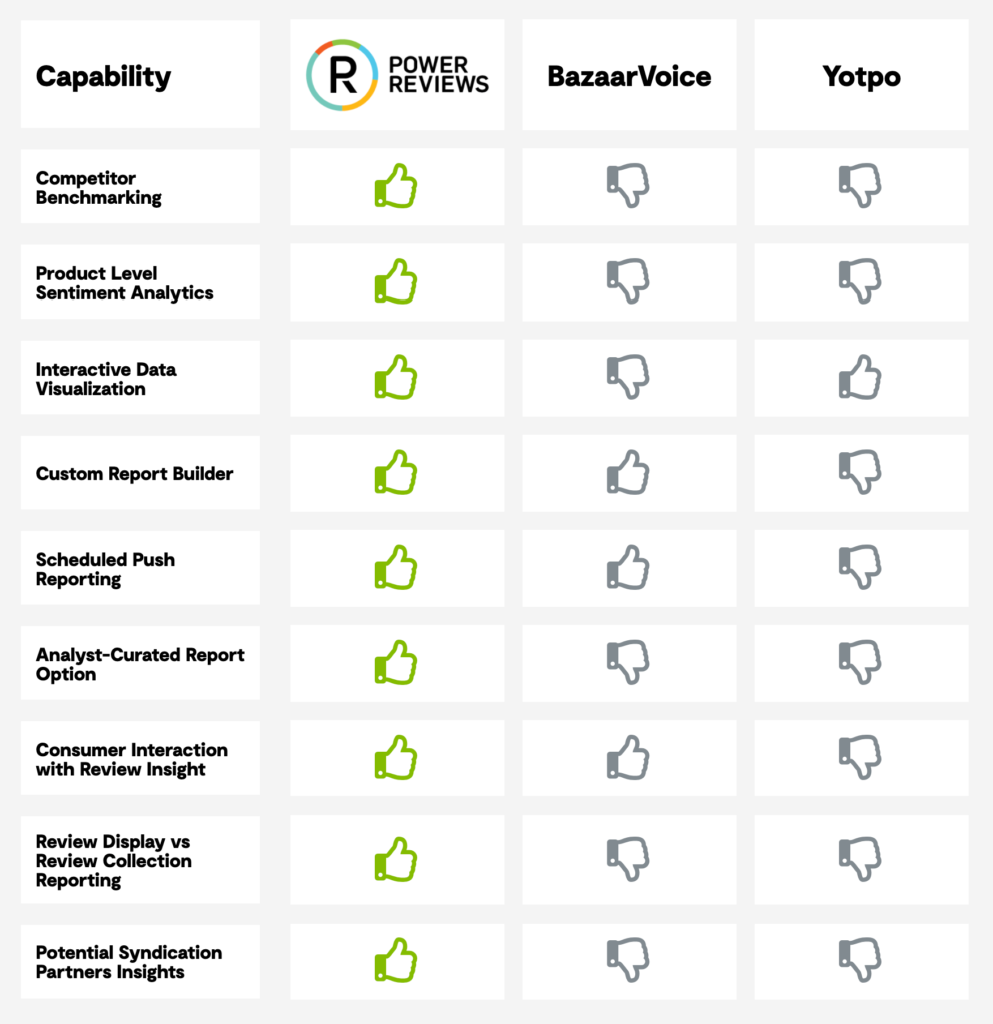
In fact, we did a thorough analysis of what other vendors in the space are able to offer. UGC Analytics is superior for a number of reasons. Check out our capability comparison chart for a deeper dive.
Here are a three things UGC Analytics does that no other UGC vendor does:
Keep reading for more on that.
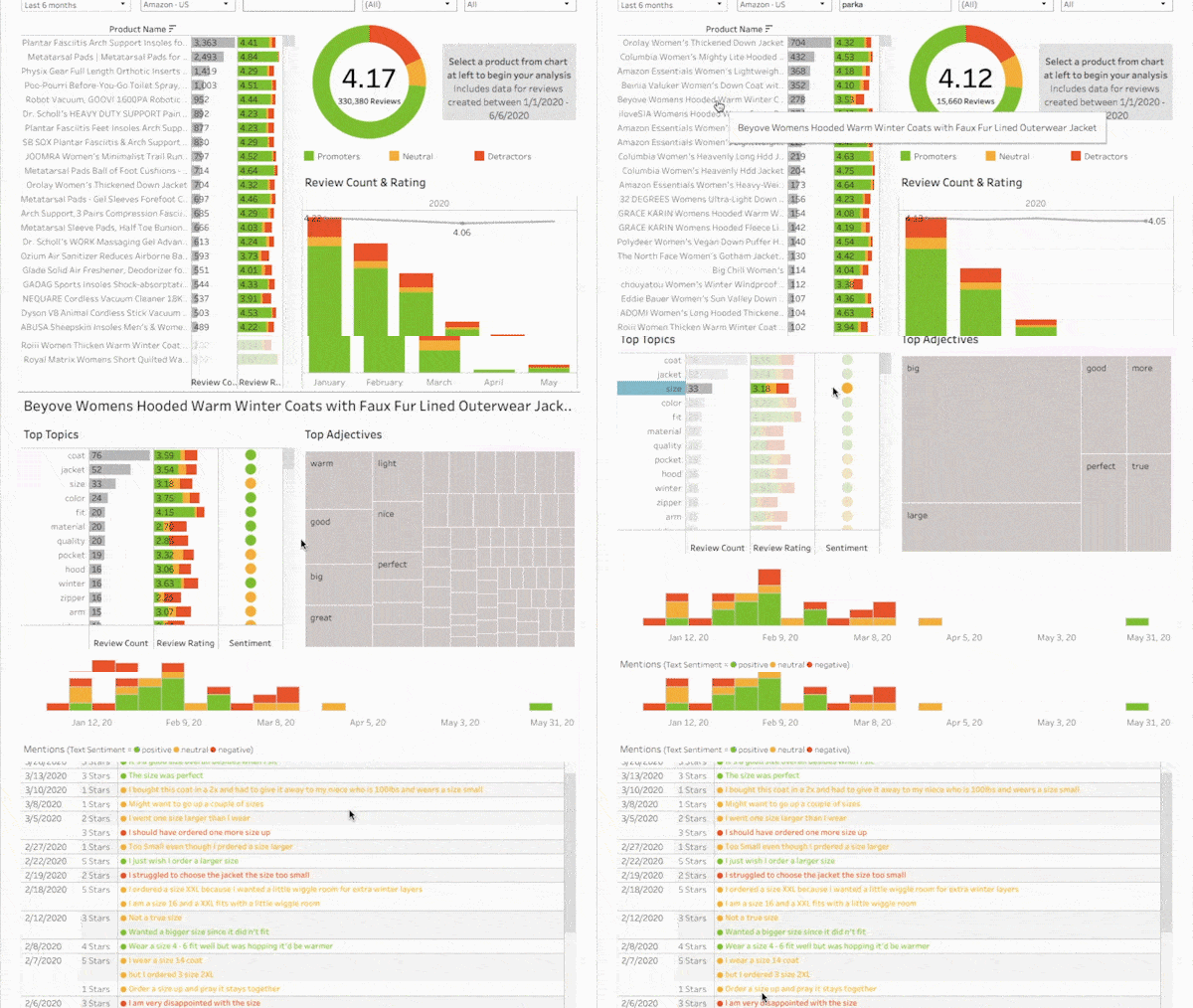
UGC Analytics is a reporting and text analytics suite powered by AI and Natural Language Processing that enables you to drive positive change across your business. These include:
Brands and retailers typically have extensive product portfolios. Knowing exactly where and how to make adjustments – both to individual products and at a more holistic level – to drive meaningful business impact is a huge challenge.
More specifically: how do you know how each product resonates with shoppers? What exactly do they like about each of your products? What don’t they like? Is the information provided at point of sale both accurate and detailed enough to generate realistic expectations?
UGC Analytics enables you to mine all the insight-rich customer feedback captured via your UGC program for the most actionable and impactful improvement opportunities. Our pilot customers used it to build specific evidence for their merchants about modifications they needed to make, make adjustments to product descriptions on their site and considered dropping entire product lines.
To become a market leader, you need to know what you’re up against. How exactly do you compare to your competition?
But most brands and retailers are unable to compare product and brand performance in the detail they need and with the precision required to make the desired impact.
This information – in the form of UGC – is all over the internet. It’s on your site, your competitors’ sites and a whole host of big box retailer and ecommerce marketplace sites. And trying to combine all of this data (which is usually structured differently depending on its source) gets overwhelming very quickly.
UGC Analytics enables you to analyze all this UGC data from your site, your competitor’s sites and any other third-party site this information exists on. It then enables you to compare consumer sentiment at the product, product category and brand level.
For example, say you make razors and Gillette is your main competitor. UGC Analytics enables you to see how your brand stacks up against the overall Gillette brand, as well as compare any of your models to any Gillette model. Extremely powerful stuff.
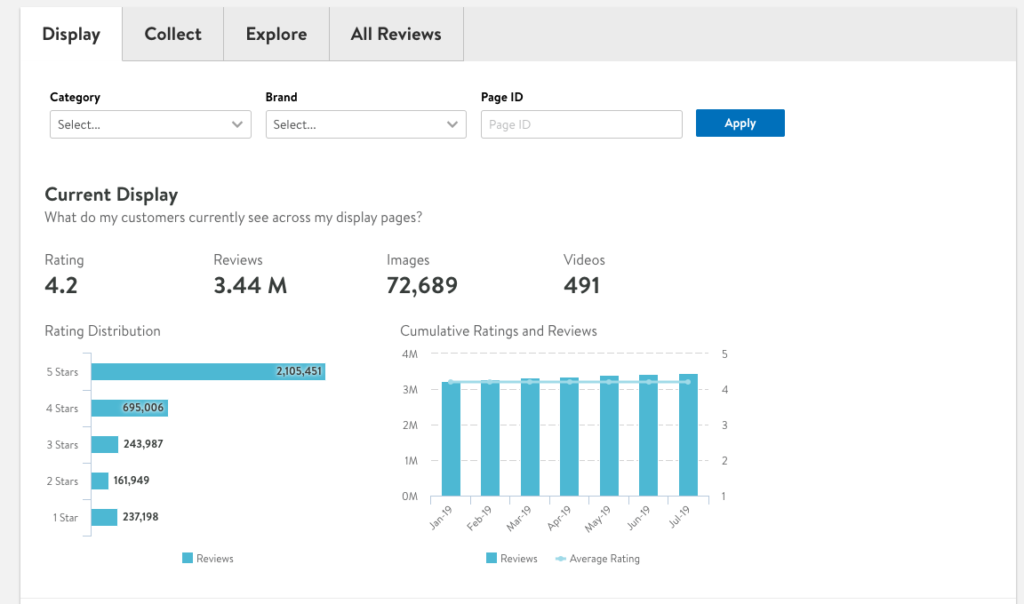
As we mention above, User-Generated Content (ratings, reviews and visual media from customers) is proven to have a huge impact on the online shopping journey. Often, it’s the driving factor in converting browsers to buyers along the path to purchase.
But most are unable to size or even define this impact. They have no way of knowing the extent of consumer interactions with UGC content and the precise nature of it.
What type of UGC content results in better outcomes? Does consumer imagery or video make purchasing a product more likely? What about product Q&A content? How big an impact do different star ratings have on purchase decisions?
UGC Analytics enables you to answer all these questions and more. How? By capturing very precise insight about how consumers interact with this content, along with their subsequent actions (i.e. do they go on to purchase or not).
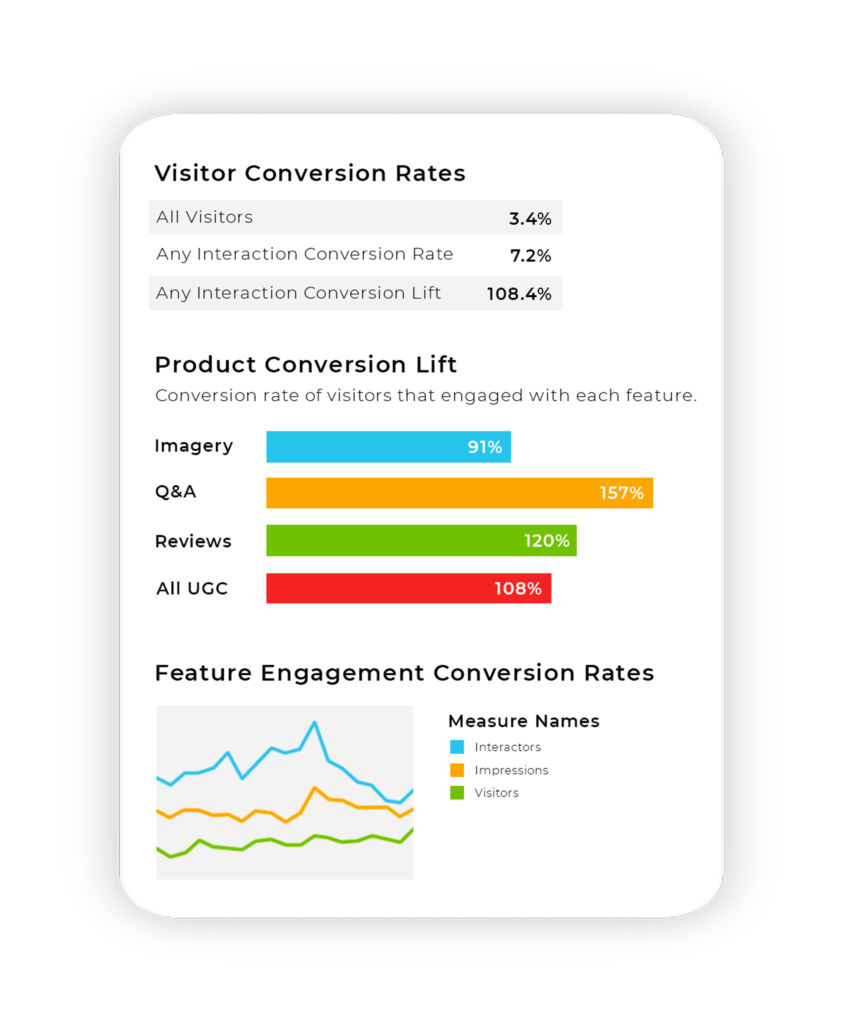
For example, across all our data, we have established that online shoppers that interact with some form of UGC are 103% more likely to convert. Q&A is the most impactful content (153% increase in conversion), followed by reviews (115% increase in conversion) and imagery (81% increase in conversion). UGC Analytics enables you to understand UGC’s tangible impact on your specific buyer journey.
UGC Analytics analyzes every single piece of ratings and reviews content submitted about each of your products anywhere on the internet.
Due to its NLP-powered text analytics capabilities, it’s therefore able to take all this data and then surface very specific trends and insights to the forefront.
As a result, you can very quickly understand how your product and brand messaging is resonating with shoppers. Are there expectations of your products accurate? Or do your products end up disappointing more often than not? What exactly is it that doesn’t hit the mark?
UGC Analytics enables you to establish answers to all these questions and more. In doing so, it delivers highly actionable insights that drive informed and strategic improvements – whether for an individual product or on a broader basis.
Put simply, because it is. We knew this was a huge gap in the UGC marketplace. As we talk about above, UGC is an incredible datasource that most brands and retailers are simply not leveraging as they could for maximum benefits. But there’s no other vendor in the space that is enabling them to fully realize this incredible potential.
UGC Analytics stacks up favorably to all other analytics platforms offered by our direct competitors. Here are the main reasons why:
Today is a proud day for us at PowerReviews. We are excited to offer brands and retailers the opportunity to maximize the huge potential impact of their UGC data to drive broad and meaningful business change.
For more information on UGC Analytics, check out the dedicated section on our website, or see it in action by requesting a demo.
As the COVID-19 pandemic has gripped the US, consumers shifted nearly all of their buying online. According to Adobe’s Digital Economy Index, U.S. ecommerce jumped 49% in April, compared to the baseline period in early March prior to shelter-in-place restrictions.
User-generated content around ecommerce has also exploded. This includes consumer reviews, responses to those reviews by other consumers and brands, along with a marked increase in the posting of Questions and Answers and other content, to help inform consumers and support browser-to-purchaser conversion.
Proactive management of the reviews process is an essential element of both ecommerce and – more broadly – brand reputation management. In today’s digital world, it only takes one consumer and one negative review to bring down a brand’s reputation and inject fear, uncertainty, and doubt in the collective digital consumer consciousness.
In a recent webinar with my co-host Sri Rajagopalan, I had the opportunity to discuss the heightened need for proactive customer engagement with Jon Jessup, CEO of Reputation Studios. I have formulated a list of key takeaways and best practices for proactive reputation management.
Many organizations understand the importance of landing great customer reviews to influence sales. But a best practice reviews management program necessitates monitoring and responding to reviews and the brand’s response can influence buyer behavior as well.
In fact, a Consumer Review Survey conducted in December 2019 shows that 73% of consumers say they “always” or “regularly” read brands responses to reviews. And 71% said they are more likely to do business with brands that have responded to existing reviews.
How long is too long to respond to a customer online? A timely response should come in a day, but theoretically a customer will accept a slower response if a review is posted over the weekend or on a holiday. There’s also a bit more leeway if a customer posts a 5-star review saying they loved the product.
The response time window is dictated, in part, by the platform used for the review (i.e., Google reviews or Twitter).
Additionally, the exact response time depends on the product, category and the type of review – positive or negative.
If a consumer has an adverse reaction to a product applied to the body or ingested, there are FDA requirements dictating the timeliness of the response and specific process to be followed.
There’s more urgency to respond to negative reviews 1) to satisfy the customer and 2) to protect the brand reputation.
Typically, a customer expects a response on a negative review in three to five business hours or less. But even this timeframe can be too long if a customer posts something negative on Twitter or via Facebook Messenger.
If brands don’t respond to a negative review in a timely manner, the reviewer can become even more vocal, alerting other followers to the brand’s lack of response. However, brands that respond quickly and address a customer’s needs can reap rewards – as a detractor can become a strong brand advocate.
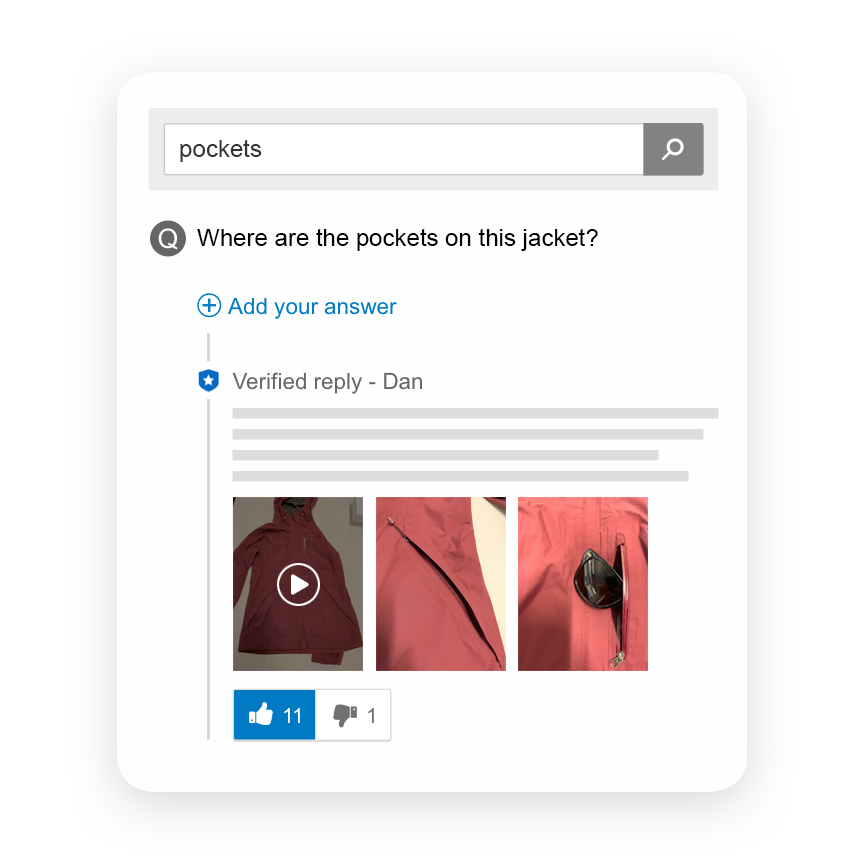
Q&A forums have become a common feature on most ecommerce sites. The Q&A section of a site can be exceptionally strategic in helping to fill the gaps in customer product knowledge.
However, the content must be accurate, and this requires monitoring. A consumer who thinks he or she knows the answer may offer an answer, but the details may be wrong. The brand can – and should – comment on another person’s answer, and especially so if it is incorrect.
In this respect, it’s vital to give this responsibility to individuals who actually know the right answers and who are well-versed in customer and consumer engagement.
The need for timely response applies for Q&As as well. If a question posed remains unanswered, customers can question the brand’s lack of a response.
According to one research study, 82% of consumers look for an immediate response from brands on marketing or sales questions. This near immediate need for response was deemed “important” or “very important.” And overall, nearly two-thirds of buyers expect a response within 10 minutes to any marketing, sales, or customer service inquiry.
Staying abreast of Q&A content can also help brands understand the customer experience and opportunities for improvement.
Automation can help brands manage an influx of customer reviews. But authenticity is key. So the role of technology should be to assist humans so they can respond to the customer quickly and efficiently. For example, populating reference and phone number information for reviews.
The first step is to consolidate everything from all channels into a single response platform. You can then provide automated responses for the simplest reviews. More complex issues can be filtered and routed to the right people internally for response.
If, for example, a customer leaves a 1-star or 5-star review on Google, but with no explanation, an automated response asking for further details is acceptable.
Similarly, if a customer leaves a 1-star or 5-star review of a product citing a particular feature, automation can filter those responses based on context and sentiment intent. They can then be forwarded to the right customer care agent to formulate a response in the brand’s “voice.” Rating-specific and channel-specific response templates can help customer care agents answer customers quickly and efficiently.
Brands typically capture a ton of data about their customers. But few leverage UGC insight in the same way they do survey or CRM data. The truth is it represents fantastic information to drive key product and organizational improvement.
How can companies use the data to make their products better? How can they use the data to better target customers?
Even analysis of your UGC program can have big impact. Which products need more reviews? How does interaction with your UGC drive purchase activity? And beyond that, you can analyze response volume and quality to ensure your reputation management processes are as effective as possible.
The best way to gain 5-star reviews is to have a 5-star product. The next best thing is to listen and respond to customer feedback to create a 5-star product and/or a 5-star experience. Too often, customer engagement is siloed and the Voice of the Customer isn’t flowed throughout the organization. This is a mistake, as insights from reviews can be invaluable in informing and guiding business improvements from product development to customer service to site content.
Brands should collaborate often to review feedback from customer reviews to respond to trends. Some brands discuss customer sentiment monthly, which isn’t nearly enough. Consider meeting a few times a week to enable a more proactive means to understand and respond to any shifts in consumer sentiment and proactively manage the customer experience and brand reputation.

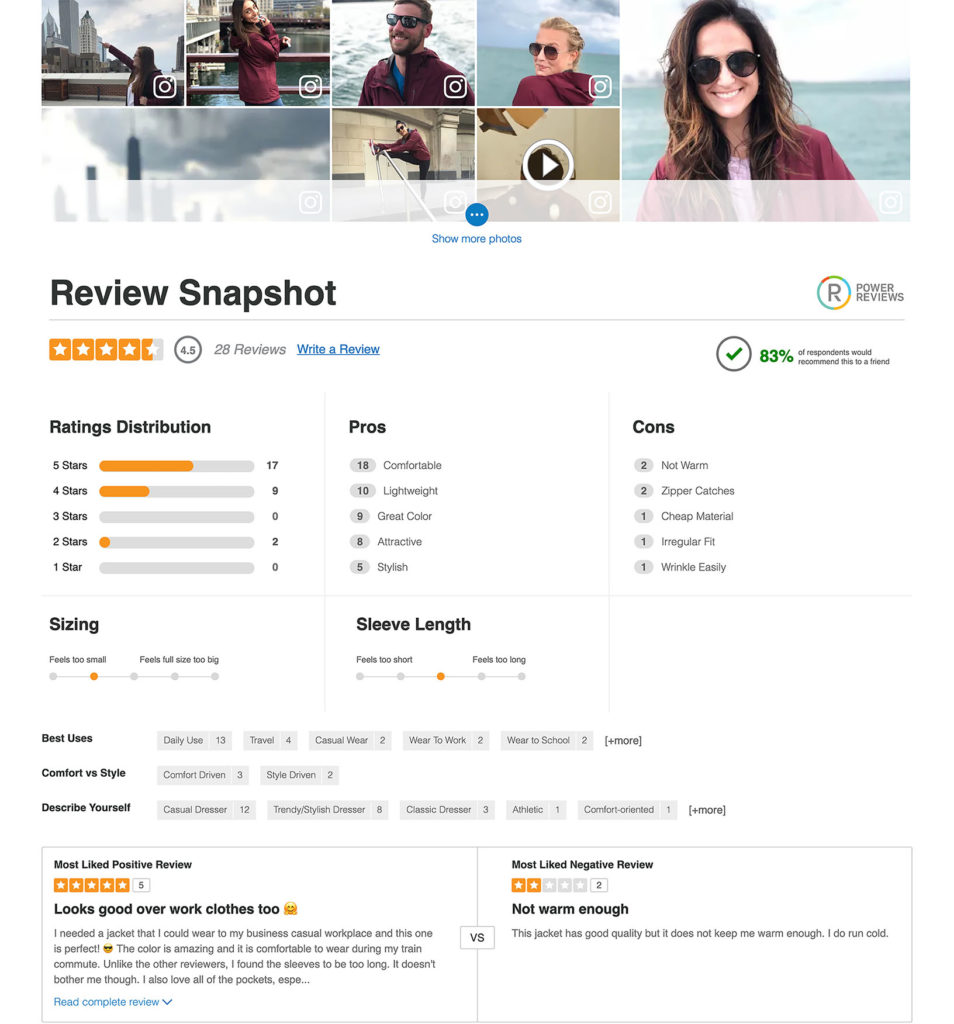
Today, nearly all consumers rely on user-generated content such as ratings and reviews, Q&A, and customer-submitted photos and videos to make informed purchase decisions. In fact, our research found that a whopping 97% of consumers consult product reviews prior to making a purchase. And 88% seek out photos and videos from other shoppers before buying.
Consumers purchasing food and beverages are no exception.
In this post, we’ll explore why leading food and beverage brands are making user-generated content a priority and how your food and beverage brand can leverage UGC to attract and convert more shoppers, boost loyalty and improve products.
Traditionally, food and beverage purchases took place within the four walls of a brick-and-mortar store. And today, the majority of these purchases still happen in physical stores.
But food and beverage ecommerce is certainly growing. A study from TABS found that in 2019, 56% of US consumers made at least one grocery purchase online, compared to 38% in the prior year.
The COVID-19 pandemic has only sped up this growth. A report from Fabric predicts that online share of grocery sales will approach (or even exceed) 10% this year. That’s four years sooner than previously forecasted.
Online shoppers are actively seeking out user-generated content for various food and beverage products. And this content is positively impacting their purchase behavior. Our own research found that 72% of online grocery shoppers are more likely to purchase a grocery item they’ve never bought before if there are reviews for that product.
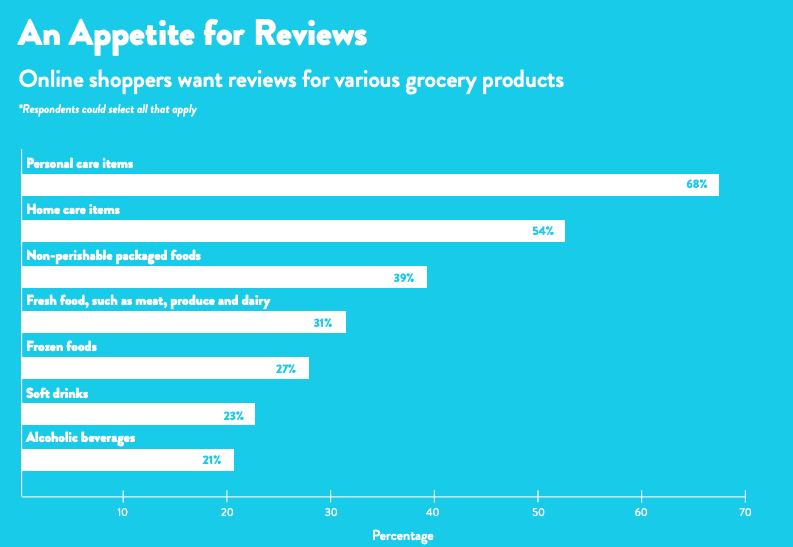
Food and beverage shoppers are also turning to user-generated content when they’re making purchases in a brick-and-mortar store — especially when they’re considering an unfamiliar product. Our research found that 52% of in-store shoppers are more likely to purchase a grocery item they’ve never purchased before if there are reviews for that product.
User-generated content gives both online and in-store food and beverage shoppers the confidence they need to try new (or new to them) products. And collecting and displaying this content has a positive impact on the brands that sell these products, too.
In an ideal world, a shopper would navigate right to your website when they were in the market for a food or beverage product you sell. But the reality is, 70% of shoppers start the purchase journey on Google or Amazon.
The good news is, user-generated content like reviews and Q&A makes it easier for shoppers to find your product pages, even when they’re not starting their search on your website. By continuously collecting user-generated content, your site’s content remains fresh and relevant with keyword-rich, permanent assets on your product pages. Search engines can crawl this content, which helps more shoppers find it. At PowerReviews, we’ve found that brands experience a 20% traffic lift from organic search when displaying user-generated content.
Once a shopper lands on a food or beverage product page, user-generated content (or the lack thereof) helps determine what happens next. If there’s user-generated content on the page, the shopper is more likely to purchase the product in question.
At PowerReviews, we’ve found that brands can experience a 65% increase in conversion when reviews are displayed on a product page. And they can expect a 6X sales lift when a customer’s question is answered via Q&A.
The content your shoppers submit is full of insights that can help you improve not only your products, but the overall experiences your shoppers have with your brand. This, in turn, will boost loyalty — and sales.
For example, perhaps you notice many shoppers rave about the taste of an energy drink, but many complain about the cap being difficult to open. This could be an opportunity to work with your supplier to improve the packaging. You can also respond to reviews mentioning the tricky cap to let shoppers know you care about their feedback and are taking action to resolve the issue.
User-generated content helps food and beverage shoppers make confident purchase decisions. And it helps food and beverage brands attract and convert more shoppers.
Let’s explore a few ways you can leverage UGC to boost your business results.
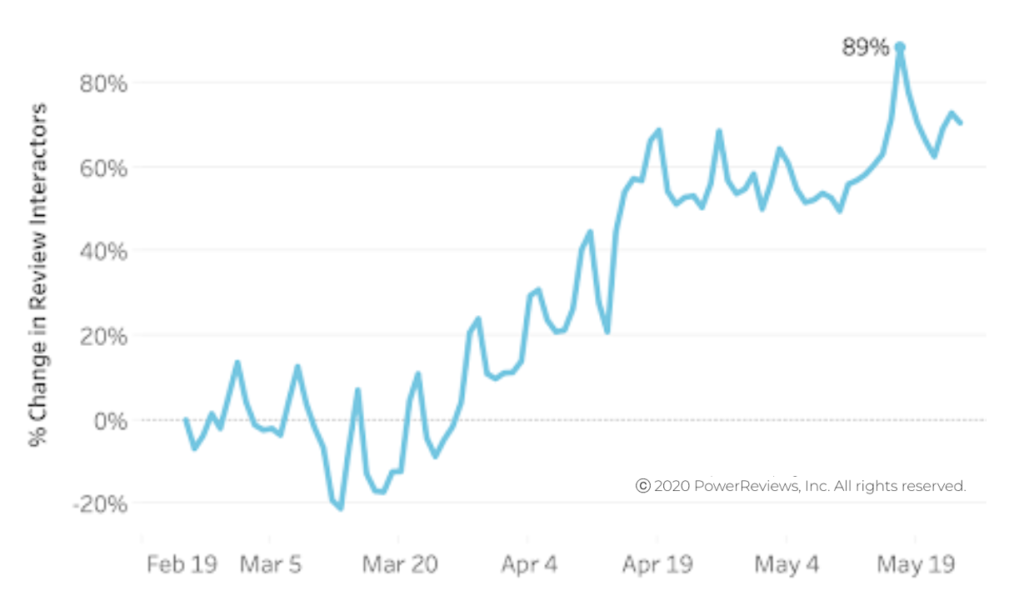
Reviews are important at the best of times. But in the wake of COVID-19, consumers rely on reviews even more. Our recent analysis found that consumer interaction with online reviews (think sorting, filtering, etc.) has almost doubled compared to pre-pandemic levels.
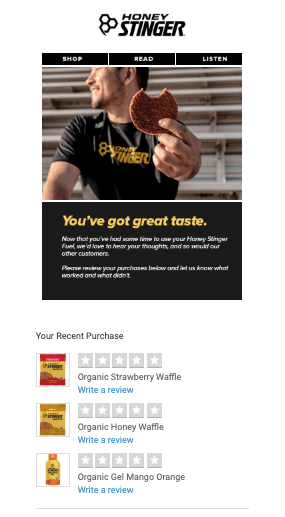
If you’re not already, now’s the time to start collecting product reviews from your shoppers. The most effective way to do this is to send a follow-up email to your shoppers asking them to submit reviews. Also, be sure the entire collection process is easy for your shoppers to compete on any device.
Once you’ve started collecting reviews, display this content in a way that’s easy for shoppers to find and consume. Make reviews front and center on your product pages and throughout your website.
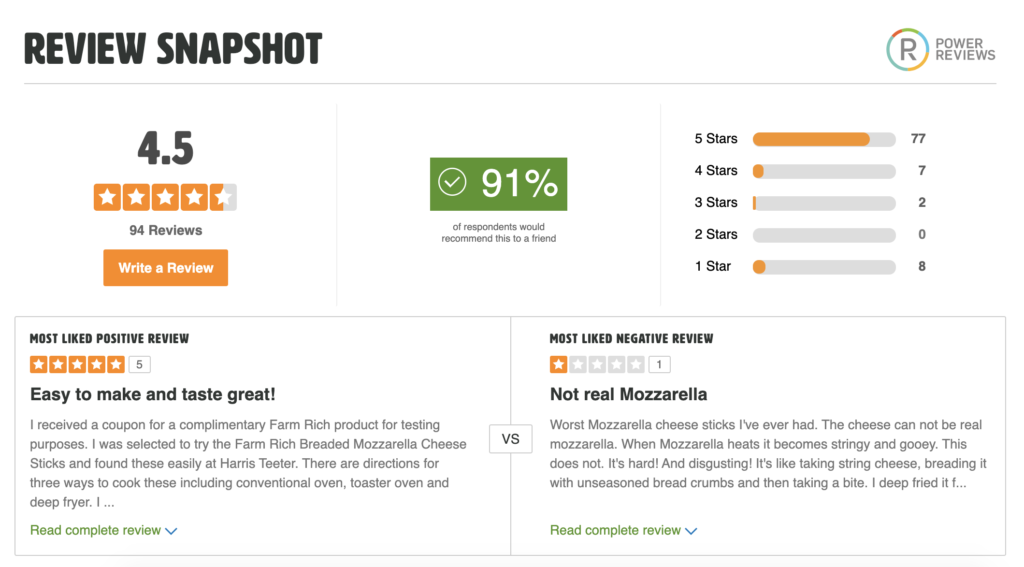
Professional photos and videos of your products are important. But for many shoppers, they’re not enough. As mentioned earlier, our research found that 88% of shoppers specifically seek out visual content like photos and videos submitted by other customers before making a purchase.
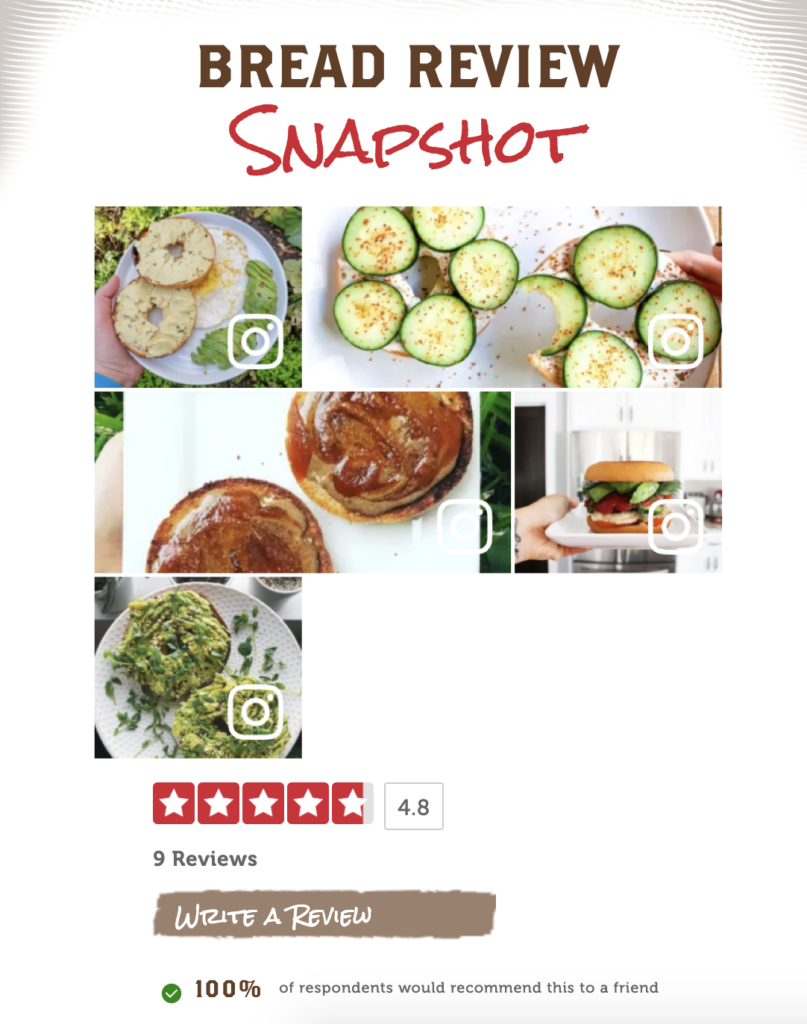
Food and beverage shoppers use customer-submitted visual content to better understand product characteristics like size and texture — and to discover new ways to use a product. For example, Canyon Bakehouse collects customer-photos and videos, many of which show unique ways shoppers are using their gluten-free bread products.
Start collecting visual content both natively and through Instagram. Then, display this content on your product pages and throughout your website to engage and inspire your shoppers.
No matter how comprehensive your product descriptions, shoppers will still have questions. Consider adding a Q&A tool to your website so shoppers can get answers to their purchase-blocking questions right on your product pages.
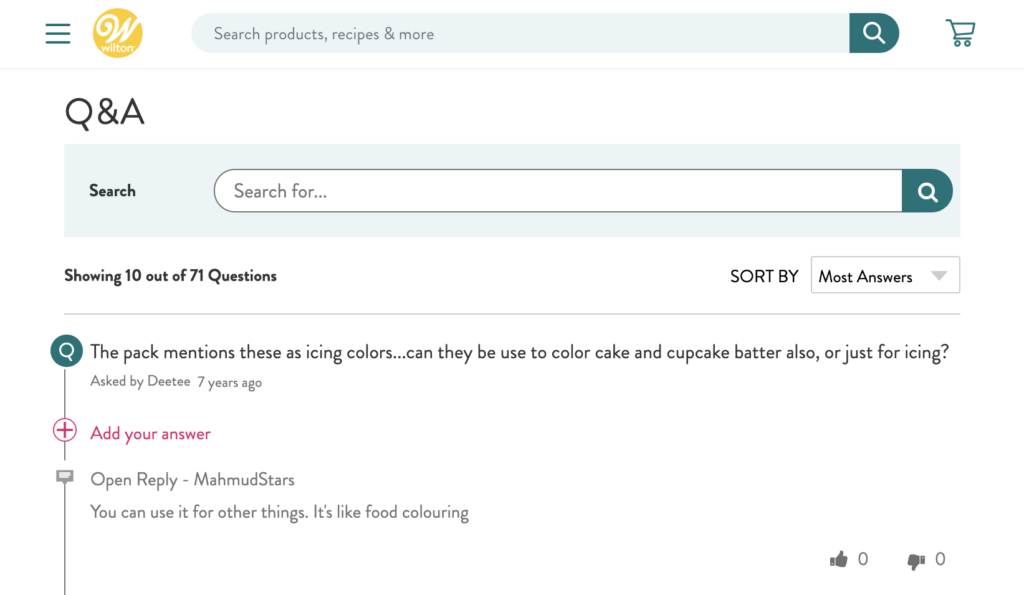
Make sure your Q&A is searchable so future shoppers can see if their question has already been asked and answered.
If you’re like most food and beverage brands, you sell your products through a variety of different channels. If so, be sure you’re syndicating your user-generated content, including ratings and reviews, Q&A, and consumer-submitted photos and videos. That way, content submitted on your own website will also appear on product pages on your retail partners’ websites.
For example, this review for Hormel’s real crumbled bacon was originally submitted on the brand’s website. But thanks to content sharing, it also appears on the product page on Target.com.
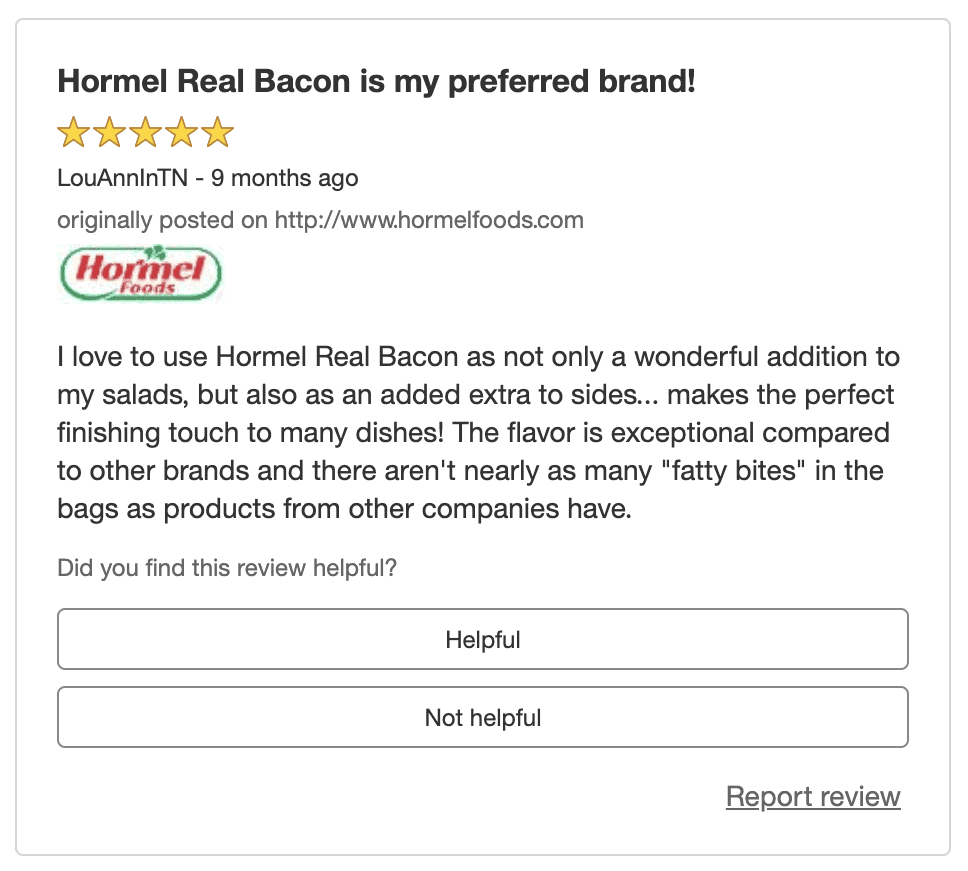
By sharing your review content, consumers can find the content they’re looking for, regardless of where they’re shopping for your products.
Today, many shoppers start their purchase journey on Amazon. Ensure they can find all of the information they’re looking for — including social proof in the form of user-generated content.
Of course, it’s important to collect user-generated content natively on Amazon. But to maximize review coverage, you’ll also want to ask your ratings and reviews provider if they make it easy for those who write reviews to share that content on Amazon.
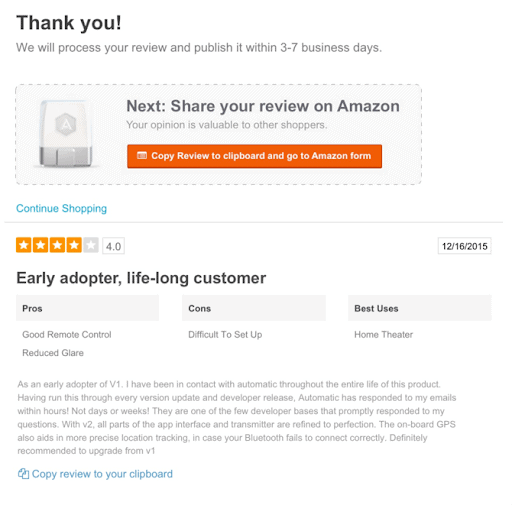
In addition, look for unique ways to highlight user-generated content on your Amazon product pages. For example, you can create an image that includes text from a positive review and add it to your image carousel to entice shoppers to learn more.
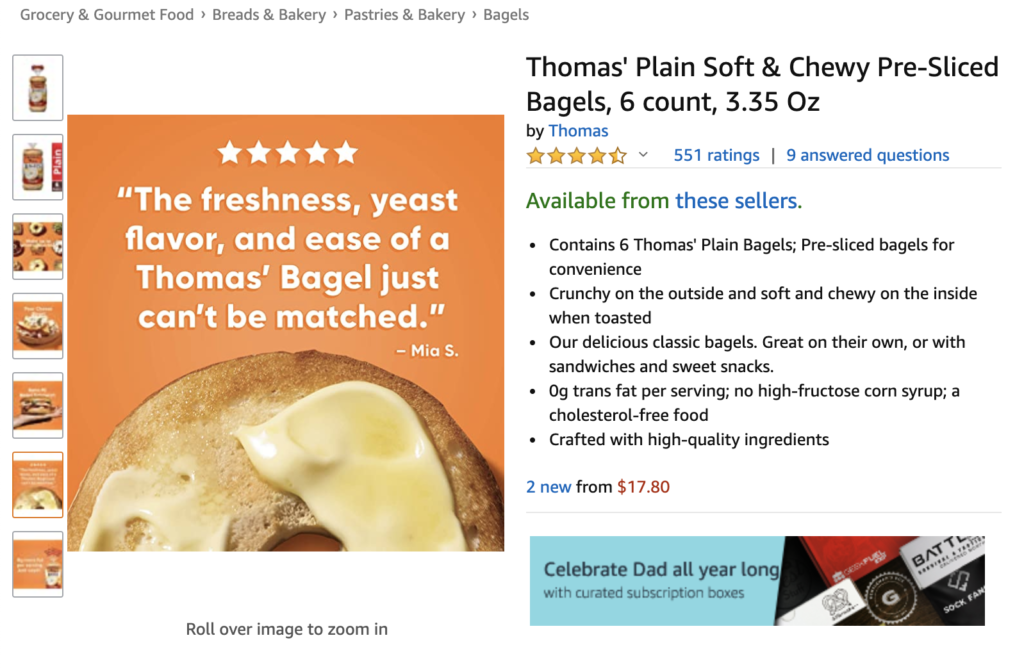
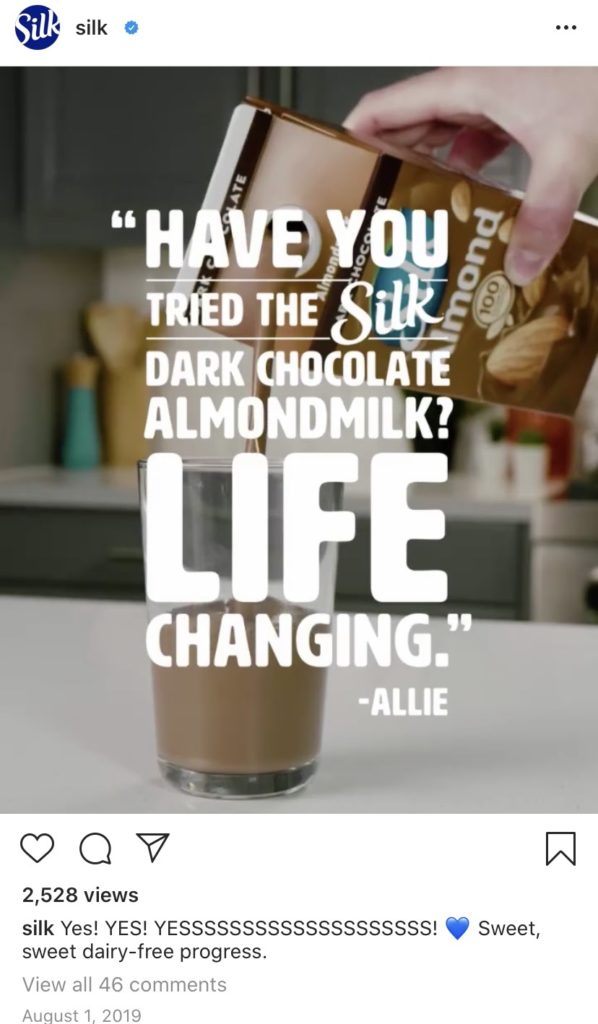
Food and beverage shoppers trust the opinions of others like them. So look for ways to enhance your marketing initiatives — including emails, organic and paid Instagram and Facebook posts, and retargeting ads — with user-generated content like star ratings, excerpts from reviews, and photos taken by your shoppers.
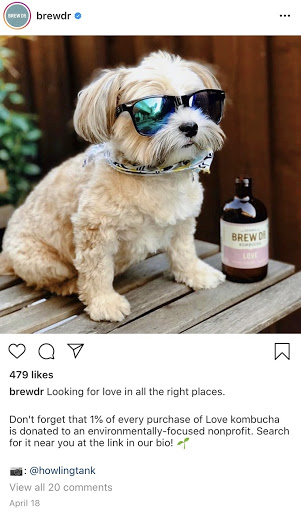
For example, Brew Dr. Kombucha regularly showcases photos taken by shoppers on their own Instagram page.
And Silk uses the text of a customer review in one of their Instagram posts.
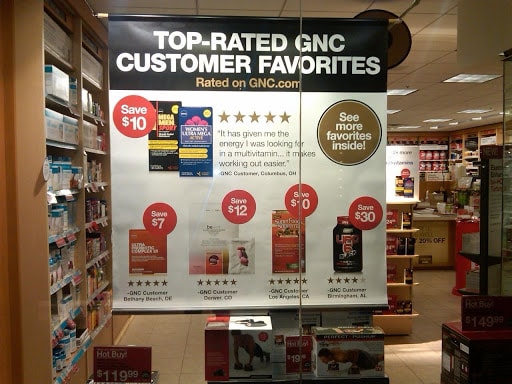
A PowerReviews survey found that 70% of consumers are interested in accessing product ratings and reviews in-store. And as mentioned earlier, the presence of this content makes a shopper more likely to try a new food or beverage product.
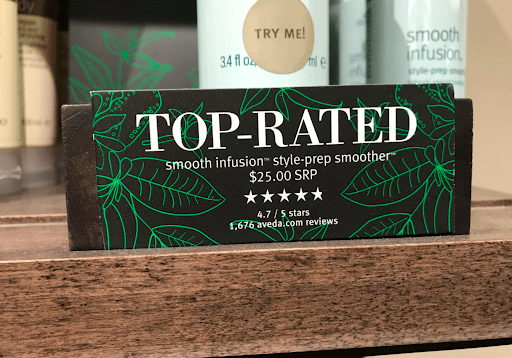
Ensure the reviews, Q&A, photos and videos on your website are easy to consume on a mobile device. And look for opportunities to enhance in-store displays, product signage and product packaging with star ratings, excerpts from reviews or even photos submitted by your customers.
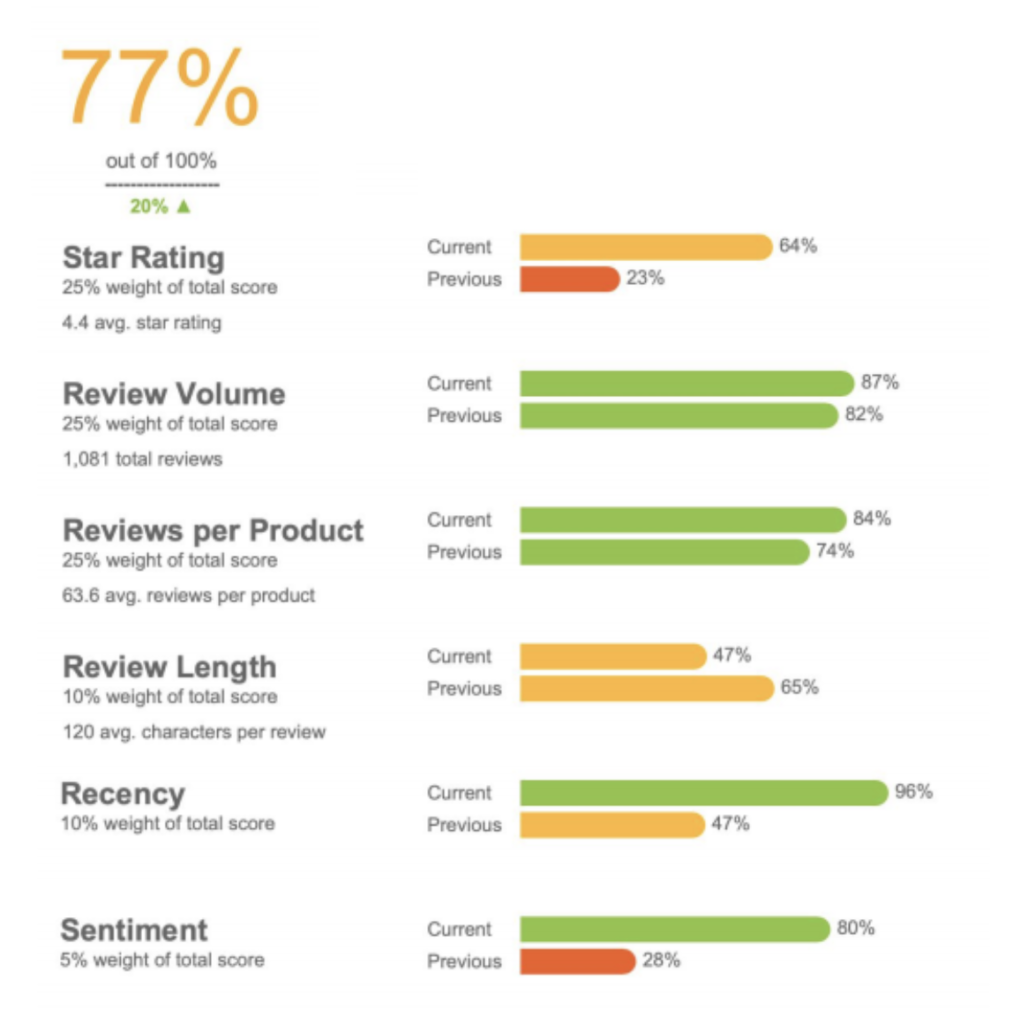
User-generated content is chock full of valuable insights that can fuel better business decisions for food and beverage brands. But far too often, these insights remain untouched.
Start leveraging the insights from your user-generated content to identify ways to improve your food and beverage products and your customers’ overall experience with your company.
You can start by monitoring the overall sentiment for a specific product, or example, a new iced tea you just released. If you notice it’s mostly negative, you can dig into the content more to identify specific ways to improve the product — or even pull it altogether.
You can also acknowledge negative feedback from shoppers, which can help you turn negative situations around and show shoppers you are a brand that cares about its customers. This builds loyalty, which then drives sales.
Today, food and beverage shoppers depend on user-generated content to make informed business decisions and gain the confidence they need to try new products. This is true regardless of whether a consumer opts to purchase food and beverages online or within the four walls of a brick-and-mortar store.
Food and beverage brands that effectively leverage user-generated content have a big opportunity to drive traffic and sales, uncover actionable insights, and build a reputation as a customer-centric business.
With stores not open to the public, our shopping behaviors have been completely disrupted. As widely reported, ecommerce has become the core channel for consumption. For many brands, it’s the one key aspect of their business that’s going well.
Many are looking to pivot on this COVID-19 ecommerce phenomenon to pave a path for growth. Read on to learn why building on your ecommerce success via a targeted customer engagement strategy can sow the seeds for long-term revenue growth.
A new Global Shopping Index report published by Salesforce cites some pretty unprecedented digital commerce statistics. But then again, these are completely unprecedented times.
The number of unique digital shoppers rose 40% year-over-year, caused by this dramatic shift we’ve all experienced in consumer behavior from physical to digital browsing and buying. Digital shoppers drove a 20% revenue growth in Q1 2020, compared to 12% in Q1 2019.
Many brands are reporting increased order volumes in line with what they only usually only see during the holiday shopping season. Our own research backs this up conclusively, and shows brands are experiencing increased page view and purchase volumes.
As some States begin to reopen, most Americans remain uneasy about venturing out, with one study showing 67% are uncomfortable going into a retail store. Given this ambivalence, expect ecommerce to remain robust for the foreseeable future.
Brands have an incredible opportunity to continue this momentum by driving even more digital engagement – both in acquiring new customers and nurturing their existing/loyal customer base.
Matt Powell, Vice President and Senior Industry Advisor at the NPD Group underscores this opportunity, “Ecommerce has been a lifeline for many brands and retailers. More and more customers are shopping online, and for products they likely would have never bought pre-pandemic. I believe we can expect consumers to continue moving online as we ease our way out of the crisis. Now is the time for brands and retailers to double down on their online business. ‘Digital first’ must be the mantra of retail now. Don’t rest on your laurels, as there is always room for improvement. Make your website the best it can be.”
During this time when consumers desperately need to feel connected and assured that a brand can be trusted with their business, some are leveraging customer content to deliver the improvements Powell talks about. Customer stories offer powerful validation that build trust and authenticity by highlighting how consumers are engaging with your brand and the products you offer.
Most importantly, they are proven to help drive increased site traffic and purchases. Even a single product review can make a big difference to your bottom line.
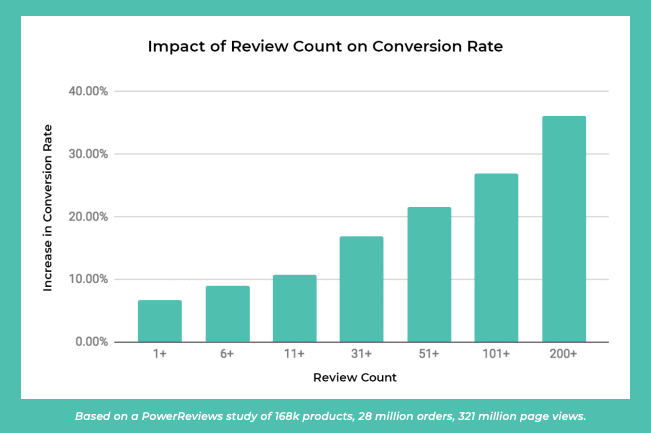
According to our extensive ratings and review data (we analyzed 168k product pages, 28 million orders and 321 million page views), we found that the more reviews displayed for a product, the higher the conversion rate. But, even a small volume of reviews has an impact. To illustrate this point, a jump from zero to one customer review results in a 7% increase in conversion levels for that product on average. This increases steadily until you hit 50 reviews, which we consider the sweet spot. At this point, the lift in conversion rate is 21% on average… Pretty impactful numbers!
Brands experiencing a high volume of ecommerce orders can typically expect at least some returns. Product returns have always been the achilles heel for retailers, and even more so now in the COVID-19 wake of shuttered storefronts and economic uncertainty.
Returns seriously erode revenues. In one study, Boston University researchers found returns cost manufacturers and retailers as much as $100 billion annually or 3.8% of revenue.
But the same study found that customer content – or more specifically, product reviews – help consumers make better purchase decisions and lead to fewer product returns. Bottom line: online product reviews are critical to enhancing strategic competitiveness, boosting revenue and reducing costs.
Why? Customer content answers questions upfront, supporting consumers’ efforts to select a product that fits their specific need. Think about it: if – as a browser – you’re faced with a product page that includes product images submitted by customers and maybe even Q&A-type content, you are far more likely to obtain the answers to any questions you have (i.e. around issues ranging from size/fit to color and plug any unconsidered gaps in the product description), while also demonstrating relatability – all in a uniquely scalable and authentic way.
This does more than sell merchandise, it can help ensure the product – once it leaves the distribution center – doesn’t come back via the returns channel.
Over the years, PowerReviews has worked with leading brands to help them formulate killer customer engagement strategies to drive high-octane ecommerce growth. I’ve taken the liberty of making a list of these — in some cases, noting particular COVID-19 implications that make these especially relevant right now.
This proactive strategy generates up to 90% of review collection. Formulating your email is important. Think short and simple and be clear and concise in stating your review ask.
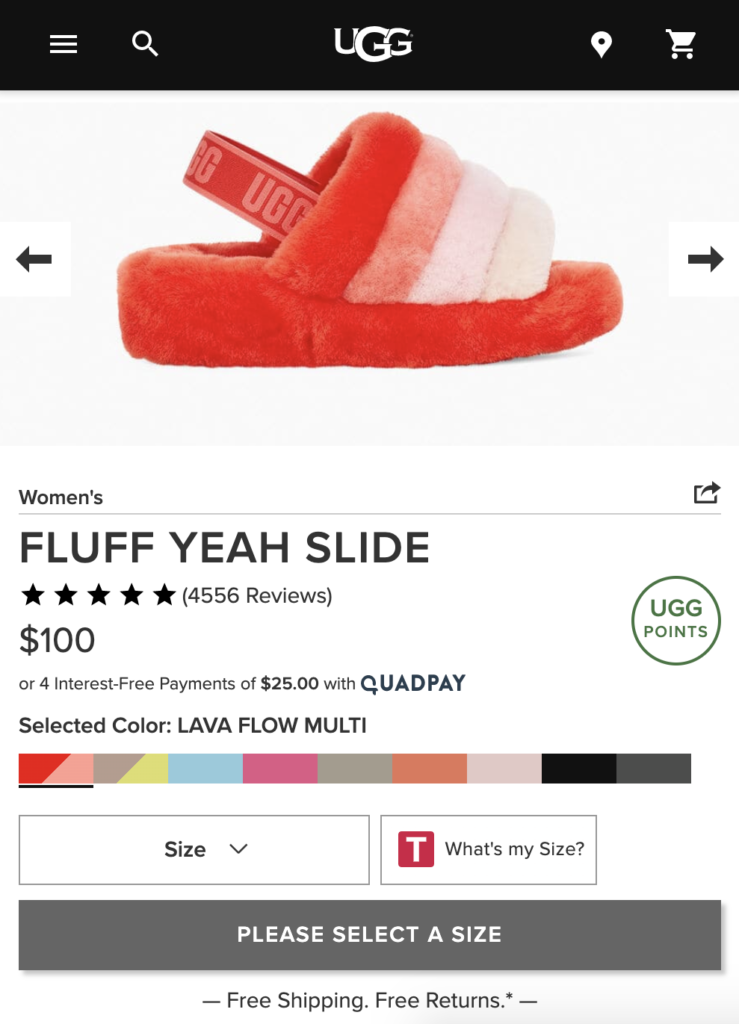
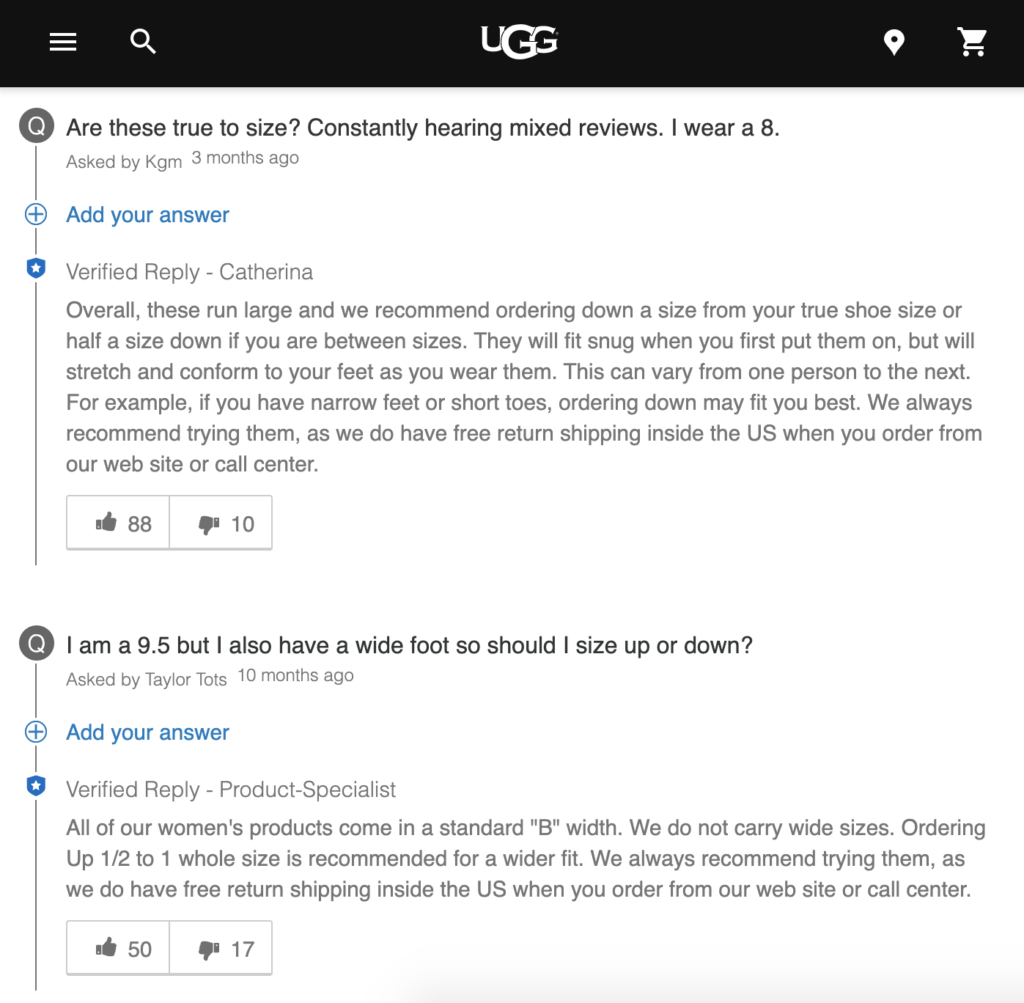
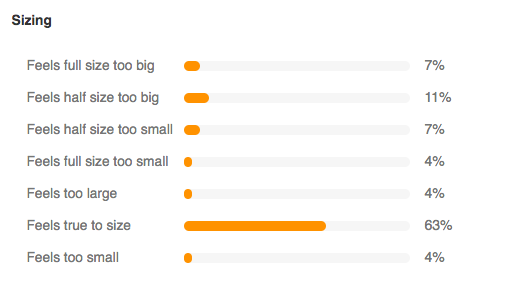
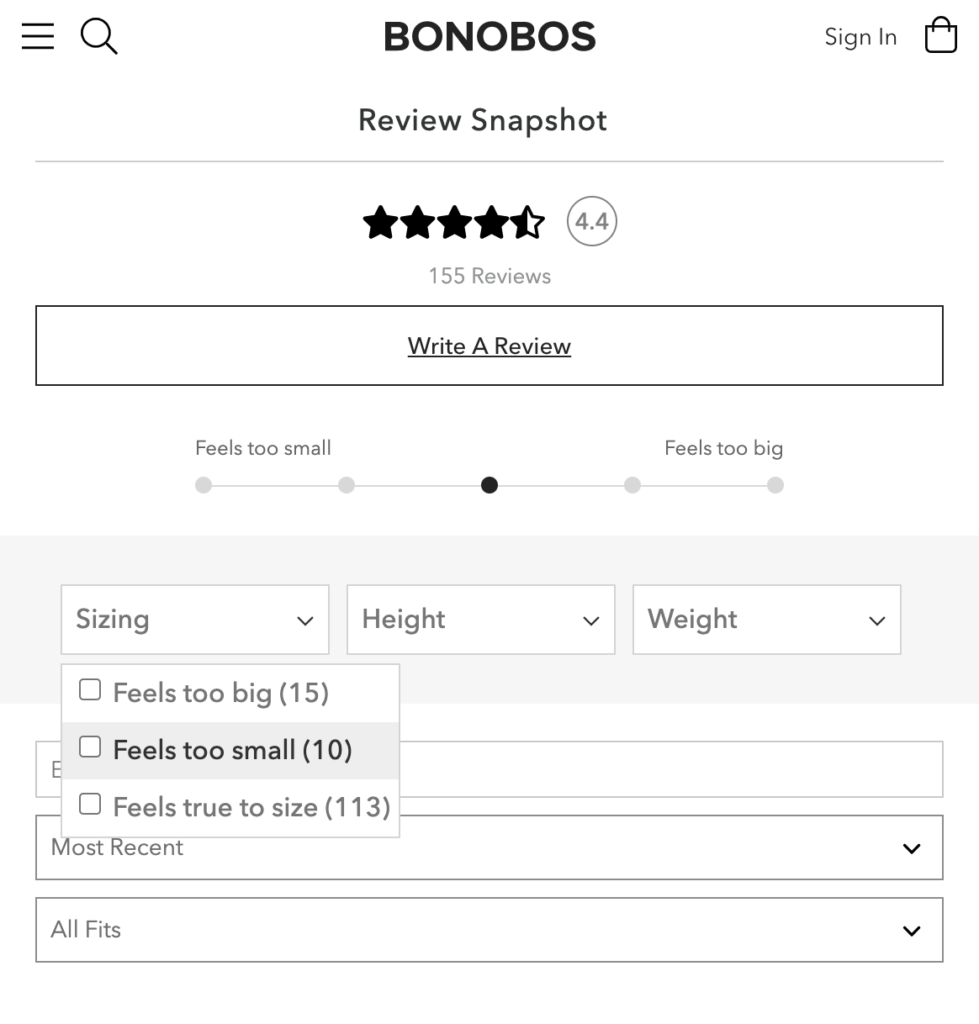
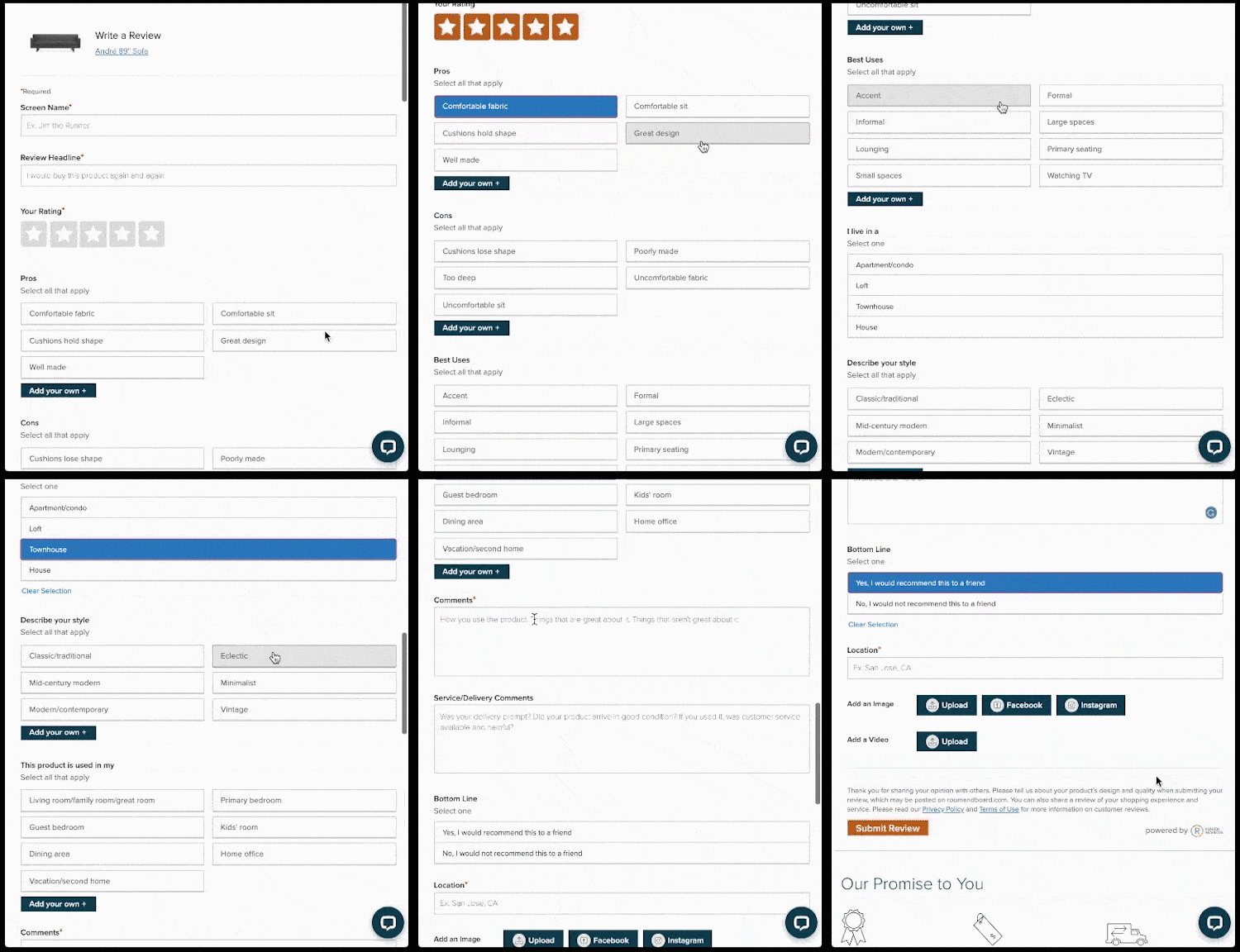
By asking for specifics, you can gather vital user information to help answer real buyer needs, such as what is the size and fit of this item? (60% of all returns can be attributed to fit issues), and, what are the best uses of this item? You should be aiming to extract existing thoughts rather than influence the content. Your typical reviewer is not a professional writer and may not even know what average customers look for. So make the writing a review process quick and easy with prepopulated tabs.
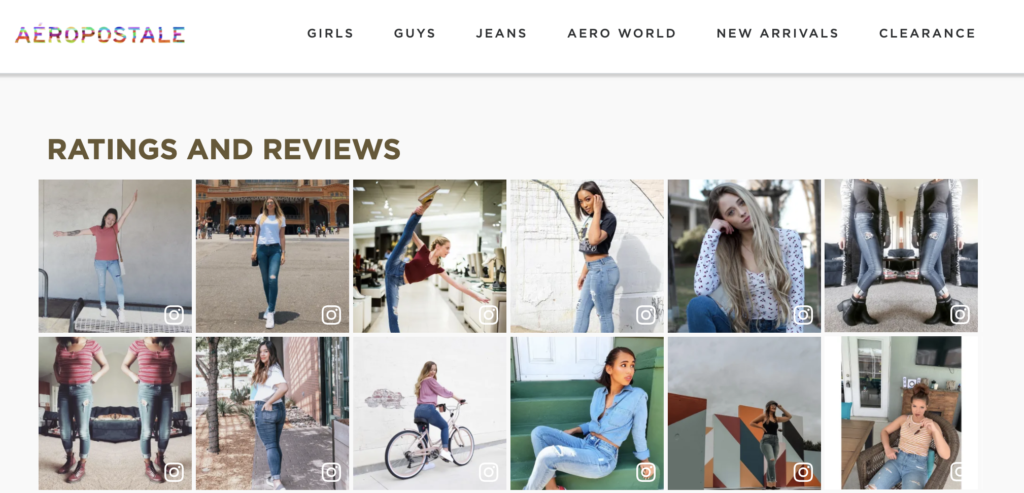
They say a picture is worth a thousand words. When it comes to reviews, it could be worth a thousand orders. Images are particularly critical for product segments such as fashion and beauty as consumers don’t have ready access to stores where they can try things on and test things out. Consumers are scanning images to assess questions such as: Will this Perfect Passion Pink lipstick look good on me? Seeing the image of another individual with the same hair and skin color wearing this shade of lipstick (and demonstrating this shade of pink is on point) – for example – is seriously impactful. Formulate your review to ask for an image first and keep in mind the opportunity to repurpose or cross-post images by curating from social media platforms such as Instagram. These offer a treasure trove of visual content that can be collected and integrated into product pages to provide scale, plug any product description gaps and establish the buyer confidence necessary for customers to hit the “buy” button.
In the post-COVID-19 era, consumers are online more than ever. Reports are flooding in regarding skyrocketing screen time in light of social distancing measures, with individuals reporting increases in screen time ranging from 35 to 68%. Take advantage of this opportunity by engaging with the community you’ve built to ask for reviews.
Satisfy your site visitors by giving them the information they want and need without having to navigate to other pages on your site. Providing answers to consumers’ questions builds trust and removes barriers to purchase while improving SEO. On average, when a product goes from displaying no answers to at least one answer, brands and retailers see an 88% lift in traffic and an 82% lift in conversion for that product. Anecdotal evidence from many of our customers indicates that Q&A content is playing an important role during the shifting COVID-19 ecommerce landscape. For example, Tim Lakin, ecommerce Merchandising Manager at Skechers, told us: “I am definitely seeing an increase in customer reviews and questions indicating a lot of customers are shopping online who would not normally be doing so – even to the point where a customer may not know their own shoe size and would rely heavily on review information. Naturally, we want to accommodate those customers since our website is now taking the place of our retail stores in many states, and the store associates and in-store experience as well.”
Sharing the customer content you collect on your brand with retailers makes it easier for them to sell your product. This also helps with SEO, making your products easier to find thereby increasing impressions and traffic. To assess the best opportunities, look at key categories that are receiving a high volume of traffic but which are not deemed “essential” items. So think self-care, home improvement, etc., These represent “killer COVID-19 categories” where reviews and content can enhance sales and SEO.
One ultra-effective way to solicit customer feedback is by giving consumers the opportunity to experience a product in exchange for their input, whether through a review or on social media. PowerReviews clients typically experience an 85% response rate to sampling campaigns. Recently, however, brands have experienced issues with sample product availability, fulfillment issues, and shipping delays. So be sure to understand what, if any, COVID-19 constraints could impact your sampling campaign execution. But I can’t stress enough how the conditions caused by the pandemic are uniquely suited to sampling campaigns. Although times are rough, people are looking for things to do. Experimenting with a new (free) product may provide some welcome escapism.
We are living in unprecedented times and now more than ever, we appreciate the connections with others – precisely because we can’t physically interact with one another. Brands have an opportunity to step up. As RSR Research Industry Analyst Paula Rosenblum has said, “It’s time to show the world what we are made of,” noting, “consumers won’t forget.” Responding to reviews or via social media to build and nurture your customer community can have a very strong and positive impact. As well, ask yourself what you can offer to help your customers at this time. Maybe that’s offering free shipping, maybe it’s a virtual try-on utility or double loyalty points.
Is your ecommerce/digital team employing any of the above customer engagement strategies? If you are a PowerReviews customer, reach out to your Customer Success Manager to discuss the best strategies to leverage our solution to achieve your objectives. If you’re not a PowerReviews customer, we’d love to hear from you.