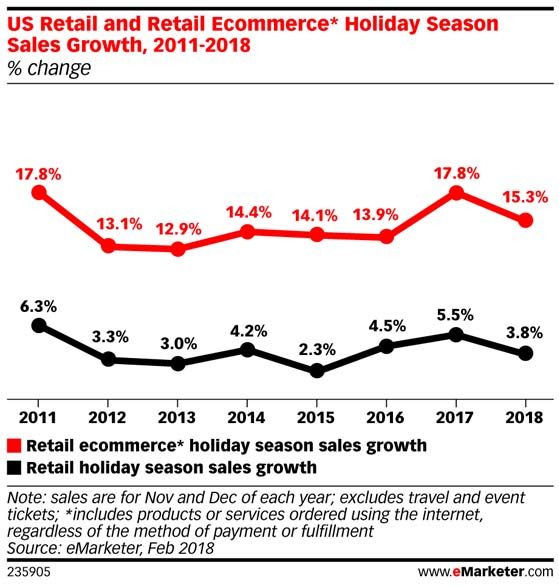
The holiday marketing season presents brands and retailers with an important opportunity to generate revenue and this year will be no exception. This year alone, eMarketer predicts US holiday ecommerce sales will grow 15.3% with a 3.8% increase in overall retail sales.
At the same time, holiday shopping options have brands and retailers battling between more competition. The biggest competitor–Amazon–pulled in 45% of all online transactions over Thanksgiving 2017 and more than half of Black Friday web purchases last year.
And those numbers are expected to grow for the ecommerce behemoth.
But there’s good news. Seriously.
When brands and retailers effectively leverage user-generated content, including ratings, reviews and visual content, they reach more shoppers and generate higher holiday revenue. This is crucial.
So are you ready to leverage UGC this holiday season and beyond? To get you started, we’ve put together the following holiday marketing guide filled with proven best practices that have helped brands and retailers like you:
Collect more UGC before, during and after the holidays
Display content more effectively on product pages
Engage with consumers throughout the holidays to encourage more confident purchases
Cheers to a happy 2018 holiday marketing season!
Collect More Content–A Lot More Content
User-generated content such as ratings, reviews, photos and videos helps holiday shoppers make better purchase decisions. And better purchase decisions means less returned merchandise. Read on to explore our five proven best practices to generate more content before, during and after the holiday season:
1. Send Post Purchase Emails
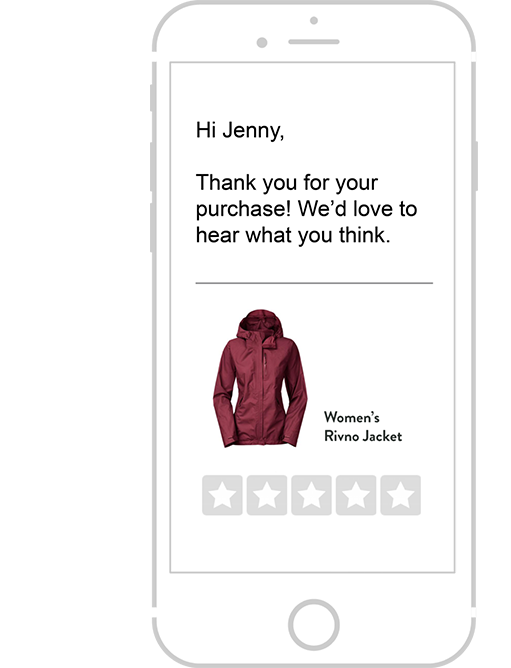
Consumers often need a reminder to submit reviews. The best way to provide a friendly nudge is to send post purchase emails. Here you should ask your shoppers to write reviews for the products they’ve recently purchased. PowerReviews customers find about 60% of reviews are written as a result of a post purchase email.
Start sending post purchase emails that are short, personalized and easy to read and navigate on a mobile device. If you’re already sending post purchase emails, identify elements to test and optimize to improve performance, including:
Subject line
Timing
Cadence
Test these elements now so your post purchase emails are optimized in time for the busy shopping season.
2. Generate Content for Multiple Items
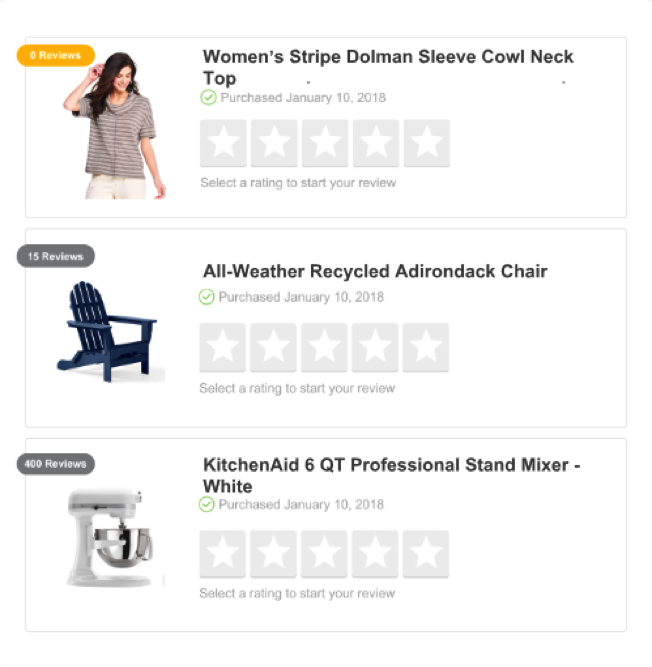
In many cases, a shopper will order multiple items in one transaction. In fact, 60% of consumer orders coming to PowerReviews include more than one product. This means you likely have shoppers ordering several items over time.
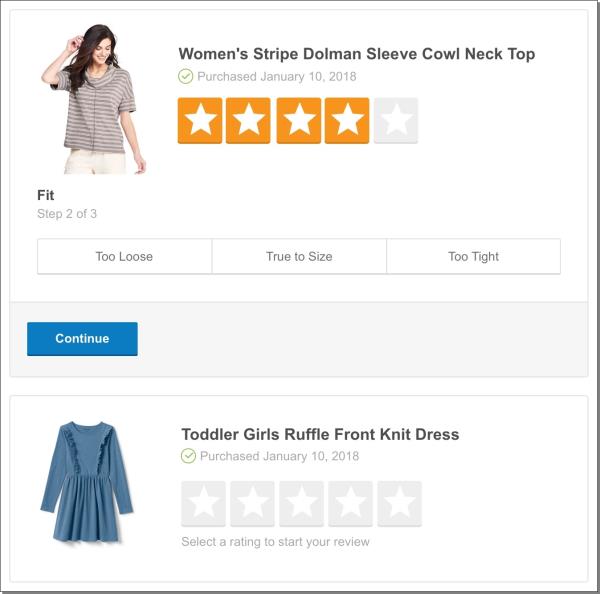
Increase the amount of content you collect by allowing consumers to submit reviews, photos and videos for multiple products, all from one, mobile-friendly page. Adopting this best practice significantly increases your review coverage and data with some brands seeing a 300% growth, compared to requiring shoppers to navigate to separate pages to write each review.
3. Collect the Information You (& Your Shoppers) Value
In addition to collecting stars and comments from your shoppers, collect other key information that helps guide future shoppers. For example, if you’re an apparel brand, collect size and fit information from reviewers to help holiday shoppers purchase the right size items for their friends and family.
Average Results for PowerReviews Customers Using Progressive Collection
90% of users answer the first question
85% of users finish all of the questions
Your ratings and reviews provider should enable you to prioritize the collection of information that matters most to you and ultimately your shoppers. For example, Progressive Collection from PowerReviews allows your shoppers to write reviews and add additional insights about the products they purchased.This includes size and fit and use case information.
If a customer closes out of the review-writing screen, it’s easy to return to the page and finish the review-writing process. PowerReviews customers using Progressive Collection find that on average, 90% of users answer the first question they are asked and 85% finish all of the questions.
4. Generate Content for Products That Need It Most
In the PowerReviews network, products with reviews have an 11% higher conversion rate compared to those without. That’s why it’s important to generate reviews for as many items as possible prior to the official kickoff of the holiday season.
Your ratings and reviews provider must prioritize the collection of reviews for products that need this content the most–including new products or those with low (or no) review volume.
For example, Intelligent Collection from PowerReviews allows brands and retailers to prioritize content collection for new products or those with low review volumes. This is done by putting these items at the top of the list of products available for a consumer to review.
5. Launch a Product Sampling Campaign
Perhaps you’re launching new products in time for the holiday season. Or you have a list of product pages that have a high volume of traffic, but a low volume of reviews.
Launch a pre-holiday product sampling campaign, sending samples to your own list of consumers or an on-demand community of reviews. Then syndicate the reviews you collect to your key retail partners. That way, there will be plenty of reviews in place when shoppers search for gifts this holiday season.
[bctt tweet=”PowerReviews Product Sampling has delivered an 85% review submission rate from targeted consumers.” username=”powerofreviews”]
Remember: product sampling doesn’t have to be an large, or expensive endeavor. Rather than executing a large sampling campaign for a single product with hundreds of samples, Vornado, a PowerReviews customer, regularly executes smaller campaigns for multiple products. This allows the company to generate reviews across more of their products.
Pro Tip: For the sake of transparency, badge any reviews that result from a product sampling campaign.
Optimize Your Content Display
It’s never been more important to provide your shoppers with all of the information to make smart and efficient purchase decisions. According to a survey from Deloitte, shoppers planned to purchase an average of 15 gifts during the 2017 holiday season.
Read on to learn best practices that make it easier for shoppers to find and interact with your user-generated content:
Showcase Visual Content
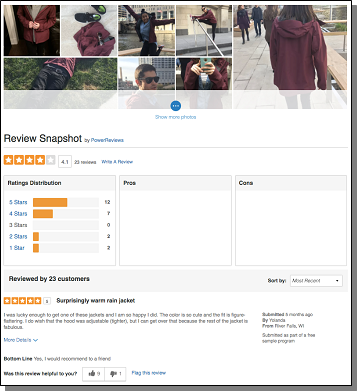
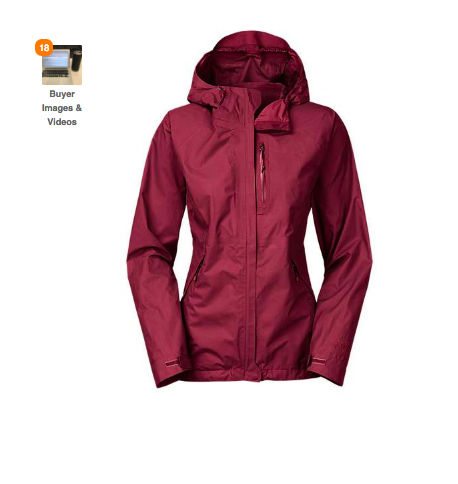
As previously mentioned, 88% of consumers specifically look for visual content (like photos and videos) submitted by other consumers prior to purchase. So when holiday shoppers hit your product pages, many are immediately looking for visual content in order to learn more about a product.
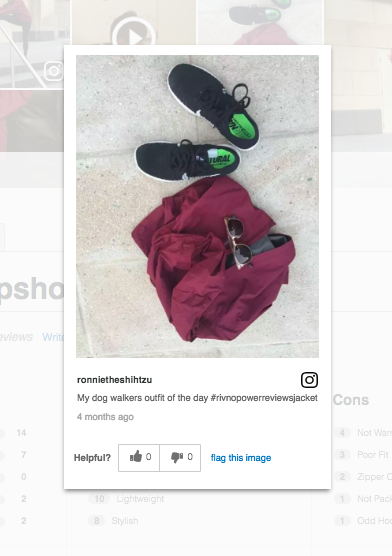
Be sure you’re collecting conversion-boosting visual content from your shoppers–both natively and through Instagram. Then display this visual content in an image and video gallery directly on the product details page where holiday shoppers can easily find it. This will lead to higher engagement on the page and greater conversion.
Allow Shoppers to Sort Content
The rating distribution summary is the most common tool a user interacts with when browsing for products. According to Baymard, 95% of test subjects used reviews to learn more about a product from others like them. And 47% of those applied a filter so see only a specific type of review.
Make sure your product detail pages prominently feature a ratings distribution summary. It’s also just as important that the summary is clickable for holiday shoppers to easily find the content important to them.
Help Customers Find Relevant Content
In addition to wanting information about product qualities including size, fit and material quality, a shopper also cares about information on uses for the product. For example, a shopper searching for athletic shoes for her husband wants to know if a specific pair are good for trail running.
Provide your holiday shoppers with a high level overview of the themes of the product, as well as an easy way to find reviews relevant to the buyer’s needs.
Engage With Your Holiday Shoppers
Effectively engaging with your shoppers helps them make better purchase decisions and this allows you to build brand loyalty. Learn the four best practices PowerReviews customers use to engage with customers during the holidays (and beyond) to help them make more confident purchase decisions for themselves and others:
1. Allow Shoppers to Ask Questions
No matter how comprehensive your product information, consumers will still have questions about your products. Trust us. In fact, the same Baymard research found 40% of shoppers use Q&A to ask a question or get more product information. This is especially true when shoppers are purchasing holiday gifts they’re not familiar with.
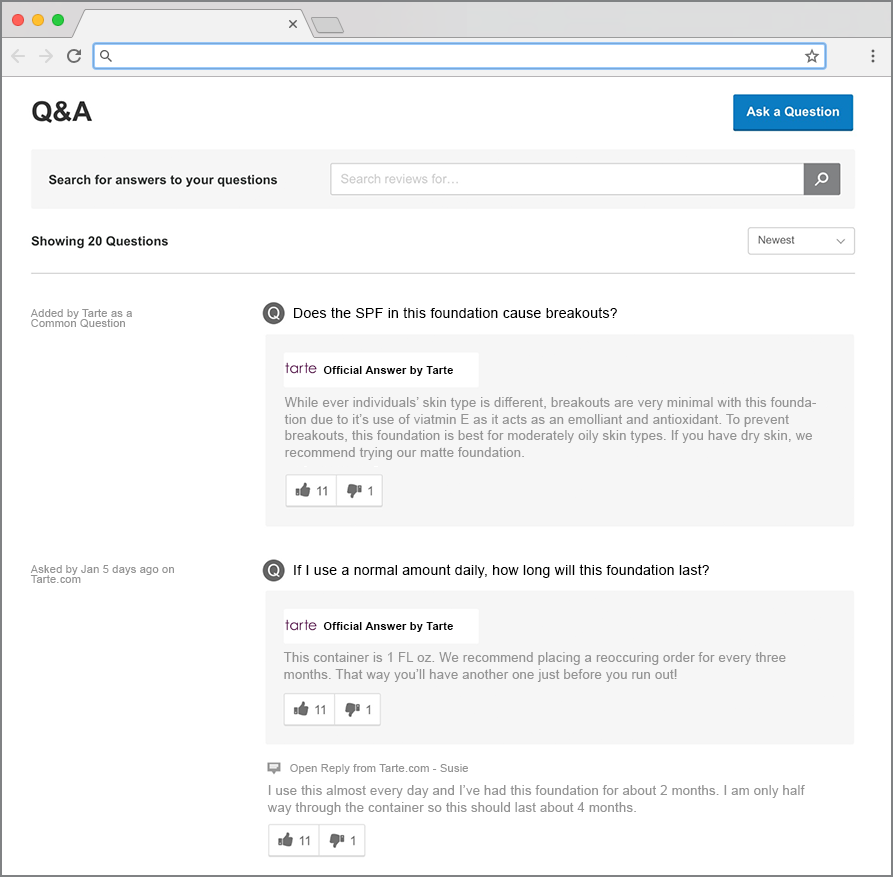
Add Question and Answer (Q&A) software to your website now to allow holiday shoppers to get answers to the questions that stand in the way of making a purchase. In addition to helping shoppers make confident purchase decisions, displaying Q&A on your products detail pages drives more SEO impact.
Doing this lets more holiday shoppers find your pages when starting their purchase journey on a search engine. Plus, PowerReviews clients have seen an 82% lift in conversion for products with answered questions compared to those without.
Pro Tip: Ask your Q&A vendor if they allow previous customers to answer incoming questions. PowerReviews research found that nearly two thirds of Centennial shoppers prefer having their questions answered by previous retailers.
Provide Expert Answers to Shopper Questions
When shoppers have questions, it’s key to provide quick answers,–especially during the holidays when the shopping window is short. No one is better equipped to answer these questions than the brand that created the product.
For Retailers: Enable your top brands to answer shopper questions directly on your product pages. This allows consumers to get their questions answered quickly. This also allows you to reduce customer service costs.
Retailer Best Practice in Action
A top health and beauty retailer had 188 brands sign up to answer questions on their site and 7,261 questions answered during their first two months using Brand Engage from PowerReviews.
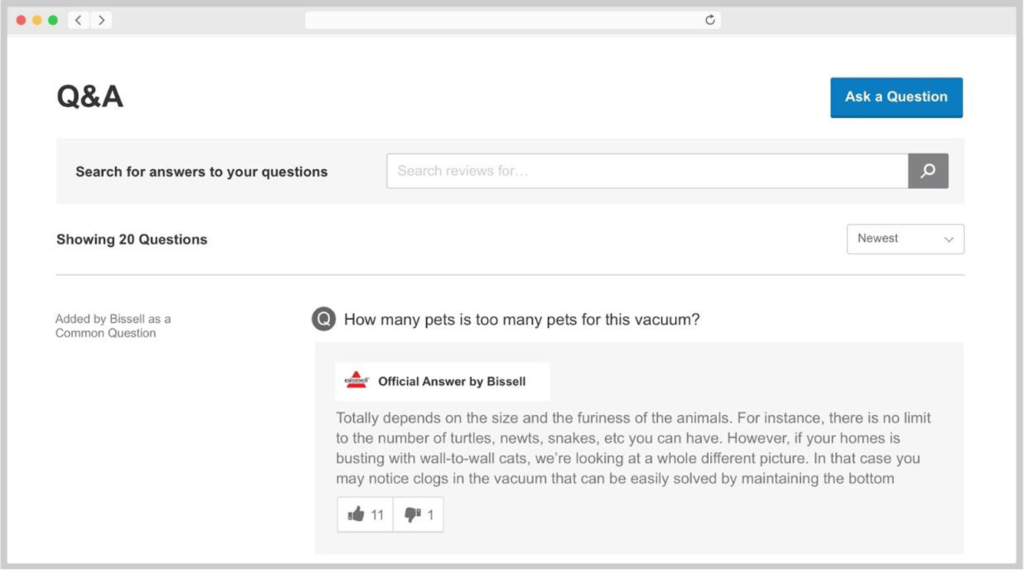
For Brands: Ask your key retailers if they allow brands to answer shopper questions on their ecommerce sites. For example, Brand Engage from PowerReviews enables brands to quickly view and answer purchase-blocking questions from consumers across retailer sites–all from one interface. This allows brands to easily interact with customers across all channels.
Brand Best Practice in Action
A top brand set up their Brand Engage account in only 30 minutes and answered more than 50 questions on their first day of use.
3. Respond to Negative Reviews
Even the best products can’t be all things to all people. So every now and then, you’ll get a negative review. Rather than being discouraged by this content, use it as an opportunity to engage with your shoppers. Effectively doing so can turn a negative experience into a positive one.
For Retailers: Allow your brands to respond to low-rated reviews, directly on your website. This allows your customers to get a response from a brand expert with no effort on your part.
For Brands: Ask your retail partners if they allow brands to respond to low-rated reviews. This allows you to engage with your shoppers and manage your brand’s reputation across channels.
Pro Tip: Ask your ratings and reviews provider if you can be alerted when you receive a review below a certain star rating or with certain negative keywords.
4. Anticipate Your Shoppers’ Questions
There are likely a number of common questions repeatedly asked about your certain products. Provide answers to these frequently asked questions–without your shoppers having to ask.
For Retailers: Enable your brands to proactively add frequently-asked questions with key answers to your product pages. This will decrease the number of questions your own teams have to answer and will give you an SEO boost from the additional content living on your pages.
For Brands: Ask your retail partners if you can add frequently-asked questions to product pages on their ecommerce sites. Then you can answer purchase-blocking questions from your customers wherever they shop for your products.
In Conclusion
No matter the size of your business, make this the year to improve your holiday marketing strategy. We provided a lot of tips to follow, but real change for your customers takes works.
Let us help you generate more revenue this holiday season with the help of a trusted community of everyday influencers and the tools to get your reviews and ratings in front of potential buyers. Schedule a demo with PowerReviews today to learn more!
A recent article in Supermarket News questioned whether online grocery sales are really positioned to explode in the coming five years. Although the current share of grocery volume through online sales is estimated at only 2%, skeptical grocery retailers who ignore the growth projections and digital consumer shift run the risk not properly supporting physical shopping experiences and ultimately losing volume in their core selling channel.
Increasingly, shoppers planning or executing physical store trips are turning to mobile and digital solutions to guide purchase decisions. 78% of millennials rely on the internet to inform real-world purchases, according to The Center for Generational Kinetics. A survey of nearly 3,000 affluent US shoppers reported that 37% read ratings and reviews on their mobile devices while they are shopping in-store. Many categories carried in grocery retail are driven by experience and content, rather than promotional activity. Ever tried to move the needle promotionally on vitamins outside of January? How much mascara are beauty shoppers willing to stockpile due to a BOGO event?
Shopper-generated content is increasingly the coin in the retail realm. It is one arrow in the mobile-digital quiver of omnichannel retailers. Home and garden shoppers are regularly turning to their mobile devices to help identify in-store product locations and product ratings to speed their store visits. And the friction in accessing shopper-generated content is decreasing at a rapid rate. Many retail mobile apps include product scanning capabilities to access pricing, nutritional information, usage videos, question and answer submission portals and shopper generated reviews. As shoppers grow accustomed to these features in other channels, they will begin to expect them from the retailers they visit most often: grocers.
At PowerReviews, we are dedicated to enabling the consumer packaged good manufacturer and retailer ecosystem with the ability to collect and distribute shopper-generated content from physical and digital shopping trips across all categories. These include center store and perimeter categories like the floral department, the deli and the custom-order bakery. These insights help shoppers make informed decisions about new product trials while assisting retailers and manufacturers with insights to improve product and service offerings. Our cloud-based platform easily integrates into retailer and manufacturer websites and mobile apps to capture and share the opinions of shoppers. The PowerReviews Open Network matches reviews to the UPC or manufacturer level and enables the reviews collected at one touchpoint to be shared through other channels selling the same product.
Don’t think that eCommerce is the only reason you might need to connect with your shopping community through mobile digital platforms. Doing so could jeopardize in-store trips already underway. Do you really want to risk shoppers turning to Amazon to learn about the products you carry while in your store? That sounds like a recipe for disaster!
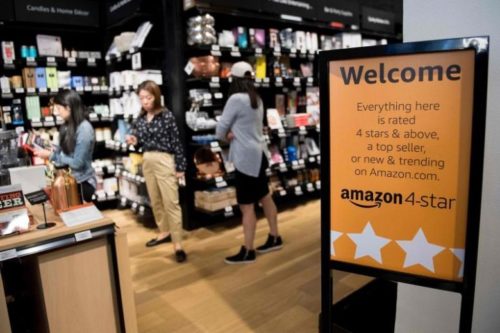
Amazon just opened a physical store in New York where all of the products are either highly rated (4+ stars) or top sellers in their eCommerce channel. Brick and mortar competitors should take note of this strategy that is being made possible by the hundreds of millions of shopper-generated ratings and reviews that Amazon customers have come to expect to help them to make informed purchasing decisions. Amazon deduced rather easily that shopper-generated ratings and reviews provide the confidence and context necessary for shoppers to make purchase decisions faster and more effectively than ever before.
Major grocery retailers have all the ingredients necessary to deliver a similar confident shopping experience to their customers. And they don’t even need to be fully invested in eCommerce to enable this capability. Here are a few ways grocery retailers are beating Amazon at their own game:
Mobile Apps with Product Content
Most major grocery retailers have mobile apps that typically promote weekly circular ads and distribute digital coupons. Many of these apps have the ability to scan product UPCs in order to access product pages with images, pricing and nutritional information. Adding ratings and reviews is a simple widget or API call away.
Content-Rich Shelf Tags
Retailers are already leveraging shelf tags to communicate content beyond price. Many grocery retailers now include nutritional value scores, healthy lifestyle identifiers (gluten-free, non-GMO, etc) or available digital coupons on product shelf tags. Grocery retailers can now follow the lead of beauty retailers like Ulta by including ratings so shoppers can see how others have evaluated product performance.
If retailers are disciplined, they can leverage these strategies to further engage even more with shoppers:
New Products Should Come with Content
All new products that grocery retailers list should come with ratings and reviews ready to include in their product pages. At PowerReviews, we work with many manufacturers to launch influencer campaigns via our BzzAgent platform prior to product launch to generate content that can be shared with retailers as their products reach physical stores. The ratings can be easily included on physical displays and on mobile/web product pages.
eCommerce Not Needed to Collect Content
Retailers with active frequent shopper programs don’t need eCommerce to collect ratings and reviews. They already know what their shoppers are purchasing. At PowerReviews, we work with brick and mortar retailers to leverage their loyalty data, targeting shoppers purchasing specific products for which content is needed. We then execute email campaigns to solicit reviews shortly after the store trip has occurred.
Drive Private Label Conversion
One of the biggest obstacles to shopper adoption of store brands is consumer confidence over product quality. Actively soliciting ratings and reviews via targeted FSP campaigns as noted above, coupled with shelf tags and product page placement will accelerate a retailer’s private label penetration efforts.
Maintain an Open Network for Content
Retailers like Walmart, BJ’s, Sam’s Club and Dollar General all participate in an open network of syndicated shopper-generated content in the form of ratings and reviews. Since the content is matched at a UPC or brand level, it ensures that shoppers are exposed to relevant content regardless of where the product was reviewed. In this way, all retailers benefit from a network of content that is related to the products they are selling through their omnichannel mechanisms.
Don’t Be Afraid of Amazon
Amazon is showing its physical competitors how to leverage shopper-generated content to reduce friction on the path to purchase. Grocery retailers have the ability to compete without the need for a fully-scaled eCommerce platform. If they work with the assets already in place, they can mount a credible competitive approach to engage their shoppers and protect market share from Amazon.
By now most brands and retailers know that for the last six years, PowerReviews and Bazaarvoice have “cross-syndicated” brand content to our respective retailers. Bazaarvoice was compelled to do so after a court determined they had violated the law and acted anti-competitively when they acquired and were subsequently forced to divest PowerReviews nearly four years ago.
As of July 3, 2018, the cross-network syndication agreement started a one-year, wind-down period to ensure a smooth transition to an open network where brands are able to syndicate directly to retailers without paying access fees. As previously announced, PowerReviews will continue accepting and sharing review content from brands using Bazaarvoice during the wind-down period. Unfortunately, Bazaarvoice, over the objection of their retail clients, stopped accepting content from new brands using PowerReviews on July 1, 2018, and recently stated they stopped accepting new content from existing brands as of September 30 unless brands signed an agreement to pay them access fees. We have recently seen evidence of Bazaarvoice attempting to charge brands double or triple the total fees that brands pay to use the PowerReviews platform and participate in the PowerReviews Open Network.
Fortunately, PowerReviews is offering brands and retailers an open alternative that is both technology agnostic and free of access fees. The PowerReviews Open Network is open to brands and retailers regardless of their review platform and it does not impose access fees. In addition to the 150+ retailers using the PowerReviews platform, 30 of the world’s largest retailers using other platforms have agreed to participate and accept brand content directly from PowerReviews. Retailers participating in the PowerReviews Open Network account for more than $1 trillion in total sales, $70 billion in online sales, reaches billions of shoppers and includes content from 1,000+ leading brands.
Despite having agreements in place with retailers, Bazaarvoice is telling the market that they control what content appears on their retailers’ sites. This is simply false. The retailers decide what content appears on their site, not Bazaarvoice nor any third party.
PowerReviews has a no cost, simple solution to ensure continued syndication for brands and retailers
PowerReviews has created pre-matched, pre-moderated files for nearly every major retailer using Bazaarvoice.Those files will continue to be updated on a daily basis with new review content from brands at no cost. There is no technical limitation to ingesting these files. PowerReviews has been sharing files with Bazaarvoice via direct feeds to syndicate review content for the last seven years.We can accept these files. So can Bazaarvoice. This is why review syndication between Jet and Bazaarvoice’s largest retail customer remains uninterrupted between Bazaarvoice and PowerReviews. Should Bazaarvoice not accept these files, PowerReviews will continue to work with retailers to provide them several options to accept brand content directly at no cost.
PowerReviews has industry leading moderation and authenticity standards. Those standards have been approved by the largest brands and retailers in the world, and have been accepted by Bazaarvoice for the last 7 years. These standards will continue.
More Benefits of The PowerReviews Open Network
As many of you know, last year PowerReviews received overwhelming industry supportfor an open syndication network. Brands and retailers were clear and unanimous in their desire for an affordable and accessible review syndication network. The PowerReviews Open Network was built to provide faster setup times, better product matching capabilities and new content types for syndication such as Q&A, images and video, all with no access fees for brands.
With this open and innovative approach, the largest retailers in the world signed direct agreements with PowerReviews. Today, the PowerReviews Open Network impacts more than $1 trillion in total sales and has 1,000+ leading brands participating including GlaxoSmithKline, The North Face, Ugg and World Kitchen and more. More than 25% of the top 100 CPG companies in the world use PowerReviews.
We are actively working through this transition with retailers on the Bazaarvoice platform, and we will continue to make content available.
Thank you, Matt
Technology has become increasingly more intertwined in people’s lives. Nearly every major sector of the economy has experienced some form of disruption because of technology — Transportation (Uber), Lodging (Airbnb), Entertainment (Netflix), Personal Communication (smartphones), Fintech (Apple Pay, Venmo, Square), Retail (Amazon) and the list goes on and on. Retail Grocery is no different.
Consumers’ willingness to embrace new lifestyles powered by technology seems almost endless. Over 18 million Americans now have a grocery app on their mobile device and over 50% of omnichannel purchases are digitally influenced. The success of brands such as FreshDirect, Peapod, Instacart, Shipt, HelloFresh, AmazonNow and many others is proof that the grocery landscape is transforming to meet consumer demand. One of the fastest growing sectors in retail is eGrocery. In fact, online grocery sales are expected to triple between 2015 – 2022.
eGrocery 1.0 focused primarily on the distribution part of the marketing mix, or how and where to buy groceries online. eGrocery 2.0 will focus on the other parts of the marketing mix — especially product, promotion and experience. With eGrocery 2.0, the key question won’t necessarily be where to buy groceries online, but rather what should I buy? Owning the digital shelf space online will be just as important as owning the physical shelf space. PowerReviews helps to enable this digital transformation.
Checking ratings & reviews before digital and physical purchases is now second nature to consumers because they come to expect this information to be readily available regardless of what they’re buying. Consumers can vet their buying decisions for almost anything including restaurants, movies, lodging, trips, electronics, apparel, etc. Grocery products are no different. For consumables, people want to know what others think about the taste as well as ingredient contents. A grocery shopper study by Label Insights, found that 73% of consumers would be willing to pay more for a product that offers complete transparency in all attributes. Furthermore, 56% said that additional information about how food is produced, handled or sourced would help them trust a brand more.
Retailers who are seeking to market their private brands rely on user-generated content to help their shoppers understand the quality and value these brands deliver. PowerReviews offers retailers the opportunity to leverage their community of shoppers to help advocate for private brands that deliver value, are comparable to national brands and offer unique or superior product benefits.
PowerReviews recognized early on that eGrocery was a sector in which we were well positioned to help both Brands and Retailers succeed. We’ve made significant investments in our technology and people resources in this space. Furthermore, we have real world client insights from which our future product roadmap is developed. Here are a few reasons why PowerReviews is a leader in eGrocery.
Insights from a Deep Bench of Grocery Clients
We’ve all heard the saying “learning by doing.” We’ve been doing ratings and reviews for over 10 years and have a deep bench of grocery clients from which we’ve been continuously building our industry expertise. PowerReviews has over 60 active grocery clients including BJ’s Wholesale Club, Jet.com, Dollar General, PepsiCo, ConAgra Brands, DelMonte, Bimbo Bakeries, Hormel, Constellation Brands, Hershey’s and many others. With this breadth of clients comes tremendous insights and unique perspective on how to help our clients focus their omnichannel strategy and get the basics right from the beginning. Without giving away all of our trade secrets, here are a few things we know are important for eGrocery and how we help our clients.
The Science of Review Collection for Grocery Brands & Retailers
Most grocery brands & retailers will readily admit that their digital strategies are still a work in progress. Some sell online, but many don’t. In either case, how do grocery brands and retailers collect reviews and how does PowerReviews help?
Review Collection for both non-eCommerce and e-Commerce clients
Collecting reviews can be a challenge since most grocery brands don’t have close one-to-one relationships with the end consumer. Furthermore, personally identifiable buyer transaction information isn’t usually provided from retailers. If a brand or retailer doesn’t sell products online directly to the end consumer, how are they supposed to easily collect reviews? PowerReviews has a full product suite to help. One of our core strengths is the bundling of our product sampling, review collection and syndication capabilities. We have solutions to help clients regardless of where they are in their digital evolution.
Product Sampling
Product sampling is one of the most effective ways clients can generate reviews if they don’t already have them. Sampling facilitates generating quality reviews for new product launches, seasonal promotions or for existing products that have few reviews. We have a full service solution that handles everything for our clients from targeting, fulfillment and review collection to syndication.
PowerReviews has a large and engaged community of everyday influencers which makes it easy to build out highly targeted sampling and review collection campaigns. We’re experts at this and have consistently been able to generate 85% review submission rates from our sampling campaigns.
Review Collection
There is a science to review collection and PowerReviews has a PhD in it. There are 3 critical success factors in review collection: 1.) How to collect reviews, 2.) What to collect and 3.) When to collect content. PowerReviews collects 2X more content for our clients than our competitors given our acute attention to detail and the smart product innovations we’ve made.
How To Collect Reviews
Our Review Your Purchases feature makes it easy for end users to write multiple reviews all at once, instead of receiving emails individually for each product. This is not standard practice in the industry and is a simple innovation that allows our grocery clients to significantly increase the breadth of coverage of their products. Review Your Purchases has been shown to increase product coverage by 300%.
Our Progressive Collection feature allows clients to collect more in-depth information on their products by sequentially asking probing questions. Whereas Review Your Purchases is about product breadth, Progressive Collection is about product depth and getting more granular feedback about the product from consumers.
Our Intelligent Collection feature allows clients to align their collection strategy with their current business priorities. We know companies have changing category and product priorities throughout the year. Intelligent Collection allows clients to be able to prioritize review collection based on various factors such as price point, margin, review coverage or low conversion rate (eg. high traffic/low conversions).
What to Collect
Our Visual Content collection features allow clients to not only collect written text reviews, but also images and video. Nearly everyone has a smartphone these days and they all have photo and video capability. Photo and video collection is integrated into our product. PowerReviews customers have seen a 153% increase in visual content collection when they sent an image or video-only request to shoppers. What’s more, 65% of shoppers that submit a piece of visual content continue on to write a review.
For grocery brands, one use case of this feature is for consumers to take photos or videos of recipes that have been “completed” using a brands’ products. Whether it’s a cake or a fantastic home-cooked meal, some people love to show off their finished recipes. Food items are among the most frequently posted on Instagram and Facebook. Our Social Suite allows brands to easily create campaigns using previously posted items on Social Media from their customers.
On average we’re collecting over 7,500 reviews per month among our grocery clients. Our portfolio continues to grow as does our executional expertise.
When to Collect
When to collect reviews is a critical success factor. If you request the review too soon after purchase, you’ll miss an opportunity because the consumer hasn’t used it yet. And if you request the review too late, the consumer is disinterested and is likely to ignore the review request. PowerReviews’ powerful data analytics capabilities are integrated into our system to time the review request at the right time per product. PowerReviews has over 1500 product SKUs in the grocery space that we’re collecting reviews for. Our data analytics is a contributing factor to our 2X advantage in review collection relative to the competition.
Syndication
Finally, reviews are most useful when distributed where your shoppers are making their purchases. Reviews don’t just sit on brand and retailer websites, but are shared across retailer product pages as well. That’s where syndication comes into play and the PowerReviews Open Network reaches 1 Billion shoppers monthly that account for $90B in sales.
For grocery brands we syndicate to the largest online retailers such as Dollar General, BJ’s Wholesale Club, Tesco, and Thrive Market to name a few. Here are a few things to note about our Syndication Network:
No access fees
80% higher product matching compared to our competitors due to proprietary artificial intelligence and an in-house human-developed executional process.
Speedy integration. 1-2 weeks setup time which is 50% faster than industry standard
With our sophistication in syndication and overall network management, PowerReviews brand clients frequently see a 2X increase in product page conversions and retailers often experience a 15-20% lift in site conversion.
Our team of consultants has a wealth of experience collecting, organizing and distributing user-generated content, critical for the omnichannel grocery path to purchase. Our years of domain experience working with grocery brands and retailers and our forward-looking product roadmap will help us stay a leader in omnichannel grocery.
As the retail environment rapidly evolves to meet the expectations of today’s empowered consumers, one of the largest brands grabbing nationwide attention also happens to be one of the most mysterious. This is especially true when it comes to the future.
Amazon’s growth from a modest online shopping option to one of the premier eCommerce platforms in the world is a journey its Chairman and CEO, Jeff Bezos says is rooted in its commitment to customers.
Sitting down for a recent 60 Minutes interview, the typically tightlipped Bezos provided a rare glimpse into the rationale behind Amazon’s business model. He also provided insight into how the strategy will steer the retail giant into other business ventures in the future.
For retailers looking to make a splash in the market themselves, his message regarding what should motivate business is particularly useful.
Jeff Bezos Makes The Case for Customer-Driven Strategy
While the investments in innovative solutions Amazon is making are certainly noteworthy and exciting visions of what lies ahead, the most important takeaway for retailers looking to innovate themselves is the idea of robust customer centricity.
For those who’ve observed Amazon’s development and looked on in excitement, today the tools are available to become much more than an observer.
When asked how he and his team decide to take on a new opportunity, Bezos finds the motivation to move in certain directions by closely watching the actions of his customers. Put plainly, Amazon “puts the customer at the center of everything they do.”
It’s this information that Bezos says gives him a glimpse of what may lie at the end of seemingly dark tunnels. While others aren’t willing to take certain risks, it’s the trust in customer opinion that provides the confidence needed to follow through with a new idea.
Trust Remains One Of The Most Important Elements of Sustained Success
The customer-centric strategy can further be broken down into the fundamental idea of trust between the customer and company. For Bezos, the ability to suspend growth goals in order to protect the fragile state of trust customers form with his company and the service it provides is what sends Amazon ahead of competitors.
When others would normally raise prices to reach benchmarks, he keeps them low in order to ensure slight erosion in customer trust doesn’t snowball into a long-term retention problem.
Speaking to Amazon’s physical growth, Bezos says much of Amazon’s profit goes directly back into development projects aimed to take Amazon even closer to its customers. Fulfillment Centers geared around ultra-quick online-to-doorstep delivery and pickup services are one such investment Bezos considers an important link between online and offline convenience.
How Retailers Put These Strategies Into Motion Today
Although it’s always interesting to peel back the cover and look inside successful companies, Bezos’s explanation highlights a business model many retailers can use to their own advantage. No matter the size of your company, turning to your customers to inform you of what next step to take can be a viable solution for any retailer.
Particularly for those who are sensing a disconnect growing between your company and its audience, an effort to let your customers decide the next step can reestablish the delicate sense of trust that may have started to fade. If a customer-centric plan seems to fit your broader customer experience needs, there are ways to start working toward a greater focus on customer-driven direction.
The first step should involve customer evaluation:
Invest in a customer experience evaluation process
In order to make the best possible decisions around your customers, you first need to gather accurate, actionable insights about what they’re pleased with, where they’d like to see improvement and the ideas they have regarding what they’d like to see next.
Whether you engage with trained and certified mystery shoppers capable of providing detailed customer experience reports, a customer intercepts program geared to capture reactions just after customers leave the store, or customer satisfaction surveys tailored to your in-store experience, this is a key step to defining exactly where your customers stand.
Depending on the needs of your particular company, these customer evaluation methods provide leadership teams with the kinds of customer feedback gathered directly from the source.
A business’ aim is to create products and experiences that consumers love. But even the best product can’t be all things to all people. And consumers don’t trust products that claim to be.
As it turns out, perfect reviews aren’t the best for businesses, either. Our research with Northwestern University found that purchase probability peaks when a product’s average star rating is between 4.2-4.5, because a perfect 5-star rating is perceived by consumers as too good to be true.
While a business never wants to aim for negative reviews, their presence adds a level of authenticity to review content, which helps the company build trust with consumers. Plus, as we’ve found, consumers depend on negative reviews to help steer them toward the products that best fit their needs.
A Growing Number of Consumers Seek Out Negative Reviews
Earlier this year, PowerReviews surveyed more than 1,000 American consumers to understand how shopper dependence on reviews has changed over the past few years. As part of this research, we wanted to explore the role of negative reviews in the path to purchase.
One key finding? 85% of shoppers seek out negative reviews, up from 82% in 2014. Notably, this number jumps to 91% among consumers age 18-29. This points to the growing demand for transparency, especially among younger consumers.
Though it may be tempting to delete negative reviews, resist the urge. Negative reviews build trust, and consumers are actively seeking out this content to help them make informed purchase decisions. And remember–what’s considered to be a negative aspect of a product for one consumer may be completely irrelevant for another. For example, if a consumer indicates that a type of shampoo doesn’t work well for people with curly hair, that comment will be deemed irrelevant for a consumer with straight hair.
Start Embracing Negative Reviews
Negative reviews are an important part of the purchase journey. In addition to helping consumers make smart purchase decisions, negative reviews help brands and retailers build trust with shoppers. Read on to get four practical tips for leveraging negative reviews to improve your business
1. Display Reviews, Regardless of Star-Rating
Of course, no business should aim for negative reviews. But displaying this content adds a level of authenticity to your product pages and helps you build trust with shoppers. In fact, research has found that 44% of Centennial shoppers won’t trust a product’s reviews if there are no negative reviews present. So be sure you’re displaying all reviews (after they’ve been moderated for things like fraud and foul language, of course), regardless of star-rating.
2. Get Alerted
Negative reviews are brimming with insights that can help you improve your products and services. But you likely don’t have the time required to constantly monitor each and every review for your entire catalog of products. Ask your ratings and reviews partner if they allow you to receive an automated alert when a review is submitted that’s below a certain star rating — or if it includes specific negative keywords. That way, you can more easily identify trends in negative reviews and determine the best course of action.
3. Share Negative Feedback With Your Teams
Once you identify trends in the negative reviews written for a specific product, be sure you share that feedback with the appropriate teams. For example, Soft Surroundings, a PowerReviews customer, makes and designs all of their apparel in-house and depends on reviews to improve their products. So when they notice trends in negative reviews, they share that feedback with their internal teams to make product changes.
“When we get feedback, it goes directly to our technical design team. The quicker we get feedback, the quicker we can resolve issues,” said Gail Buffington, eCommerce Manager at Soft Surroundings.
4. Respond To Negative Reviews
There’s certainly no need to respond to every review that’s written about your products. But sometimes, it makes sense to respond to a review — especially if it’s a negative one. By responding to a negative review, you’re showing the review writer (as well as future shoppers) that you care about their feedback. When responding to reviews, empathize with the customer’s frustration and let them know you value their input. And if you’re doing anything to improve the product, be sure to mention it.
Learn More
Want to learn more about how consumers are using ratings and reviews — both positive and negative — to make purchase decisions? Download our latest research report.
Ready to see how PowerReviews helps businesses like yours drive traffic, conversion and sales with ratings and reviews? Contact us to schedule a demo today.
The Evolving Role of Ratings and Reviews in the Path to Purchase
There was once a time (in the not so distant past) when the idea of asking for feedback from consumers, then displaying that feedback for the world to see, was a pretty radical concept. But that has all changed — and quickly. Today’s consumers have come to expect easily accessible product information — and this includes ratings and reviews written by others like them.
In 2014, PowerReviews conducted a survey to explore the role ratings and reviews play in the path to purchase and found that nearly all consumers (95%) read reviews and 86% considered them an essential resource when making purchase decisions0. But we understand that a lot can change in four years. That’s why we decided to survey more than 1,000 American consumers earlier this year to understand how shopper dependence on reviews has changed over the past few years. Spoiler alert: our latest round of research found that consumers are reading and writing product reviews more than ever before. And, as expected, this content continues to be a top consideration when making purchase decisions.
Read on for key findings from our latest research, as well as four tips for brands and retailers to leverage the growing power of ratings and reviews to satisfy their shoppers’ growing desire for information from others like them.
More Consumers Read Reviews
Previously, when a consumer was in the market for a new product, she’d ask for the opinions of her family and friends. And though traditional word of mouth is alive and well, increasingly, consumers are seeking out the opinions of other consumers — by reading product reviews.
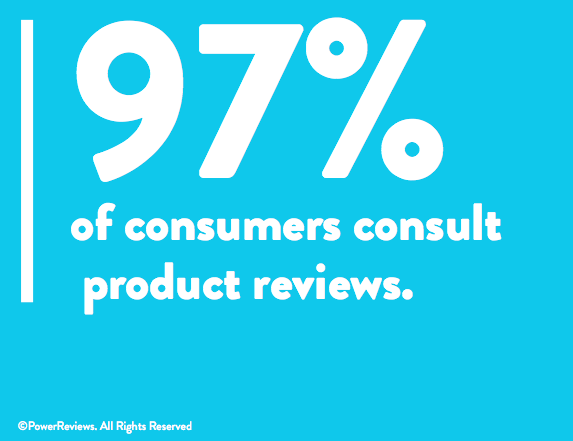
Today, 97% of consumers consult product reviews when making purchase decisions, up from 95% in 2014. Of those shoppers, more than a quarter (26%) consult reviews for every purchase they make online. That number jumps to 30% for consumers age 18–44.
Reviews are an Essential Resource
Reviews have quickly evolved from a “nice to have” to an expected component of the shopping experience. In fact, 89% of consumers consider reviews to be an essential resource when making a purchase decision, up from 86% in 2014.
Reviews have become so essential that many shoppers simply won’t make a purchase without them. 70% of consumers indicate they won’t purchase products online without reading reviews. And over a third (39%) won’t purchase products in a brick-and-mortar store without first consulting reviews.
The message is clear: featuring review content on your website is no longer optional — it’s essential. Businesses that don’t provide this content to their shoppers risk losing them to businesses that do.
Reviews are a Top Purchase Consideration
Consumers weigh a number of different factors when making a purchase decision–from product pricing to the ease of returns. But which factors weigh more heavily when it comes time to commit?
Our latest research found that consumers rank the presence of ratings and reviews as the most important factor impacting purchase decisions, behind only the price of the product itself. Consumers have made it clear that the presence of authentic reviews have a larger impact on purchase decisions than other factors including recommendations from family and friends, the brand of the product and the availability of free shipping.
Reviews Impact Online Shopping Behavior
The availability of reviews impacts where consumers choose to shop online, and whether they make a purchase once they land on a given website. When shopping online, 63% of consumers specifically seek out websites that have product reviews, up from 57% in 2014. And 77% of mobile shoppers are more likely to purchase an item if the website or app offers product reviews, up from 70% in 2014.
Brands and retailers take note: collecting and displaying reviews is a key way to attract — and convert — information-hungry consumers. Those that don’t will lose shoppers — 70% of consumers simply won’t buy products online without reading reviews first.
Reviews Influence In-Store Behavior, Too
It’s clear that reviews play a large role in online shopping behavior. However, it’s important to note that a significant–and growing–number of consumers rely on review content when making in-store purchases, too. Our research found that a growing number of consumers (39%) don’t buy products in stores without first reading reviews, up 8% from consumer research in 2014. This trend will only continue to grow, with 31% of consumers indicating they use reviews to make in-store purchases more today than they did a year ago.
It’s key for brick-and-mortar retailers to ensure review content is easily accessible for in-store shoppers. In addition to ensuring reviews are easy to read via a mobile device, look for opportunities to display ratings and reviews in your physical stores.
Four Tips for Success
With nearly all consumers reading reviews, this content has become an expected part of the path to purchase. Read on for four tips for businesses looking to leverage reviews to attract and convert shoppers.
Collect Reviews: If you’re not already, now’s the time to start requesting reviews from your customers. The most effective way to generate this content is to send a post purchase email, asking consumers to write reviews for recently purchased products. Make sure the entire process for submitting a review is quick, simple and can easily be completed from any device. Finally, ensure it’s easy for your consumers to review multiple products at once.
Make Reviews Front and Center Online: Once you’ve started generating reviews, start prominently displaying this content on your product pages so shoppers can easily find it, regardless of the device they’re using to shop. Look for opportunities to include ratings and reviews on other parts of your website too, including category pages and even your homepage.
Feature Reviews In-Store: A growing number of consumers are turning to reviews to inform in-store purchases. In addition to ensuring this content is easy to find and read on your website from any device, look for opportunities to display review content in your brick-and-mortar store locations. For example, include star ratings and excerpts from reviews on signage alongside key products.
Syndicate Reviews: If you’re a brand that syndicates content to retail sites, you’ll benefit from getting this content in front of more shoppers in more places. And if you’re a retailer that accepts syndicated brand content, you’ll benefit from increased review coverage and depth, without having to generate that content yourselves. Today, retailers receive an average of 58% of their review content from syndication.
Want to learn how PowerReviews can help you start collecting and syndicating more reviews to drive traffic, conversion and sales? Contact us to schedule a demo today.
Reaching More Shoppers With Visual Content
There’s no question that visual content is changing the way consumers browse for and purchase products. Today, 97% of consumers seek out visual content prior to purchase. And 88% specifically seek out photos and videos submitted by other consumers like them.
You’ve heard the message loud and clear and have started collecting visual content from your shoppers, both natively and through Instagram. Now, it’s time to start getting this visual content in front of your shoppers in more places to boost buying confidence and increase conversion. Read on to learn six easy steps for more effectively displaying the user-generated photos and videos you’ve collected from your shoppers.
1. Feature Visual Content in a Gallery on Product Pages
Consumers want to find user-generated photos and videos of the products they’re considering — but they don’t want to work hard to find it. PowerReviews research found that two-fifths of shoppers prefer to see images and videos from shoppers like them directly on a brand or retailer website.
Once you’ve started generating photos and videos from your consumers, be sure to showcase this powerful visual content in an engaging gallery directly on the product page. This will get more eyes on your visual content, leading to higher engagement on the page and greater conversion.
2. Make Sure Photos Are Oriented Correctly
Imagine you’re a health and beauty retailer and one of your shoppers purchases a lipstick she loves. She takes a couple selfies wearing the lipstick and attempts to upload one of them natively, as part of a review. But the photo appears sideways, and there isn’t a way for her to fix it.
The lesson here? Make sure your visual content provider makes it easy for your shoppers to properly orient photos when they’re being uploaded. That way, this content will appear correctly in your visual content gallery.
3. Syndicate Visual Content to Retail Partners
In some cases, a shopper will shop for a brand’s product directly from the brand’s ecommerce site. But in other cases, they’ll opt to shop via a retailer that sells the brand’s products. Be sure both types of shoppers can find the visual information they’re seeking out, regardless of where they shop. How? By syndicating the visual content you collect (both natively and through Instagram) to your retail partners (or, if you’re a retailer, by accepting this content from your brands).
If you’re a brand that syndicates visual content to your retail partners, you benefit from getting this conversion-boosting content in front of more shoppers, wherever they purchase your products. If you’re a retailer that accepts syndicated visual content, you benefit from displaying more photos and videos on more products, without having to generate this content yourself.
4. Add a UGC Snippet to Product Pages
Consumers are busy people with short attention spans, so it’s key to provide them with all the information they’re looking for in one place. That includes photos and videos — both brand-provided and submitted by consumers like them.
Ask your visual content provider if it’s possible to add a snippet to your product display page to allow your shoppers to easily access photos and videos submitted by other consumers, right alongside brand-provided product images.
5. Include Visual Content in Other Marketing Campaigns
Make the most of the great visual content you’re generating from your customers by including this content in other marketing initiatives. For example, once you’ve received permission, consider including user-submitted visual content in social media campaigns and marketing emails. Or, include content on in-store displays to engage shoppers in your brick-and-mortar locations.
6. Give Credit to Instagram Contributors
You’ll need to get permission from consumers before using their Instagram photos or videos on your website or in your other marketing materials. The good news is, your visual content partner should make this an easy process for you.
Once you get permission, be sure to give the shopper a shout out when you use their photo or video. For example, if you repost a user’s photo on your company’s Instagram page, tag them in it as another way to give them props. This will encourage other consumers to share content with you, in hopes of being featured on your page.
Start Collecting and Displaying More Visual Content
Collecting and displaying visual content is a win-win for consumers and businesses alike. Seeing photos and videos of a product “in real life” helps consumers make more confident purchase decisions. And it helps brands and retailers boost traffic, conversion, and sales — and reduce returns.
Are you already a PowerReviews client? Contact your Client Success Director to learn more about how you can start generating and displaying more visual content today. Not a PowerReviews customer yet? Contact us to schedule a demo.