Millennials are the largest living generation. Today, there are 72.1 million in the U.S.
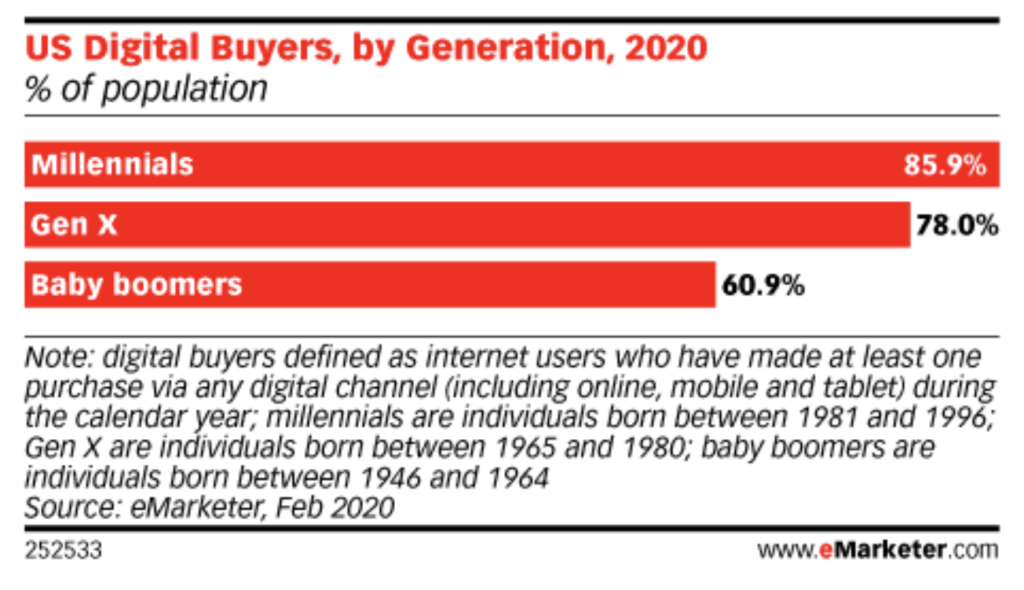
Millennials are the generation with the most digital buyers. Today, 85.9% of Millennials make purchases online.
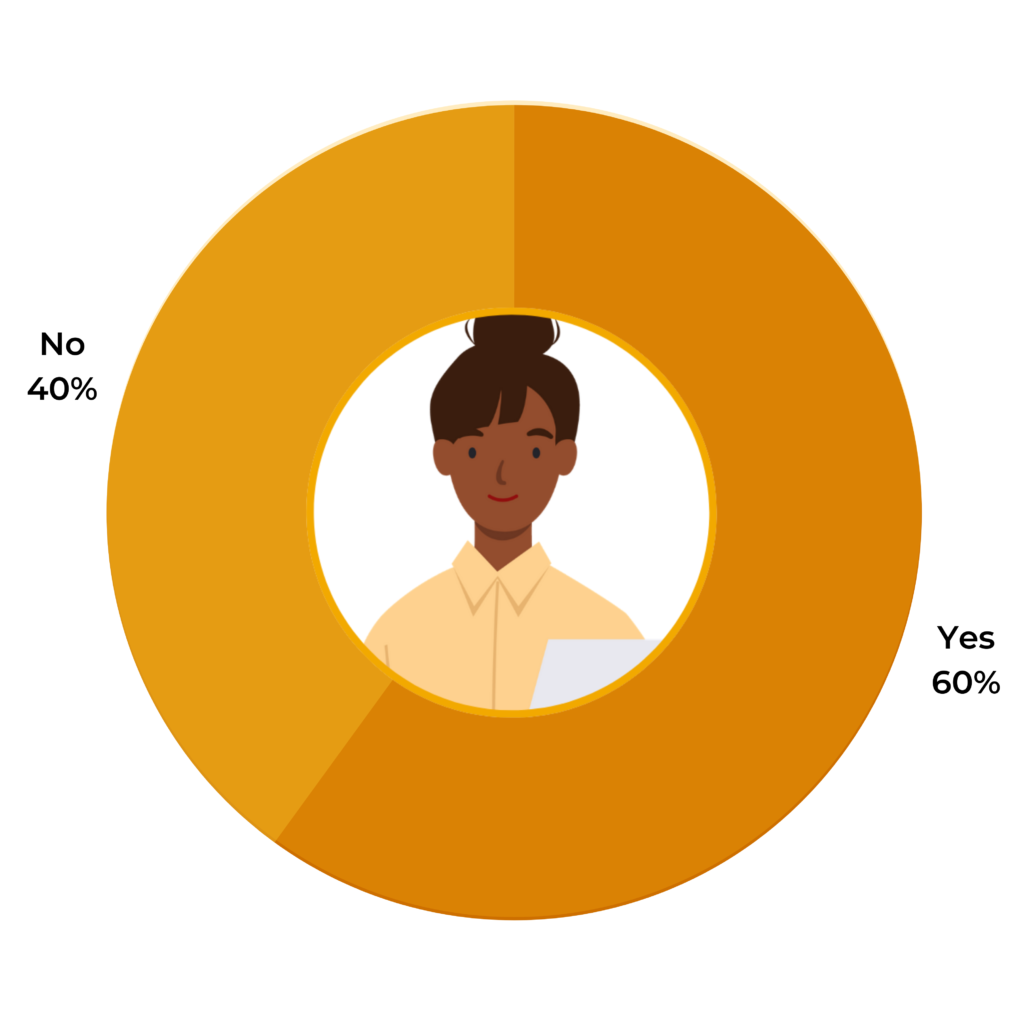
On average, Millennials make 60% of their purchases online.
Millennial shoppers depend on ratings and reviews to make informed purchase decisions, regardless of channel. 99.9% read reviews when shopping online and 63% do so when shopping in-store.
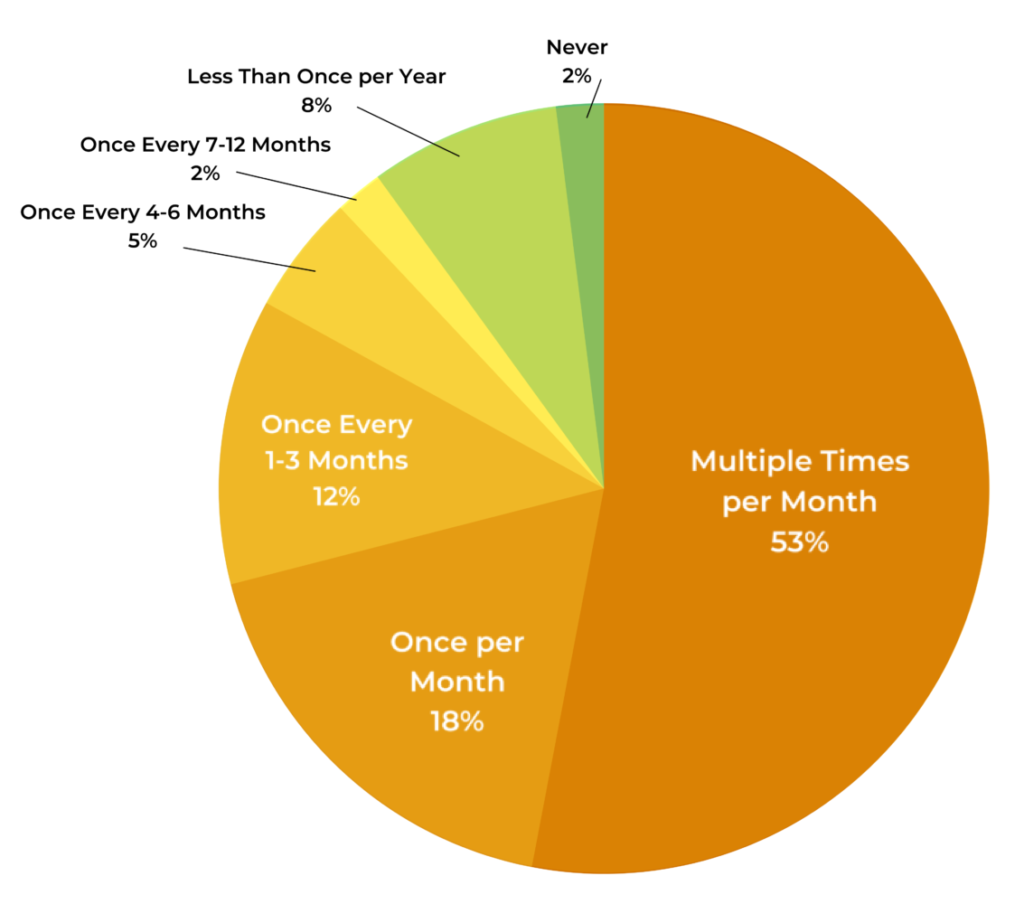
Millennials don’t write reviews as frequently as they read them. Just over half write reviews multiple times per month.
Understanding what motivates Millennials to write reviews can help brands and retailers generate more content from this large, important demographic.
Millennials, people born between 1981 and 1996, are a force to be reckoned with.
Today, there are 72.1 million Millennials in the U.S., making it the largest living generation. And they’re willing to spend money with the brands they love. According to Statista, Millennial-led households in the U.S. spent an average of nearly $60,000 in 2019.
There’s no denying that the shopping habits of Millennial consumers are vastly different from those of the generations that came before them.
Namely, Millennials shop online more than older generations — and they depend on feedback from other consumers throughout the purchase journey.
In order to attract and retain Millennial shoppers, brands and retailers must understand these key differences — and adapt their strategies accordingly.
Reviews are Essential for Online Millennial Shoppers
Millennials were the first generation to grow up with the internet. So it’s probably not surprising that they’re also the generation most likely to shop online. According to eMarketer, 85.9% of Millennials were digital buyers in 2020, compared to 78% of Gen X and 60.9% of Baby Boomers.
When they’re shopping online, they depend on reviews and other types of user-generated content to navigate the journey and make informed purchase decisions. In fact, 99.9% of Millennials say that they read reviews when shopping online at least sometimes.
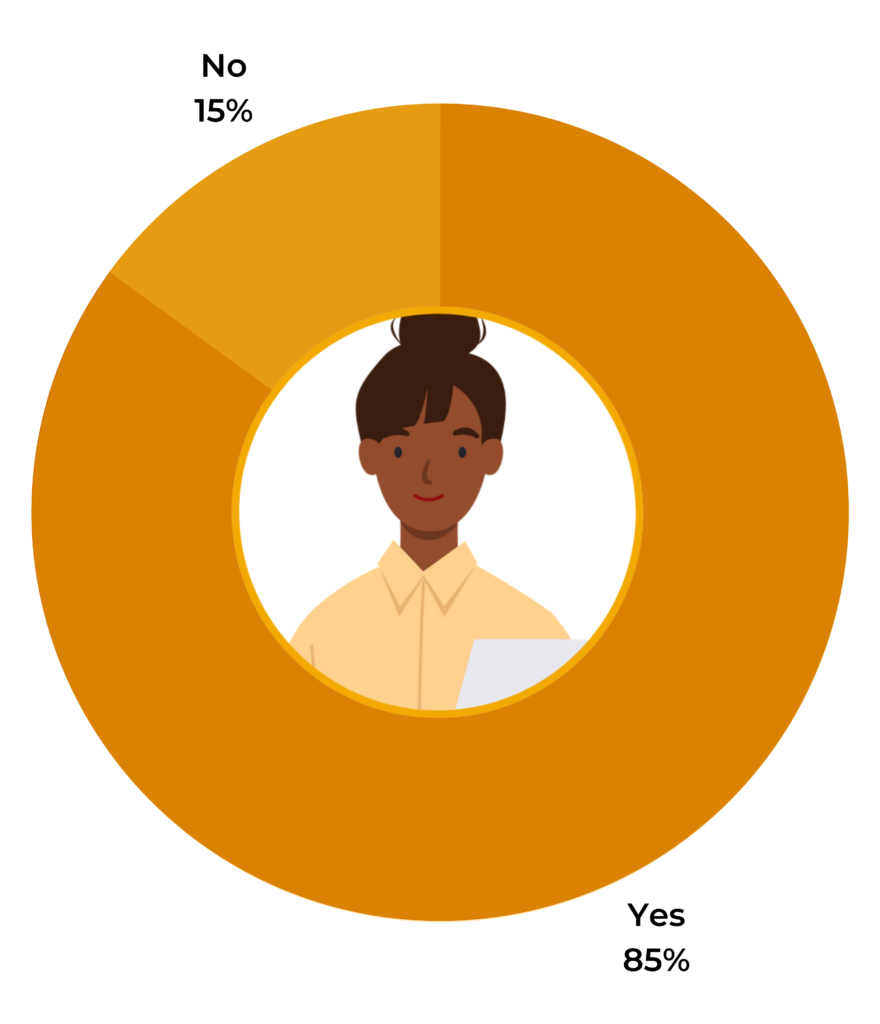
Reviews influence where Millennials choose to shop online — more so than any other generation. 85% of Millennials say they specifically seek out websites with reviews, compared to 76% of Gen X’ers and 70% of Boomers.
Millennials Seek out Websites with Reviews
And if Millennials can’t find the content they’re looking for, they’re likely to pass on the product altogether. Nearly half (48%) of Millennials indicate that they won’t purchase a product if there are no reviews for it, compared to 42% of Gen X shoppers and 39% of Boomers.
Of course, glowing reviews help Millennial shoppers understand how great a product is. But this generation also wants to learn about the worst case scenario before committing to a purchase.
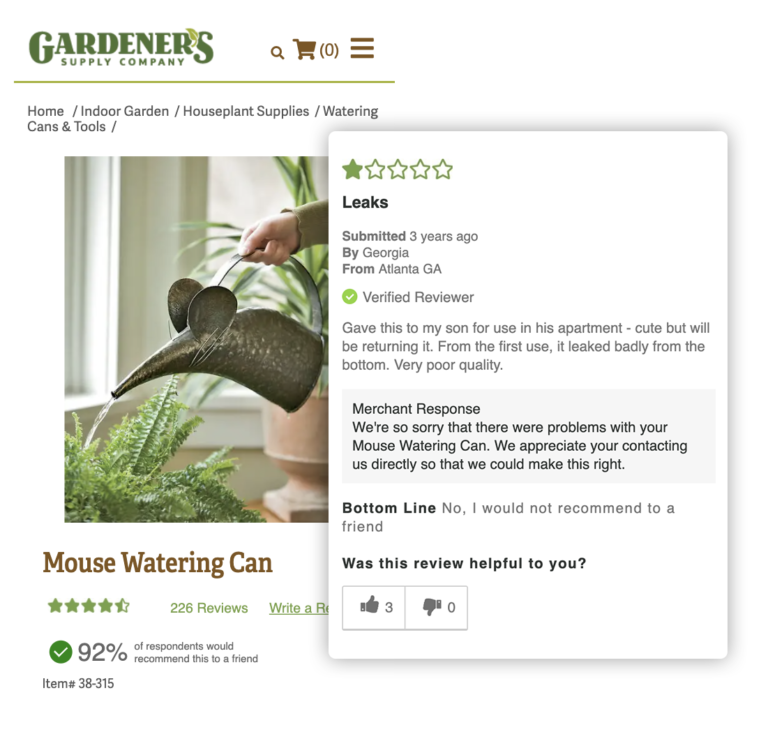
And they do this by reading negative reviews. 97% of Millennials specifically seek out negative reviews at least sometimes. And 60% say they specifically seek out one star reviews. In fact, Millennials are the generation most likely to seek out one star content.
Seeking Out One-Star Reviews
Negative reviews help Millennial shoppers make better purchase decisions. What’s more, when you display negative reviews, it helps you earn the trust of Millennial shoppers. After all, 47% say they’re suspicious of products with a perfect five star rating.
Millennials Use Reviews In-Store, Too
Up until this point, we’ve focused on how reviews impact online shopping behavior. But today, most Millennials continue to do at least some of their shopping in a brick-and-mortar store. Per Digital Commerce 360, Millennials do 60% of their shopping online. The remaining 40% happens in a physical store location.
Millennials use reviews when shopping in-person, too. In fact, Millennials are the generation most likely to consult reviews when shopping in brick-and-mortar stores. 63% of Millennials read reviews when shopping in physical store locations, compared to 56% of Gen X shoppers and 39% of Boomers.
How to Generate More Reviews from Millennial Shoppers
Millennials are shopping online more than any other generation. And they place a tremendous value on reviews when they do so.
So it’s easy to assume that Millennials also write a lot of reviews. But that’s not exactly the case. Our research found that just over half (53%) of Millennials say they write reviews multiple times per month.
Once you determine what motivates Millennial shoppers to write reviews, there’s potential to significantly increase your review volume. But what exactly do you need to do to encourage more reviews from this demographic?
Recently, we surveyed more than 10,000 consumers to understand what motivates them to write reviews. For the purposes of this blog, we’re zeroing in on the behaviors of Millennial shoppers to provide five recommendations for generating more content from this group.
1. Deliver Great Experiences
You may think Millennials are more likely to write reviews if they’ve had a bad experience. But our research tells us this actually isn’t the case.
Rather, a great experience is the top motivator for Millennials to write reviews. 92% of Millennials say that a great experience motivates them to write a review, compared to 76% that indicate a negative review motivates them to write a review.
Factors that Motivate Consumers to Leave a Rating/Review
A positive experience
92%
Receiving free product samples
87%
A negative experience
76%
Incentives (reward points, discounts, etc)
73%
Helping and guiding others
68%
Desire to help brand improve product
64%
Being part of a reviewer community
50%
Reading ratings and reviews from others
45%
Validation from other shoppers
26%
So make it a priority to consistently deliver great products and experiences to your customers.
Of course, developing great products is essential. But so too is managing expectations. Be sure to provide plenty of information — including comprehensive product descriptions, customer reviews, and professional and shopper-submitted photos and videos — to ensure shoppers have realistic expectations of your products.
That way, when the product arrives, it’ll meet customer expectations — and their great experience with your product will make them more likely to leave a review.
But remember: a great product is just one factor that contributes to a customer’s experience.
It’s also important to focus on ways to improve the experiences your shoppers have with your brand throughout the purchase journey — from browsing on your website, mobile app or brick-and-mortar store to reaching out to your customer service team when something goes wrong.
After all, Salesforce research found that 80% of consumers indicate that the experience a company provides is as important as its product or service.
Great experiences lead to happy customers. And happy customers are more likely to purchase from you again…and write positive reviews about your products.
2. Ask for Reviews -- But do it More Than Once
Of course, there are shoppers out there who will write reviews of their own volition. But more often than not, customers need to be prompted to submit a review.
One of the most effective ways to prompt shoppers is by sending a post purchase email, asking them to provide reviews for recently purchased products. Research tells us that up to 80% of reviews are the result of post sale emails.
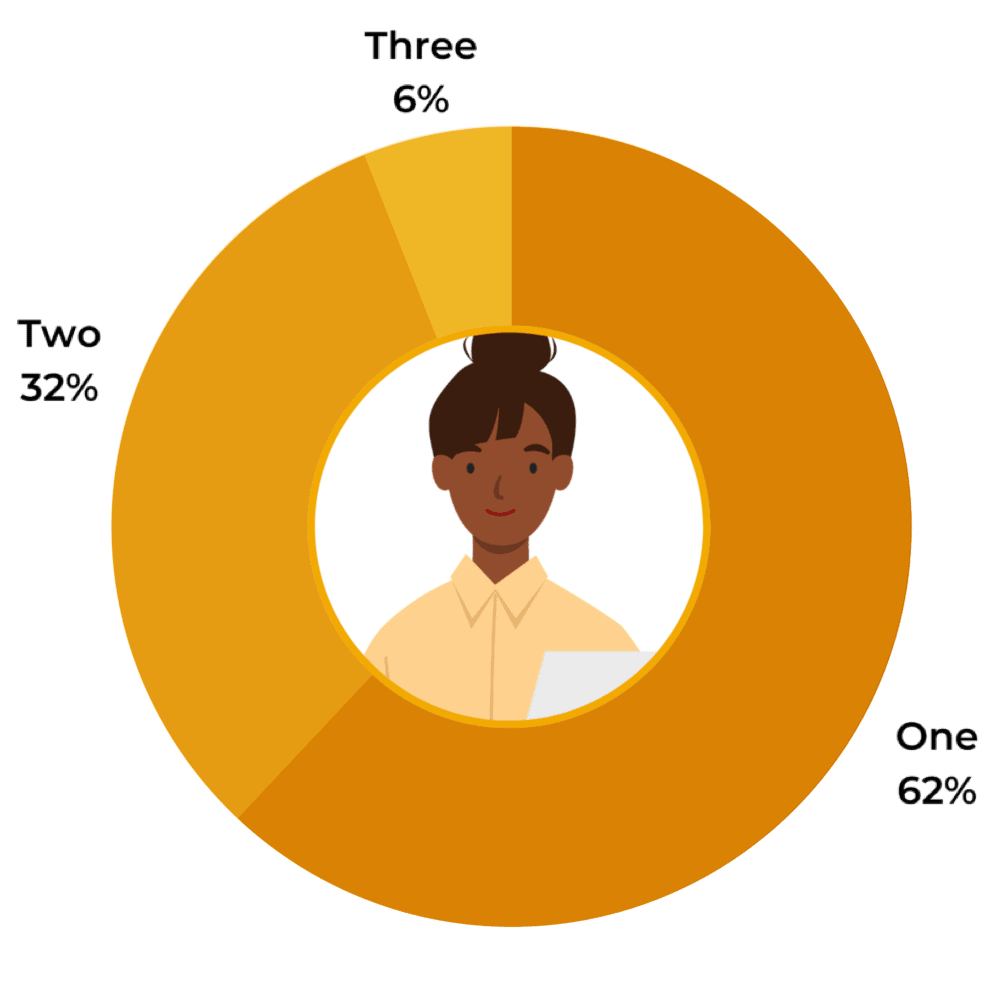
But as it turns out, a single email often isn’t enough — especially among Millennials. A third of Millennials say they need to be asked twice before leaving a review, and 6% need to be asked three times!
Number of Times Millennials Need to be Asked Before Leaving a Product Rating or Review
If shoppers don’t write a review after receiving your post purchase email, consider sending a second — or even a third.
It’s a low effort tactic that can help you generate a lot more review content from those Millennials who need an extra nudge.
3. Make Your Request at the Right Time
We know that it can take up to three post purchase emails to get a review from a Millennial shopper. Now, the next question is: “When’s the best time to ask for reviews?”
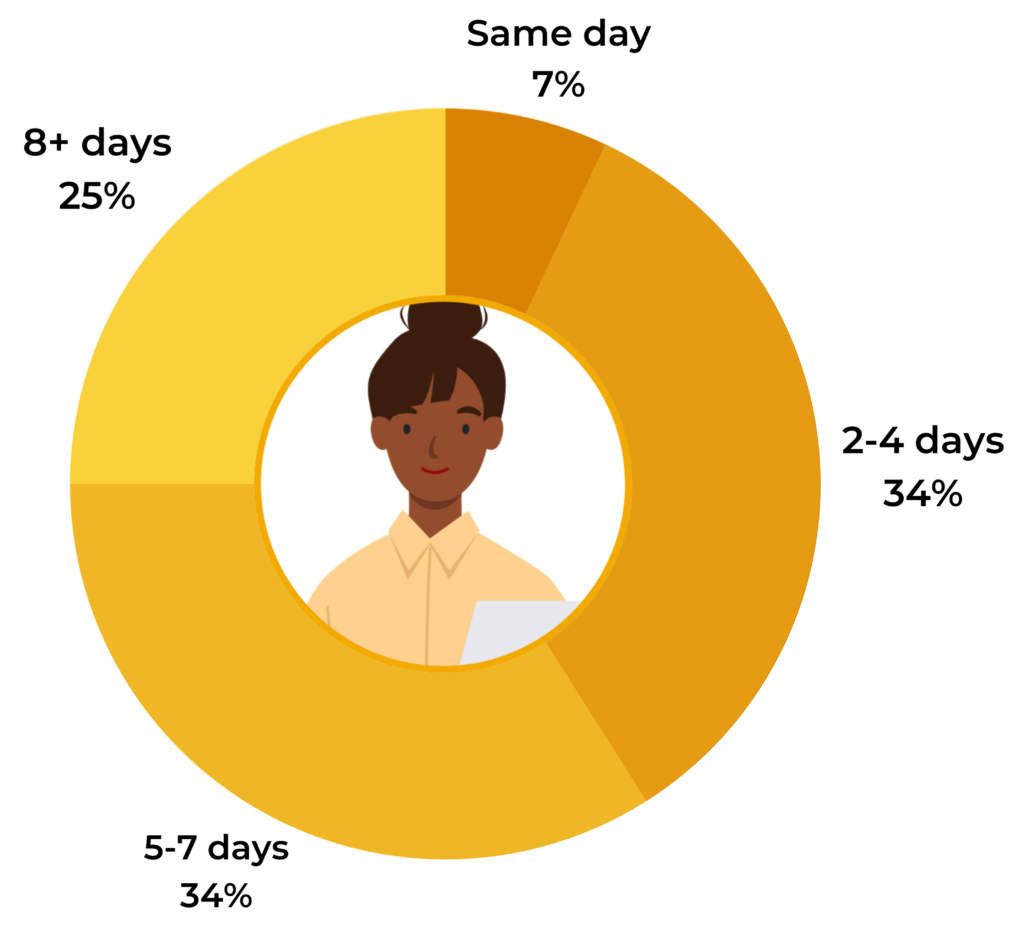
There’s not exactly an easy answer. Our survey also reveals that 41% of Millennials say they write reviews within four days of receiving a product — including 7% who do so the day the product arrives.
But the remaining 59% indicate they submit reviews five or more days after a product’s arrival. A quarter need to spend at least eight days with a product before they’ll consider writing a review.
Average Length of Time Taken After First Using/Receiving a Product to Submit Review
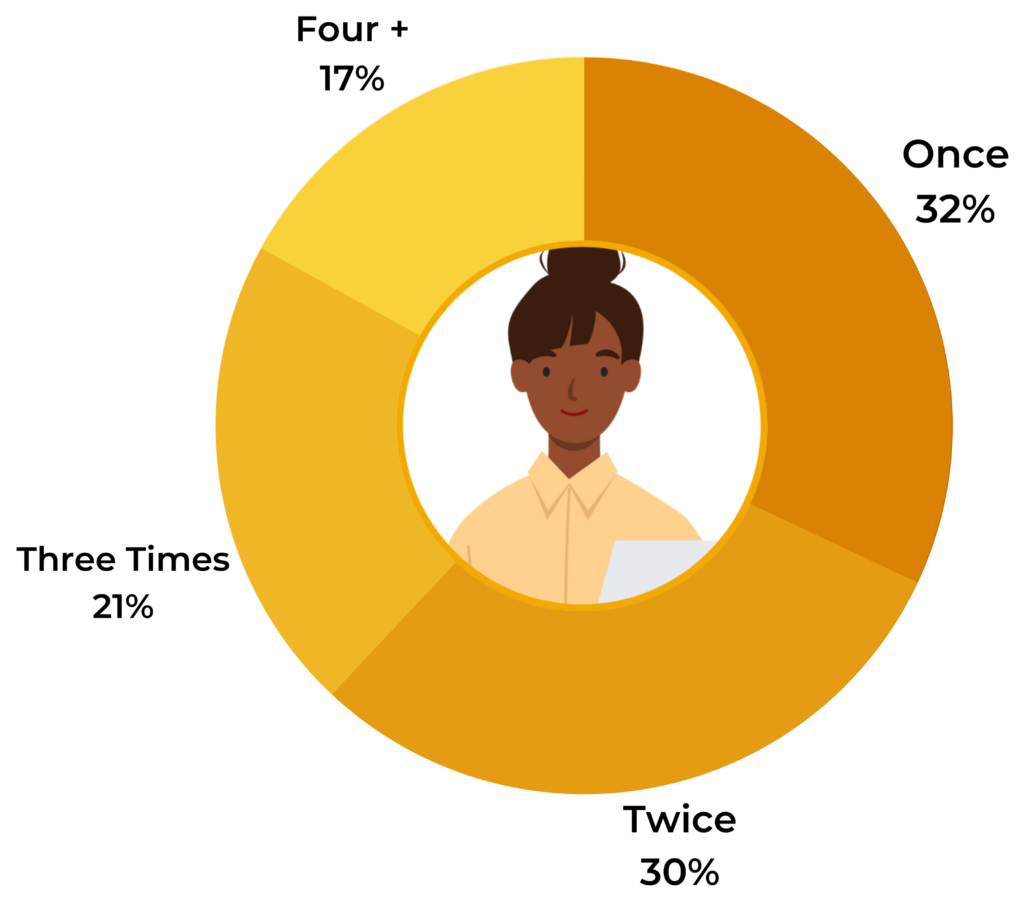
What’s more, while 32% of Millennials say they’ll write a review after using a product just once, the remaining 68% need to test drive the product at least twice before submitting feedback.
Number of Times Product Used Before Review Submission
These data points support the need for multiple post purchase emails, spaced out over a few days or weeks, depending on the product category. At a minimum, send one shortly after a product has arrived to capture content from those shoppers willing to submit reviews after a single use. And send a second (and possibly, a third) email later on, once your Millennial shoppers have had a chance to try out the product in question multiple times.
4. Try an Incentive
Of course, the best way to get more reviews from Millennial shoppers is to provide them with great products and services. But if you want to quickly generate more reviews from this demographic, the right incentive can go a long way.
After all, 73% of Millennials indicate that an incentive would motivate them to write a review.
When you’re asking for reviews from Millennial shoppers, consider sweetening the deal by offering an incentive. The most enticing incentive for Millennials is receiving a free product sample, which probably isn’t a big surprise.
In fact, a product sampling campaign is a proven way to generate a high volume of content quickly (on average, brands and retailers that leverage PowerReviews’ sampling capabilities find that 86% of those who receive a free sample will go on to write a review).
However, there are other incentives that intrigue Millennial shoppers, including early access to a product (84%), discounts (74%) and loyalty points (65%).
Here at PowerReviews, we also have many clients that significantly boost their review volumes by offering an entry into a sweepstakes in exchange for a review.
Incentives Leading to Review Submission
Loyalty points
65%
Discounts with store/brand
74%
Receiving a product before the general public
84%
Receiving the product free of charge
91%
Whatever incentive you choose, make sure it’s prominently showcased in your post purchase emails.
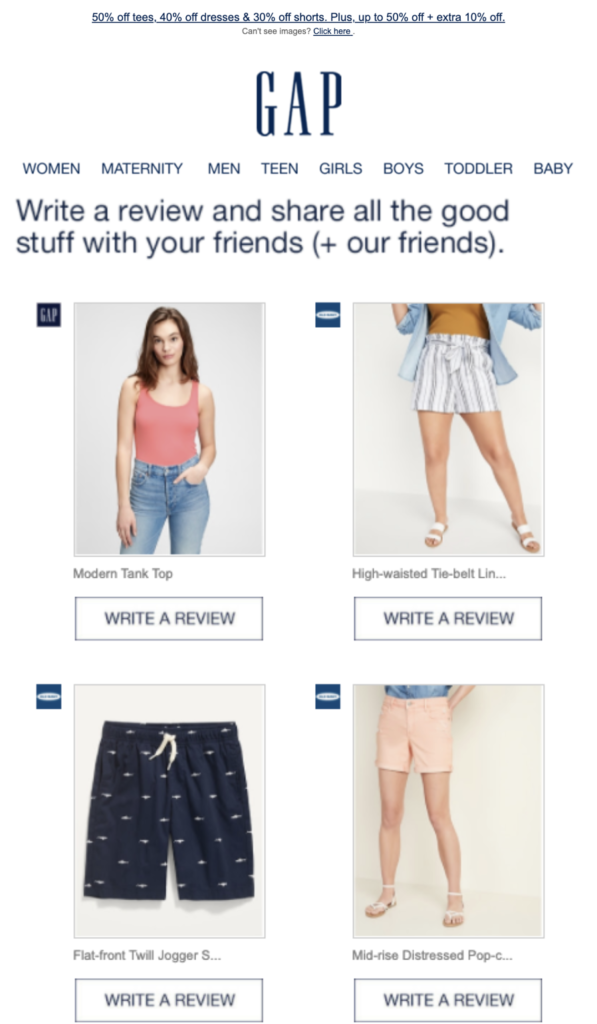
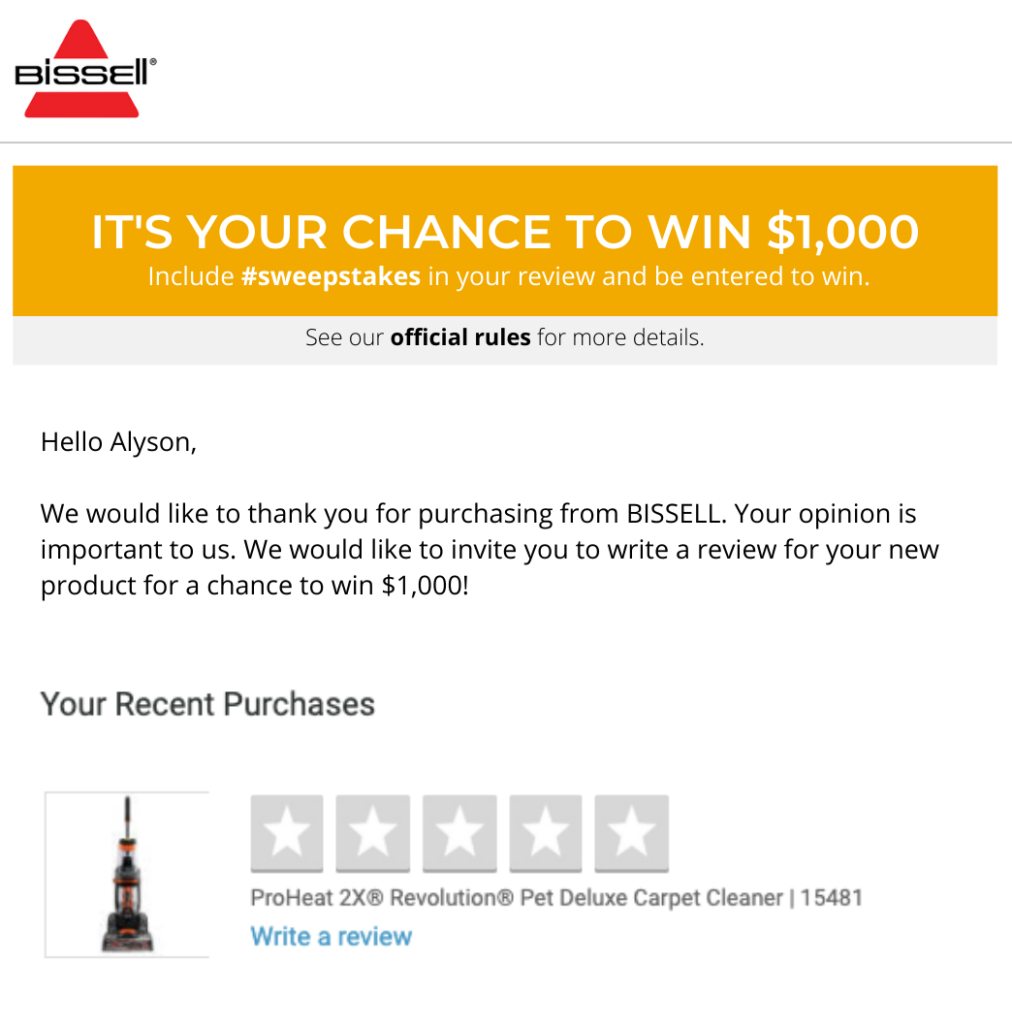
For example, this post purchase email invites the consumer to enter a sweepstakes by mentioning a hashtag in their review.
It’s also a good idea to call out the incentive on the review submission page. For example, when a shopper clicks on the post purchase email above, they’re taken to a page that reminds them that they’re eligible for a sweepstakes entry for writing a review.
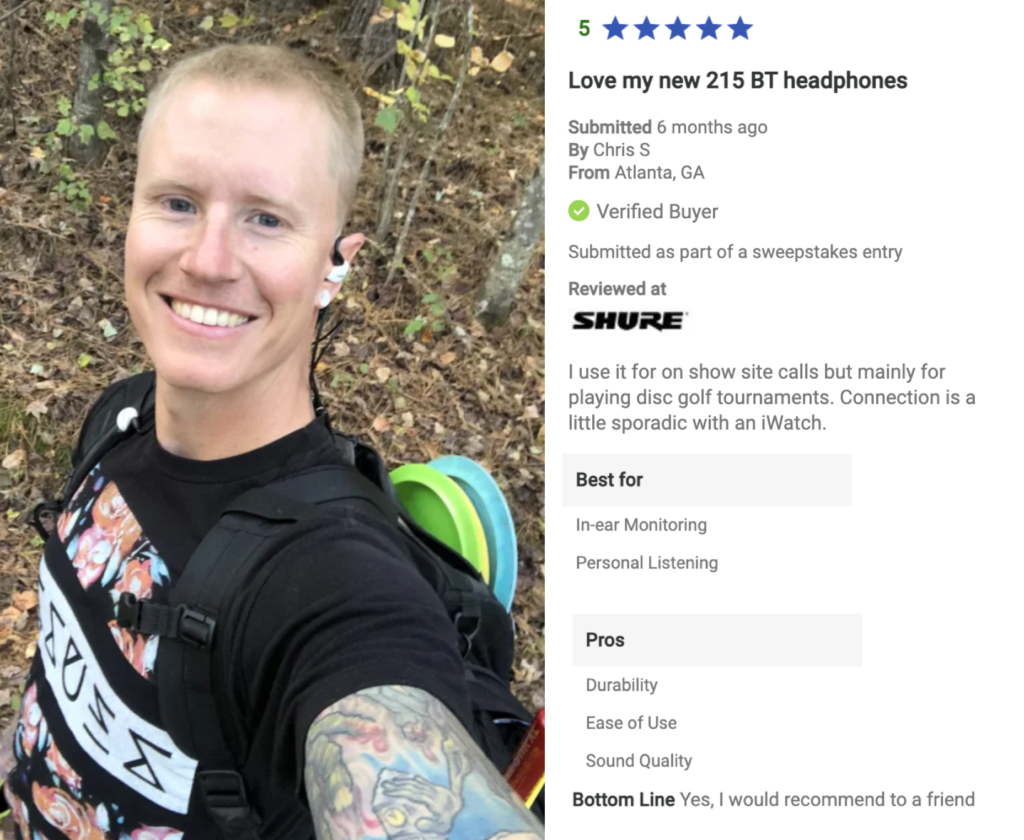
Finally, be sure to disclose when a review was written as the result of an incentive. For example, shoppers can clearly see that the customer who wrote this (syndicated) review did so on the brand’s website and received an entry into a sweepstakes.
It’s an important way to be transparent — and preserve your customers’ trust.
5. Focus on Higher Priced Items
Our latest research found that reviews are particularly impactful for higher cost items. This is especially true for younger shoppers — including Millennials.
86% of Millennials say they read more reviews for expensive products, compared to 70% of Boomers and 78% of Gen X shoppers.
The most logical explanation is that there’s risk associated with purchasing expensive items, and reviews provide social proof that can help shoppers overcome that risk.
Interestingly, over a quarter of Millennials (28%) also say they’re more likely to write reviews for expensive products.
Reviews can give Millennials the confidence they need to purchase an expensive product. But a good number of Millennials are also more likely to write reviews for higher priced products.
So, put a bit of extra effort into collecting reviews for the more expensive items in your product catalog. One way to do that is to send an extra post purchase email to customers who purchase these higher priced items.
Start Leveraging Reviews to Connect with Your Millennial Shoppers
Millennials depend on reviews whether they’re shopping online or in-store. Brands and retailers must provide plenty of this content, or risk losing shoppers to a business that does.
Millennials also have the potential to be a rich source of reviews for brands and retailers. But it can be challenging to generate reviews from this busy group of shoppers, especially because their behaviors and motivations are different from other generations.
The first step is to understand what motivates Millennials to write reviews. Then, you can use those insights to evolve your approach to review collection — and start generating a higher volume of reviews from this important demographic.
To put it simply, more millennial reviews = more millennial conversions and sales = more millennial reviews = more millennial conversions and sales…and so on and so on.
Power Points
99.9% of consumers read reviews, and 98% consider them an essential step on the consumer path to purchase.
The more reviews a brand has, the better. Shoppers who visit a product page with 1-10 reviews are 52.2% more likely to convert than those who visit pages without any reviews.
At the risk of stating the obvious, more reviews equals more conversions and sales, regardless of product type. However, review volume has the highest impact on conversion rate for shoppers in the electronics, CPG, furniture, and luxury goods categories.
There are a few truisms we can rely on in this life.
Cat videos will never get old, taking vacation is always a good idea, and people will always consult reviews when making a purchase.
Our latest analysis of consumer activity during more than 4.5B visits, across more than 1.5MM online product pages from more than 1,200 retail and brand sites has revealed new insights. Some aren’t so surprising, like the fact that people trust reviews more than ever. Others are a bit more surprising, like the impact of review volume on customer conversion rates.
Below we recap our latest findings on the impact of review volume on conversion, broken down by industry, with tips for boosting your own review count and quality.
The Power of Reviews
First, let’s review the impact of reviews in general (see what we did there?).
Back in 2018, we asked consumers what role reviews played in their purchase journey. At the time, 97% reported consulting reviews, and 89% considered reviews an essential part of the purchase journey.
Those numbers were impressive enough. But they’ve only grown bigger since. Nearly all (99.9%) of today’s consumers read reviews, and nearly as many (98%) consider them essential. In a world where it’s hard to know what to trust, shoppers know they can rely on reviews to be authentic and unbiased, empowering them to make an informed purchase decision.
In fact, consumer trust in reviews is so high that 86% of online shoppers say they won’t even buy products without reading reviews first.
And indeed, reviews are driving shoppers to purchase. Our 2021 UGC Conversion Impact Analysis found that when a shopper interacts with ratings and reviews on a product page, it lifts their conversion rate by 120.3%.
The Impact of Reviews on Conversion
Ecommerce UGC Page Visitor Overall
3.4%
Conversion for Those Who Interact with Reviews
7.6%
120.3% conversion lift when visitors interact with reviews
Ratings and reviews are now so critical to making purchasing decisions that they’ve edged out price as the most important factor for shoppers. 94% of shoppers say ratings and reviews are the most important factor in their decision, compared with 91% who said price (Source: Ever-Growing Power of Reviews).
Top Factors Impacting Purchase Decisions
Ratings & Reviews
94%
Price of the product
91%
Free shipping
78%
Brand of the product
65%
Recommendation from friends/family
60%
Imagery provided by people who have previously purchased the product
52%
Imagery provided by the brand or retailer
46%
The Power of Review Volume
Reviews are table stakes for business today. If reviews are so essential, does it follow that more reviews are even better?
We recently commissioned some new analysis exploring this question. To accurately assess the impact of review volume on the shopper journey, we calculate the visitor conversion rate based on the product page visited with the most reviews during a site visit (counted as all interactions with a specific site in a 24 hour period). The benefit of this consumer-centric evaluation method is that it focuses on the shopper and the impact that exposure to reviews has on likelihood to convert.
Our data from the past twelve months (5/12/2020-5/14/2021) reveals the incredible impact of review volume on conversion.
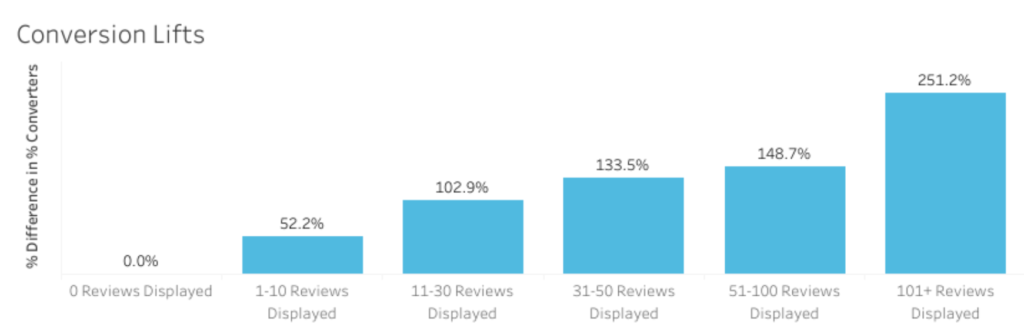
When a shopper is exposed to a product page with 1 or more reviews, conversion lifts by 52.2%.
Shoppers visiting product pages that have 11 to 30 reviews have conversion rates that are over 2x higher than those who visit product pages with 0 reviews.
When products reach the holy grail of 101 reviews or more, we see shopper conversion rate increase of over 250%!
The takeaway is clear: the more reviews you have, the better.
There’s a direct, linear relationship between the number of reviews a shopper is exposed to on a product page and the lift in conversion rate.
The influence of review volume on a customer’s decision to purchase makes a lot of sense, when you take a step back to think about it. As University of South Carolina marketing professor Dr. Sungsik Park recently told the Wall Street Journal, “It’s all about sample size. The more reviews, the more likely the comments will reflect the product’s true quality.”
As important as review volume is, the consumer appetite for reviews still isn’t being met by brands and retailers. Over half (53%) of shoppers consult up to 10 reviews when buying a product, but 68% say that in an ideal world, a product would have at least 26 reviews for them to consider. Given the insatiable consumer demand for reviews, there’s a clear opportunity for brands to increase their review volume.
The impact of review volume extends beyond individual products. Nearly six in ten shoppers say they’re more likely to buy a product that has no reviews if other products from the same brand have high overall ratings. So, good reviews for one product generate a halo effect that extends to other products. This just goes to show the power of social proof and how reviews help establish trust and credibility for a brand overall.
What About Your Industry?
Reviews are impactful irrespective of industry, but the extent of this impact does vary across verticals. Which product categories see the highest impact from reviews?
Percentage of shoppers who indicate reviews are helpful, by category
Electronics
95%
Health & Beauty
83%
Clothing
75%
Shoes
68%
Home & Garden
67%
Toys
54%
Groceries
42%
Baby
40%
Electronics & Computers
95% of consumers state reviews are helpful when shopping for electronics. In the consumer appliances & electronics category:
When a shopper visits a product page with between 1 and 10 reviews, there is a conversion lift of 70.5% (compared to visitors to product pages with 0 reviews).
If a shopper visits a product page with between 31-50 reviews, their conversion lift increases to 224.7%.
81% of consumers state reviews are helpful when shopping for computers.
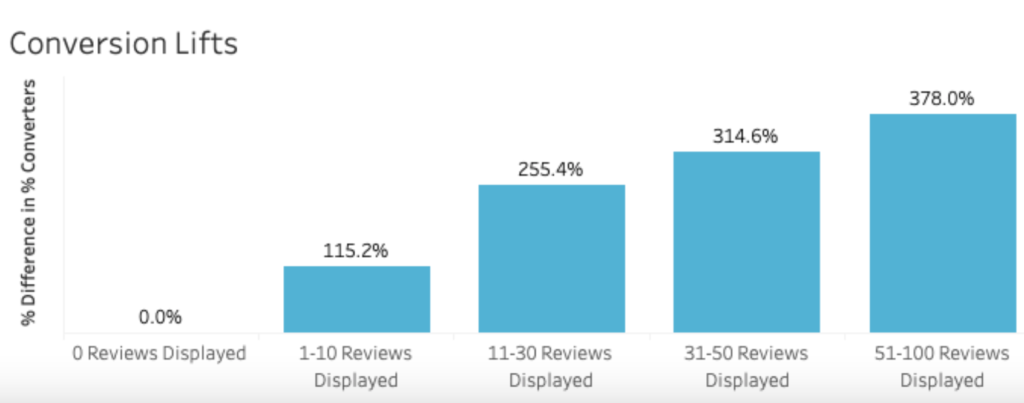
When a shopper visits a product page in the computer & software category with between 1-10 reviews, there is a conversion lift of 115.2% vs. a product page with 0 reviews.
When a shopper visits a page with between 11 to 30 reviews, the conversion lift is 255.4% (vs a product page with 0 reviews).
At 31 to 50 reviews, the shopper conversion lift is 314.6%.
Reach 51 to 100 reviews, and shopper conversions lift by a giant 378.0%.
Health and Beauty
83% of consumers stated that reviews are helpful when shopping for Health and Beauty products. In this category in particular, volume is king.
When a shopper visits a Health and Beauty product page with 1-10 reviews, the conversion lift is 22.1%.
But when a shopper visits a product page with 101+ reviews, their conversion lift reaches 275.7%.
Clothing & Accessories
75% of consumers find reviews helpful when shopping for clothing and 68% when shopping for shoes.
When a shopper is exposed to an item in the Clothing & Accessories category with 1-10 reviews, the conversion lift is 33.6%.
For a shopper who visits a product page with 11-30 reviews, their conversion lift is 67.6%.
For a shopper who visits a product page with 31-50 reviews, their conversion lift is 98.6%.
For a shopper who visits a product page with 51 to 100 reviews, their conversion lift is 107.5%.
For a shopper who visits a product page with 101 or more reviews, their conversion lift is 162.8%.
Grocery & Consumer Packaged Goods (CPG)
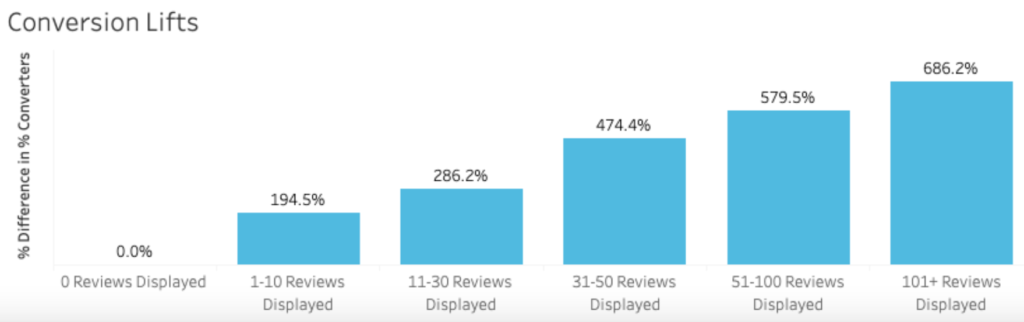
When a CPG shopper visits a product page with 1-10 reviews, their conversion rate nearly doubles – with a conversion lift of 194.5% (in comparison to visitors to pages from the same product category without any reviews)
For a shopper who visits a product page with 11 to 30 reviews, their conversion lift is 286.2%.
For a shopper who visits a product page with 31 to 50 reviews, their conversion lift is 474.4%.
For a shopper who visits a product page with 51 to 100 reviews, their conversion lift is 579.5%.
For a shopper who visits a product page with 101 or more reviews, their conversion lift is 686.2%.
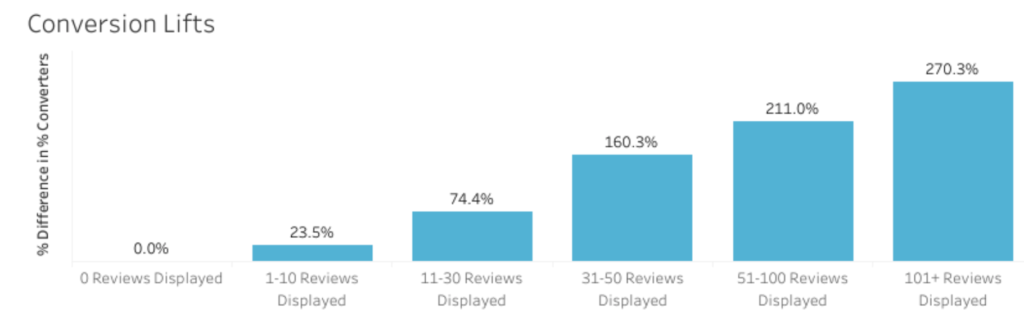
Despite a slower ramp up, we see a similar pattern in Food and Beverage. Put simply, the more reviews a shopper is exposed to, the higher the lift in conversion rate in this category.
With 11 to 30 reviews, the shopper conversion lift is 74.4%.
With 31 to 50 reviews, the shopper conversion lift is 160.3%.
With 51 to 100 reviews, the shopper conversion lift is 211.0%.
With 101 or more reviews, the shopper conversion lift is 270.3%.
Home and Garden
67% of consumers state reviews are helpful when shopping for home and garden products. When a shopper visits a product page in this vertical with between 1 and 10 reviews, there is a conversion lift of 44.7% (in comparison to a visitor to product pages in this category without any reviews).
In this category, more than 30 reviews appears to be the sweet spot as we don’t see a material lift as review volumes rise beyond this level.
With 11 to 30 reviews, the shopper conversion lift is 142.8%.
With 31 to 50 reviews, the shopper conversion lift is 211.6%.
With 51 to 100 reviews, the shopper conversion lift is 213.3%.
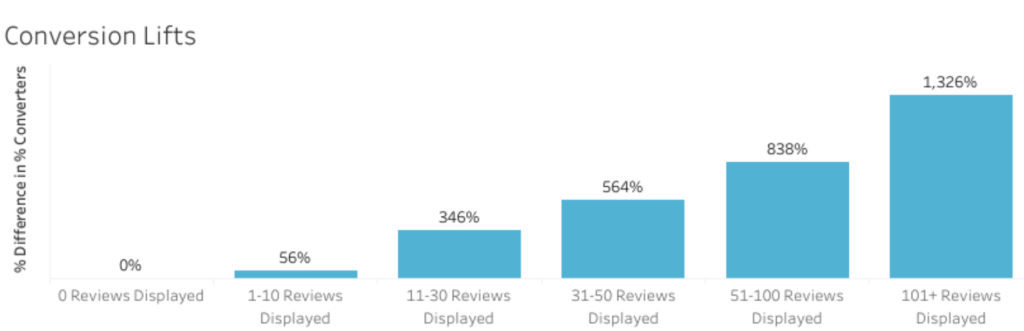
In the furniture category, there is a 56% lift when a shopper visits product pages with 1-10 reviews vs. those with zero. After that, the lift is exponential.
With 11 to 30 reviews, the shopper conversion lift is 346%.
With 31 to 50 reviews, the shopper conversion lift is 564%.
With 51 to 100 reviews, the shopper conversion lift is 838%.
With 101+ reviews, the shopper conversion lift is 1,326% !
Jewelry and Watches
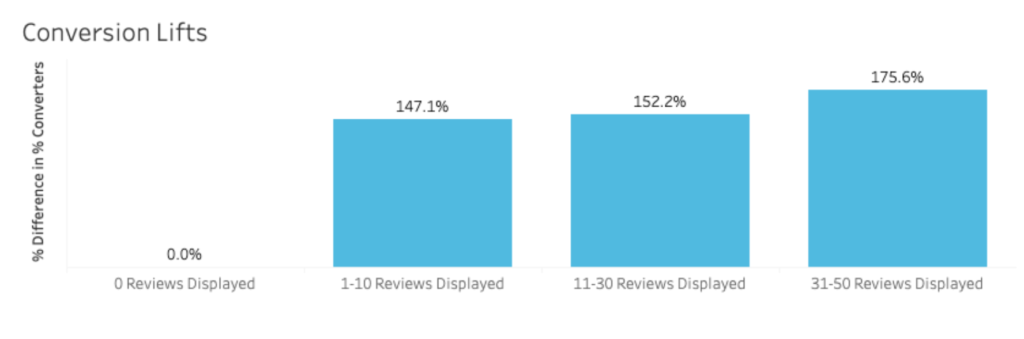
80% of consumers say that the more expensive a product is, the more they read reviews. It’s no surprise then, that conversion lifts for shoppers visiting luxury goods product pages (such as jewelry and watches) reach 147% if they have 1-10 reviews on them (in comparison to product pages in this category without any reviews):
Conclusion
The key takeaway from all this? Reviews matter. Like really matter.
Companies of all shapes and sizes scrutinize the ROI of each and every investment – which is standard practice and simple common sense. When it comes to product ratings and reviews, the ROI is very clear and is not even remotely difficult to justify.
Across all of the key categories we studied: the more reviews a product has, the higher the likelihood it has of converting a shopper to purchase. This is just a simple universal truth of ecommerce.
What does this mean for you? 1. You need to make collecting high volumes of ratings and reviews a priority and 2. When you do, you need to make sure you display this content in a way that it will have maximum impact.
This may sound simple but the honest truth is ratings and reviews are often an afterthought for brands and retailers.
So if you adequately prioritize both these strategies, you will stand out from your competition. And who wouldn’t get excited about that?
Alyson Fischer
Alyson Fischer is our Product Marketing Manager, obsessed with using data-driven storytelling to deliver a best-in-class customer experience and inspire dynamic engagement across channels. When she’s not agonizing over writing this bio, you can find her exploring Chicago with her furry sidekick or watching a true crime documentary on Netflix.
Audrey Zuckerman
Audrey is a Business Intelligence Analyst at PowerReviews – passionate about empowering users with data. When she isn’t building reports or writing SQL, you can probably find her hiking the greenbelt in Austin, TX or playing with her dog at Zilker Park.
Power Points
The Google product reviews update does not impact the kind of reviews you have on your website, i.e. individual product reviews written by verified customers.
The update targets affiliate-style blogs that review products, or lists of products, in a long-form article format. For example, articles with titles like “Best Drip Coffee Makers of 2021” or “2021’s Best Top Load Washing Machines, Reviewed.”
At PowerReviews, we are focused on ensuring that the user-generated content we help you collect is authentic and helpful.
Learn how our review displays are already engineered to satisfy Google’s requirements for useful, thoughtful, and detailed review content.
We know you’ve probably heard about a recent Google update concerning product reviews. It’s totally normal to get nervous whenever Google makes a big announcement.
But, if you’re a PowerReviews customer, there is no need to panic with this update.
Google’s product reviews update is targeting the kind of generic, unhelpful information you find in affiliate blogs and listicles, so that true product reviews — like what you have on your website — can come to the spotlight.
Read on as we break down what you need to know about Google’s product reviews update, how it impacts search and page rank, and how PowerReviews products are already set up to help you take advantage of this change.
What Is the Google Product Reviews Update?
The Google product reviews update targets affiliate-style blogs that review products, or lists of products, in a long-form article format. It is not targeting individual product reviews written by verified customers, like the kind you have on your website. That’s the key takeaway you need to know.
What is an affiliate blog, you may be wondering? Let us explain.
Affiliate blogs include links to all the products they review, with unique identifiers that help the retailer identify which clicks and purchases came from that blog. If a reader clicks on a link and buys the product, the company rewards the affiliate with cash. That’s why these blogs almost always have something vaguely positive to say about all of the products featured; it’s the best way for them to make money!
Think back to the last time you researched online to buy an important purchase, like a new TV or coffee maker. You may have been looking for an expert’s opinion on the top options out there. You may have found yourself reading an affiliate blog. The blog may have talked vaguely about what to look for when you compared products, and all the products kind of sounded the same.
We’ve all found ourselves reading one of these affiliate review blogs. They’re typically only somewhat helpful. In fact, many of them share the same information you’d find on a retailer’s website, which you could have found yourself!
This is exactly the kind of the content Google’s looking to catch with this product reviews update. Instead of promoting “thin content that simply summarizes a bunch of products,” Google is changing up their ranking algorithms to ensure that the affiliate blogs they feature were written by people who have actually used the products and can speak to them knowledgeably.
Google always aims to share the most up-to-date, helpful information with its users, which is why it rewards sites that have richer, more freshly updated content with higher rankings in the search results. (This is why reviews are so good for SEO!)
INCREASE RANKINGS
More than 35% of customers begin the purchase journey on a search engine.
0%
BOOST ORGANIC TRAFFIC
Organic product page traffic increases on average by 108% when going from zero to at least one review.
0%
GENERATE MORE CONTENT
Product pages going from zero to at least one answer see an average traffic increase by 88%.
0%
The bottom line: Google’s goal with this update is to ensure that when people look up blogs and review articles online, the content they find is written by experts who have deep knowledge of the industry, and have actually held the products they’re reviewing in their hands and used them. Google is not targeting user reviews of individual products like those found on your product landing pages.
How We Ensure Authenticity and Helpfulness at PowerReviews
Even though Google’s product reviews update has no impact on the types of review content we support here at PowerReviews, we’re vigilant about ensuring that the user-generated content we help you collect is authentic and helpful. We’re always brainstorming new ways to ensure your reviews convey a level of thoughtfulness and detail that give people actionable information. In other words — the kind of content that Google’s working to protect and promote.
It all starts with our Review Displays. We’ve designed them to be flexible, so we can easily adapt them to precisely fit the needs of your customer base. You can add different filters and review fields, from the pros and cons for a product to identifying information about the reviewer. This level of detail allows your brand to provide what we call contextual reviews.
What Are Contextual Reviews?
Contextual reviews enable shoppers to hone in on the reviews from people just like them. They can find a review and say to themselves, “Hey, this person sounds just like me! That gives me more confidence that the product will work for me!”
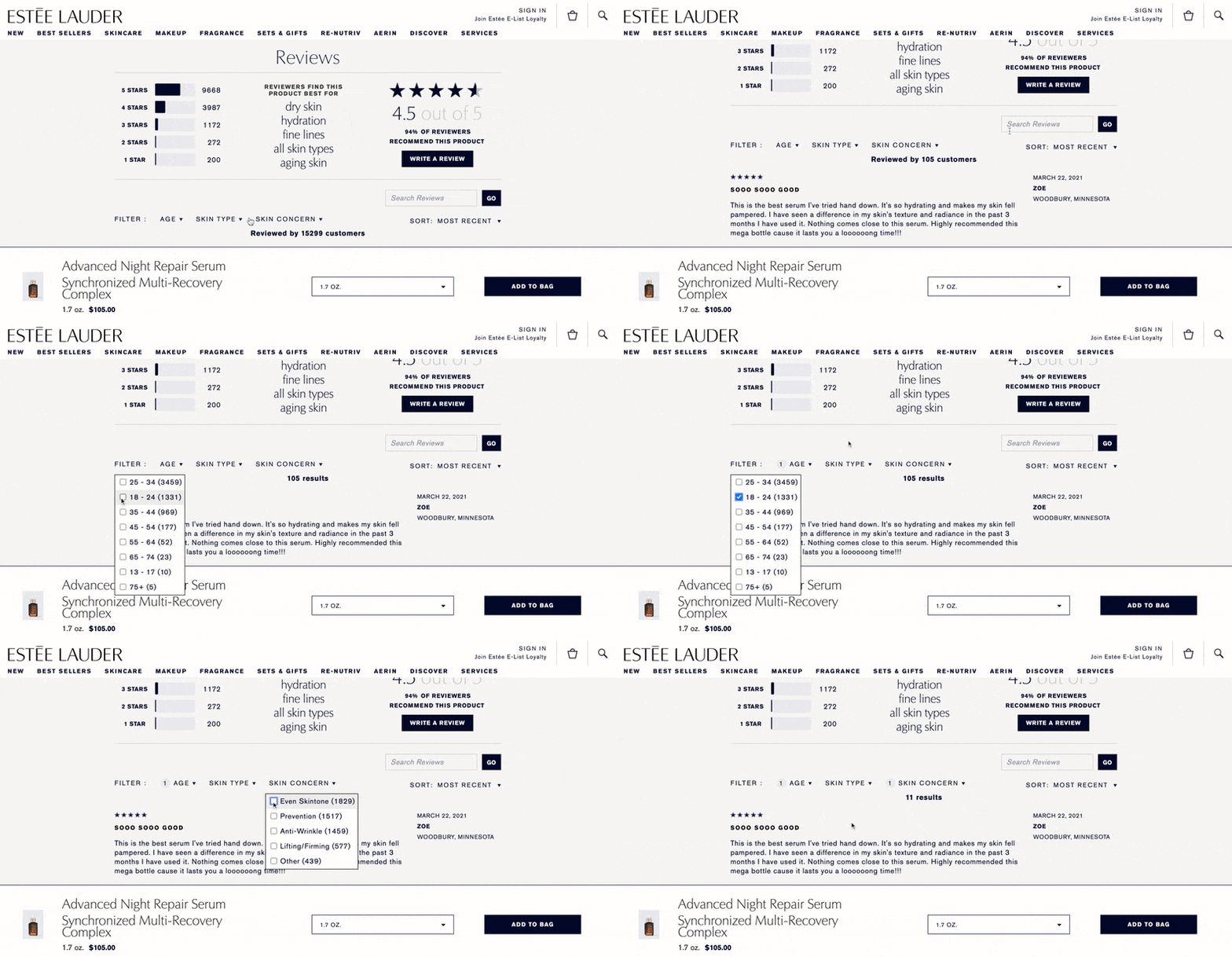
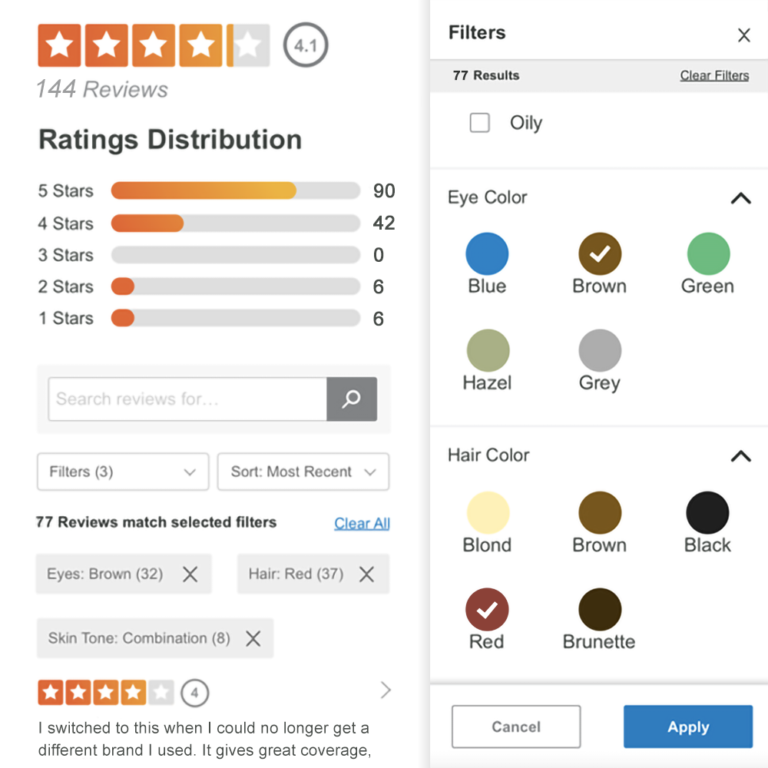
Here’s what that looks like in action, using Estee Lauder’s Repair Serum as an example. This product has over 15,000 reviews. That’s certainly impressive, but it’s also way too many for shoppers to read. Fortunately, with just a few clicks, they can use the filters to narrow down to just a handful of reviews that are hyper-relevant to them:
Google’s Product Reviews Update vs. PowerReviews: Do We Pass the Test?
Google’s product reviews update targets affiliate-style blogs that review products or lists of products, not the customer reviews found on a retailer’s website. But, just for the heck of it, let’s see how our PowerReviews review display stacks up against Google’s guidelines, shall we?
In their announcement, Google challenged affiliate blogs to question whether their reviews satisfied the following guidelines. Here’s what they asked, and how PowerReviews passed (spoiler alert: we passed with flying colors!)
Do your reviews express expert knowledge about products where appropriate?
You know it!
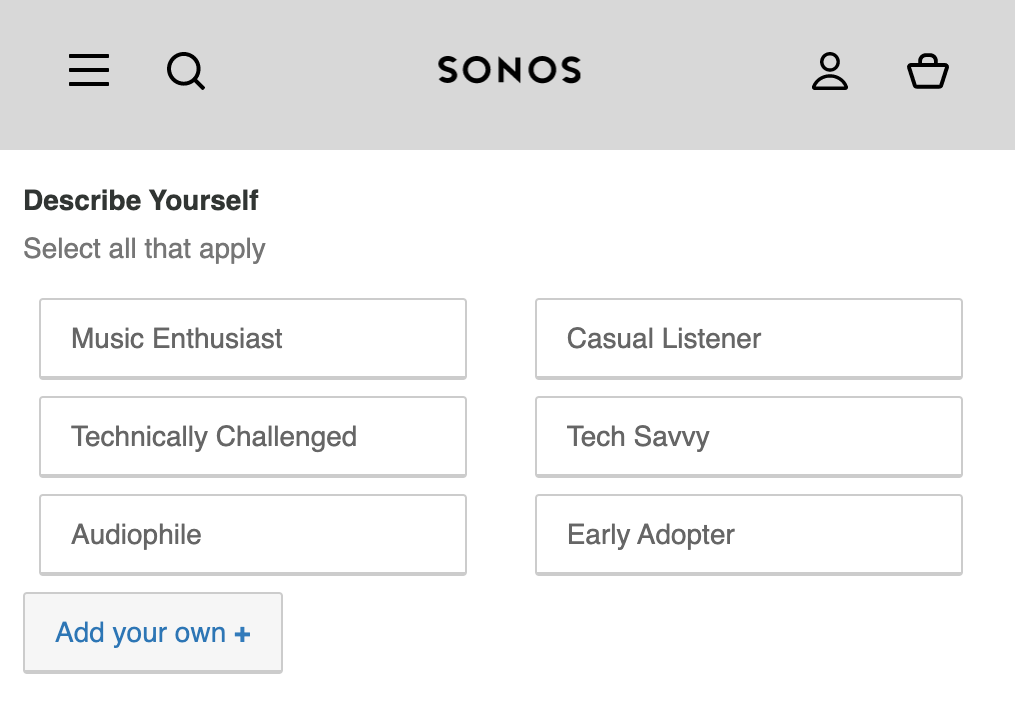
We ask reviewers to describe themselves (in terms of their preferences, demographics and so on), so customers can determine how much weight they should put behind a person’s reviews. For example, Sonos reviewers can identify as audiophiles (someone who’s clearly an expert in sound) or simply a casual listener.
Do your reviews show what the product is like physically, or how it is used, with unique content beyond what’s provided by the manufacturer?
Check!
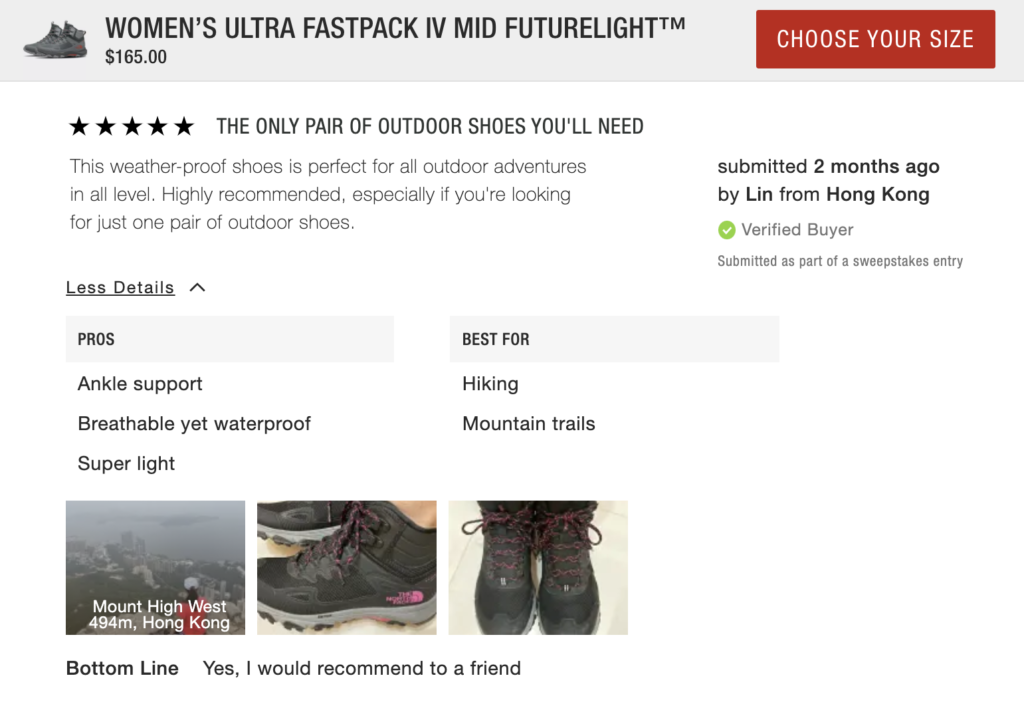
Our Review Displays allow customers to upload multiple images and add captions. In the example below from REI, shoppers can clearly see the reviewer is an avid hiker, thanks to the caption she added about the mountain she hiked.
Power Pro TipWe strongly recommend adding image and video content to your reviews. 88% of shoppers specifically look for user-generated photos and videos before they decide to make a purchase, and those who interact with user-generated image galleries are nearly twice as likely to convert.
Do your reviews provide quantitative measurements about how a product measures up in various categories of performance?
Yes again!
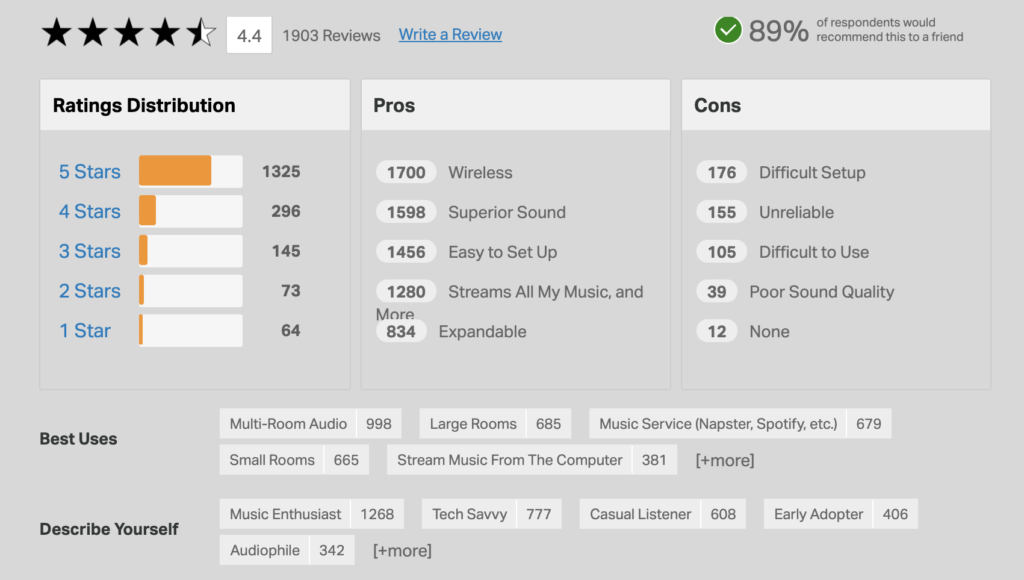
You can invite customers to list the best use cases for a product. Then, at a glance, customers can view tallies of how many reviewers ranked a product for a particular use case. Sonos shoppers can see that this speaker shines at multi-room audio:
Do your reviews explain what sets a product apart from its competitors?
You betcha.
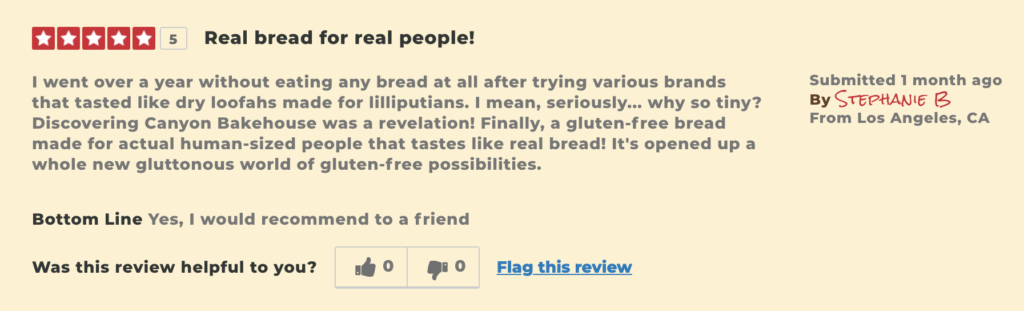
Customers can use the open-ended review field to rave about what makes your product stand out. Canyon Bakehouse has won over gluten-free fans for making their bread taste like bread. Unlike other GF breads, it can be prepared various ways and always tastes great:
Do your reviews cover comparable products to consider, or explain which products might be best for certain uses or circumstances?
Check!
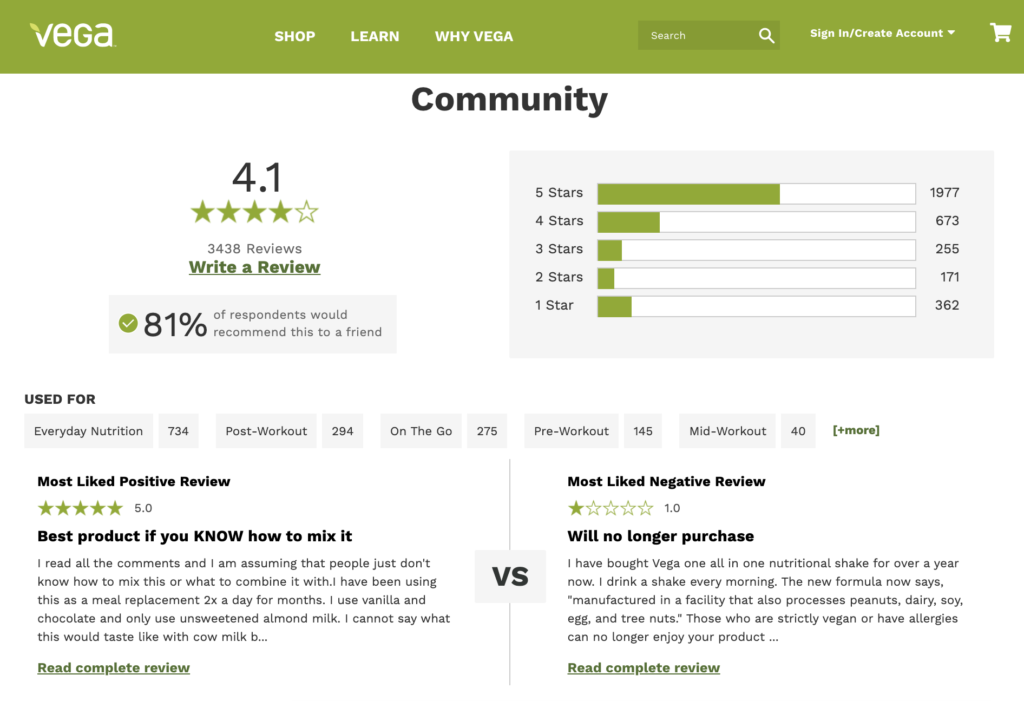
Reviewers can discuss their favorite product, and compare and contrast it with your other products to help others find the best one for their needs. For a health shake like Vega, shoppers can also identify whether they prefer having theirs as a daily smoothie, on the go, or pre- or post-workout:
Do your reviews discuss the benefits and drawbacks of a particular product, based on research into it?
Yes, yet again.
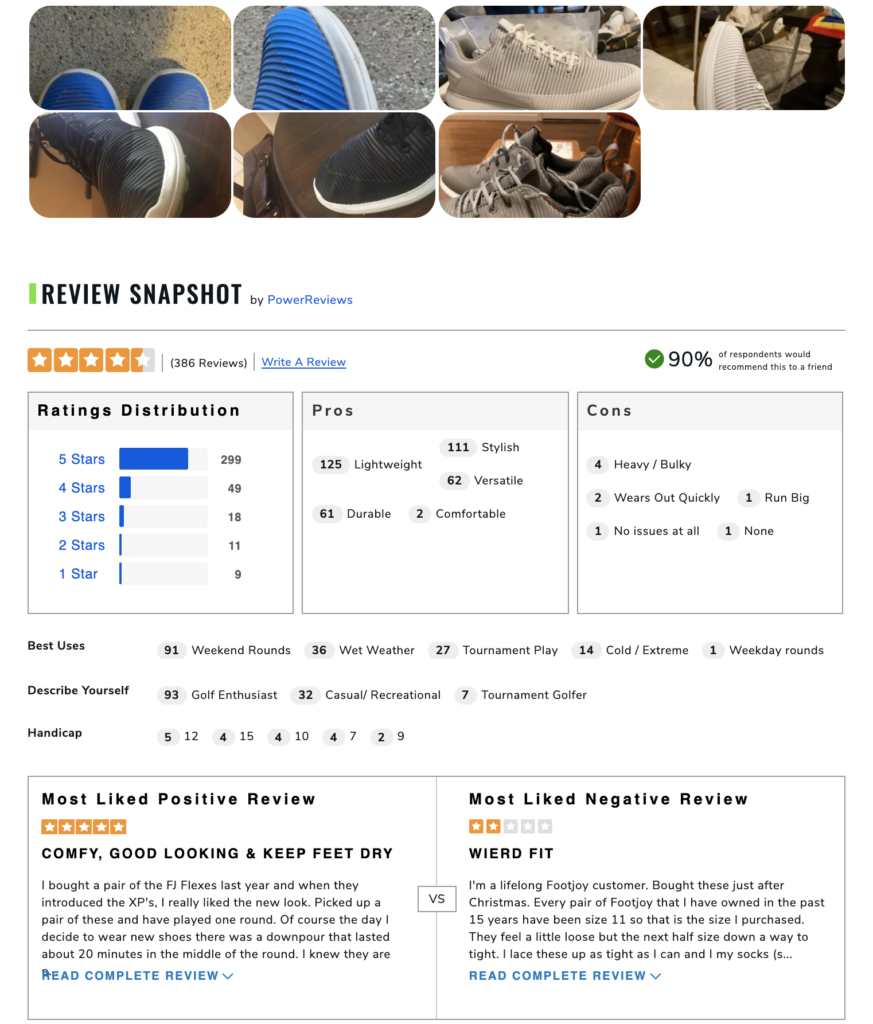
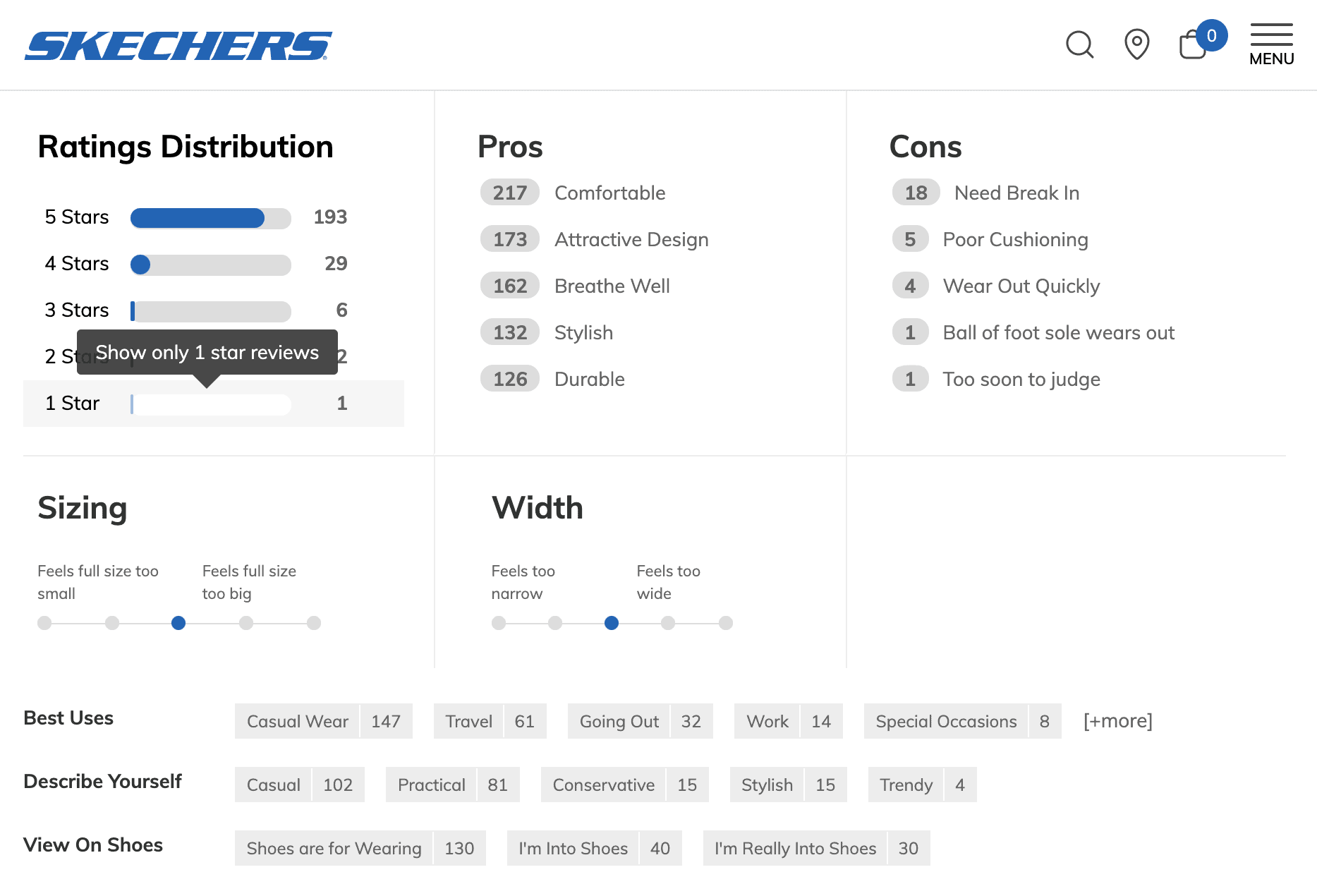
Reviewers can select from a list of pros and cons, so shoppers can see at a glance how well a product stacks up on everything that matters to them:
Do your reviews describe how a product has evolved from previous models or releases to provide improvements, address issues, or otherwise help users in making a purchase decision?
Absolutely.
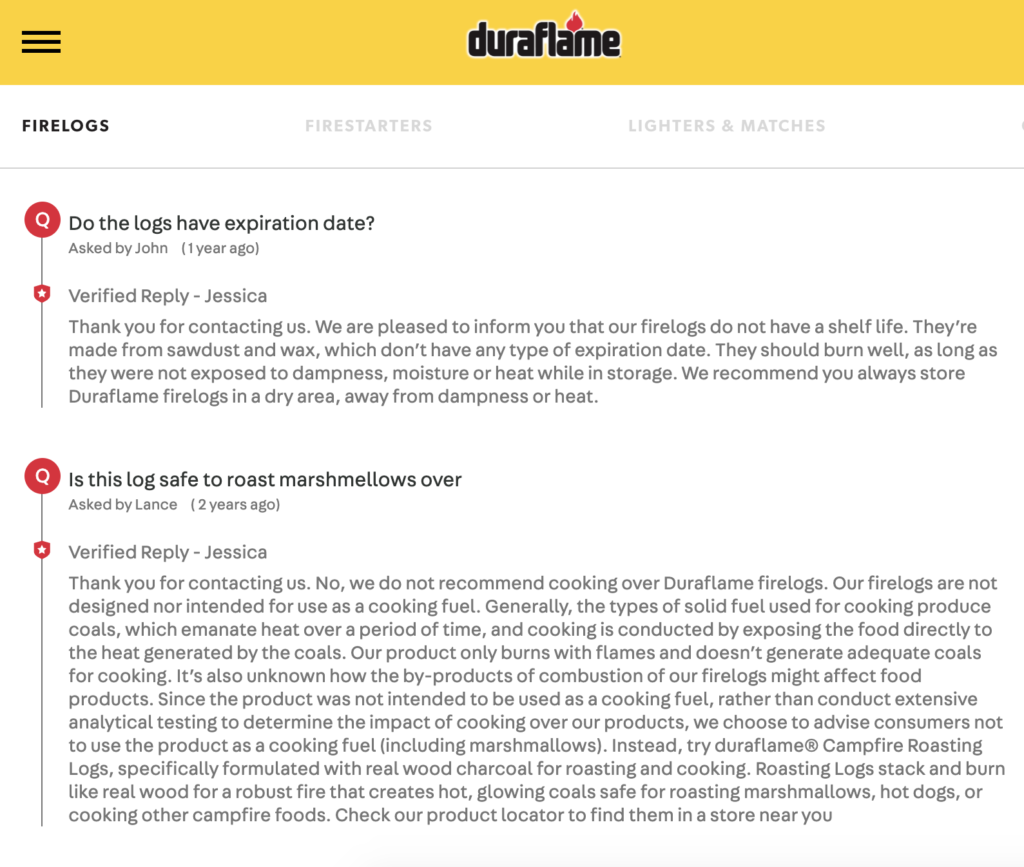
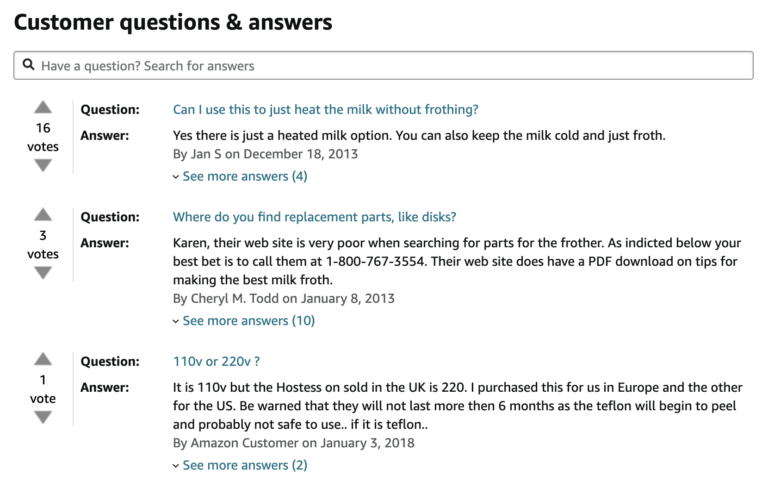
This is what Q&A was made for! Use your Q&A to respond to people’s questions and help them understand the best product for their needs, like Duraflame does:
Power Pro TipQ&A is the most impactful type of user-generated content, even more so than reviews. When people interact with Q&A, they are 157.1% more likely to convert. Add Q&A to your site, and watch your conversion rates skyrocket.
Do your reviews identify key decision-making factors for the product's category and how the product performs in those areas?
100%.
Not all review displays need to show the same information. For example, the review display for an apparel brand will look quite different than that for a food & beverage brand. We will work with you to create a review display that fits your needs.
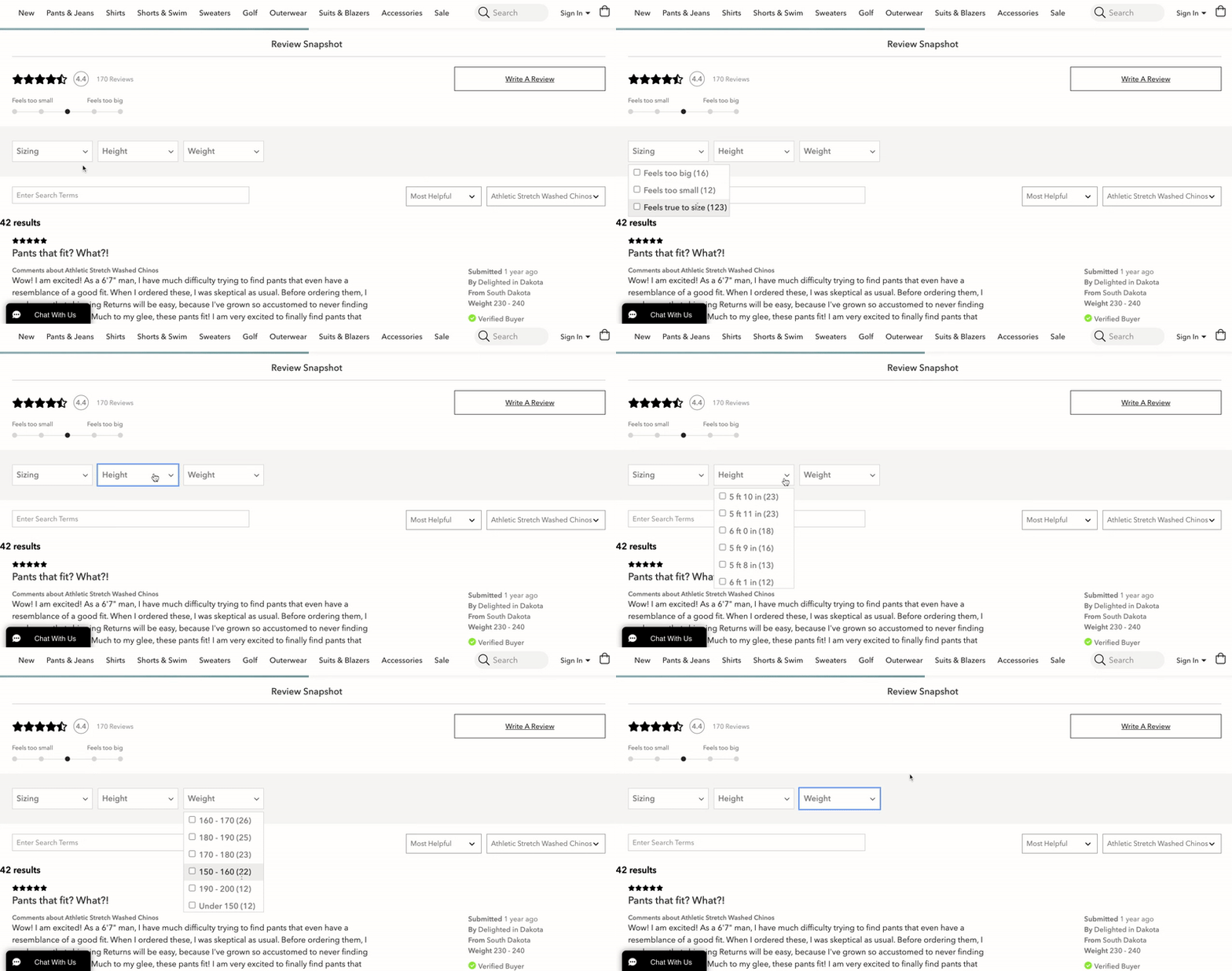
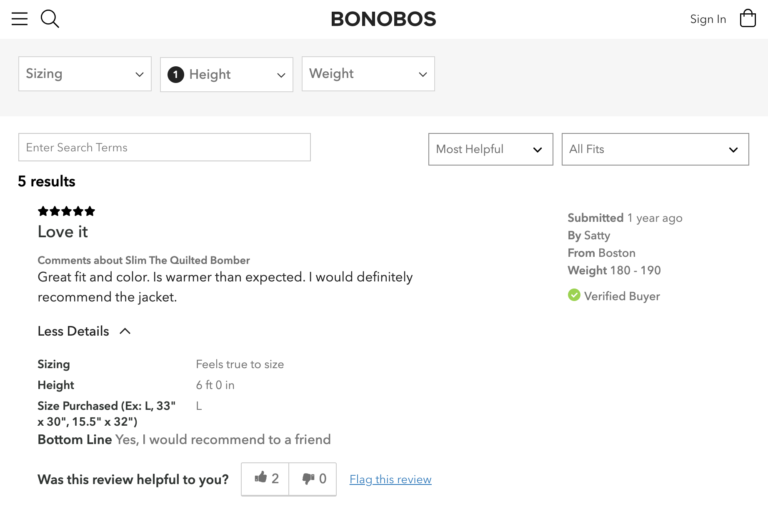
Bonobos apparel shoppers can not only filter the reviews by the exact variation they’re considering, but they can also filter them by their size, height, and weight — allowing them to narrow in on reviews from people who look just like them.
Do your reviews describe key choices in how a product has been designed and their effect on the users beyond what the manufacturer says?
Yes!
This is the power of contextual reviews. Reviewers can quickly provide information that allows other shoppers to determine how much weight they should give their review: Are the pros listed the same features that are most important to me? Do the use cases line up with how I intend to use the product? Does this person sound like me?
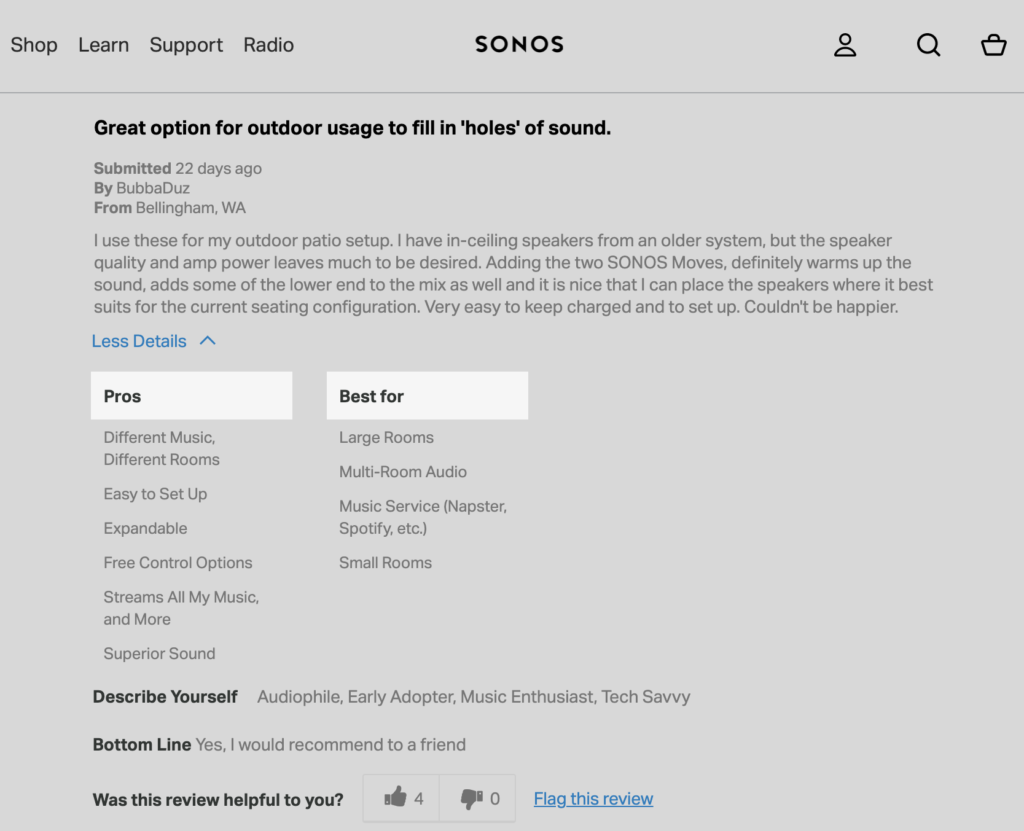
Then, shoppers can read the review to glean even more information, like how this Sonos reviewer describes exactly where he uses his Sonos speaker:
Don’t Worry, Be Happy
If we haven’t drummed it into you yet, there’s no need to worry about the Google product reviews update. And even if you were worried (which you don’t need to be), our review displays are already engineered to satisfy Google’s requirements for useful, thoughtful, and detailed review content.
We’re always on top of Google updates here at PowerReviews. You can rely on us to be working behind the scenes to make sure we’re always setting you up for success in the search results.
Power Points
Product reviews drive conversions and revenue. They also provide unique benefits for category managers.
Category managers interact with customer review data to drill into specific products, categories, and custom product groupings to understand customer sentiment and trends.
With these insights on hand, category managers can optimize their product mix, spot trends early, and develop more effective relationships with suppliers.
From understanding market trends and consumer purchase drivers to managing product portfolio and supplier relationships, category managers have a lot on their plate. But at its core, category management is about driving revenue and margin by putting the right products, in the right place, at the right time and right price.
There are a lot of tools that can help category managers achieve these goals, but one that often goes underlooked is user-generated content (UGC) like product reviews.
Product reviews can give you unique insights that make your product mix more attractive, spot trends faster than your competitors, and help your vendors and private label brands better meet consumer demand.
The Power of Reviews for Category Management
Consider this: After price, reviews are the second-most important factor to customers making a purchase decision.
When you add ratings and reviews to a product page, conversions lift by 115% on average. Customers who engage with any form of UGC, whether it’s reviews, Q&A, or an image gallery, are twice as likely to convert than customers who don’t.
The takeaway? If you’re not prioritizing reviews as a category manager, you’re missing out on conversions.
Clearly, reviews are good for revenue, but they also provide unique benefits for category managers. Here’s how you can use reviews to build out your category according to consumer demand, maximize revenue, and respond to trends before the competition.
1. Fix Your Mix
The Pareto Principle, or the 80/20 rule, has been a cornerstone of retail strategy for decades, and while it is certainly effective, it also has its limits. Just because products aren’t in the top 20%, doesn’t mean they don’t have value. The bottom 80% of your products likely fall into a niche category, which is very important to a certain customer.
At the same time, some of those bottom 80-percenters may not even be worth offering. So, how do you know whether a lower-volume product satisfies its niche, or is sitting stagnant on your shelves? You guessed it — reviews.
When you analyze your product reviews for customer sentiment, you may discover that the reason a product isn’t selling is because consumers dislike several things about it. Moreover, there could be another product you’re not currently offering that they much prefer. That’s the kind of information you’d never find in a product rank report.
SuperPower Success Story
“We stopped selling products we realized were disappointing customers. We didn’t have this information before, and now I can’t imagine operating without it. It’s key to the long-term customer relationship.”
When Hammacher Schlemmer started using review analytics to inform their product mix, their conversion rates increased nearly 400%
With the information you’ll find in reviews, you can make changes to your product mix that lift your category as a whole. You can optimize your product assortment by exiting unsuccessful products, elevating “hero” products, and adjusting your messaging and space allocation.
2. Identify Product Opportunities
Mining the reviews can reveal what products your portfolio is currently missing. It’s common for shoppers to compare and contrast a product they just purchased with a similar one they’ve used before.
From this analysis, you may expand your partnerships with new vendors. Or, you might see an opportunity for a private label product. You can see the features your customers are looking for, and the words they use to describe them, and then use that to inform your own private label product development — filling gaps in your current assortment, without cannibalizing your current suppliers
3. Supercharge Your Display
Reviews offer you direct access to the voice of your customer, and what matters to them. Beyond optimizing your product mix, you can use their feedback to adjust the way you display those products in-store and on your website to grab their attention when they’re ready to purchase.
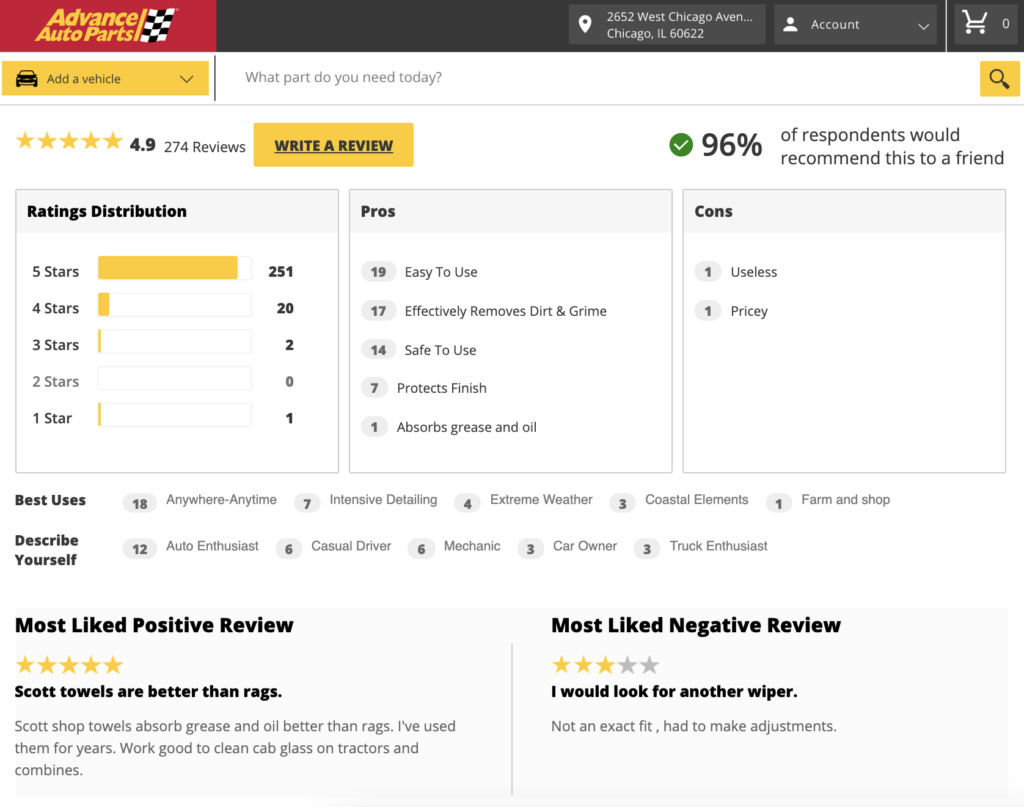
Here’s a hypothetical example from Advance Auto Parts. Multiple customers rave about the usefulness of Scott Shop Towels in extreme weather and against coastal elements. Based on this information, the Category Manager in charge of Car Accessories may decide to feature the towels more prominently in-store during the winter season, or include them in a dedicated landing page that targets people living in beach cities.
Power Pro TipUse the insights you glean from customer reviews to optimize your review display, and gain even more insights. Add a few basic prompts to your review display so you can help the next customer find what’s most relevant to them. For example, a beauty brand may ask customers for their eye color and skin type, while an apparel brand may allow people to select their size and age. Adding just a few filters can provide immense value for your customers — and for you when you analyze the reviews later on.
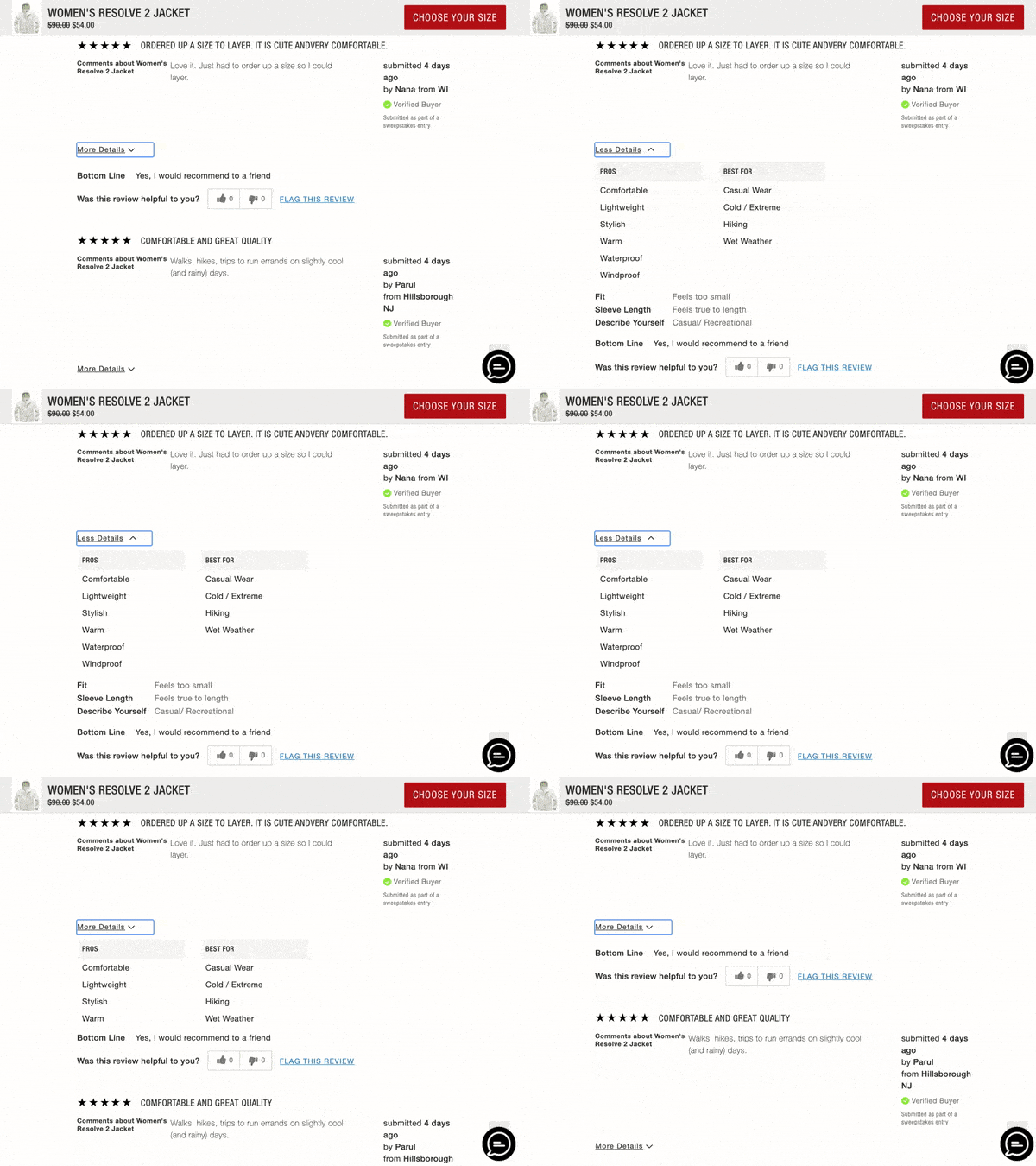
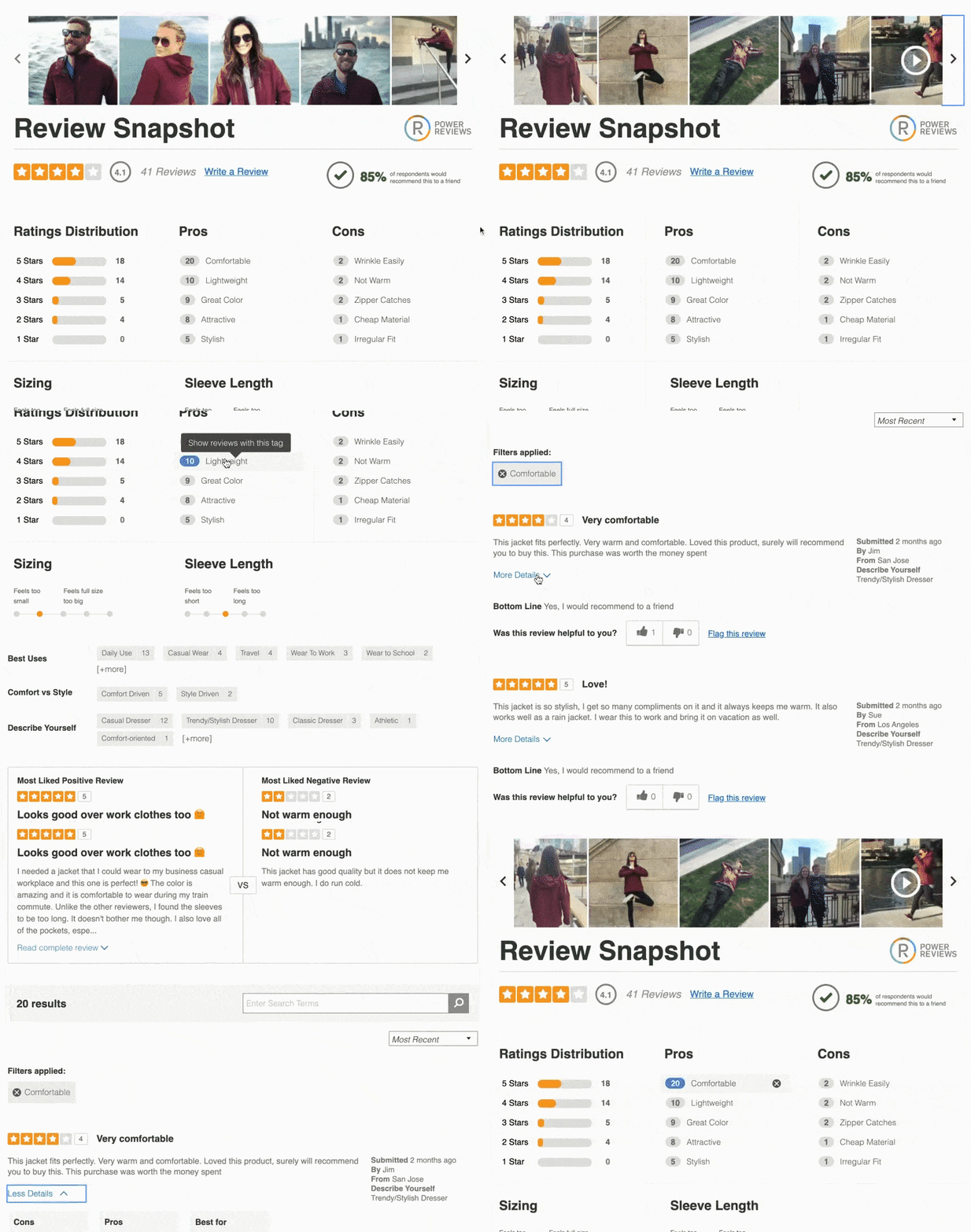
The North Face asks reviewers to select the pros of a product (e.g. lightweight, stylish), identify conditions it’s best for (e.g. hiking, casual wear), and describe themselves. Filters like these can give shoppers a ton of information quickly, even if the review itself isn’t very detailed.
4. Spot Trends Early
As a category manager, it’s up to you to keep a pulse on both market conditions and consumer behavior. Review analytics allows you to accomplish both simultaneously by distilling insights on consumer and industry trends from the source — the consumers themselves.
You can hone in on what features matter most to shoppers. Do certain attributes keep coming up again and again? Perhaps customers love that a product is organic, or that it keeps their child entertained. When you know what matters to customers, you can optimize your marketing accordingly.
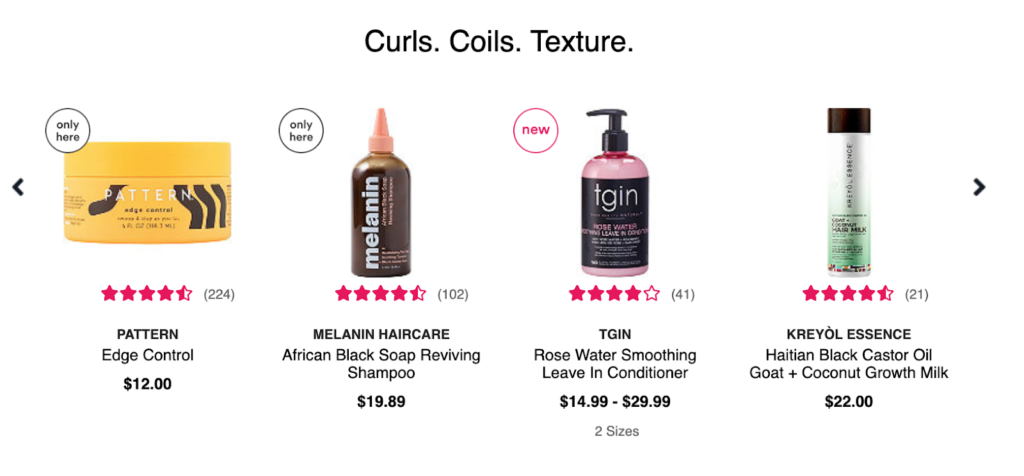
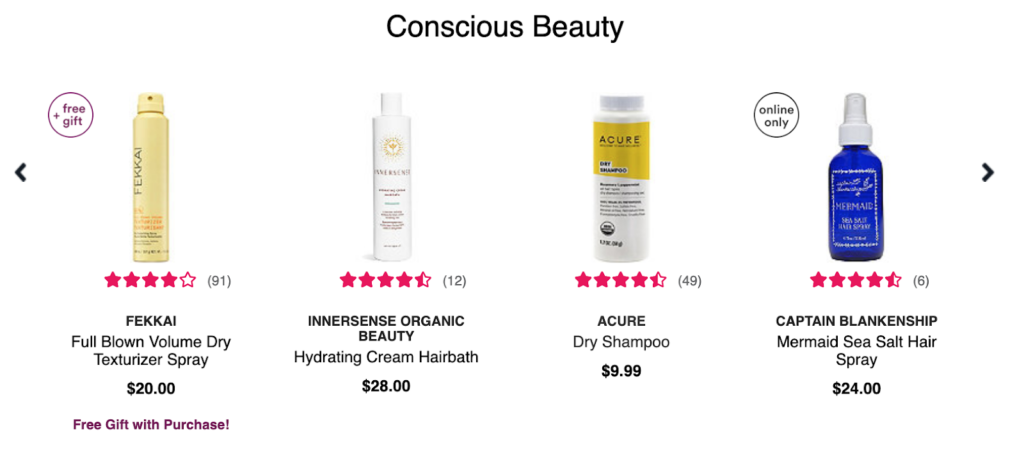
For example, Ulta’s Hair category page features all the typical sections you’d expect to see on a category page, like best sellers. It also features sections for curly hair and ethical hair brands, likely as a response to customer trends.
Power Pro TipHelp new products launch successfully with a product sampling campaign. These can drum up a lot of quality reviews quickly.
5. Power Up Your Partnerships
Don’t keep all the review goodness to yourself. That information can help your vendors, too! Use what you learn to nurture your vendor relationships and help them help you, by identifying opportunities for innovation early on.
Sentiment analysis of your review content can help you understand how customers feel about your category overall. What are the common words customers use to describe products? What makes them satisfied, or unsatisfied? What are they looking for that your partners aren’t offering?
Having this type of analysis in hand makes you a better partner to your vendors. It gives you the tools to be proactive about negotiating changes in their products, to better align with their customer needs. When they perform better, you perform better.
For example, a brand might be unaware that their products are shipping with a defect, and all they can see from a top line sales report that it’s just underperforming. Your review analytics may explain why those products keep getting returned, so you can come to them with something actionable.
SuperPower Success Story
“Analyzing our UGC enables me to aggregate our customers’ opinion. I can go to our merchant and say ‘look at what our customers are saying, you need to fix this’. This insight is such a time saver for us.”
Analyzing your reviews can help you build a stronger category. They can also help you build a stronger career.
Owning insights on your category positions you as a thought leader. It increases your clout internally with cross-functional teams. Present your insights as evidence to back up your recommendations, and you may win more shelf space as a result.
Clearly, reviews have a huge impact on conversions. The data tells us this.
The problem is, too many brands — however unintentionally — delay adding reviews to their site. Conversations become hyper-focused on making the review display “on brand,” forcing developers through endless rounds of deployment to simply adjust a font size here, or change the shade of a star color there.
Worse, in an effort to be a thought leader, some brands try and reinvent the wheel. They start asking questions like, “Should we use our brand icon instead of stars? That could help us stand out.” (The answer, by the way, is absolutely not. You’ll only confuse your customers, which leaves you with less reviews, and less conversions.)
We’re writing this article to stop this fearsome scenario from happening to you. The research shows that the presence of high quality reviews in large volumes — not some vanity feature — is the largest determining factor in driving page traffic and conversions.
Why? It’s the information contained within the reviews that is the key, not how that information is presented. As a brand, your goal is to provide attention-short shoppers with the confidence to buy from you. So focus on what’s important.
Over the years, we’ve collected data from hundreds of brands, and thousands of end-customers, to analyze what really drives conversions. From the data, we can clearly see what works, what doesn’t, and what really matters when it comes to displaying reviews.
It’s not worth obsessing over the branding of your review display to the extent that you lose sight of what you’re doing. Your goal is to generate conversions. Focus on the best practices we share below — all proven by our data to actually drive more conversions — and you’ll be way ahead of the game.
Review Display Best Practices: The Official Checklist
What makes a top-performing review display? There are some elements that are more important for certain industries over others. For example, an apparel retailer needs to add size and fit to their review display, but that wouldn’t be applicable for a food and beverage brand.
It all comes back to focusing on providing the information shoppers look for and building credibility fast.
In general, however, we’ve honed in on a set of best practices that work well for nearly everybody. When adding reviews to your site, these are the 7 elements we typically recommend to include in your review display.
Other options tend to be unnecessary luxuries that won’t move the needle when it comes to converting shoppers.
Review Snippet
This is a simple visualization of a product’s review rating and volume that sits at the top of the product page, above the fold.
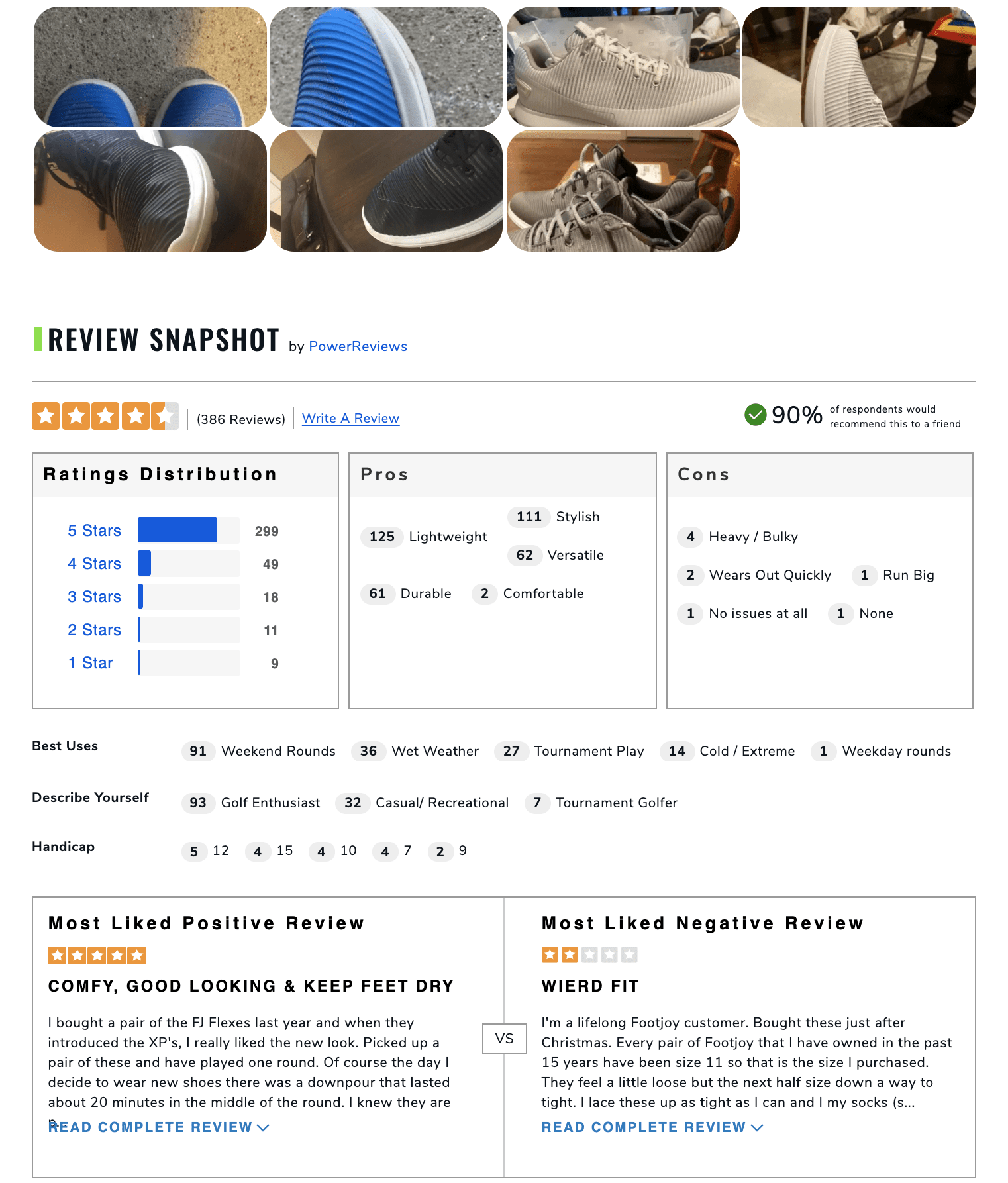
Review Snapshot
Further down the page, the complete review display includes a visual overview of the review content for a given product, including average star rating and rating distribution.
Search and Filter
This functionality helps shoppers find content relevant to their needs. They may click on pre-set filters or search for a specific phrase to find reviews or Q&A content that is most relevant to them.
Demographic Information
These help shoppers find relatable content from someone with similar characteristics and use cases to themselves.
Verified Buyer Badge
These badges build trust, by communicating to shoppers that a review was written by someone who actually purchased the product.
Visual Content Display
These photos and videos from your shoppers can be collected both natively and through social media.
Q&A Display
Customer questions displayed alongside the appropriate (and accurate) answers.
Now, the specific order in which these appear, or even the content (in the case of demographic information, for example) may vary from brand to brand. Here are a few review snapshots that show how brands from different verticals implement their review display:
Make it on-brand, but don’t overthink it
We know, we know: we said don’t obsess over your review display. And we still stand by that.. You don’t want to eat up all of your developers’ time on customizing every bit of your review display. The more stylistic changes you make, the longer it takes them to launch reviews — and the longer you go without reviews on your site, the longer you’re missing out on sales.
We’re not saying that brand isn’t important. It is. But, a few, very minor changes can take your review display from generic to on-brand. At PowerReviews, our out-of-the-box solution is designed to be flexible enough to meet 99% of a client’s requirements for review display. When integrating our solution, we recommend making CSS changes to the font style, star color, and background color. These are all pretty simple and quick, and go a long way toward making it feel on-brand.
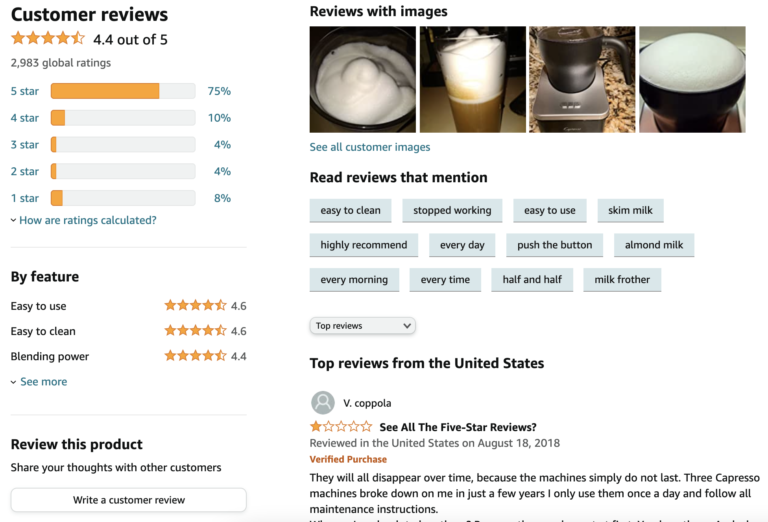
Still not convinced that a generic review display can really work? Look up your favorite product on Amazon and check out the reviews. You’ll see Amazon uses the regular orange stars with their brand font, and there’s some drop shadowing here and there.
Amazon has tons of money and engineers, but they’re not spending those resources on CSS and branding their review display. They’re focused on review volume and getting the most pertinent information to their customers. Be like Amazon.
Display Q&A first
This is another thing that Amazon gets right — and many brands don’t. Amazon shows Q&A content above their reviews.
The data favors Amazon. Q&A Content has a higher conversion rate than reviews and images. Customers who interact with user-generated Q&A content are 153% more likely to convert, and products enjoy a 600% sales lift when a customer’s question is answered via Q&A.
Think about it: People are not going to ask a question about a product they’re not interested in. If they’re interested and there’s just one outstanding question keeping them from buying, a quick informed answer from your brand can really help them convert.
Still, many marketers have been conditioned to focus on reviews and reviews alone. Don’t be like those marketers. Position Q&A content above your reviews, and you’re likely to enjoy more conversions as a result.
Power Pro TipMake your Q&A searchable to prevent duplicate questions.
Help customers find reviewers like them
Reviews are not one size fits all. Your shoppers care most about the reviews that come from shoppers like them, who share their style, use case, and unique situation. That’s why it’s important to give shoppers the ability to filter for reviews from people like themselves. When demographic filters are available, 47% of consumers will use them to seek out information most directly relevant to them.
Even better, we’ve found adding demographic filters translates to more sales. Our clients see an average 52% increase in conversion when consumers interact with filter tags (e.g. sort reviews from users with a particular hair color).
More importantly, this demographic information increases buyer confidence and makes your brand feel relatable — because shoppers recognize people like them among your customer base.
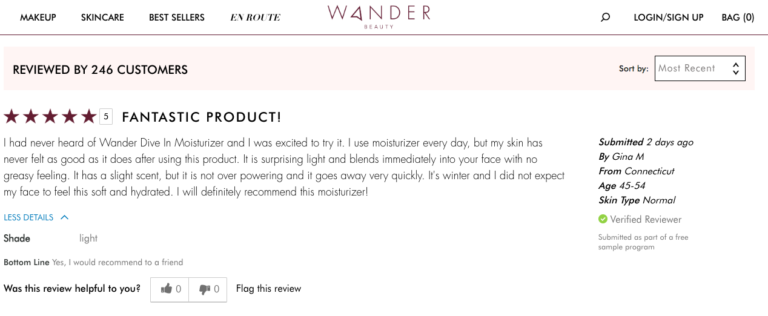
The demographic questions you choose can vary based on your industry. For example, Wander Beauty asks age, location, and skin type, while Bonobos asks about size, height, and weight.
Power Pro Tip60% of customers return due to size and fit issues, so add a Size/Fit slider to reduce return rate.
Add an image carousel
People no longer trust the image carousels shown at the top of a product page, full of perfect stock images carefully chosen by the brand. Instead, they want to see real products in real life, from a person like them.
Some brands shy away from user-generated images, but again, we encourage you to look at the data. User-generated images build trust, traffic, and most importantly, sales.
88% of consumers specifically look for photos and videos submitted by other consumers prior to moving forward with a purchase decision.
72% of shoppers say they’re more likely to buy a product that has reviews with photos and videos in addition to written text, and 40% of Centennials won’t even consider purchasing a product if it has no photos.
Adding user-generated images to a product page results in an 18% uplift in daily traffic.
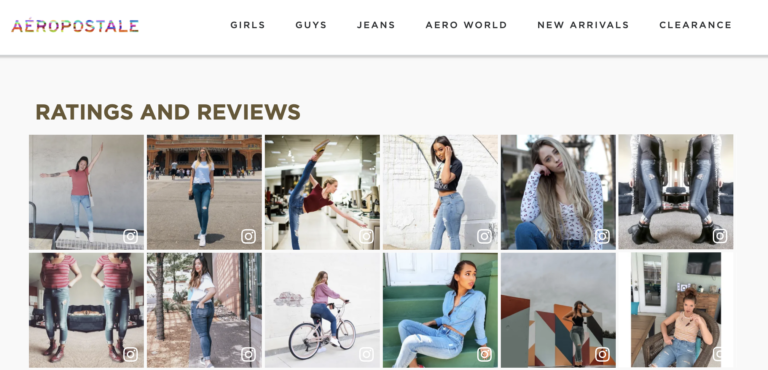
It’s important to display user-generated images in very prominent places. You can collect this content natively. We also recommend pulling in content from Instagram because the content quality is usually higher than what people add to a native review form where no one else sees it. People view their Instagram accounts like a personal brand, so the images they upload are carefully curated — and more likely to align with your brand standards.
Images are almost always a good idea, but again, there are exceptions to every rule. Images are essential for makeup and apparel, but for credit cards, they’re not necessary.
Don’t shy away from negative reviews
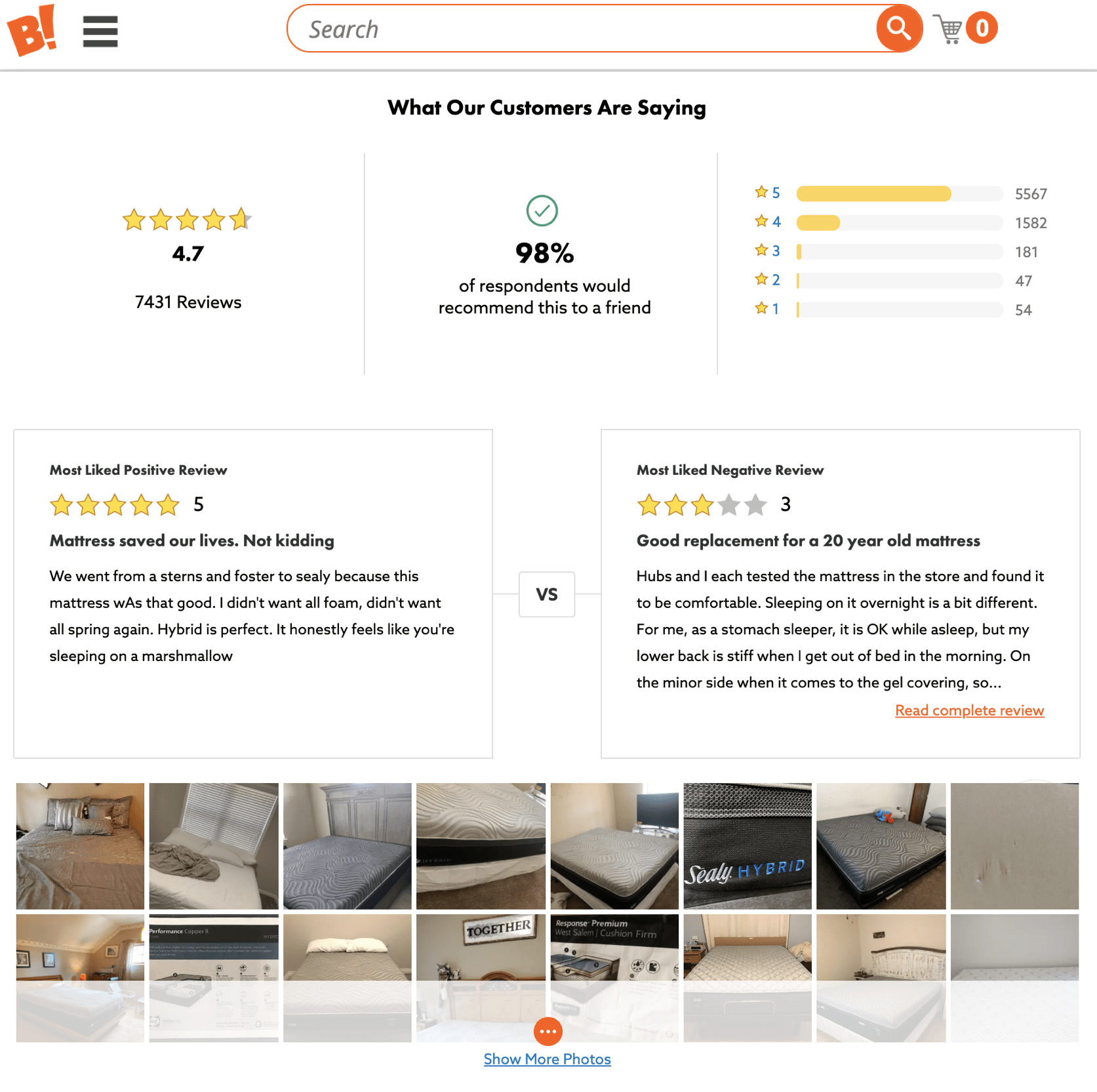
When implementing a review display for our clients, the #1 question we get is about one-star reviews. Understandably, brands worry about bad reviews scaring customers away.The thing is, negative reviews actually help your brand. 82% of consumers specifically seek out negative reviews. Our data shows the top three things people interact with in a review display are all related to negative reviews (i.e. sorting by 1-star reviews, filtering the most helpful negative review, and searching for the most negative reviews).
Of the shoppers who click on star ratings, 63% click on the 1-star option. Moreover, those shoppers are more than twice as likely to convert than shoppers that don’t click on anything (7.8% conversion for 1-star filter clickers vs 3.7% conversion for non-clickers).
Shoppers want to confirm use cases and biases they might have about a product, and one way to do that quickly is to see what the unhappy people said about it. They use that negative content to inform their purchasing decisions, and remove barriers and hesitations they might have had previously.
The takeaway: Don’t be afraid of negative reviews. Trust that most customers can connect the dots. If the negative review is from someone with a completely different use case than themselves — such as a grandma buying a tricycle as a gift vs. an experienced dad who’s bought several tricycles before — it’s not going to affect their behavior. Rather, it can be an opportunity for you to win customers over and validate your brand. Show them that you are listening and responding to customers.
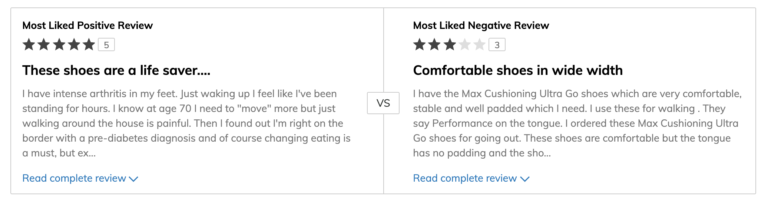
Power TipDisplay your most helpful positive and negative reviews front and center. We call this our “review face-off” feature. Those who interacted with the face-off, positive or negative, have a 183% higher conversion rate than general visitors to the site.
Get Started Now
We saved the easiest, and perhaps the most obvious, tip for last. The best thing you can do for your review display is to launch it as quickly as you can (assuming everything’s been QAed, of course). Consider the brand experience, and use the best practices as your guide, but don’t lose sight of what’s important: conversions conversions conversions.
When implementing your review display, use common sense and be thoughtful. Think about what’s going to have the biggest impact on shopper behavior, and prioritize that. Everything else can wait. You can always make improvements later, once you have more data to inform your decisions. Get more tips for success in our Complete Guide to Ratings & Reviews for 2021.
There’s only one piece of the puzzle left for you to figure out: when to ask for reviews.
Congratulations — this is actually the easiest part, especially since we’ve already done the research for you. We’ve analyzed the data from hundreds of thousands of review requests and post-purchase emails from PowerReviews clients to determine the optimal time for asking reviews.
What we found may surprise you. Certain days of the week perform better for review collection. Ultimately, however, the best time to ask for reviews depends on the types of products you sell, as well as the demographic makeup of your audience.
Let’s dig in.
The Best Day(s) of the Week to Ask for Reviews
In general, we’ve found that Wednesdays and Saturdays have the highest conversion rate for review request emails. Maybe people are looking for a way to break up hump day, or they have more time on the weekend.
Whatever the reason, emails sent on these days tend to lead to more reviews. This is not to say requests aren’t effective on other days (we’ve seen plenty of evidence to suggest this is the case). But scheduling your post-purchase emails on a Wednesday or Saturday seems to give it the best possible chance of generating a review.
What Time Should You Email Your Review Request?
The best time to send your review request emails depends on your customer base, and their past interactions with your email campaigns. Review your email analytics. Based on that data, you can determine when your customers will be most likely to open and engage with your review request emails.
If you’re starting fresh with a review collection email program and looking for some general best practices, however, the best time slot is between 10am and 2pm. This timeframe captures people on their lunch break, when they have a little extra down time to leave a review. 6pm can be another peak time, when people have finished their workday.
When to Ask for Reviews, Depending on What You Sell
Now you’ve got two days of the week you can dedicate to sending your post-purchase emails. But how many Wednesdays, or Saturdays, should you wait before sending your review request?
You don’t want to send your email too early. You could come off as too eager, but worse, the person may not have even had a chance to try out the product yet.
The vast majority of people prefer to leave a review after they’ve used a product at least once or twice, and 34% of people would like to use it even more before writing their review.
Younger generations, in particular, prefer to be able to vet a product a bit longer before leaving their review. While 40% of Boomers are happy to write a review after using a product once, only 27% of Gen Zers are.
At the same time, you don’t want to wait too long either. People prefer to leave reviews while the product is still top of mind. 77% of people will write a review within a week of receiving or using the product, and 8% will write a review the same day.
There’s also a risk that if you wait too long, your email will get lost among all the other review request emails they’re getting. People order a lot of things online these days, and that shopping behavior has only increased during the COVID-19 pandemic. 1 in 5 people buy something at least once a week. For 6% of Amazon Prime members, they purchase something every single day.
Getting the timing just right is key to maximizing your review submissions. You want to give people enough time to be able to leave a detailed review (customers rate longer reviews as more helpful), without waiting so long that they lose interest.
How long should you wait before sending your review request? Between 7 to 21 days, depending on the type of product the customer purchased.
Hard Goods – 21 Days
When we talk about hard goods, we’re referring to products that last a long time, such as refrigerators, washing machines, and computers.
We recommend waiting 21 days before sending your review request for these products. Why so long? With products like these, the person is expecting to use them for a long time. They want to make sure it works as expected, and they need time to confirm that.
Send your review request too early, and they may have only used the product a few times. With some of these products, like a new computer, they may have not even had a chance to set them up yet!
Soft Goods – 14 Days
Soft goods describe items that are used immediately and only last a few years, such as apparel, cosmetics, and personal care items.
We recommend waiting 14 days before asking for a review on these products. That’s a perfect amount of time for a person to have received the product and used it at least once or twice. With the purchase still top of mind, they’ll be in a good place to write a thoughtful review.
Perishable Goods – 14 Days
Perishable goods are used immediately and have a short lifespan. These may include food and beverage items, as well as flowers and plants.
Like soft goods, we recommend waiting 14 days before sending your review request email. Perishable goods are used quickly, and you want to ask for a review before the person has already forgotten about how much they enjoyed it!
Seasonal Goods – 7 Days
Seasonal items include holiday and seasonal products. They could be perishable, like holiday-themed foods and beverages. Or they could be a soft good, like apparel or decor. Regardless, many of these items are put to use as soon as they’re out of the box.
As a result, you don’t want to delay your review request longer than a week. 7 days is the ideal time for sending a post-purchase email on seasonal goods. The person has probably already used the product, if not multiple times, and you want to make sure you ask for a review before the holiday is over.
There’s another reason why you don’t want to wait too long to ask for reviews on seasonal products.
Reviews increase conversions by 115%, and there’s only a short window of time your seasonal products will be available. You have to make the most of that window to boost your review count — and your sales.
When to Send a Review Follow Up Email
If a customer doesn’t respond to your initial review request, how long should you wait before sending them a follow up? A good rule of thumb is 1 additional week, or 7 days. The product will still be fresh in their mind, but you’ve given their email inbox a little breathing room.
Do you really need to send a followup email? Yes, not everyone will leave a review the first time you ask them. In fact, only 68% of customers will. An additional 28% leave a review the second time you ask them. But 4% of people, you’ll need to nudge them a third time before they write a review. That’s why we recommend sending at least two emails as a best practice.
How many requests you’ll ultimately need to send can depend on the demographic makeup of your customer base, however. Our research shows that older generations are significantly more likely to leave a review after the first request. 74% of Boomers will write a review the first time you ask them, as will 70% of Gen Xers. For Gen Zers and Millennials, however, that percentage drops to around 60%.
The takeaway: If your customer base skews younger, always send at least two emails asking for reviews, if not three. Learn more about what drives customers to leave reviews.
Worried about being a pest? Don’t be. Our data shows that up to 80% of all reviews come from post-purchase emails. Asking for reviews over email can work wonders for your review collection, especially if you ask more than once.
Just take a look at the chart below. These are the review collection numbers for one of our clients, before and after they started sending post purchase emails. Can you guess what month they started asking for reviews?
That’s right. Simply starting a post-purchase email campaign skyrocketed this client’s review collection numbers to the tune of 900%.
They say all you need to do to collect reviews is ask. It’s simple advice, and it works. But, it also feels easier said than done. How, exactly, are you supposed to go about asking for reviews? Should you email your customers, tweet them on social media, or host a contest?
All of the above — and more. The truth is, the more creative you are with asking, the more reviews you’ll receive. Customers respond to different requests for reviews, so the more ways you can ask for reviews, the more successful you’ll be.
Today, we’re sharing 18 proven strategies for collecting more product reviews, with real-world inspiration from our own clients at PowerReviews. Let’s dig in.
1. Ask for reviews in your post-purchase emails
This one’s an essential best practice. Our research has found that nearly 80% of all reviews content is generated from email requests. Personalize your post-purchase emails with the customer’s name and the products they purchased, with direct links to write a review.
Not convinced an email can really make that much of a difference? Take a look at the chart below. The blue bars represent how many reviews one of our clients collected each month. In December 2020, they started emailing customers asking for reviews. As a result, their review numbers skyrocketed by around 600%. When we say asking for reviews works, we mean it!
2. Collect reviews from the email itself
Want to wow customers with your review collection technology? Let them complete their review directly within the email.
3. Collect multiple reviews at once
60% of orders include more than 1 product. That’s a lot of reviews to write. Make the process quick and painless by letting customers review multiple products in one click. One of our clients saw their review collection rates increase by 54% in just 30 days after implementing this approach.
4. Add a review request form to your product pages
Add review forms to your product pages, so customers have a place to leave a review no matter if they purchased your products from your site, another retailer, or in-store.
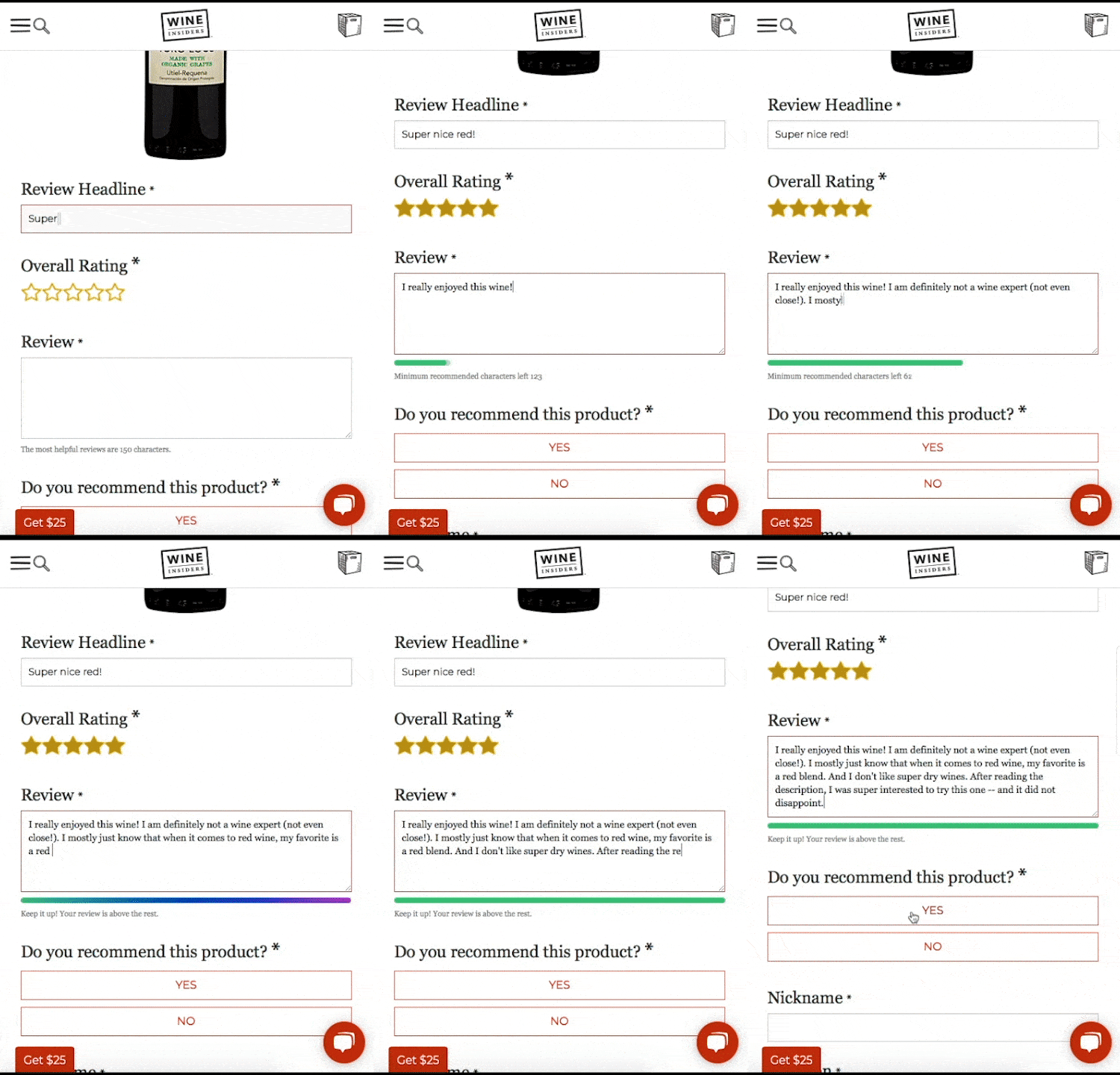
Pro Tip: Encourage longer reviews by gamifying the process! Add a Review Meter link that shows a progress bar and cheers customers on to keep writing.
5. Create a landing page for reviews
Maybe you don’t sell your products through your website. Good news: you can still collect reviews. Create a page on your website that’s just for reviews. Feature each product with a link to write a review. This gives you a handy URL you can share on social media, email newsletters, and other marketing communications.
6. Ask for reviews on receipts and invoices
Post-purchase emails are great, but you need a customer’s email in order to send them. For in-store purchases, you can add a call-to-action on your receipts and invoices asking shoppers to write a review. Take every opportunity you can to remind shoppers that their feedback is valuable and you’re always looking for reviews.
7. Include review requests in your email newsletters
Do you send a marketing email newsletter to your customers and subscribers? That’s another great spot to ask them to write a review. Remind customers of the value of reviews in a short and sweet callout, or feature some of your products along with links that take people right to the review form. One PowerReviews client collected 175 days in just 2 days with this review collection campaign; another collected over 1,000 in just 5 days!
8. Ask for reviews via text message
For younger generations, email feels so old school. Stay hip and connected by asking them to leave reviews via text message. You can send them links to your review form after their purchase.
9. Host a sweepstakes or giveaway
Among shoppers who don’t write reviews, 55% said they need an incentive or reward to do so. So, give the people what they want! Throw a review sweepstakes, where each review counts as an entry. One of our apparel clients saw a 290% increase in review collection in just 45 days thanks to this strategy!
Pro Tip: Promote your review contest far and wide, including on your website, email newsletters, and social media channels.
10. Include your review request on the product packaging
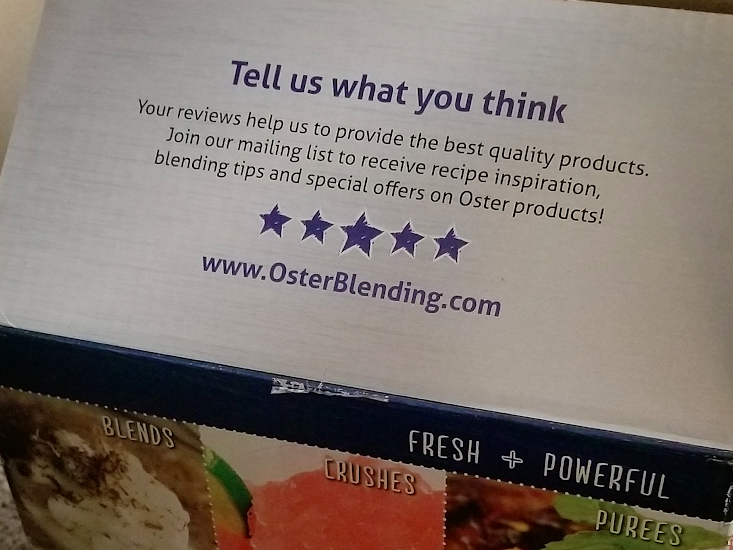
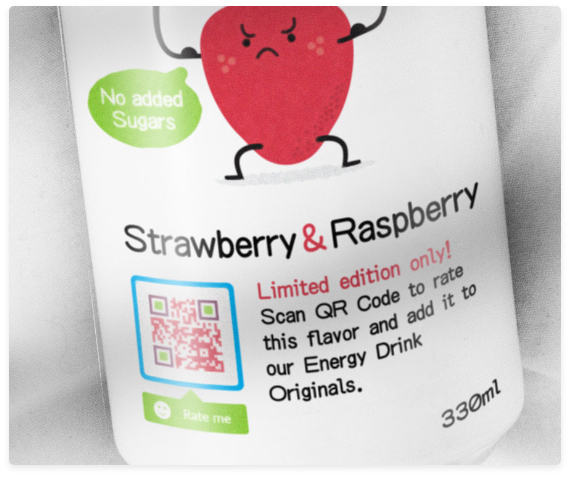
It’s common to include rave reviews on product packaging. Why not also ask for reviews while your customers are in a positive frame of mind, and excited to start using your product? Print a QR form on product packaging. Once the customer scans it from their smartphone, they’re taken directly to your review form.
11. Collect more reviews via QR codes
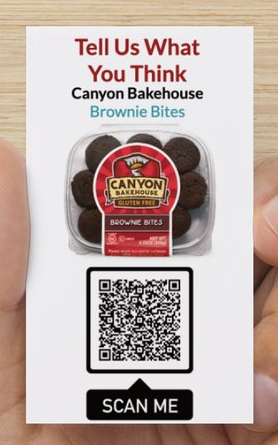
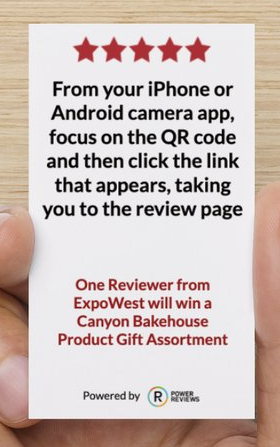
Speaking of QR codes, they’re a review collector’s best friend. As long as they’re linked to your review form, you can use QR codes in a variety of places to collect more reviews. Do you attend trade shows? Print a QR code on a business card with instructions on how to write a review and hand it out at your booth. Do you ship products directly to your customers? Include a product insert with a QR code and instructions to write a review.
12. Award loyalty points for writing a review
If you offer a customer loyalty program, make writing a review one of your point-earning activities. Allow customers to earn points each time they leave a review for one of your products.
13. Share product samples to drum up new reviews
Are you launching a new product, or reintroducing a seasonal product line? Generate new reviews fast by offering product samples. You can share physical products, or distribute physical or digital coupons for specific items. Tell customers that you are looking for their feedback. Because you’ve already given them a free product, they’ll be more likely to return the favor with a review. We’ve found that review submission from a sampling campaign can range from 60% to 90%. Not too shabby!
Pro Tip: Supercharge your product sampling campaign by partnering up with influencers. Talk to your notable influencers or register with a micro-influencer platform to expand your reach.
14. Reward reviews with a product discount
Keep the positive momentum going. After a customer writes a review, thank them with a discount. It can be a percentage-off discount or something as simple as free shipping. Offering a discount not only encourages the customer to make another purchase, but to keep writing reviews to score more discounts.
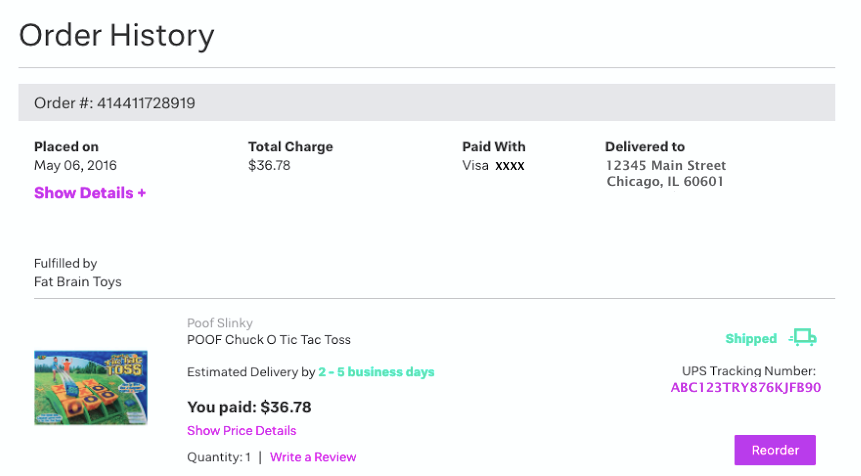
15. Ask for reviews on your Order History page
Customers often review their Order History to reorder their favorite products. That’s an excellent time to remind them to write a review. Include a CTA to write a review next to each product in their order history.
16. Ask for reviews on social media
Your most loyal customers are following you on social media. These are folks who love your products and want to see you succeed. Activate your social media army and tell them they can help by writing you reviews. Ask for reviews on Facebook and Twitter, and include swipe-up links in your Instagram Stories.
Pro Tip: Prevent writer’s block and inspire your followers by retweeting, reposting, and resharing positive reviews from other social media users.
17. Follow up on Facebook comments
Are customers raving about your products on social media? Join the conversation. Respond to positive Facebook comments with your appreciation and a link to leave a review. Social media is a perfect place to collect review content when you don’t have customer emails — sometimes you just need to do a little digging!
18. Include review requests on product warranties and registrations
After customers complete their product registration or warranty, ask for a review. These folks care enough about their product to want to keep it protected, so they probably have some pretty good things to say. This is an excellent way for non-ecommerce brands to collect reviews.
Bonus: Syndicate reviews to other retail partners
We’ll include this last tip as a bonus. If you sell through retail partners in addition to your own website, you need to be thinking about how to collect reviews not just for yourself, but for those other partners, too. One easy way to accomplish this is to share reviews from your website out to your retail partners through review syndication. By boosting your review counts on other retailers, you can increase sales there as well.
As you can see, you’ve got lots of options for collecting reviews. All it takes is a little creativity. Get started by putting these tips into practice today. Collecting reviews is the foundation of any UGC strategy, but there is so much more you can do. Learn more in our Complete Guide to Ratings & Reviews for 2021.
Reviews provide important feedback for brands, helping them shape and improve their products. Having review content on your website is also good for SEO, providing fresh content to Google and lifting organic traffic by 20% on average. Most importantly, customers who interact with reviews are 115% more likely to convert.
But for non-ecommerce brands without checkout data, the path to collecting reviews isn’t.
If you don’t collect orders like a traditional ecommerce site, there’s no automatic way of sending a follow up email with your customers to solicit reviews.
The challenge of review collection affects a large number of non-ecommerce companies, from B2B brands who primarily sell to contractors to those who sell primarily through large retailers. You may be a food and beverage brand, a home supply company, or a personal care brand.
If your website showcases your products with a button that says “Find a Store” instead of “Checkout Now,” we’ve got good news.
You don’t need a transactional website to collect reviews. There are plenty of success stories from non-ecommerce brands who collect real, positive reviews from their customers, brand advocates, and fans. You just have to get a little creative.
8 Creative Ways Non-Ecommerce Brands Can Collect More Review Content
What’s the #1 thing non-ecommerce brands can do when it comes to collecting reviews? Make sure your customers know that you have a website (we know, it seems obvious), that your website offers the ability for them to write reviews, and that you want their feedback.
Are you ready to collect reviews for your non-ecommerce brand? Get started with these eight proven strategies.
1. Leverage Your Email Marketing
Again, one of our biggest tips is simply to let your customers know that you want reviews. What better place to do that than in your email communications?
Ask for reviews in your email marketing newsletters. A campaign from sports drink brand BodyArmor collected over 1,000 reviews in just five days!
Ready-made cocktail brand BuzzBallz took a similar approach, offering free merch to the first 50 people to leave a review.
To ensure authentic reviews, send these emails to verified customers in your CRM. Offer an incentive for writing a review, or just let people know their feedback can help others. Then, include a link that takes them straight to your review form.
2. Create a Landing Page Just for Reviews
Don’t know which customers bought which products? Take a cue from Skippy Peanut Butter. They put all four types of peanut butter they sold on one landing page and added a “Write a Review” link beneath each one.
This approach is really effective because you can send customers straight to this page and they don’t have to navigate. There’s just one call to action for them, and one link for you to include in your emails.
3. Use QR Codes to Gather Reviews
When it comes to getting reviews, QR codes are a brand’s best friend. Use promotional labels with QR codes to drive customers to your site to leave a review.
For example, you can attach a promotional card insert or tag to your product that has a QR code on it, or print the QR code on the product packaging itself. When customers scan it, they’re taken directly to your review form.
You can also print QR codes on cards you hand out at different events with a note like “Let us know what you think.” Get inspired with these business-sized cards from gluten-free bread brand Canyon Bakehouse.
QR codes make it easy for your customers to leave feedback. They don’t have to type anything in; they can just scan the code and leave their feedback right there on the spot.
4. Exchange Coupons for Reviews
Coupons are a great way to get people to try your products. They’re also a great way to get people to review your products. 68% of shoppers who receive a digital coupon are likely to leave a review. That number goes up to 76% for shoppers who receive a physical coupon.
Many non-ecommerce brands use this strategy to drum up reviews for new products. For example, organic dairy company Horizon Organic invited customers to sign up to leave a review. Once they signed up, they received a coupon to use on their purchase of cheese sticks, a new product that needed reviews.
This approach builds loyalty, as customers feel like they’re part of the process of helping you towards a successful launch. When customers know you need their feedback, they’re often happy to give it.
5. Pair Product Sampling with Review Requests
If you thought our statistics on coupons were impressive, wait until you hear about our research on product sampling. Brands who send customers a physical product see an 85% average review submission rate.
So, share product samples with your brand advocates and customers. Add a QR code on the product packaging or as a product insert and ask for feedback in that way. The key is letting customers know about the ability to write a review on your site. This will drive traffic and prompt them to share their feedback.
For example, Hormel sent five packs of their Compleats entrees to customers with clear, two-step instructions. Try them all, and then leave a review!
Like with coupons, asking for reviews with your product samples invites customers to be a part of your success. This earns reviews, builds loyalty, and drives more purchases!
6. Follow Up on Product Registrations and Warranties
One challenge non-ecommerce brands face in collecting reviews is knowing whether a customer has actually purchased the product.
If this sounds familiar, consider asking for reviews on printed receipts, emailed receipts, and even your product warranties and registrations. For example, Simonton, a non-ecommerce brand that sells windows and doors, follows up with each customer who registers their product and asks them to leave a review.
7. Run a Sweepstakes or Giveaway
55% of customers who don’t write reviews say they need an incentive to leave a review. Enter sweepstakes and giveaways to save the day. Target specific products for a review generation campaign, and then promote your contest via email and social media communication.
Offering an incentive is always a surefire way to get people to write reviews. Here are a few examples from The North Face and Duraflame.
After one PowerReviews client implemented a sweepstakes, they saw a 290% increase in collection rates — in just 45 days! They now run sweepstakes sporadically throughout the year and have more than doubled the amount of reviews they collect than they did previously.
8. Ask for Reviews on Social Media
When people rave about your products on social media, it’s the perfect time to ask them to leave a review. These customers were already excited enough to write a positive comment, so they obviously love the product. They may just need an extra push to write a review. That’s where you come in.
If you respond and say thank you and ask them to leave a review (with a link that takes them directly there), they’re probably going to because you engaged with them and they love your product.
Proactively reaching out to customers can quickly increase your review count. Make this a part of your customer service routine on social media, like men’s care brand Just for Men does.
You can also include swipe up links in your Instagram Stories to your Write a Review form, asking customers to engage. Explain the value of reviews, and people may just respond.
Start Collecting Reviews Now
Since they purchase your products elsewhere, a lot of customers don’t even know that non-ecommerce brands collect reviews. Letting them know that you do collect feedback, and that you want theirs, can be a powerful first step in generating positive reviews.
Don’t wait. Try one (or all) of the strategies above and start collecting reviews for your brand.
User-generated content (UGC) — including reviews, Q&A, photos and videos — is proven to drive sales growth for brands and retailers. Our own data tells us that once a product starts displaying reviews, the conversion rate for that product increases by 65%, on average. The same goes for imagery: on average, a product experiences a 69% increase in conversion when just one customer-generated image is added to the product page.
While sales growth is certainly an important benefit of UGC, it’s far from the only one. In fact, there’s another huge plus of collecting this content. And it’s one that’s often overlooked by even most progressive brands and retailers.
UGC is full of rich data that — when leveraged — can drive positive change throughout your entire organization.
Of course, you probably use other tools — including surveys — to capture feedback from your customers that you can then take action on. But the beauty of UGC is that you can easily map feedback to specific products. And that makes it a whole lot easier to take meaningful action on the data.
Why eCommerce Managers Should Analyze UGC Data
Constant analysis of UGC data is key to uncovering impactful ways to improve the ROI of your UGC program.
For starters, this data gives you a very clear picture of what types of content is driving sales. For example, you might discover that website visitors who engage with reviews convert at a much higher rate than those who don’t. Based on this data, you determine it’s important to have plenty of reviews for plenty of your products — including any offerings you’re launching in the future. So you decide to execute a series of pre-launch product sampling campaigns to generate reviews before your new products hit the shelves.
Data can also help you understand how shoppers are interacting with the different components of your content display — and how it’s impacting sales. You can then use this information to optimize your display — and drive even better results.
For example, our friends at Clinique might notice that a lot of shoppers filter reviews to see only the one-star content. Surprisingly, though, these folks go on to convert at a higher level than those that don’t.
There might be an opportunity here for Clinique to make this filtering functionality even more prominent. That way, shoppers can easily identify the “worst case” scenario and determine if it’s something they can live with.
5 Other Teams that can Leverage UGC to Drive Positive Change
So the data from your user-generated content can help you optimize your overall program. But that’s just the tip of the iceberg.
UGC is full of actionable insights that can drive meaningful change throughout your company.
But data without action is pointless. The key is to get the right data into the right hands to put the data into action.
Who can benefit from the insights in UGC? Let’s take a closer look at how five of the likely key teams at your company can leverage the data from UGC to make impactful improvements — and boost your company’s bottom line.
The Product Innovation Team
Innovation teams are constantly looking for opportunities to develop new products — or even entire product lines. The data from UGC is a great resource to uncover these.
For example, let’s say there’s a CPG company that sells protein drinks. The company’s product innovation team is always on the hunt for new ideas. The team analyzes their UGC for existing products and discovers that shoppers frequently suggest a pumpkin pie flavored product. They also notice that a competitor offers a pumpkin spice protein drink, and it seems to perform well with shoppers. So the team starts putting together a proof of concept (POC).
The R&D Team
Coming up with a great product idea isn’t enough. Instead, it’s critical to iterate and improve on that product to ensure it’s in line with market demand. The data from UGC can help your research and development (R&D) team do that. In fact, UGC is full of actionable insights you can use to discover and fix problems with your products — or identify and implement ways to take your product to the next level.
Let’s take a look at an example of these insights in action.
Clif Bar & Company, a food and beverage brand, recently developed a new product formula. Before officially launching, the company conducted a sampling campaign. They found that the average rating on the new bar was 2, and sentiment around the word “taste” was particularly negative. After digging into the content, they found that one of the ingredients wasn’t mixing well with the others. They made a quick change to the formula and ran another product sampling campaign prior to launch. The result? The average star rating jumped to over 4. And the company launched a product they knew would resonate with their customers.
The Merchandising Team
Merchandising teams are responsible for ensuring a retailer sells the right mix of products that meet the needs of its customers. Typically, a merchandise manager oversees buying for a specific category or set of categories. But in order to make informed buying decisions, they’ve got to understand why a product did (or didn’t) sell.
Your merchandising teams can analyze the UGC from your own eCommerce site — and benchmark this against your competitors — to uncover great insights. The result: better purchase decisions. For example, merchandisers might leverage data from UGC to eliminate products, add new offerings, negotiate better deals, and even work with merchants to improve products.
Let’s take a look at a couple real-life examples.
Room&Board had a lounge chair that sold well but had the occasional poor review. Looking at those reviews as a whole, a criticism that kept coming up was that the fade-resistant chairs weren’t living up to those claims. After identifying the issue as a material defect and making exchanges for those customers, the merchandising team used this data to negotiate a major price break on a large new order they were placing.
Room&Board identified a manufacturing defect in one of its products.
Gardener’s Supply Company is another PowerReviews customer whose merchandising team depends on the data from UGC. Recently, this retailer found that one of their top-selling watering cans had several reviews that noted leaking. The merchandising team was able to share specific data with the merchant to make improvements to the watering can.
Gardener’s Supply Company uses UGC to improve products.
The Customer Insights Team
Customer Insights teams are focused on better understanding current and prospective customers. UGC can be a powerful source of data to enhance their analysis, and it can even lead to improvements of the overall customer experience.
For example, Discount Tires is a PowerReviews customer that collects ratings and reviews not only for products — but also for store experiences. Early in the COVID-19 pandemic, the company implemented some store-specific policy changes, including mask requirements and the option to self park in order to allow for social distancing. When analyzing the store reviews, Discount Tires determined these safety measures were well received by customers. Based on this data, they made the decision to make these company-wide policies.
The Marketing Team
Marketing teams are tasked with developing messaging and campaigns that attract the right shoppers. The data from UGC can make their initiatives even more effective.
In fact, there are countless ways marketing teams can leverage the data from UGC to better position, differentiate and promote a product. Let’s take a look at a couple of examples.
One way marketers can leverage the insights from UGC is to get a better understanding of what matters to shoppers who have purchased a specific product. For example, a skincare company can determine whether shoppers care about an item being fragrance-free. If it’s a feature that’s frequently mentioned in reviews, the team may want to make this a more prominent message on the website and other marketing initiatives.
Analyzing your UGC (and that of your competitors) is also a great way for your marketing team to understand what words your shoppers are actually using when describing products. Your marketing team can then use this information to improve campaign performance. For example, New Balance, a PowerReviews customer, analyzes UGC to understand how their customers are talking about their products. Then, they use the words and phrases they uncover to power SEO and paid search ads.
Maximize the Impact of Your UGC
User-generated content — including reviews, Q&A, photos and videos — is full of powerful insights that can position your business to better serve its customers. But all too often, this rich data source isn’t used to its full potential. And its impact can stretch way beyond your ecommerce team alone.
Ensure you fully explore all the different insights it generates and make an active effort to get these into the hands of the different teams around your business which can take action on them. In doing so, you make yourself a hugely valuable resource. Why? Because doing so enables meaningful, data-driven changes to products and experiences — which can have a significant and measurable impact on your company’s bottom line.