You can’t have a retail business without a good product to sell, which is why companies invest enormous resources into a thoughtful product development strategy.
The most successful retailers understand the importance of developing new products and improving their existing merchandise. Continuously finding ways to innovate will keep your business competitive.
Not sure where to start?
This post will walk you through the seven stages of an ecommerce product development strategy. By the end of this article, you’ll have a solid idea of how winning products make it to the market—and how you can create more of them.
1. Smarter Product Ideation
Every great product starts with an idea. It happens when you and your team get that light bulb moment and come up with a concept that would change the world—or at least, add value to other people’s lives.
There are multiple ways to navigate the ideation process, but one of the most popular and effective methods is to start with by gathering customer feedback from your existing shoppers. Conduct surveys and analyze your product reviews to identify pain points and opportunities to improve.
Let’s say you discovered that a significant chunk of your customers are asking if an item comes in another color or size. You now have valuable feedback that you can use when developing your next product line.
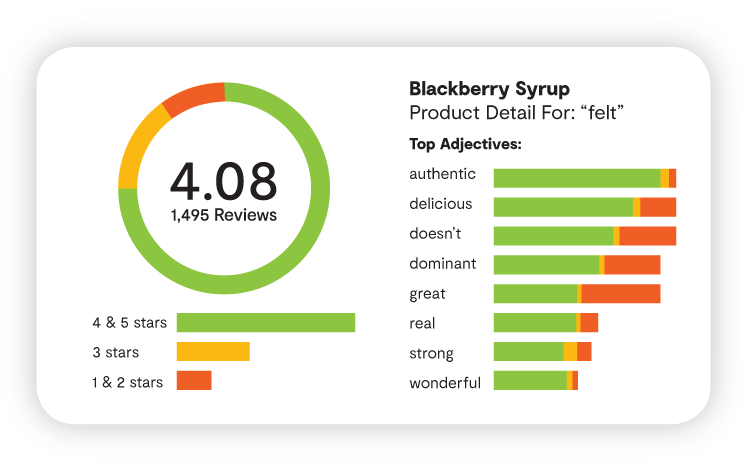
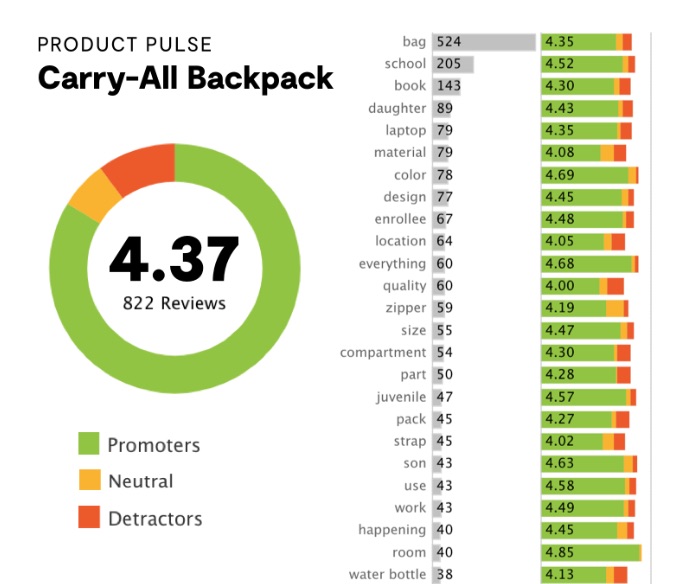
Pro tip: Want to make this process easier? Instead of manually combing through your reviews, use a review analytics solution like Product Pulse, which uses natural language processing and sentiment analysis to uncover trends and insights that you can use in your product development strategy. Powered by our Intelligence Engine, the solution has processed over 40 million product reviews, 2 million unique topics and 5 million unique opinions.
In addition to analyzing reviews, you should also consider the SCAMPER technique when cooking up product ideas. SCAMPER stands for Substitute, Combine, Adapt, Modify, Put to another use, Eliminate and Reverse/Rearrange.
It’s a way of thinking that prompts you to ask questions about how you can innovate and improve an existing product.
Substitute – Think about a product and ask yourself if you can substitute any of its materials or parts. For instance, if you’re selling brownies and want to make them healthier, you could use other ingredients to replace things like sugar or butter.
Combine – Find two or more things that your customers love and combine them. A great example of this can be found in the Doritos Locos Taco, Taco Bell’s most popular menu item, which combined the restaurant’s famous tacos with Doritos.
Adapt – You could enhance a product so it adapts to modern changes. For instance, when more people started using their camera phones to take selfies, smartphone companies adapted to consumer behavior by developing front-facing cameras.
Modify – The “M” can also stand for “Minify” or “Magnify.” It prompts you to think of ways to modify an existing product by highlighting or reducing specific features. A fashion designer could modify existing work by making dress buttons larger or by shortening overall length.
Put to another use – Can you use the product (or the technology behind it) for another purpose? An increasing number of retailers, for instance, are upcycling old clothes and materials to create new ones.
Eliminate – How can you simplify the product? Are there features that you can eliminate? We can see this in action in the latest Apple products, which contain fewer ports. Take the latest Macbook Air, which no longer has USB ports.
Reverse/Rearrange – Can you interchange or reverse the components of a product? For instance, a shoe designer can move the brand’s logo around to see if it would make a bigger impact on the design.
2. Determining Product Demand
Already have a product idea that you love? Great. The next phase is to determine if there is a demand for it. The last thing you want is to go into full-on production mode only to realize that people don’t want it.
So, take some time to assess just how much your market wants or needs your product. You can do this by:
Conducting Customer Surveys
One of the easiest ways to determine whether or not people like your idea is to ask them. Conduct a survey or speak directly to your most engaged customers to run the idea by them. Ask them what they think, why they like or dislike the concept and how much they would be willing to pay for the item.
The answers to these questions will tell you if your idea is a winner or a dud.
Take Pre-Orders
You can take things a step further and see if you can get people to place pre-orders for the product. Set up a product page for your concept—complete with a product description, photos and a CTA to buy.
If you get enough pre-orders you can take that as a sign to move forward with production.
Start A Crowdfunding Campaign
Another route is to crowdfund your idea. Use a platform like Kickstarter or Indiegogo to set up a campaign explaining your idea and mapping out your plan. If you get enough people to back your campaign, you might just have a winner on your hands.
Analyze Search Trends
Use tools such as Google Keyword Planner and Google Trends to find out if people searching for the type of product you want to develop or if they’re looking for a solution that your idea can solve.
3. Creating a Prototype
The next step is prototyping.
Prototypes are essential in any product development strategy because they enable you to test the design and functionality of your concept. After all, an idea may seem possible in theory, but you won’t find out for sure until you have a physical representation of the product.
The specifics of this stage will vary from one product to the next, but here’s what’s typically involved in the prototyping process:
Sketching the Idea
It’s one thing to have an idea in your head, but bringing it to reality requires solidifying the concept on paper. Create a sketch of your idea so you and your team can better visualize what the prototype would look like. The sketch should communicate general details like the major components of the item and what the product will be used for.
Creating a Digital Prototype
Once you’ve nailed the sketch, you can proceed to create a digital prototype. This would be a 3-D rendering of the product that allows you to view it from multiple angles. Having a digital prototype will enable you to see the item in more detail, so you can refine it before creating the physical version.
Building a Physical Prototype
When you’re happy with the digital version of your product, you can move forward with your physical prototype. Get help from an engineer or prototype designer to create one that you can touch, feel and evaluate.
Note that you can build multiple prototypes for each of your ideas. It’s actually recommended that you do this, as it enables you to compare and test different variations to see what works best.
Take Spanx, as an example. When the brand developed the strap for its Bra-llelujah! Bra, Spanx tested hundreds of prototypes and construction trials to determine the best one.
Got your working prototypes? Test them out on your target customers and gather feedback. The key here is to find your actual customers and let them try the product themselves.
Using Spanx as an example, founder Sara Blakely said that during the prototyping phase of her first product, she was “blown away” by how the production mill tested the prototype.
They had these plastic forms in their mill, and they would put the product up on the plastic form and they’d all stand back with their clipboards and go, “Yep, that’s a medium.” I remember I leaned in, I’m like, “Ask her how she feels.”
Sara took a different approach. Rather than testing her prototypes on lifeless forms, she asked actual women to try her product.
“So, with Spanx, I started testing my prototypes on real women, my mom, my grandmother, all my friends,” she added in the video. “And to this day, all of the Spanx products are obviously tested and worn by me and all of my friends and family and I really appreciate that honest feedback, it’s what makes us better than what had existed out there.”
Follow Blakely’s playbook when testing your prototypes. Find real consumers to test them out and strive to get their honest feedback on how to improve.
5. Don’t Forget Your Product Creation
Once you’ve perfected your prototype, you can move on to production. Again, the specifics of this phase will depend on the product—the materials, complexity, etc. But generally speaking, one of the most important parts of the product creation process is selecting your manufacturer.
There are several websites and directories that you can use to find the right one. Here are a few that you can start with:
You can also check out trade publications and directories in your industry to find potential manufacturers.
Use the above resources to search and identify companies that can bring your product to life. Once you have a list of manufacturers, contact them to discuss:
Payment terms
Turnaround time
Minimum order sizes
Their facilities and production environment
What happens in the event of delays and special circumstances
Also, consider asking for examples of similar products that they’ve manufactured. References from companies in your space are also beneficial.
6. Launching the Product on the Right Foot
The key to a good product launch is to do it explosively. When your product goes live, you want to make a strong and memorable impression on your target market, so they’ll be compelled to check out it out.
Accomplishing this requires a well-coordinated marketing push. You should ensure that all your marketing initiatives (e.g., email marketing, Facebook ads, paid search ads, influencers, etc.) are in sync. Doing so maximizes the impact and visibility of your product.
Certain book authors are particularly good at this. Consider Marie Forleo, when she launched her book, Everything Is Figureoutable, Forleo had a well-timed and well-coordinated marketing campaign that covered multiple channels.
She drummed excitement on social media, leveraged email marketing, kicked off a live event and went on the TODAY Show to talk about her book.
https://www.instagram.com/p/B2O-Cr2gZJR/
Forleo made a huge splash on the day of her launch, which led to multiple online reviews, numerous mentions on social media and sold out book tour events in multiple cities.
Strive to market your new products in the same way. Create an explosive launch by leveraging various marketing tools and maximizing your impact on multiple channels.
7. Gathering Feedback (Hint: Look to Your Product Reviews)
Your product development strategy doesn’t end with a launch. You need to close the loop by gathering feedback from your customers. You can do this by:
Analyzing Product Ratings & Reviews
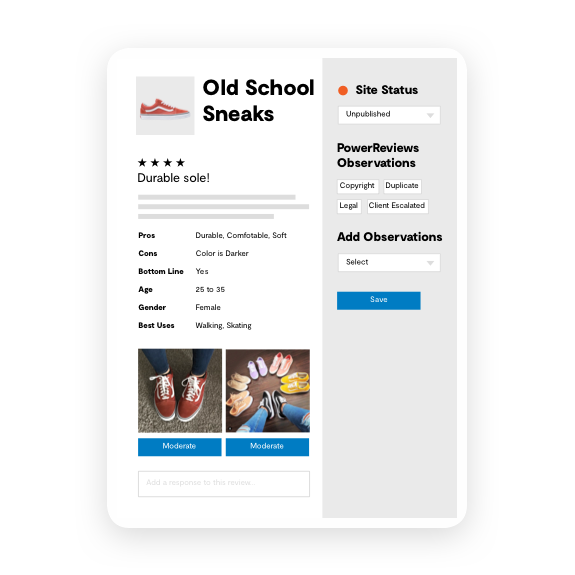
The product reviews section of your site is your most valuable source of feedback. Pay close attention to what people are saying about the item, the star rating that they’re giving the product and any common trends or themes that come up.
The insights that you gather at this stage will be incredibly useful when you decide to create a new product or improve an existing one.
For best results, automate this process using a tool like Product Pulse, which analyzes product review data for you and delivers actionable insights that you can put to good use.
Engaging in Social Listening
If you have an active social media presence, then sites like Facebook, Instagram and Twitter can be valuable sources of feedback. Look at what people are saying on these sites and take note of the photos that they’re posting. Social media content offer insights into how people are using the product and how it fits into their lives.
Listening to Your Customers Is a Must in Any Product Development Strategy
Product development magic can’t happen in a vacuum. Amazing ideas aren’t born in the boardroom. You get them by listening to your customers and making sure that they’re involved in every step of the development process.
Last year we wrote about what a transformative trade conference the inaugural GroceryShop event had been. Few of the attendees–even among the event creators who developed the wildly-successful Shoptalk event–understood the magnitude with which the GroceryShop experience would resonate with brands, retailers and solutions providers.
Originally planned for 1,000 attendees, the rolls swelled to over 2,000 by the time the show opened. This year, attendance is expected to exceed 3,000 grocery-focused industry professionals.
GroceryShop is able to draw such a crowd because the gravitas of their speakers eclipse those of any other similar food and beverage show. A veritable who’s who of retail and brand ecommerce and marketing luminaries, GroceryShop is poised to define the omnichannel customer experience direction of the industry for the year to come.
Here are seven major themes that we expect to play out in the presentations and discussions next week in Las Vegas:
1. Content Is King
Shoppers expect product content to be accessible online, in-store and in-between. This includes pricing, availability, visual content, product descriptions, in-store aisle location, ratings, reviews, questions, answers, coupons, recipes, nutritional information and health lifestyle compliance (Vegan, Paleo, Non-GMO, etc.).
If a retailer isn’t able to make the content available to its shoppers, expect them to turn to Amazon, even if they are walking your aisles or browsing your site. Amazon now displays product ratings and review count on digital shelf tags in their physical stores. Other retailers need to wake up and take notice.
2. Shoppers Seek Trust & Demand Authenticity
It should not surprise anyone that shoppers are more willing to trust product opinions of other shoppers they have never met more than the brand or the retailer that sold them an item. With all the talk of fake reviews, and government regulators seeking to identify and punish companies that do not deliver authenticity, expect success to be driven by how a brand communicates the underlying trust factors that go into the collection and display of shopper-generated content.
3. Digital Must Reach Brick & Mortar
If “click and mortar” retailers think digital is only meaningful for shopping outside of the store, think again. You cannot win shoppers in one channel only to lose them in another. Digital must be a complement to the physical shopping experience, informing and directing the customer as they traverse the store.
4. Native & Traditional Brands Blurring the Line
Remember digitally-native and micro brands like Dollar Shave Club? Now, these brands are entering physical stores. Check out Target with Harry’s, Quip and other brands that originally started online. Then look at Nike’s efforts to shift its business model to focus on direct to consumer. It isn’t just one or the other, and omnichannel retailers are competing to find the right model for growth.
5. Measuring the Customer Journey
Whether offline or online, retailers need to start benchmarking the shopper journey over time and against competitors. This is the only way they improve and grow their businesses. It’s important that retailers measure the customer journey, reduce costs and improve customer experience.
6. Retailers Must Own Their Customer Experience
Several years ago, grocery retailers of all sizes were faced with the challenge that Peapod, Amazon Fresh and Walmart mounted in establishing formidable ecommerce beachheads in their industry. Anyone who works in retail understands the resource constraints, both technical and financial, that inhibit them from moving quickly and decisively.
Along comes Instacart with a model that involves little to no capital or resource investment in exchange for a digital presence. But the price paid by the retailers who joined the Instacart family was a homogeneous customer experience that they can no longer afford to tolerate, especially if Instacart is poised to be a direct competitor.
Expect grocers small and large to seek ways to customize or even configure the customer experience to be more unique.
7. Data Will Define Success
This week Target announced it would launch a new loyalty program in October. Getting customers to willingly identify themselves in transactions helps build rich longitudinal sales data. This in turn can be used to profile shoppers and build propensity models for communications targeting.
Club stores already attribute 100% of item sales to individual households. Major grocers like Kroger are close and in the 95%+ range, which allows them to drive measurable sales lift through precision marketing (just ask Kroger’s 84.51 division).
Retailers need to use AI-driven Natural Language Processing to make sense of all the shopper sentiment they collect that informs brands about what themes and words are most closely associated with positive and negative product perceptions.
Expectations are set high and Groceryshop is sure to please.
As ecommerce spending explodes year-over-year, it’s clear that consumers today aren’t shy about buying from new brands online. And for those same consumers, the path to purchase is paved with visual content.
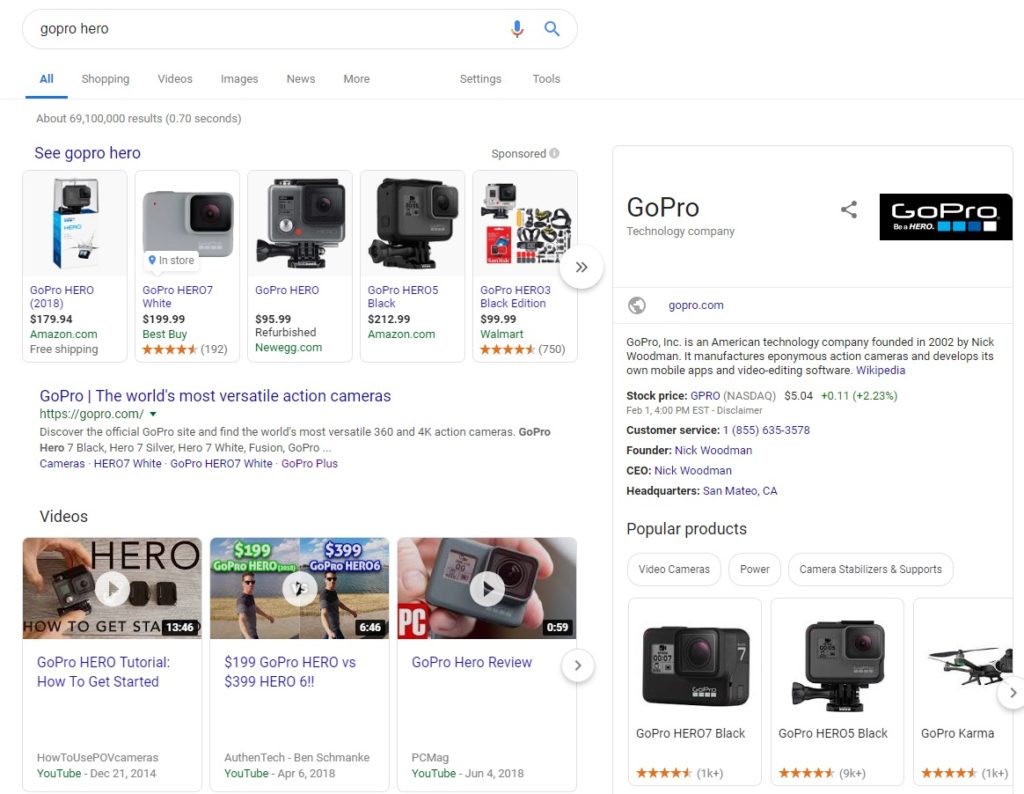
Heck, just do a quick Google search and see for yourself. What will you find?
Visual content is front-and-center in today’s search results before users even have time to think about sifting through a laundry list of links. That’s because seeing is believing.
Brands need to operate under the principle of “show, don’t tell” if they want to convert modern customers. Perhaps this is why creating and curating visual content remains a top priority for businesses in 2019.
The good news? Harnessing the power of visual content doesn’t require you to be a creative genius. In this guide, we’ll break down the fine details of visual content in the path to purchase. You’ll see firsthand the specific visual strategies top brands are using to convert customers and how to roll them out yourself.
With that, let’s dive right in.
What is the Path to Purchase?
The path to purchase represents the various channels that business rely on to transform leads and prospects into customers. From search engines and social media to email and paid ads, there is no “right” channel for converting customers.
Likewise, there is no single path to purchase in the customer journey. Visual content plays a vital role in the path to purchase for a couple of key reasons. For starters, visual content is easy to digest at a glance.
A video or image can show off a product in action in a fraction of the time that a blog post or lengthy email. This spells good news for appealing to today’s customers and their microscopic attention spans.
Consider also that people typically retain and recall visuals much better than the written word. Consumers today are hit with more marketing messages on a day-to-day basis than we can count. The more often someone sees your brand’s imagery including product photos and logos, the more likely you are to stand out over time.
Think about the marketing rule of seven that states people need to see what you’re offering at least seven times before they’re ready to buy. Paving your path to purchase with visual content means creating meaningful, memorable touch points that’ll result in sales.
And if nothing else, Brandwagon Digital Media wants you to bear in mind businesses boasting unique visuals see conversion rates seven times higher than those that don’t.
What Does a Visual Path to Purchase Look Like in Action?
We’re glad you asked!
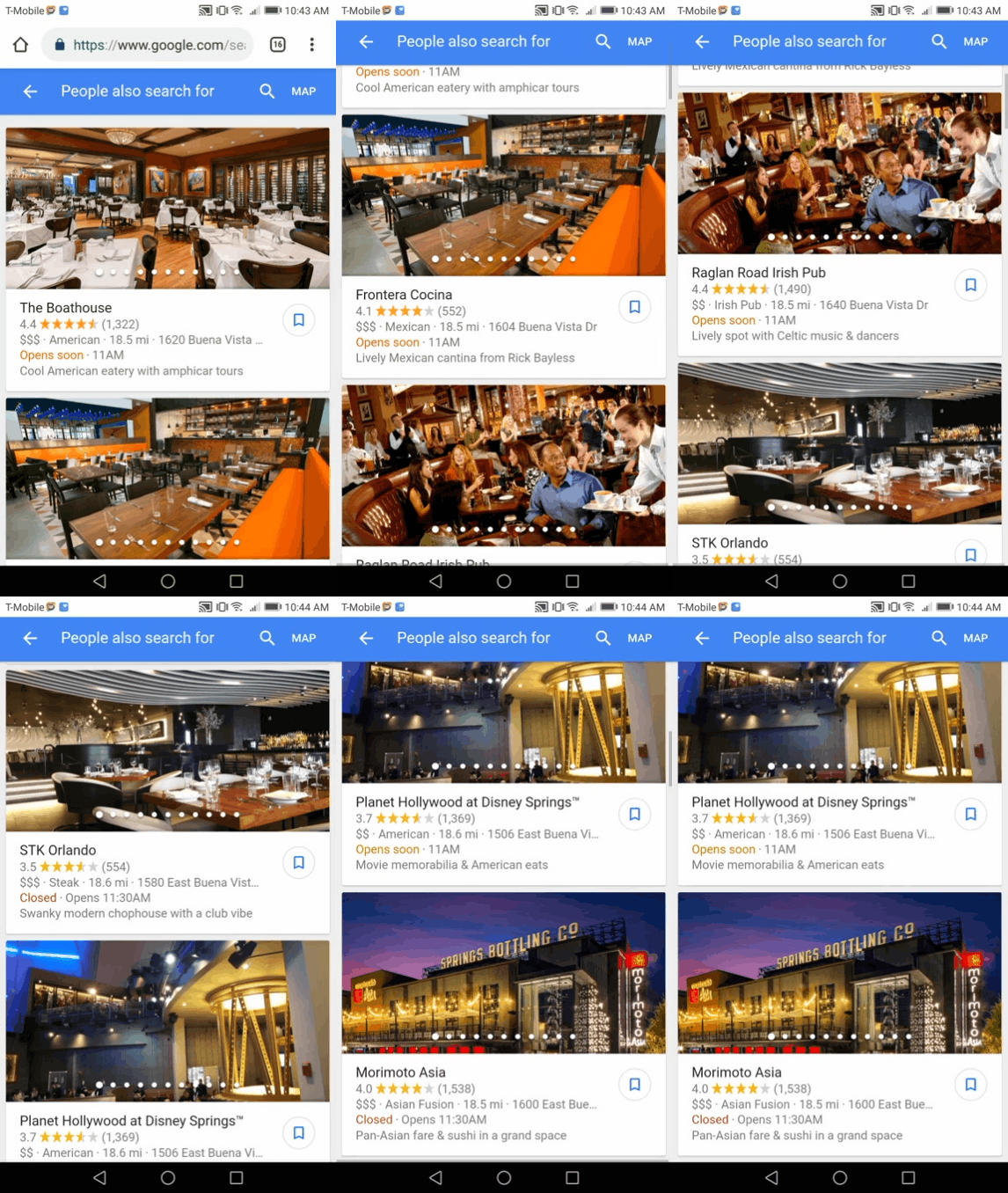
Let’s look at a real-world example of how visual content can impact the path to purchase. For example, say you’re taking a Disney vacation with your family and you’ve been tasked with one of life’s greatest challenges: picking a spot for dinner.
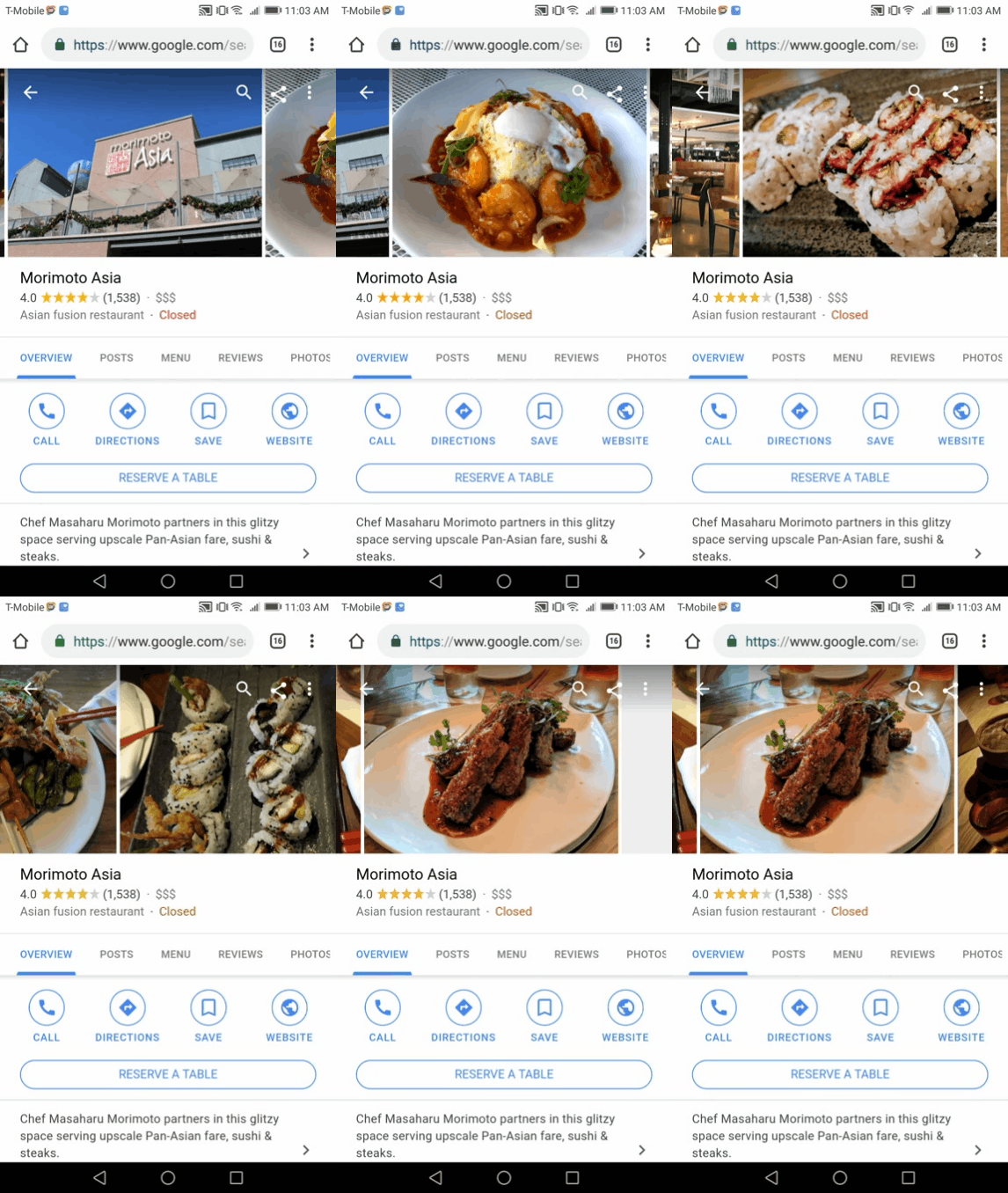
More than likely, you’ll start with a simple Google query–and in this case, you’d likely search “places to eat at Disney Springs.” While you’re obviously spoiled for choice, the Google ratings and restaurant snapshots help you narrow down your decision.
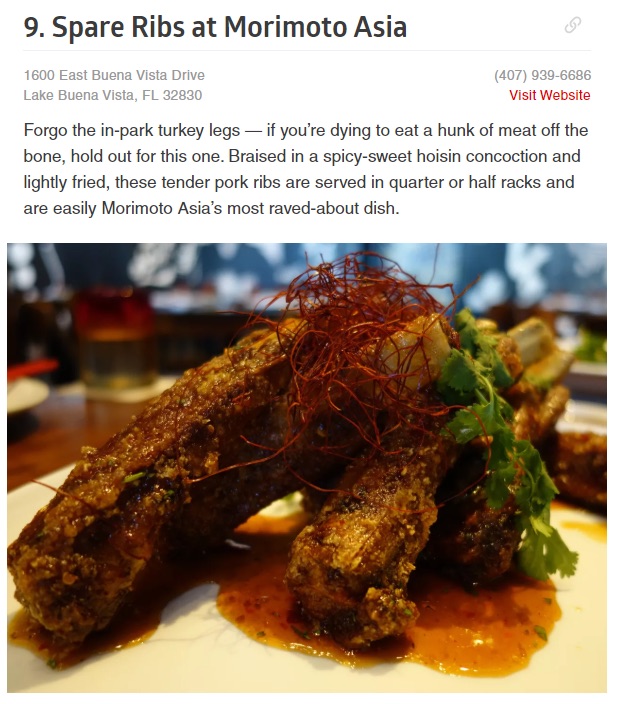
As part of your journey through Google results, you find some listicles like this one that shows off pictures of the author’s favorite fare.
Or ever better, you come across a video or two that breaks down the best restaurants in the area.
Based on your research, you pick out a spot with some confidence. Scrolling through customer photos, you see your potential menu firsthand and get a better idea of the restaurant’s vibe. Customer reviews then clue you on what you should expect and which menu items to check out (or avoid).
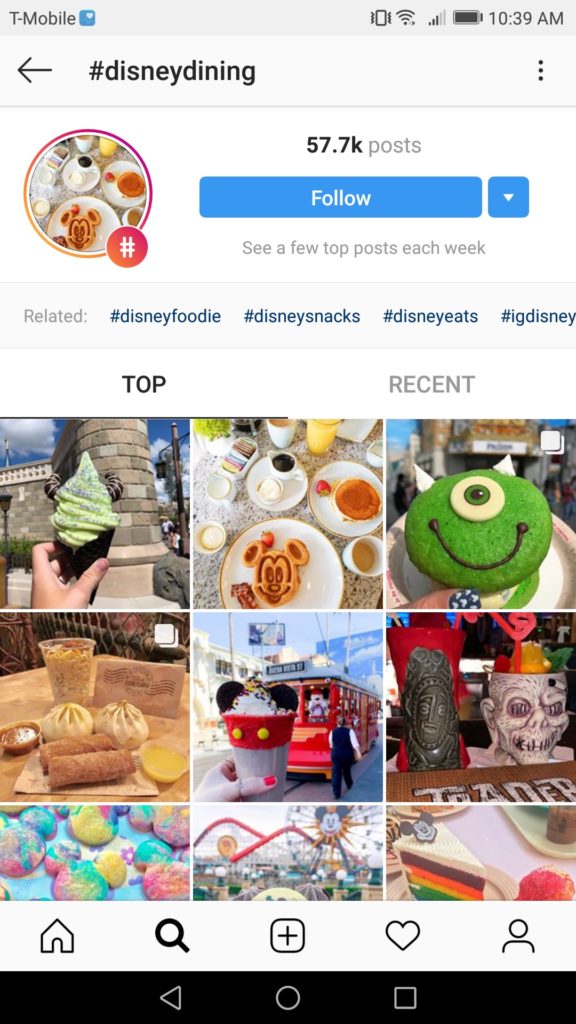
And if you’re socially savvy, you might even take to social media to which local spots have customers buzzing in real time.
See how that works?
We often hear the notion that effective selling online is all about creating a good customer experience. Through visual content, and especially through user-generated content, businesses create authentic experiences that eventually convert customers. This is just a snapshot of all the various avenues to make those experiences happen.
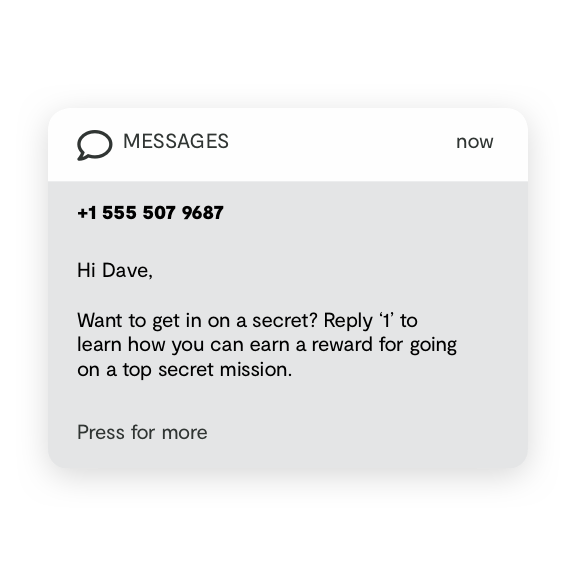
This is why we created Journey IQ, a completely scalable tool to provide you insights into what happens online and in store. This tools helps incentivize buyers who already love you to go on special missions to help you improve sales and understand the complete shopping experience.
And on a related note, remember that the path to purchase isn’t a straight line. Any combination of these channels are fair game both before and after purchasing (specifically sharing hashtags or leaving reviews).
How to Pave Your Own Path to Purchase via Visual Content
No two paths of purchase are the same for two different businesses. And hey, that’s a good thing.
This gives your business a much-needed sense of freedom when it comes to the types of visual content necessary to make those meaningful touch points. Below are some tips for brands looking to to put their visual content on display regardless of your industry or budget:
Make Sure Your Product Pages Pack a Punch
Product pages are a prime place to step up your visual game. Chances are you couple each of your product listings with some form of imagery, right?
But why stop there?
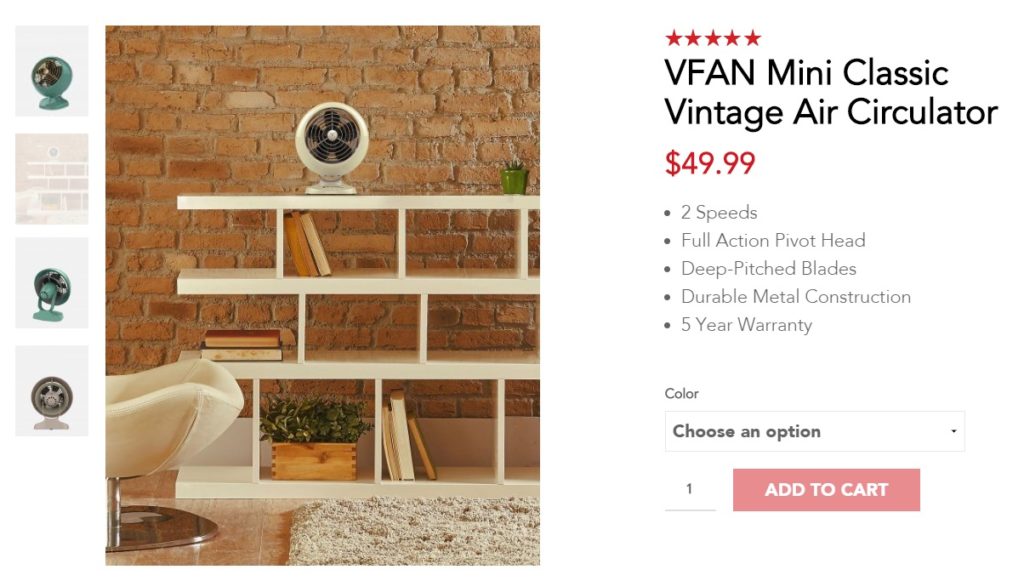
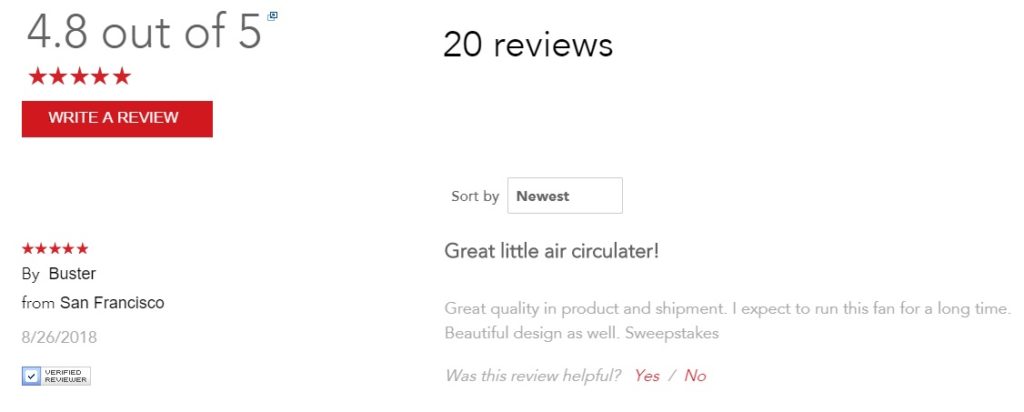
Vornado includes some still photos as well as action shots of their products to help shoppers visualize them in-person. Additionally, Vornado integrates ratings and reviews to build trust with shoppers.
The star-ratings themselves work to catch the eye of potential buyers, encouraging them to spend longer on the page and eventually make a purchase. Given that Northwestern University data shows 95% of shoppers read online reviews before buying, providing a place for buyers to sound-off is a no-brainer.
Star ratings and customer photos provide shoppers an authentic look at a product while also making the page more aesthetically pleasing. In fact, the PowerReviews Growing Power of Reviews report found 63% of shoppers look for user-generated content and visuals from real customers before making a purchase.
So why not put your biggest fans’ visual content front and center on your product pages? Well, you can do just that with the PowerReviews Visual and Social Suite.
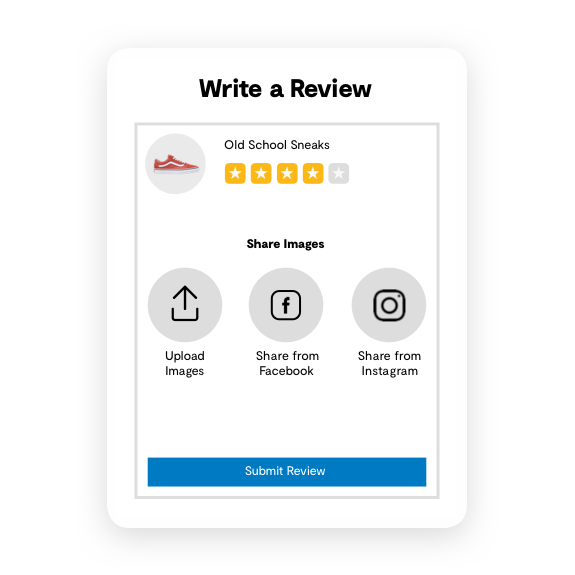
We provide more avenues to collect and display user-generated content directly from your customers and their social channels. Whether your customers share an image from their phone or social media channel like Instagram, we provide the integration tools to make this easy on brands and retailers, but a quick and painless experience for your shoppers.
But what if your customers aren’t uploading visual content for your products? It’s not easy asking for content, but there’s definitely a great place to start looking.
Curate High-Converting Imagery from Social Media
To say that social media is a staple of the path to purchase would be a massive understatement.
The beauty of user-generated content is that it’s, well, user-generated. Rather than worry about coming up with new imagery, you simply let your customers do the legwork for you.
Of course, that involves encouraging those customers to start creatin’.
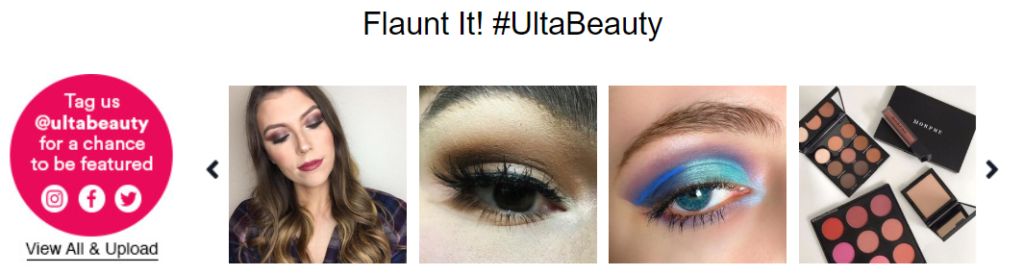
The first step to making that happen is by asking. For example, brands like Ulta encourage fans to use the hashtag #UltaBeauty for a chance to be featured on their feed.
This results in a slew of new content for that’s a far cry from a typical product photo. Hashtags and opportunities to create user-generated content are smart ways to encourage more engagement from your customers.
https://www.instagram.com/p/BsWmfV6gP3r/
User-generated content is likewise great marketing firepower for your website or email list. For example, Ulta features its user-generated photos on-site in the form of a lookbook. Many brands likewise feature similar photos in their email campaigns to encourage more social shoppers.
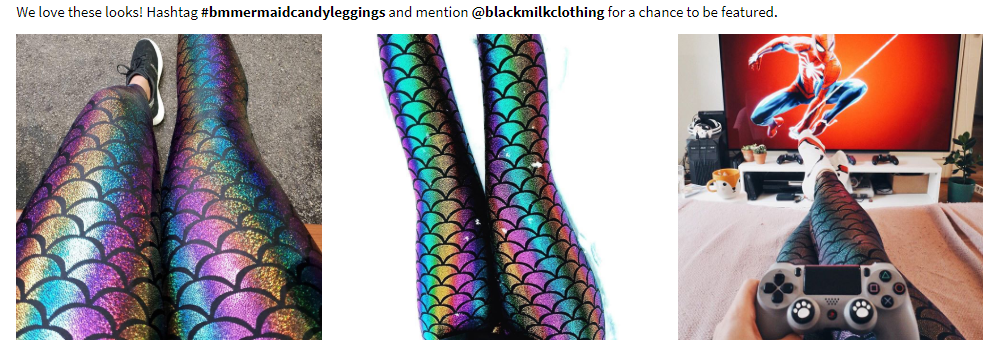
And to bring the power of user-generated content full-circle with our first tip, customer photos are fantastic for product pages. Brands like Black Milk Clothing promote item-specific hashtags to share for individual products. This is yet another opportunity to build trust and convert buyers through visual content.
Reel Customers in via Video Marketing
We can’t talk about visual content without talking about video.
As you might already know, video content is taking over the internet itself as the majority of all web traffic will be video-based in the coming years. To drive this point home, YouTube is now second only to Google in terms of today’s most-visited websites (recently passing Facebook).
And speaking o Facebook, video is often cited as the most popular type of content across the major social media platforms.
The specifics of why video works so well to reel in customers is no surprise.
Easy to digest? Check.
More entertaining than a traditional blog post or listicle? Most of the time, yes.
But most importantly, videos quite literally show off your products in action. There’s a reason why unboxings and video reviews are so popular: they’re unfiltered, and well, real.
From raising awareness to serving as an ad itself, video is a powerful medium on the path to purchase. For example, BeardBrand regularly publishes tutorials and how-to’s which subtly highlight their own products.
GoPro might be the best example of a brand killing it with video, mostly due to the fact that they’re, you know, a camera company that has heavily invested in action sports. Their eye-popping clips and user-generated content quite literally show what their products can do.
https://www.instagram.com/p/BteXYiXHuEV/
Some brands might shy away from video because they think they lack the budget or production value. That said, not everything you produce needs to be a mind-blowing production.
Brands like Blue Apron put together simple, 15-second clips to feature through their website and social media to give a glimpse of what they have to offer.
And with that, we wrap up our guide!
Learn From What Your Customers Are Already Telling You
It might not surprise you, but there’s a lot to learn from your previous customers. And to take it one step further, there’s even more to learn from the review content they provide on your products.
Try to find the commonalities with your products and how consumers truly feel about them. What this means is brands have to pay attention to small details that might be causing some concern on a product.
For example, if a few customers are having problems with the zipper on your new coat–it might be time to take these product insights to the manufacturer. The only problem is you might have hundreds of products and even more reviews.
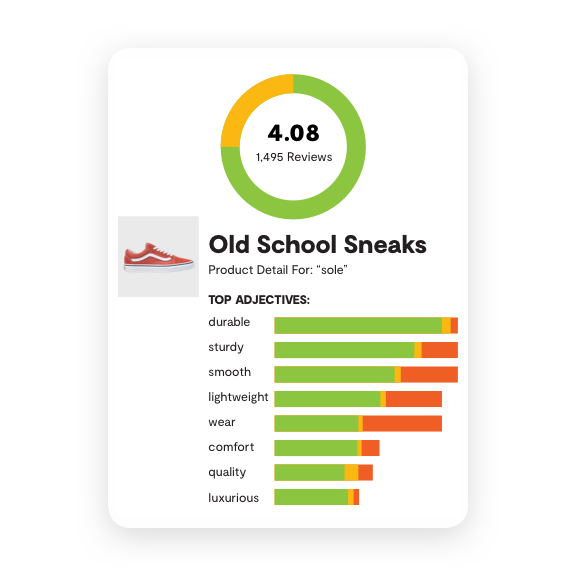
That’s why we created Product Pulse in our Intelligence Suite–so brands and retailers can find, analyze and uncover real product insights within review content. The hours it would take your team to review every single rating would take far too much time–and good luck finding someone to dig through the mess to find insights.
Instead, we do the heavy lifting and analyze sentiment through common adjectives and review analysis from more than 40 million consumer reviews already put through our Intelligence Engine. Your consumers are talking about your products and providing feedback, it’s just a matter if you’re listening to everything they’re saying.
Is Visual Content Part of Your Path to Purchase?
The final takeaway here is that visual content in any shape or form is integral to the path to purchase. Not just because it helps catch the eye of customers but because it builds the trust that results in conversions.
By supplementing your path to purchase with visual experiences for customers, you win more sales.
We want to hear from you, though. Which types of visual content do you find most compelling? Let us know on Twitter!
If you’re looking for a trusted partner to take your visual content to the next level, request a demo of PowerReviews today to see how we can integrate user-generated content onto your product pages.
Let’s get serious–we know the average sales increases by as much as 2 times when the product goes from zero reviews to at least one review. The thing is most businesses know the value of getting more reviews, but they simply struggle on how to ask for reviews.
Retailers have to adopt the mentality of the more, the merrier because positive reviews are not just an ego boost–they represent serious positioning power. According to multiple online shopping statistics and studies, well over 90% of consumers look at online reviews before making a purchase.
Translation? The more reviews you have to show off your satisfied customers, the easier it is to convince prospects your products are the real deal. If nothing else, customer feedback clues you in on what your current and future customers want to see you offer.
Here’s the problem, though–reviews don’t happen by accident.
If you want customers to leave meaningful feedback, you have to learn how to ask for reviews. That’s why we put together this guide on how to ask for reviews without chasing them down one by one.
The Art of Asking for Customer Reviews
Food for thought: 70% of people are willing to write a review if prompted to do so. In other words, you shouldn’t be shy about asking for reviews. But the question isn’t whether or not you should ask for reviews, but rather how to ask for ‘em.
Your parents probably taught you to say “please” and “thank you,” right? Well, figuring out how to ask for reviews is a bit more complicated than that.
For example, how do you avoid coming off as clingy or desperate? Is there an ideal time to pitch your customers for reviews? What the heck do you even say? All great questions!
Before we dive into specific strategies, let’s talk about the art of asking. The following tips are around language, framing and timing so you understand what makes a review pitch pack a punch. These tips are fair game for emails, review-specific promotions and even scripts for your customer service team!
Give Your Customers a ‘Why’
Writing reviews might seem like a simple, straightforward task for your satisfied customers. The reality is reviews represent an exchange. After all, you’re asking them to do something before their initial transaction.
https://www.instagram.com/p/6QpV-Ujq46/
Chances are your customers are crazy busy. Ask yourself: what would compel you to take time from your schedule to write a review? Offering an awesome product or service is a start, but you should strive to give your customers an answer to “Why bother?”
“We want to make sure that we’re delivering top-tier products and to understand if there’s anything we can do to improve in the future!”
These sorts of statements provide subtle yet significant context to your review questions and make them seem less obtrusive.
Frame Your Reviews as Quick & Painless
Reviews shouldn’t be seen as something to tack on your customers’ to-do list. Ideally, they should be empowered to leave feedback quickly and without having to jump through too many hoops.
And no, a “good” review doesn’t have to be novel-length (but more on that later). Something as simple as the following phrase can win over a customer who’s on the fence about writing a review:
“Your feedback is invaluable to us and only takes a few seconds!”
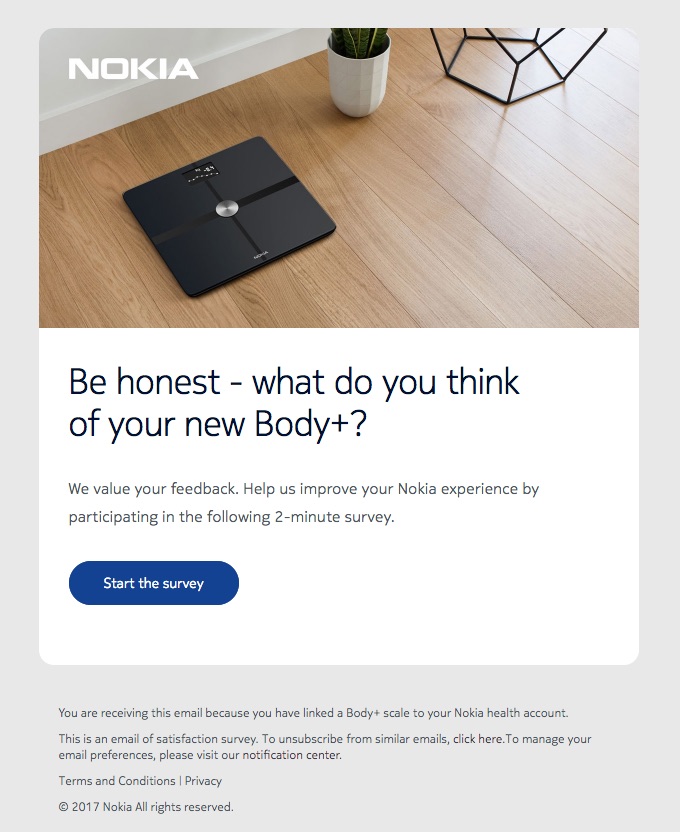
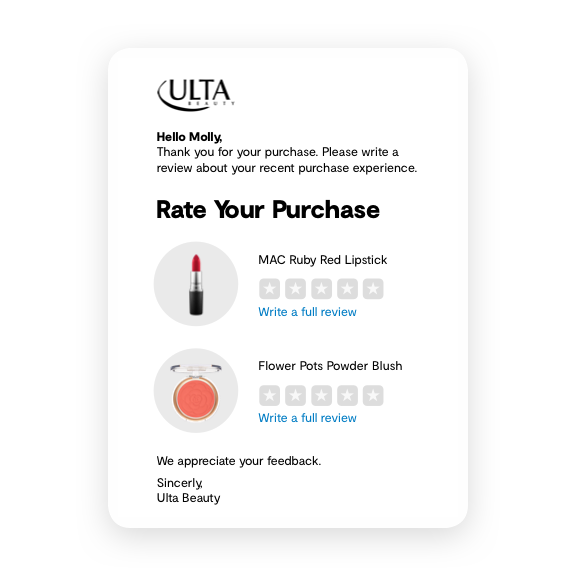
In fact, this is the exact sort of approach that Nokia takes for their post-purchase review request emails. See how that works?
Mind Your Words
Figuring out how to ask for reviews might seem simple on the surface. However, writing your first review request pitch can certainly be daunting.
The good news? Asking for a review doesn’t have to be rocket science. As you brainstorm your pitch, just keep the following three principles in mind:
Start with a question. Review requests centered around questions like what did you think of tend get more responses. Questions manage to engage your customers from the word “go” and naturally prompt a response.
Make your pitch about them, not just you. Again, make sure to drive home the point that you’re eager to hear from your customers because you want to provide the best service possible. You’re doing this to help your customers too.
Be straightforward. There’s no point in being vague or coy when asking for a review. Customers are more than happy to write them, but probably see their fair share of requests too. You don’t need more than a couple of sentences to get the job done.
Time Your Reviews Requests to Perfection
This is a crucial piece of how to ask for reviews that’s easy to overlook. Ever been to a restaurant where a waiter or manager asks you how your food was before you’ve even had a chance to take a bite?
Awkward, right?
Likewise, you can’t be too eager when it comes to asking for reviews. You don’t want to ask someone how they’re enjoying your product before they’ve had a chance to do so.
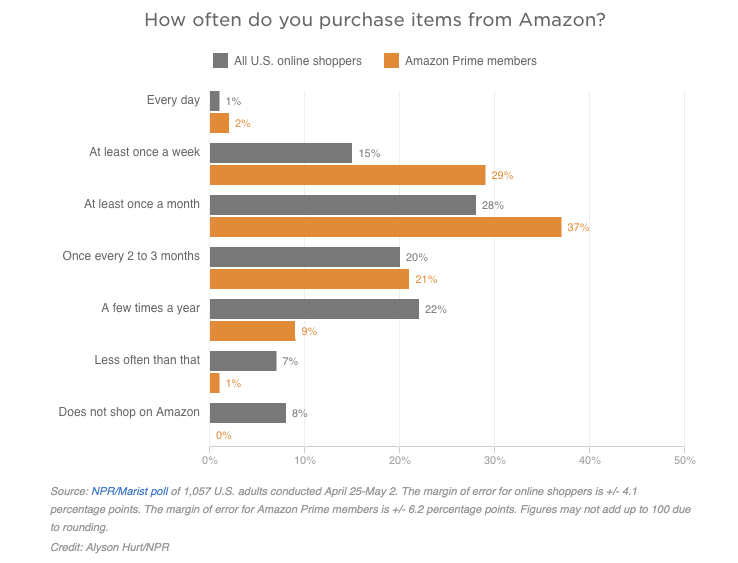
And on the flip side, shoppers order a lot of products online. In fact, an NPR report found 28% of U.S. shoppers order at least one product off Amazon a week!
You shouldn’t wait too long and risk losing the interest and initial buzz behind their purchase. For most products and industries, a week or two is fair game in terms of how long to wait before asking for a review.
For reference, MailChimp’s default trigger settings for a post-purchase message series (hint: where a review request would be) are an hour, 10 days and 20 days after a purchase is made. The latter two times would work for most businesses out there.
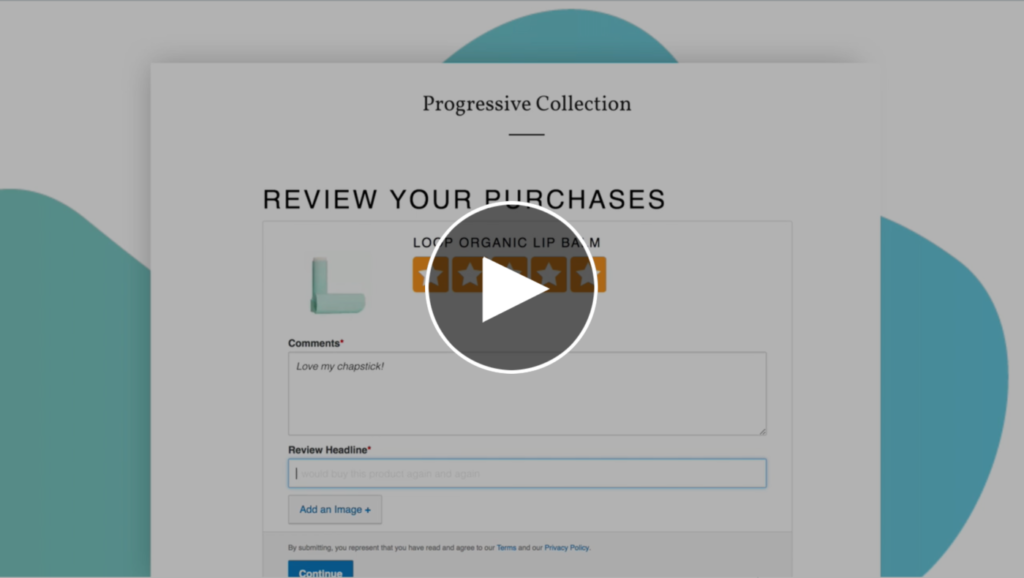
If you’re still having trouble asking for reviews and actually getting them, we’ve got you. PowerReviews’ Progressive Collection feature allows you to put the products that need reviews at the top of post-purchase emails.
This is perfect for retailers who often see multi-item orders, but don’t see the reviews for all items. If a shopper bought a toothbrush, hairbrush and hair-dying kit, you’d probably want the customer to write that review for the dye above all.
Our collection features lets your customers see review requests forms showing the most expensive item or lowest review count item first in the review submission. Request a demo to learn how else PowerReviews helps increase review rates!
5 Strategies for Encouraging More Customer Reviews
Now that we’ve broken down the art of asking, let’s talk about how to ask customers to reviews. Like, what are the best ways to actually, you know, ask?
Below are 5 tips on how to encourage customers to write reviews and specific tactics that should be part of your various marketing campaigns:
1. Put Together Your Post-Purchase Autoresponders
Email is perhaps the most popular avenue for asking for reviews. It’s no secret as to why, either.
For starters, you’re able to put review quests can be put on autopilot. Just about any major email marketing software includes a post-purchase series which means all you need to do is put together a pitch email to slot in.
The beauty of automated review emails is that you can perfect and optimize your pitch prior to sending it. No awkward conservations: just a sleek, straightforward message to encourage reviews.
By setting up your post-purchase email requests automatically, you ensure that you hit up all of your customers for reviews. This results in a higher overall volume of reviews and no second-guessing who you’ve already asked.
Of course, email autoresponders sometimes feel robotic or pushy if they aren’t crafted with care. That’s exactly why we believe your messages need to have a personal touch and be sent at an appropriate time so they don’t land in the trash (or worse, the spam folder).
However, the key is making an autoresponder that doesn’t annoy someone. This is where the art of asking comes into play as you ask in a reasonable frame of time and don’t want to come off as aggressive or pushy. Flooding someone’s inbox is a bad look and isn’t going to get you much love.
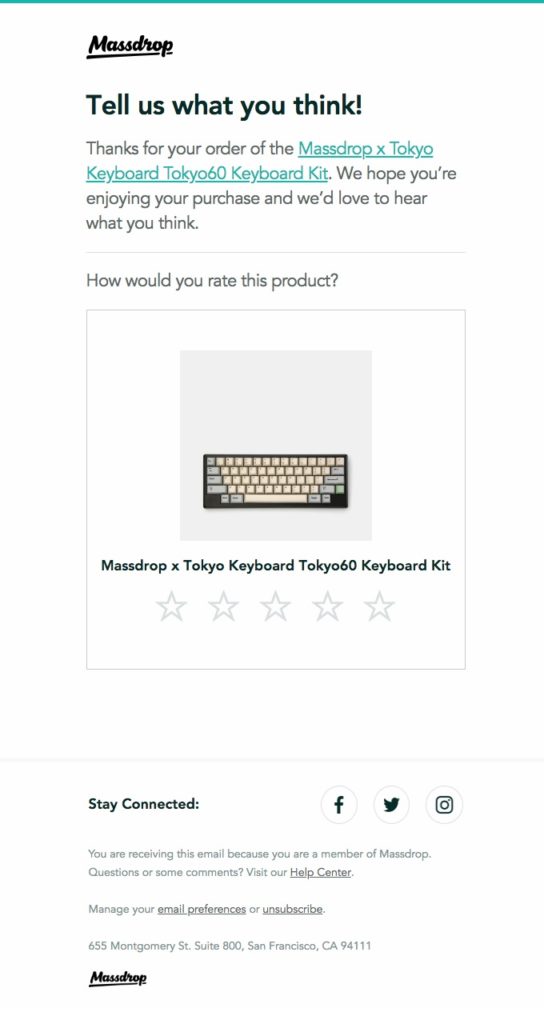
This is a great example of an effective post-purchase email from Massdrop. Short, sweet and to the point, this messages presents itself as a positive request that isn’t going to eat up the customer’s schedule.
2. Sweeten the Deal With Review Incentives
Either as a variation on your autoresponders or as part of a specific promotion, consider providing your customers with incentives as part of your review requests. Remember what we said earlier about giving customers a “Why bother?”
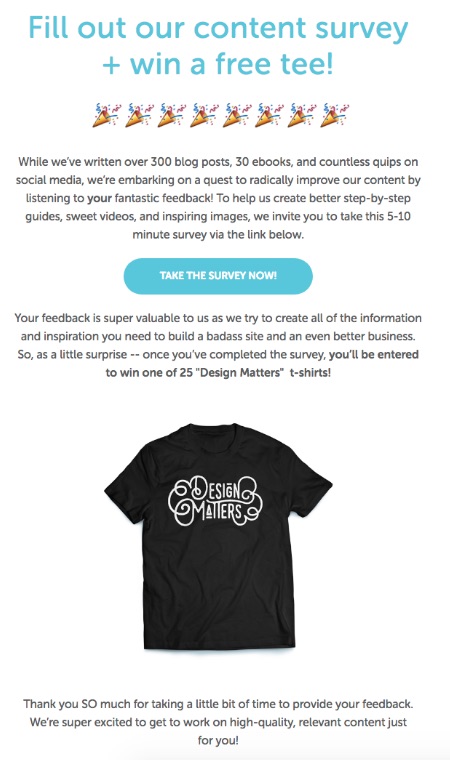
A freebie such as a percentage-off discount or entry into a contest can do the trick. The point here isn’t to break the bank or to come off as fake with your review content. Instead, the right incentive simply helps encourage shoppers to leave a review and possibly even another purchase.
If a discount isn’t doing the trick, consider the power of a product sampling campaign. PowerReviews’ Influencer and Social Suite connects brands to our massive community of everyday influencers who are ready to leave reviews for your products, shout them out on social media and potentially turn them into repeat buyers.
Product sampling is one of the best ways to ask for reviews–especially when you have a new product or low-rated item in need of some reviews.
3. Prompt Your Customers With Review Templates
The more straightforward your review process, the better. That’s exactly why we integrate specific questions and prompts into our review platform.
Think about what it’s like to stare a totally blank page when trying to write, well, anything. Having some form of guidance is enough to get you going.
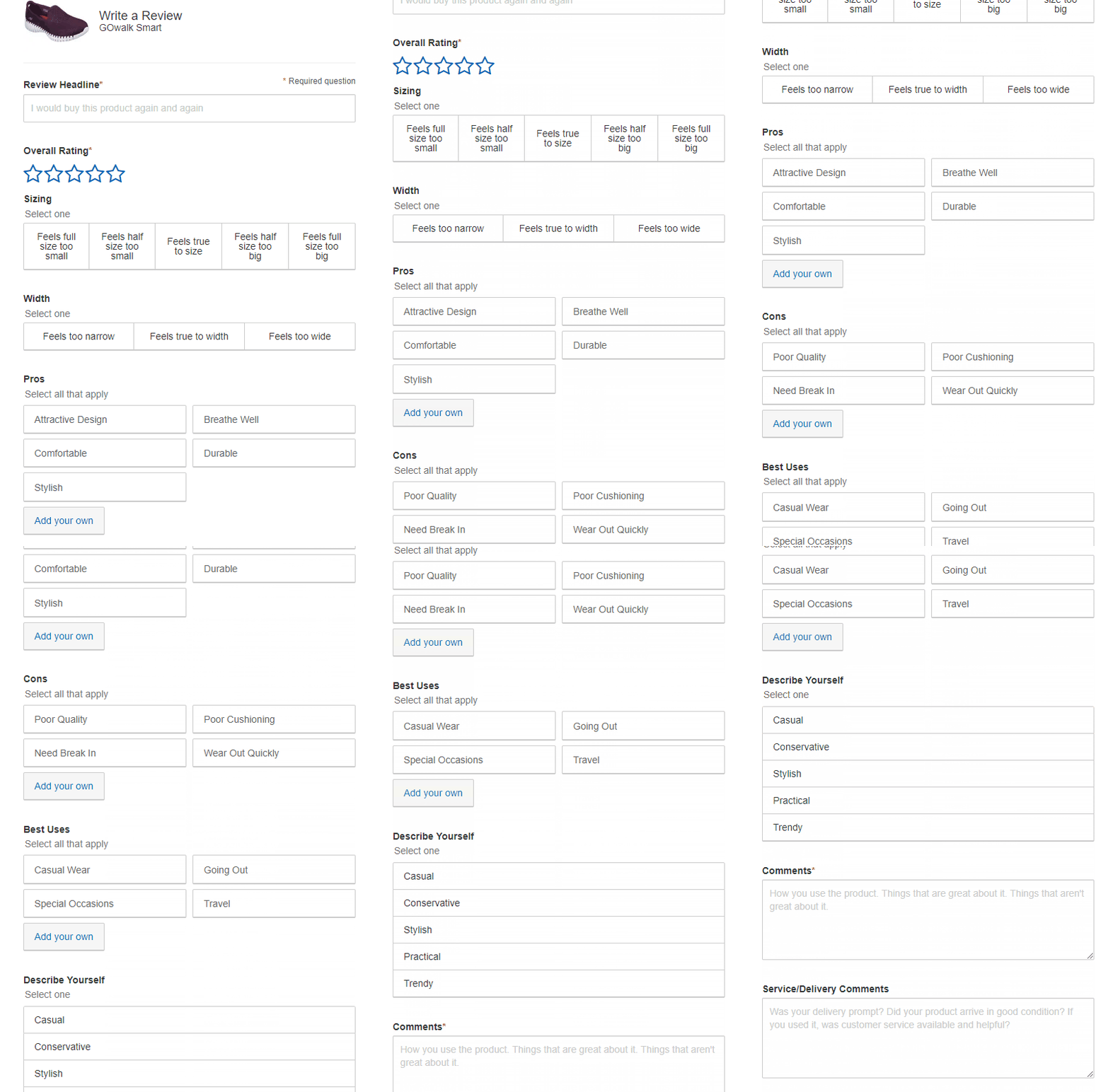
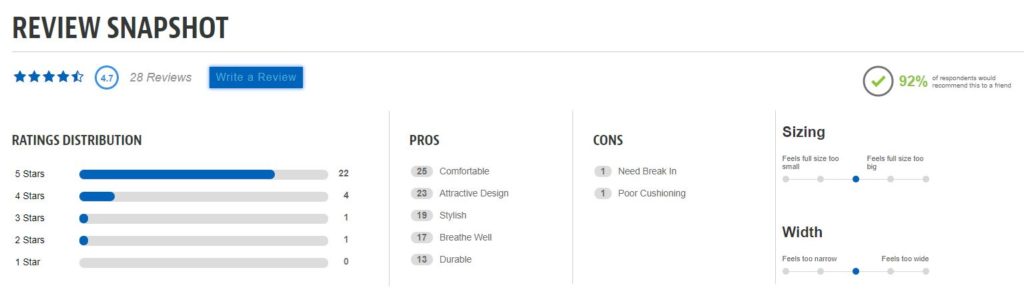
For example, PowerReviews’ Review Snapshot feature breaks down specific ratings and relevant keywords in addition to providing an open-ended section where reviewers can speak their mind. This gives you the best of both worlds in terms of feedback.
The best part is each brand has the option to select which questions or product details it includes on the Review Snapshot. This means your customers have a tailored experience and the freedom to say what they need to say, all the while you have actionable data points that clue you in on the most important details of your products. In short, a win-win.
4. Monitor Your Social Mentions & Share Customer Content
More customers are taking to social media to shout-out their latest purchases. As a result, it pays to mind your social mentions to see when your buyers are showing you some love.
These represent perfect opportunities to ask for on-site reviews. If someone’s willing to hype you up on social media, they’ll more than likely put in a good word, no questions asked.
We like your style 😉 Can we feature this pic on our social channels, email, in-store displays, or https://t.co/c1lRu6YHuJ? Reply “yes" to us if that sounds good. Thanks!
To encourage more of these types of shout-outs, make a point to share customer photos and user-generated content on a regular basis. If followers and customers know that you frequently promote your fans, they’ll naturally want to get on board.
Hint: PowerReviews makes it a cinch for you to discover and obtain the rights to your user-generated content. In addition to helping you monitor your mentions, our platform taps into customer photos that are perfect to couple with your on-site reviews. Want to see all of our Social Collection capabilities? Request a demo today!
5. Be Transparent By Responding to Reviews & Questions
If you expect your customers to provide feedback and answer questions regarding your products, you should be willing to do the same. Responding to questions and reviews signals that you’re actively listening to your customers and are truly committed to stellar service.
Encouraging customer interactions isn’t just a one-way street. Making your transparent and open, responding to both positive and negative feedback, is a good look for your brand.
Anyone who’s willing to ask a question is likely the same type of person to write a review once they’ve made a purchase.
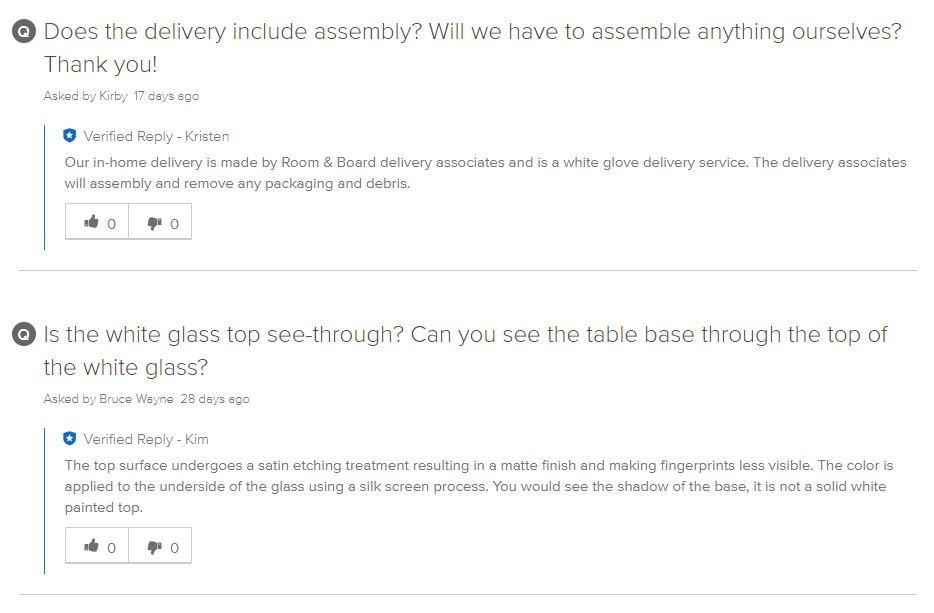
PowerReviews’ Questions and Answers platform enables prospects to ask questions which you can reply to for the sake of winning more would-be customers.
How Do You Ask Customers for Reviews?
Listen: there is no secret to scoring more reviews.
If you want ‘em, you’re going to have to ask for ‘em.
The tips and tactics in this guide can put you on a path toward consistent positive feedback for your business.
And with the help of platforms like PowerReviews, you know that you’re maximizing the engagement and level of detail from your customer feedback.
It’s 2019 and surprisingly, one of the hottest customer communication methods is a technology that’s existed since 1992–text messaging. Brands have increasingly found value in SMS marketing due to the fact it earns higher open rates, engagement and click-through rates.
Do we have your attention?
This isn’t the first time SMS marketing strategies have gained popularity. Like we mentioned, text capabilities have been around for decades and a lot of companies found success with SMS marketing campaigns in the early 2000s.
But technology, cost and the simplicity of SMS has made a strong comeback for marketers, especially in an age where the average U.S. consumer checks their phone 52 times a day. In this post, we’ll shed light on the ins and outs of SMS marketing in today’s digital environment and how brands effectively use text messages to increase customer engagement.
Let’s get started.
What Is SMS Marketing?
SMS marketing (short message service) is a type of customer communication method that requires permission from a business to communicate with a customer via text message to promote, sell, update or confirm specific messages. This technique needs the customer to opt-in, much like an email marketing subscription, so brands and retailers have the ability to send product updates, discounts and important information directly to the consumers’ device.
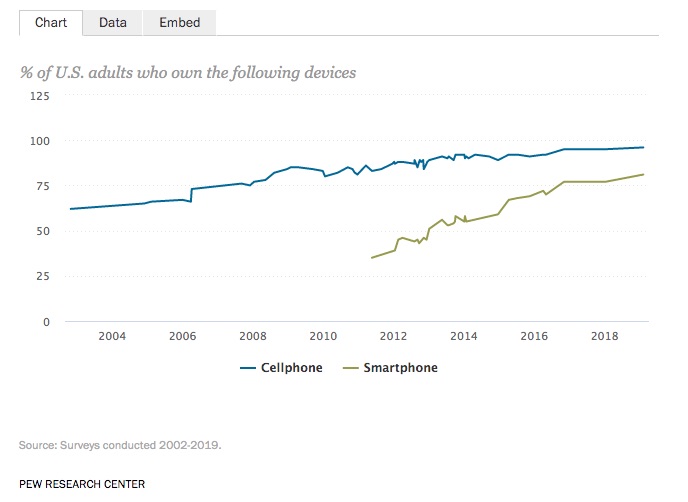
And for SMS marketing in 2019, this typically means a smartphone. In fact, Pew Research found 81% of U.S. adults now own a smartphone, while 96% at least own a cell phone. So it’s probably safe to say, if you’re struggling to connect with your customers, SMS gives you the chance to communicate through a device nearly every consumer owns.
Before diving into SMS marketing tips and tricks, it’s worth taking a look at why text messaging works and how it performs compared to other channels:
SMS Gets More Engagement
Customer engagement is a tough cookie to crack these days. Between short attention spans and the growing number of distractions all around, it’s difficult to get your messages in front of your target audience.
SMS, when used correctly, cuts through the noise and capture people’s attention in ways that traditional channels (e.g., email, PPC) can’t. According to Gartner, SMS open rates run as high as 98% compared to email’s 20% mark. What’s more is the data cited by Digital Marketing Magazine indicating 75% of consumers actually prefer to receive promotions via text message.
These numbers tell us that consumers are a lot more receptive toward messages they receive via text.
SMS Is Widely Used
Smartphone users love SMS messaging. The same study from Pew Research also found 97% of smartphone owners send text messages–making SMS the most used feature on smartphones. Not only is it the most popular feature, but survey respondents said it’s the most-frequently used feature with the majority stating they’ve sent or received a text in the last hour.
SMS is clearly an invaluable communication method for consumers, so it makes sense to use (or at least test) it in your marketing efforts.
SMS Messaging Promotes Immediate Communication
Text messaging also paves the way for faster communication and even back-and-forth conversations with your customers. That same Gartner research cited earlier discovered SMS had a response rate of 45%, compared to email, which had a 6% response rate. Additionally, data from the GSM Association shows that on average, it takes 90 seconds for users to respond to text messages.
You Can Efficiently Track Results
With the right platform, you can measure the performance of your SMS campaigns and improve your results. Most SMS marketing solutions have reporting analytics features, which allow you to track open rates, CTRs, offer and redemption.
You don’t have to go into SMS marketing blind. As long as you choose the right messaging platform, you can closely track how your initiatives are doing and measure the ROI.
Mobile Messaging Is Poised for (Even More) Growth
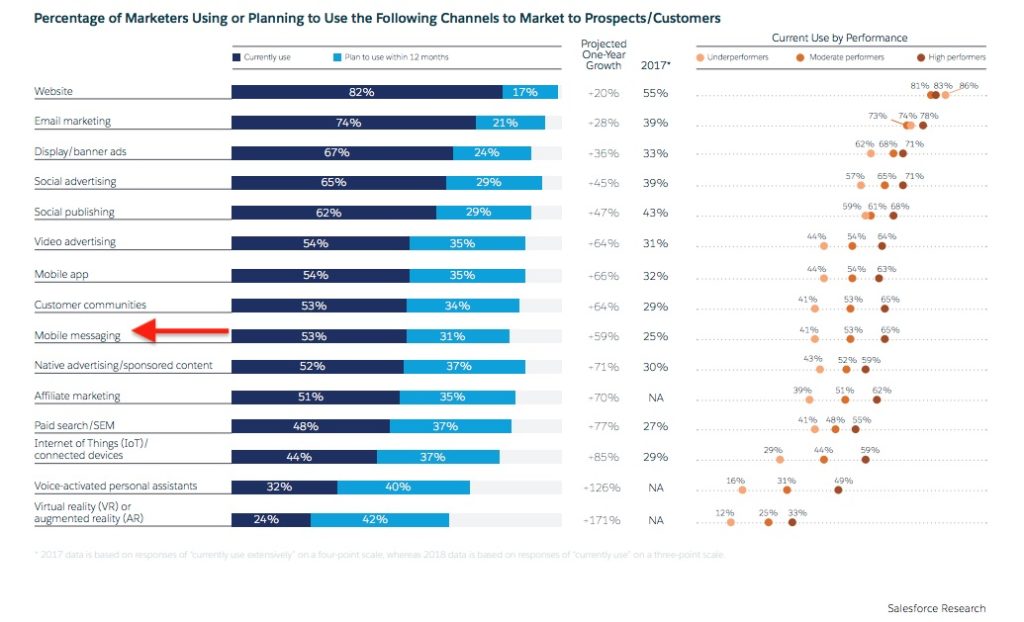
Mobile messaging has gained a lot of steam, and marketers are taking notice. According to Salesforce’s 2018 State of Marketing Report, 53% are currently using mobile messaging to market to prospects or customers and 31% are planning to use mobile messaging within the next 12 months.
Marketers are evidently going to be using mobile messaging (which includes text) even more. And while this helps validate the value of SMS marketing, it also means that the landscape is going to be more crowded.
As such, if you’re looking to jump into text messaging as a marketing tool, you’ll want to do it sooner rather than later. This is why PowerReviews is striving to help businesses with their SMS marketing strategy by providing a simple tool to engage your shoppers post-purchase to generate more ratings and reviews.
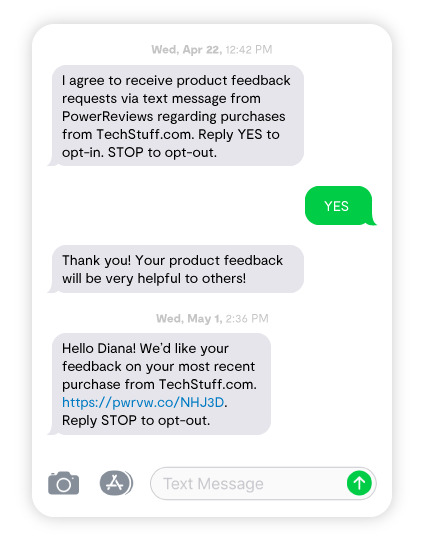
By asking your customers for feedback via SMS, brands have seen up to 4 times higher review collection rate. Our goal is to help businesses collect the most content possible to help you drive more sales, all while making it easier for the consumer to interact.
Want to see our SMS review collection feature in action? Contact our team today and learn how to get more authentic reviews!
SMS Marketing Examples & Tips: How to Get It Right
Now that you know the value of text messaging and the impact it has on customer engagement, it’s time to look at how you can make SMS work for you. Here are a handful of SMS marketing examples and tips to inspire your efforts:
Run Timely SMS Marketing Campaigns
Text messages may get a ton of engagement, but that doesn’t mean you can send customers whenever you want. Timing makes or breaks your campaigns, so make sure shoppers receive your messages at the most optimal times.
In addition to sending at the right time of the day, consider the time of the year your subscribers are reading your messages and when you’re running your campaigns. Mark special holidays on your calendar and launch SMS marketing campaigns that align with these events.
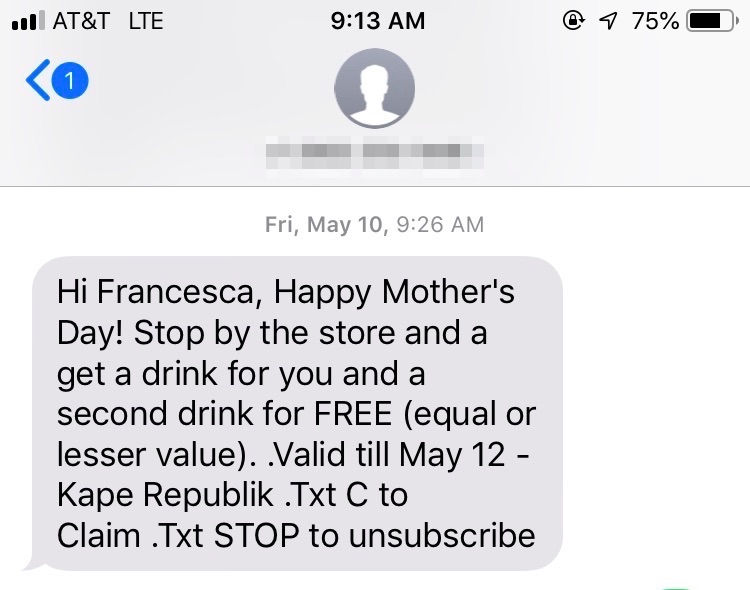
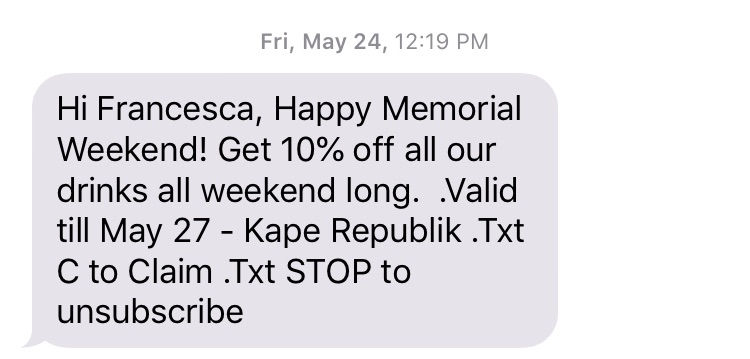
Check out this message from Kape Republik. The business obviously pays attention to yearly holidays and makes it a point to engage its customers through text. On Mother’s Day, Kape Republik sent moms a special BOGO (buy one get one) offer.
Additionally, the company got in touch once more on Memorial Day with a 10% coupon. The company’s timing is effective because it’s not over the top and the the discount makes it worth it for customers to continue receiving messages.
Take a leaf out of Kape Republik’s playbook and run seasonal and holiday SMS campaigns to boost your engagement.
Make Them Visual
Don’t let the term “text” stop you from sending visually stimulating messages via SMS. Aside from giving your messages more personality, visual elements help you stand out and be more memorable. A study on the effects of emoticons found that the presence of emojis in messages can boost the cognition and memory scores of recipients.
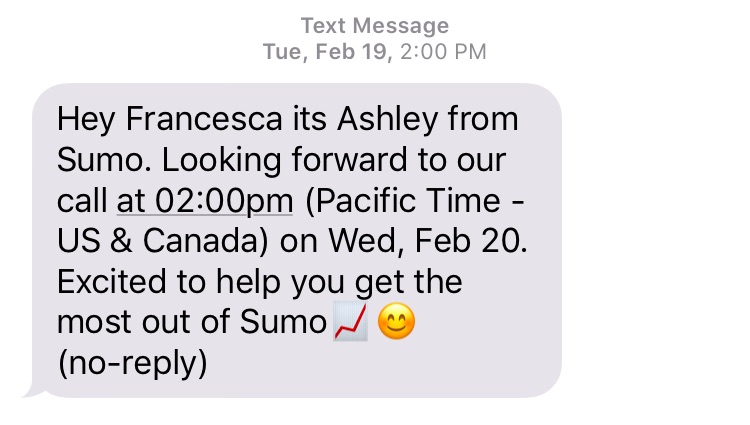
An excellent example of a brand putting emojis to good use is Sumo. In the appointment reminder below, the Sumo team included a couple of relevant emojis to spruce up the text.
But why stop at emojis?
If you’re sending a sweet offer and really want to get people’s attention, consider throwing images into the mix. The jewelry retailer AUrate does this with their SMS strategy.
To promote its gold jewelry, AUrate sent a photo of someone wearing the brand’s shiny pieces to give its consumers a visual example of the product–directly to their device.
Adding a bit of visual flair to your messages doesn’t take a lot of effort. Strive to include images and emojis in your texts whenever it’s appropriate to do so. Your audience will remember you for it!
Instill a Sense of Urgency
Because people tend to open text messages immediately, SMS is an ideal platform for sending time-sensitive messages. If you have an offer that’s expiring soon or want people to respond quickly, SMS is your best communication channel.
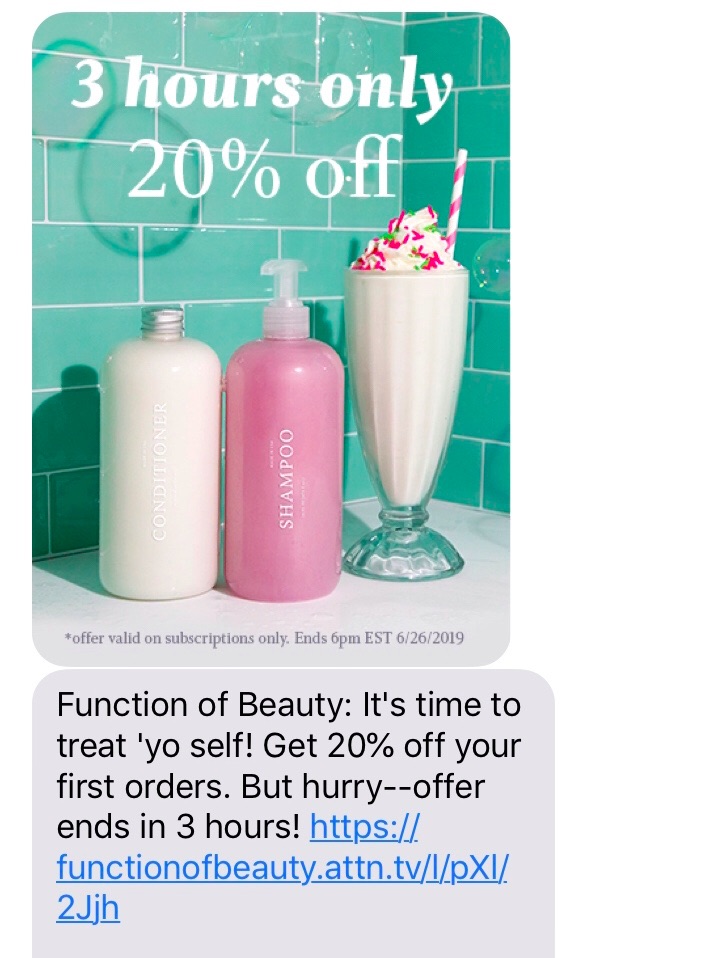
The haircare brand Function of Beauty clearly understands this. The website recently ran a 20% off promotion, and 3 hours before it ended, Function of Beauty sent its subscribers a heads up via text. This helped urge shoppers to take advantage of the offer while it lasted.
Make Taking Action Quick & Easy
Remember that users reading messages on their smartphones don’t have time to type up long responses or jump through several hoops. So, if you require recipients to take action—such as visiting your website—you should make the process as easy as possible.
We already saw this in action in the messages above. Both AUrate and Function of Beauty made it easy to get to their promotions by sending a clickable link via text. In some cases, the action you want people to take is to confirm an appointment or opt-in. In such situations, make sure the task takes as little effort as possible.
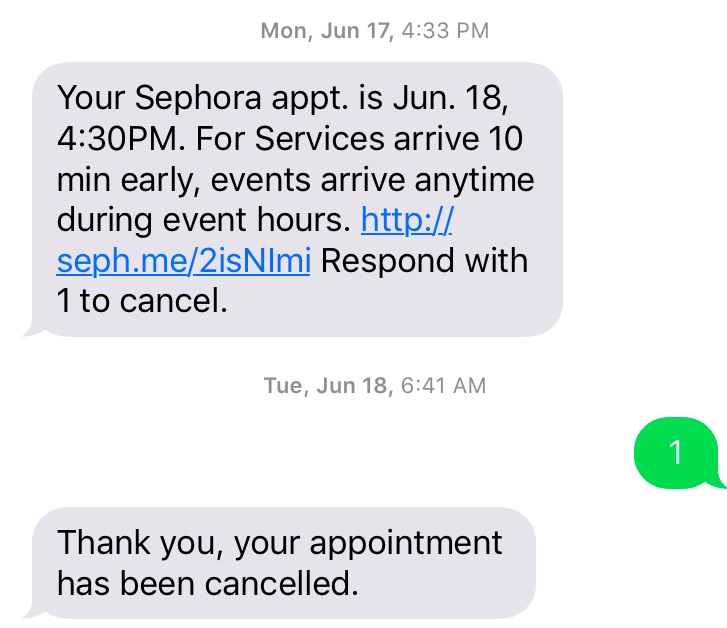
When someone makes a service appointment at Sephora and can’t make it, they simply need to reply with “1” and the retailer will cancel their appointment.
Go Beyond Self-Promotion
SMS is obviously a great channel for sending promotional messages. But you’d do your audience and your brand a favor by using text messaging to actually help your customers–not just spam them.
In other words, rather than leveraging SMS solely to promote your business, you should also use the medium to provide a service or send information that your audience would truly find useful. In doing so, your recipients value your messages more and are encouraged to keep opening and reading your texts.
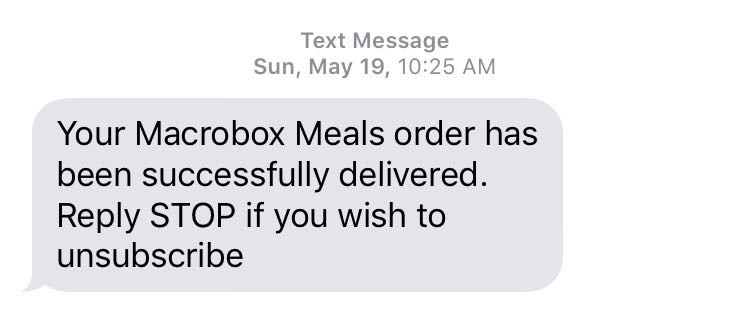
Macrobox Meals, for example, sends delivery notifications via text when people’s meals have been delivered. Macrobox knows that its customers would want to be notified when their food reaches their doorstep, so the company makes it a point to give them a heads up.
Strive to do something similar to your efforts. Ask yourself: How can you use text to add value to the customer experience? What types of non-promotional messages would people want to receive from you? The answers to these questions will help you craft a better SMS strategy.
Ask for Feedback
As we mentioned earlier, SMS is an effective tool for gathering customer feedback. Since people are more likely to read and respond to text messages, you have a greater chance of collecting responses. And for brands wanting to improve their ratings and reviews collection, PowerReviews’ SMS Collection is a must.
You don’t want to make the process complicated. PowerReviews helps brands send quick message asking your customers to give feedback on a product so you increase the chances of getting more information about your products–and ultimately more reviews.
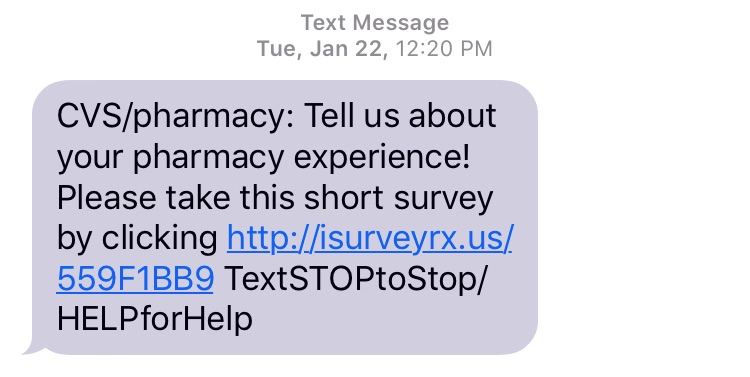
SMS also helps brands and retailers improve customer satisfaction by getting appropriate feedback on a specific experience. CVS Pharmacy sends its visitors a text asking them to fill out a short survey.
Use SMS Marketing to Re-Engage Inactive Customers
Do you have customers who haven’t visited your store or website in a while? Send them a quick text to get back on their radar.
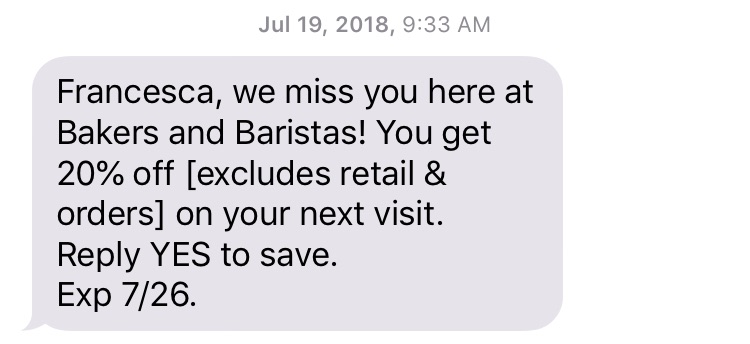
Bakers & Baristas, a cafe in Cerritos, CA, does exactly that. Have a look at the store’s text below. In addition to a quick “we miss you” message, the cafe sent a promo to sweeten the deal. This helps compel customers to come back.
Use Branded Links
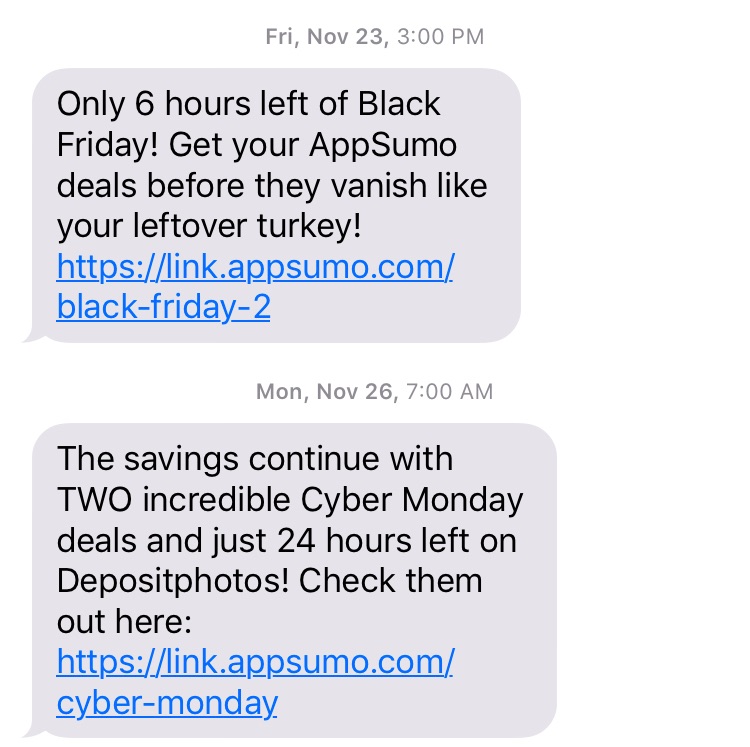
Branded links look at lot cleaner and trustworthy compared to generic ones, and they promote trust and credibility. In fact, data from Rebrandly found branded links see up to 39% more click-throughs compared to non-branded URLs. It’s worth it to use them in your messages as much as possible.
Check out these messages from Appsumo. For Black Friday and Cyber Monday 2018, Appsumo used branded links in its text messages to direct people to its website.
Is SMS Marketing Part of Your Customer Engagement Toolkit Yet?
SMS clearly offers a lot of value in the customer engagement department. Use text messaging to drive sales, gather feedback, provide services and communicate with your audience.
This technique has the potential to outperform traditional channels in open, click-through and response rates. So see how SMS could fit into your customer engagement strategy and start looking for right messaging platform.
Once you’ve collected enough data, use those insights to get to know your audience better, and then refine your efforts.
Good luck and happy texting!
It’s said that goldfish have an attention span of 3 seconds–so how long do you think it is for your customers?
Whether it’s hours of Instagram or binge-listening the newest podcast, we consume a lot of media in various mediums and don’t make a lot of time to hear your business out. So with so many companies competing for attention, it’s no wonder that micro brands are flourishing amount retail giants.
In fact, companies like Nordstrom, Walmart and Amazon shell out a ton of money each year to reach their ideal customer. But with the rise in direct-to-consumer marketing, micro brands are standing out right in front of our faces.
You likely have heard of some of the more popular micro brands like UNTUCKit, Billie and Sugarbearhair. And that’s because these brands have pushed plenty of social ads and mid-roll advertising campaigns on your favorite podcast. Simply put, these companies leverage social commerce in a way that’s completely changing the way we think about online selling.
https://www.instagram.com/p/ByYpANJFw-O/
So much so that big-name companies are feeling the pressure to compete—or acquire the competition. According to RetailDive, one-third of U.S. consumers expect to make at least 40% of their purchases from direct-to-consumer companies within the next five years. Also, 81% claim they’ll make a minimum of one purchase from a direct-to-consumer brand within the next five years.
So, what are these brands doing that’s yielding such success?
We’ll take a look at the successful rise in micro brands and how they’ve impacted social commerce and mobile sales as a whole. But first, what actually is a micro brand?
What Are Micro Brands?
Micro brands use a direct-to-consumer business model, meaning the company foregoes the middleman by selling and shipping products straight to the customer.
Traditionally, the bigger your business (or, the more stores you had), the more successful you were, but that isn’t so much the case in today’s ecommerce world. Companies find that they can generate sales and grow cult-like followings through strategic, hyper-focused content and social media marketing campaigns.
https://www.instagram.com/p/B0E3vuvn-mp/
But the audiences they’re targeting aren’t the typical consumer personas many brands use to identify and resonate with their audience. These are small pools of consumers who are highly engaged with a brand—not a mass audience.
Showing up in places their unique audience frequents, like podcasts, Instagram and streaming services, they capitalize on what Google likes to call micro-moments—or an intent-rich moment–when a person turns to a device to act on a need and generates success.
Micro Brands Stand out From the Crowd by Being Selective
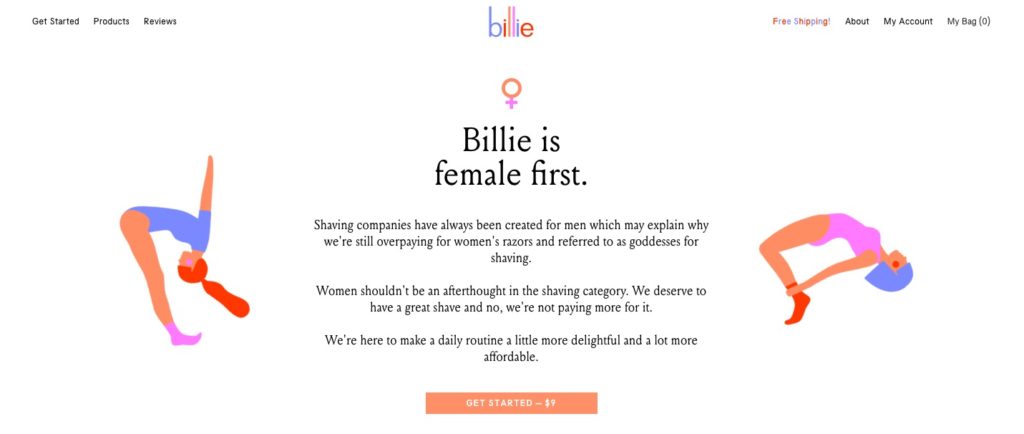
Another significant difference between micro brands and other retailers is their hyper-focused approach to content marketing. Take the woman’s razor brand, Billie, for example. From a bird’s eye view, Billie sells high-quality razors and shaving products for women.
https://www.instagram.com/p/Bzbj7angtDP/
But what makes this company so successful is its ability to resonate with its target niche using select visuals, tone and language that appeal to a specific smaller audience. While big brands often fish the whole ocean, micro brands look to the best spots for a particular need.
This is done through personalization marketing instead of trying to appeal to the masses. Billie’s female-first approach is more engaging to women who aren’t necessarily concerned with adhering to societal norms around women and body hair. But it also connects with a specific product need–women who are tired of paying more for their shaving supplies.
In contrast, a company like Gillette’s Venus has built its brand on just the opposite. Because of Billie’s unique targeting, they strike a chord with their audience in a way Venus doesn’t.
However, because of this, Venus is looking for ways to stay competitive, as the launch of their delivered-to-your-door custom razor package confirms.
https://www.instagram.com/p/B0E8WZkgP9v/
Even in the case of their social game, the content looks extremely similar. Micro brands attract a smaller group of customers by appealing to their unique interests, values and priorities instead of being too general.
Changing the Social Proof Landscape
Using influencers as part of a brand’s content strategy is nothing new, but for micro brands, it’s approached a little differently. Instead of racing to work with influencers with the biggest following, it’s more like the opposite.
Rather than seeking out the Kardashian’s approval, scaling micro influencers or everyday influencers helps keep your reach specific with a loyal fan base. These influencers built a relationship with their followers by asking questions, answering DMs and genuinely caring about the products they share with followers.
https://www.instagram.com/p/ByV0y6il5K-/
For example, Zenni Optical does a great job of making its customers the star of their marketing efforts. While the company isn’t as micro as it used to be, this direct-to-consumer brand successfully uses social to connect with consumers.
Zenni posts photos of everyday customers wearing their glasses. The eyewear company created a reputation for themselves as a relatable brand for creative and budget-friendly shoppers.
Additionally, they promote their shoppers directly on the product pages with user-generated content of the specific frames. This helps shoppers make better purchasing decisions with visual proof.
And your customers want visuals. A PowerReviews survey found 63% of U.S. shoppers specifically look for user-generated content along with verified consumer reviews before buying.
Micro Brand Shoppers Still Rely On Customer Feedback
Influencers aside, how are micro brands impacting the effectiveness of other forms of social proof, like ratings and reviews? Most micro brands work without a physical retail space and have the unique challenge of getting consumers to purchase products without ever seeing it in person.
This type of relationship requires trust. What’s the quickest way to build that trust? By collecting ratings and reviews from reliable sources that customers can identify with.
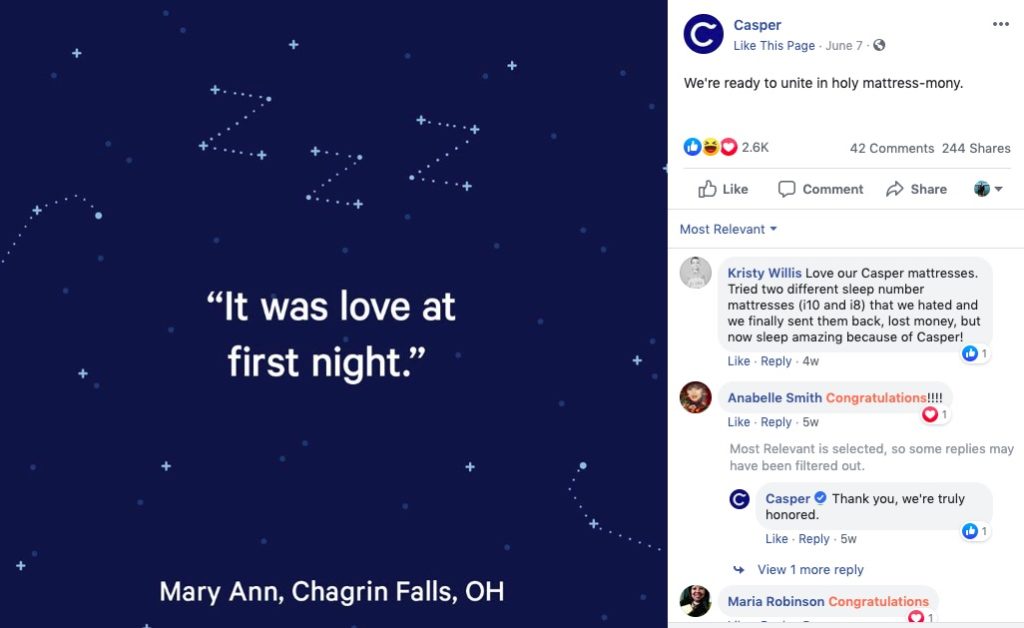
Direct-to-consumer mattress brand, Casper, faces the ultimate retail challenge—getting people to buy a mattress without ever testing it out first. Sounds daunting, right?
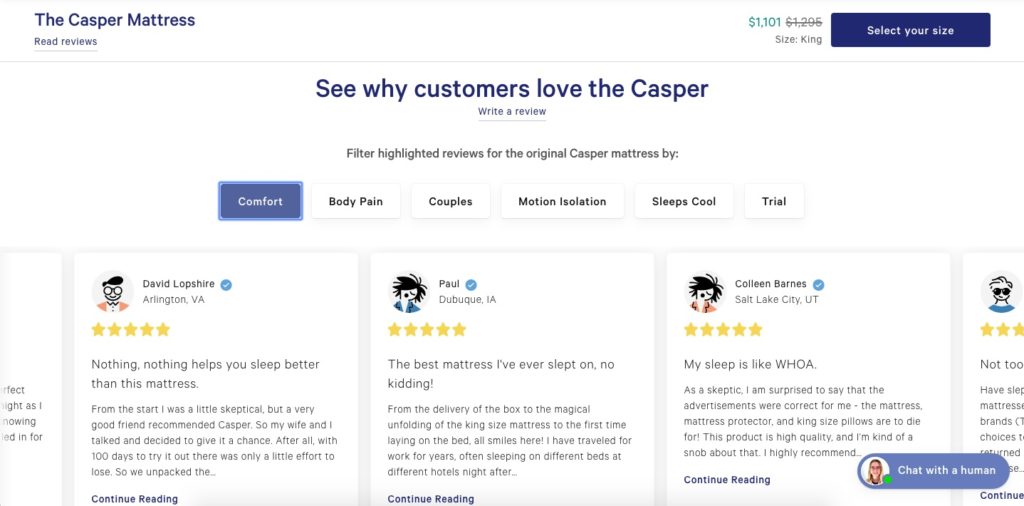
To build that essential trust among customers, Casper injects social proof into a large portion of their content marketing. The company integrates glowing customer testimonials in social posts as well as on the homepage of their website and on their product pages.
Within their product page designs, customers search through reviews broken up into categories that align with top concerns such as comfort, temperature and even reviews from couples. As a result, Casper is positioned to be a trustworthy brand that wants its customers to sleep better at night (literally), knowing they made a great purchase.
What makes micro brand social proof especially powerful is that because customers are making purchases without handling the products in person, it’s all the more important to make customers feel secure, confident and validated in their decision.
Plus, many micro brands make buying and returning products easy, so taking a chance on a new product has never been more low-risk for consumers.
A Lesson in Niche Content Marketing
Micro brands have do an amazing job marketing to their niche audience, but that doesn’t mean it only works because they’re so focused on targeting the right shopper. Instead, large brands need to a page from the micro-brand content marketing playbook to stay relevant.
Here are a few ways to make this approach work for your brand.
Be Intentional With Influencer Relationships
Instead of trying to appeal to a broad audience or picking an influencer with millions of followers, working with influencers with a sizable following with the audience you’re trying to reach is a step in the right direction.
Again, through an effective product sampling campaign, you leverage the voice of people who want to talk about your brand and spread the news through word-of-mouth marketing. Product sampling campaigns significantly help brands collect more reviews that are authentic and trustworthy.
By focusing on a smaller group of customers, your message has a chance to resonate with that group and that group only. The idea is that you’re a brand for them, not for everyone.
Cultivate Trust Through Social Proof
We know that building customer trust is one of the biggest hurdles micro brands face. Social proof adds a human element to any marketing strategy and it’s the difference between a customer making a purchase or moving on to another brand.
Strengthen your product pages with ratings and reviews that are presented in an engaging, easy-to-navigate way.
With the addition of ratings and reviews, adding customer-generated images is a great way to add value to each page.
Provide Value Beyond Your Products
A key differentiator of micro brands is providing more than high-quality products to customers–they also offer immense value elsewhere.
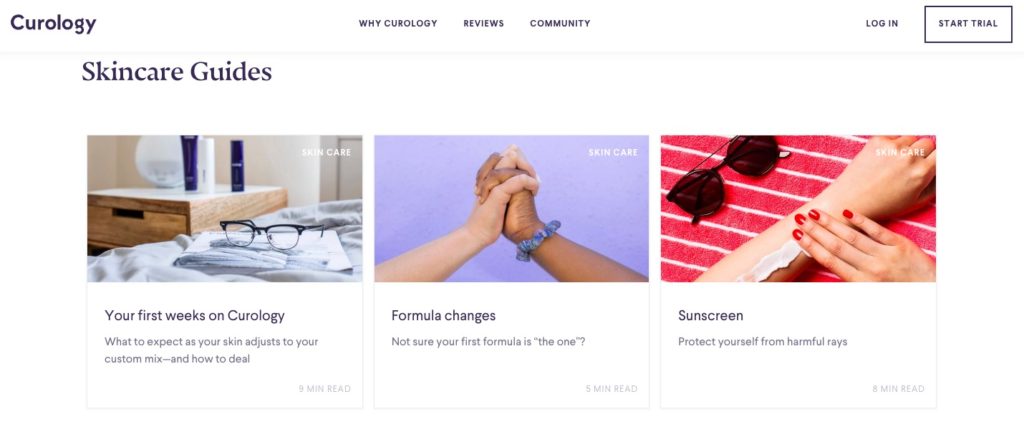
Take skincare company, Curology, for example. In addition to providing customers with totally customized skincare products, they have a series of skincare guides.
Curology covers topics ranging from how diet impacts the skin to which sunscreen is right for different skin types. Not only are these guides valuable and educational, but they’re also free on the Curology website.
This content marketing tactic positions them as skincare experts and helps lay that foundational trust for new customers. After they’ve made a purchase, customers learn about Curology products. Shoppers see what’s happening to their skin with their new skincare routine and more.
Scaling-Up Isn’t Always Synonymous With Success
Small, agile companies are more than capable of keeping up with the big guys—if not outpace them. Micro brands succeed because they relate to their niche audience in a way that speaks to them.
The ecommerce space makes it possible for smaller teams to compete, and the world is taking notice. With the help of PowerReviews, you will improve your brand’s social proof efforts and build more trust with your customers with suite of tools specifically built for these reasons.
Want to see a demo? Contact us today, and we’ll help you find the right solution.
You’ve spent a lot of time and energy building your ecommerce business. The website looks phenomenal. You addressed all the best demographics and tailored your message to your target audience. Through all that, you hear is crickets.
So what’s wrong?
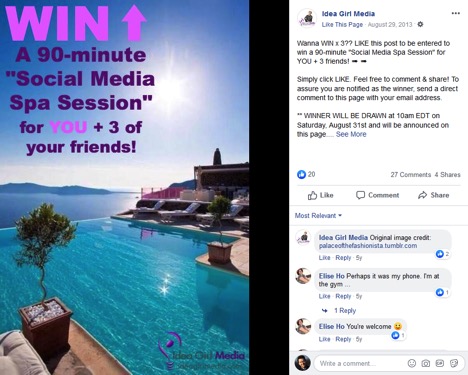
For starters, you might not be using all your channels to drive important traffic through to your site. And one area we’ll address today is with an ecommerce giveaway contest.
Why don’t people visit your site? If you’re new to creating an effective ecommerce marketing strategy, you might have trouble getting your products or website known by the audience who wants to see it.
Consumers don’t trust what they don’t know. Largely, shoppers don’t trust what they do know, either. But if they are familiar with a business, shoppers have the feeling they can get the best deals when doing business with you.
How a Giveaway Contest Increases Business
Giveaway contests help grow businesses by enticing shoppers to try something new or get to know your brand in the first place. And for many ecommerce companies, it’s not as easy as owning a store front and gaining awareness through foot traffic.
Instead, brands have to gain that foot traffic online and get users coming into your site, whether it’s from SEO best practices, paid ads, social media marketing or giveaway contests.
https://www.instagram.com/p/Bzs38_PBSkJ/
How Does a Giveaway Contest Work?
Giveaway contests work when consumers feel as if they get something of value without any monetary ties associated to the exchange. For marketers, you want shoppers to think they’re getting something for free by entering a giveaway or contest.
In reality, getting consumers to share their contest entry via social, email or to friends and family is simply a tried-and-true word-of-mouth marketing strategy. What might seem free to a consumer, might be a lot of the legwork for an ecommerce brand.
You’ve surely seen them. It comes in an email from a brand saying something like, Click here once a day to enter our contest. You can enter your email and wait to hear if you won, while the brand now has a way to contact you.
This is the simplest method of doing an ecommerce contest giveaway.
Sometimes, the contest will feature another radio button saying, Share with your friends for extra entries. People want to win the prize inherent in the contest, so they share with their friends.
https://www.instagram.com/p/Bzp2j2hnB6l/
You see how quickly such a contest blossoms and creates hundreds, if not thousands, of new leads for your company. But as you guessed, it’s just not that simple. There’s plenty of strategy behind an effective giveaway contest.
Start by doing some analysis on your own customer needs to see their preferences, challenges and ultimately what makes them tick. You can’t just throw out an email that says Join this contest! and hope to see the leads pour in.
Instead, you have to send contest emails only to those folks who show an interest in the product or service that forms the prize. Only then will you start to see a whole slew of opportunities to grow your business.
Empower Your Employees to Start the Buzz
For most businesses, you have a team of people who not only love to share and talk about you, but they’ll do it for free. Your employees are a great asset to leverage and enlist to get the word out about a new or upcoming contest to generate more buzz.
Have your employees spread the word about it to their friends and families. Try incentivizing the process by rewarding your own employees who reach the most people through their social networks.
GUYS. My company is giving away a free wedding dress and free bridesmaid dresses. Like. FREE. FREE!!!!!!!! Go enter the easiest contest everrrrr. https://t.co/7NGsIfxZ1W
In the end, this method will be much cheaper than some traditional paid marketing strategies.
Use Social Media to Your Advantage
Social connections are just one of the many ways brands build relationships with customers. Social media is a community and more companies are seeing the benefits of Instagram and other social networks to keep customers happy.
There’s an old Faberge shampoo ad where the gal in the ad says, “I told two friends, and then they told two friends…and so on, and so on…” Sharing major events on social media is a great way to turn a standard contest into a truly popular event. That’s a lot of possibilities for leads and sales.
Here’s an example of some of the social numbers you could expect from an ecommerce contest that taps into the power of social media:
Each employee has 500 social connections
1 in 10 of your employees will share the contest
A standard online conversion rate is typically around 5%
The product you’re giving away costs $10 at wholesale
Your profit margin is 40%
You have 50 employees
Off the top, in this example, the brand would have roughly 25,000 people seeing the contest giveaway. And if 10% of those 25,000 people shared it with their 500-strong friend lists, you have the potential reach of 1.25 million people.
Additionally, if 10% of consumers who see your giveaway and visit your website, and of that 10%, you convert 5% of those visitors, then 6,250 people could buy your product for $10. Again in our example, let’s say you make $4 off each conversion, you’d be looking at $25,000 just from having each employee share the news of a contest.
4 Ways to Keep Your Contest Giveaways on Track
It’s easy to get excited when you’re giving away things for free, but it’s so important to get your ducks in a row first. Contests need to be measured, tracked and benchmarked for the future so during your next go-around, you have a much better idea of what to expect.
Here’s four quick tips to keep your contest on track:
Decide your goals right away: While giveaways are a great tool to boost your growth, they are not the be-all and end-all. Keep all goals realistic but not asininely easy to reach. Things that are too hard or too easy won’t help your business in the long term. Change your processes and goals based upon real-world results, never guesses or projections.
Pick appropriate prizes for your contest: The prizes must be relevant to your target demographic and something they actually want! Generic prizes are not effective. Winning a $100 gift card to the Playstation Store might not be something those over the age of 45 would want. But you also don’t want to give away a Visa or Amazon gift card because the flood of participants won’t be as effective as a prize related to your brand that every entrant wants.
Don’t spend too much on the prize: If this is your first giveaway contest, start on the smaller side. You want to be sure that your gift-giving ways go noticed and have an impact on your site’s traffic. Your goal should be to increase your brand’s fans, not just get people in the door. Start with more simple gifts before spending a ton on a giveaway. Also, cheaper giveaway items feel more realistic to win.
Find co-marketing partners: Having a co-marketing partner could help you double your pool of entrants. By teaming up with another brand, you can create better and more exciting giveaway packages at a lower cost and increase the audience with two teams spreading the word. At the same time, this is a great opportunity to create back links from each other’s sites to increase your SEO for ecommerce efforts.
https://www.instagram.com/p/Bz-wHZ8gvOS/
The Final Word
These strategies are to help bolster your growth rate through giveaway contests and are just the tip of a very creative iceberg. Use your imagination to craft new and untried ideas.
Assess their effectiveness honestly, and if they’re crackerjack, share them with your partners to build goodwill and further networking and partnership possibilities.
Ecommerce has been around for decades and the rise in mobile commerce has made selling online much easier, right?
We’ll, not exactly.
There’s still so many challenges to selling online, whether it’s more direct-to-consumer brands or competing with Amazon. Businesses must have a strategic plan to take on the competition, which is why knowing your most valuable ecommerce KPIs and how to measure them is essential to online success.
And in 2019, there’s a plethora of ecommerce tools for brands and retailers to track and measure their efforts. The way ROI is measured across the board evolves with the growth of tools and marketplaces.
For example, Instagram introduced shoppable posts and brands were tasked with not only learning how to leverage yet another powerful ecommerce feature, but how to measure success with new metrics.
The way people shop keeps evolving, so how do businesses make sure marketing efforts are moving the needle?
What Are the Best Ecommerce KPIs to Track?
The best Ecommerce KPIs (key performance indicators) should provide accurate and properly-tracked data to help businesses measure any of its core initiatives. KPIs and their corresponding metrics are an essential part of determining how well a tactic is performing using a combination of data and industry benchmarks.
If you aren’t tracking the right KPIs, it’ll be nearly impossible to get a correct reading on whether or not a campaign is hitting the target mark. However, it’s not enough just to gather this data–it must be used correctly.
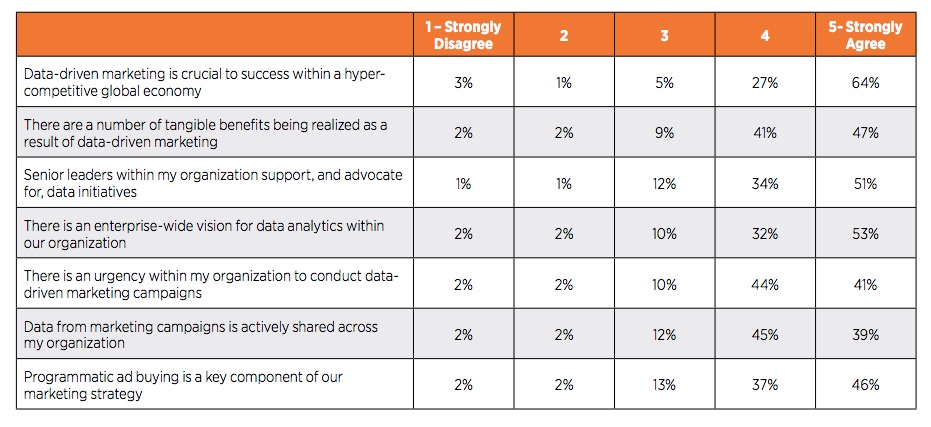
A report from Forbes found that 64% of marketing execs “strongly agree” that data-driven marketing is essential to success. However, a study from Forrester found that between 60-73% of all data within a company goes unused for analytics.
So what’s missing here?
Let’s not beat around the bush–there are a lot of KPIs and metrics you could track, which means understanding what metrics are important to your business is tricky.
But do you need to track them all?
The short answer is no. But the KPIs you should monitor will vary depending on your goals and what you deem essential. Let’s take a look at how to determine the most important ecommerce KPIs:
KPIs That Establish Concrete Marketing Goals
Before you can figure out what to track, you need to determine what you want to accomplish. Unless you know exactly why you need to track a specific KPI for ecommerce, it’s unnecessary work on your end.
Think about your biggest marketing problems like:
Trouble generating sales
Customer drop off after first purchases
Low engagement rates on social media
Whatever you’re trying to improve or change, make sure it’s clear. Otherwise, you’ll have issues not only measuring the success of a tactic, but building a strategy to work toward that goal.
KPIs From Historical Data
The data you already own helps you understand how to plan for future campaigns. Maybe a tactic you thought was going to be wildly successful fell flat or you saw a spike in sales during a specific and unexpected timeframe.
Historical data helps you work on campaign forecasting. And the data from your website, past campaigns and social media channels let you plan future initiatives.
KPIs That Collectively Gauge Growth
We know the KPIs you track should directly correlate with those goals. But the thing is, there isn’t one specific KPI or metric that will tell you the full story. Instead, tracking several metrics paints a broader picture of how the overall tactic is performing.
For example, let’s say you’re trying to increase your sales numbers. What KPIs or metrics should you track? Only looking at your revenue or sales numbers isn’t going to tell you the full story or help you make decisions to improve.
You want to track the KPIs and metrics that give you a well-rounded look at your business as a whole.
17 Metrics to Track the Growth of Your Ecommerce Business
We know the importance of KPIs and associated metrics, but which ones are important for ecommerce businesses?
Let’s take a look at these 17 ecommerce KPIs to gauge the growth of your business so you make informed business decisions and reach your goals:
1. Sales Conversion Rate
Sales conversion rate is the total number of sales you’ve generated over a period of time. To find this, take the total number of sales and divide it by the total number of sessions to your site.
For example, if you’ve made 50 sales and had 100 visitors to your site, your sales conversion rate is 50%.
This metric helps you determine, on average, how much site traffic you need to generate sales. Sales conversion rate is one of the most important metrics to watch as it can help you optimize your site traffic-generating efforts.
2. Response Rate
The Response Rate is how many customers responded to a call-to-action (CTA). It can be calculated by dividing the number of people who responded to the CTA by the total number of recipients.
This metric is important for gauging the effectiveness of a CTA, like if you asked customers to complete a follow-up survey or to sign up for your email newsletter.
Response Rate can also help you determine if there’s any friction between the CTA and your customers. For example, perhaps your survey is too long, and customers click away before completing it, or maybe it’s unclear how to sign up for your email newsletter.
3. Cart Abandonment Rate
You’ve likely heard of this metric before, and it’s not without good reason. Cart abandonment rate is when shoppers put items in their cart while on your site, but don’t follow through with the purchase. Cart abandonment is an issue for ecommerce businesses across all industries and it could be severely harming your bottom line if you don’t have the right path to purchase.
Find this KPI by dividing the total number of completed purchases by the total number of carts. Then multiply that number by 100. Let’s say there were 400 completed purchases last month and 600 carts created. Divide 400 by 600 and you get .66, which you then multiply .66 by 100 and you get 66% as your cart abandonment rate.
Calculating your cart abandonment rate is the first step in determining if your checkout process is clunky or if there’s another issue (like a lack of trust) among your shoppers.
4. Cost per Acquisition (CPA)
Have you ever wondered how much it costs to acquire each customer, whether it be through social media advertising, Google Adwords or another channel? Cost per Acquisition (CPA) will tell you exactly that. This is critical in determining the effectiveness of your paid efforts and if the ROI tradeoff is worth it.
CPA is calculated by dividing the total campaign cost by the total number of conversions. If your CPA is more than how much your customers are spending, then it’s probably time to review your current strategy. At the same time, this metric helps determine what channels need more investment, money or time.
For example, if you Facebook is a low CPA channel for you—in other words, you don’t lose money acquiring customers through Facebook—it might be worth brainstorming how to scale this channel versus others costing you more money.
5. Average Order Size
With CPA, you know the value of each customer, but what about the actual value of their orders? To calculate this, divide your revenue by the number of transactions, and you’ll see how much each customer contributes to your overall bottom line.
A great way to increase your customer’s average order size is to include an incentive for them to order more at no additional shipping cost. Offering free shipping if the cart exceeds a specific dollar amount or a buy one, get one half off deal are great ways to increase average order size.
6. Average Order Value (AOV)
The Average Order Value (AOV) helps determine the average amount spent by customers each time they place an order. This is calculated by dividing revenue over the number of orders.
For example, let’s say your store generated $10,000 in sales this month and there were a total of 1,000 orders. Divide $10,000 by 1,000 to get $10, bringing your average order value to $10 per order.
This metric comes in handy when determining the pricing of your products and overall ecommerce marketing strategy. It also helps you measure the long-term value of customers as well as their purchase habits.
7. Net Promoter Score (NPS)
Net Promoter Score (NPS) measures how likely customers would recommend your brand to others. Instead of measuring the success of your business with revenue or sales, NPS is great for calculating brand loyalty and customer satisfaction so you better gauge how customers perceive your brand.
This can be measured with a survey using a simple 1-10 rating scale–zero equaling “Not Likely” and 10 representing “Extremely Likely.” The scale value looks like this:
Shoppers who give you a 9 or 10 are considered promoters, meaning they love your brand and could be potential brand advocates.
Shoppers assigning you a 7 or 8 are considered passive or neutral.
If consumers give you a 6 or below, these people are considered detractors or shoppers who wouldn’t recommend your products or services.
The goal with NPS is to have as high of a score as possible. If your NPS score is low, that could be causing you issues and turning potential customers away.
8. Repeat Purchase Rate
Like NPS, Repeat Purchase Rate also indicates brand loyalty and customer satisfaction. Repeat Purchase Rate is simply the number of times the same shopper has placed an order over their lifetime as a customer.
This can be calculated by dividing the total number of customers who have made more than one purchase by the total number of customers. If you have a high Repeat Purchase Rate, you likely have some very happy customers!
Purchase Frequency goes hand-in-hand with Repeat Purchase Rate. In fact, the overall KPI is simply the number of times a customer has made a purchase within a period—usually about a year or so.
This metric is important because it helps evaluate your customer retention strategy and loyalty. It also allows businesses to make better decisions around when to re-engage with customers between purchases and host sales to encourage shorter time in between purchases.
10. Order Gap Analysis
Much in the same aspect of the Purchase Frequency, Order Gap Analysis let’s companies see the time between two purchases from the same customer. This metric identifies trends in shopping behaviors and seasonal or product trends.
Order Gap Analysis also informs other marketing efforts, like when you should send special offers or post-purchase emails to customers.
You can calculate this by dividing 365 (one year) by your purchase frequency number. This would be the average number of days between purchases.
11. Average Customer Lifetime Value
The Average Customer Lifetime Value (CLV) represents the estimated total amount of money a customer will spend during their time as a customer. This metric tallies how much you can realistically spend on acquiring new customers as well as how much you will likely spend trying to recuperate from acquiring that new customer.
This number should always be higher than your customer acquisition cost. Otherwise, you’ll be losing money.
12. Customer Churn Rate
If you find that your Average Customer Lifetime Value is low, it probably means your churn rate is high. Customer Churn Rate is the percentage of customers that never return to your site. In other words, your customers may buy once and never buy again.
There could be many things impacting your churn rate:
The customer service isn’t great.
Your product isn’t up to customer standards.
Navigation is too difficult across your site.
Churn is an ecommerce KPI every company deals with. That’s why it’s essential you know where you stand so you can fix it if needed. Providing more branded content or educational content could give your shoppers the motive to continue buying from your brand.
https://www.instagram.com/p/BzntU9jn97s/
13. Star Rating
Star ratings help customers determine the value of a product as determined by previous customers who purchased the product in question. If a product has a high star rating from customers, it’s a good indicator of quality.
The Reviews to Revenue study from PowerReviews and Northwestern found an average rating between 4.2 and 4.5 stars is most effective—even more than a perfect 5.
That’s why PowerReviews’ Review Snapshot feature allows brands and retailers to customize their review features to help consumers get a better understanding of the star rating. PowerReviews also optimizes your product pages through visual content elements, which allows customers to see user-generated content of products from other shoppers.
14. Customer Sentiment Analysis
Customer Sentiment Analysis takes a look at the emotions, impressions and attitudes surrounding your brand. Each time your customers write a review about their experience with your company, it’s an opportunity to learn.
That includes experiences on your site or through social media. This metric is essential for a few reasons:
Businesses make more informed decisions
Uncovers product insights to make improvements
It makes your customers happy
Helps manage your online reputation
Unlike other KPIs and metrics, understanding audience sentiment calls for a tool that examines review content at the product level. Tools like Product Pulse allow companies to see product insights from review content through customer sentiment analysis. Easily uncover product features that need improvement so your team can make improvements for the future.
15. Organic Traffic Metrics
These metrics are probably familiar for most ecommerce SEO marketers. And while individually they don’t give too much insight into the success or performance of a campaign, collectively these ecommerce KPIs tell a larger story.
Clicks: This is the total number of clicks from a Search Engine Results Page (SERP) to your site. Because we’re talking about organic traffic, these clicks were generated without the assistance of paid ads.
Click-Through Rate (CTR): CTR is the total click count divided by the impression count. This metric show the effectiveness of a campaign, such as an email or social media campaign.
Average Position: This is the average spot the URLs on your site have on the SERPs. This metric helps determine how your site ranks and the quality of your content and website from the SERPs standards.
As a whole, these metrics let ecommerce businesses see the quality of their site and how customers navigate it.
16. Google AdWords Metrics
If you use Google AdWords, there are various ecommerce KPIs to track. However, these are some of the most essential:
Impressions Share: The number of impressions received divided by the estimated number of impressions you were qualified to receive. Estimated impressions qualification are collected by your ad targeting settings, bids, Quality Scores and status.
Average Cost-Per-Click (CPC): This metric is the average cost of one click on an ad.
Ad Conversions: When a customer clicks on your ad and completes the action or goal you set for that ad—like email signups or app downloads.
Together, these metrics help determine how many people saw your ad in relation to how many of those people converted so you better plan future campaigns and optimize current ones.
17. Social Media Engagement Metrics
Like Google AdWords metrics, social media engagement metrics tell a collective story of how your social media campaigns and content is resonating with your customers (and potential customers).
These three metrics can help you gauge how your content is performing overall. Of course, brands want more likes and shares on their posts, but the reality is that on their own, these metrics are vanity metrics—or ones that don’t hold that much weight.
Likes: This metric may be a like, a favorite, a +1, etc., depending on the platform. To calculate this metric, divide the total number of likes by the number of posts per platform.
Comments: If people are commenting on your posts, the content is resonating with them in some way or another. Maybe they’ve tagged a friend’s name or replied to your question, but either way, comments indicate that people are engaging with your brand.
Shares: Similar to likes and comments, shares help determine engagement. Sharing allows your content to go a step further and reach an audience you may not otherwise have access to.
Along with other social media KPIs, these engagement metrics paint a picture of how well your content is doing on a given channel to your target audience.
The Right KPIs Help You Measure ROI to Grow Exponentially
Understanding what the function of each metric is and how it can be used to measure success will help you grow your business and reach your goals.
It can be easy to get caught up in wanting to track everything, but it only makes sense to do so if it’s going to help you reach your objectives. Be smart and strategic when it comes to tracking ecommerce KPIs and metrics, and you’ll see results in no time.
Looking for ways to better track your storefront’s performance? Contact us today, and a member of our team will help make it happen!
What drives customers to make a purchase?
We’re not talking about the item in question necessarily, but rather what are the buying motivators that convinces shoppers to enter their credit card number and hit submit order?
Since we can’t read our customer’s minds, we’ll have to resort to the next best thing. What if there was a way to figure out why they make a purchase, so you optimize your selling strategy and make more customers happy?
Buying motivators help brands and retailers understand what prompts customers to purchase in the first place. Once you understand these nuances, it changes the way you sell to your customers for the better—both at the present moment and in the future.
In fact, Sirus Decisions found 67% of the buyer’s journey takes place digitally. That’s why it’s more important than ever to understand your customers’ shopping behaviors and why they make their purchasing decisions.
In this post, we’re taking a closer look at what buyer motivations are to marketers and how you leverage them to increase revenue and sell with more intent:
What Are Buying Motivators?
Buying motivators are the reassurances that encourages customers to go through with a purchase. The root of buying motivators varies from shopper to shopper, but these factors help segment customers based on where they are in the purchase journey. Let’s take a look at the buying process from start to finish:
Step 1: Awareness
Every aspect of the buyer journey can be traced back to this initial stage—or when a customer becomes aware of a want, a need or a problem. This recognition could be either internally or externally motivated.
For example, your customer is going on a backpacking trip and realizes there is a hole in their backpack. The customer thinks, time for a new bag and begins their search.
Pro Tip: Make sure your reviews SEO is set up correctly so you’re not only ranking on search more effectively, but also for more terms through unique, well-written product descriptions.
Step 2: Consideration
Once a buyer realizes they need to fulfill a want, need or problem, they research products to meet that need, want or problem. Gathering information about options, reading product reviews, watching demo videos and checking out user-generated content is a critical part of this stage.
At this point, the customer will likely also ask for opinions or feedback from people they trust. This might be someone who has previously purchased the product or an similar item. In fact, Nielsen discovered that 92% of people trust the recommendations of close friends and family over any other type of advertising.
Pro Tip: Use Instagram to market visuals of new products and ask users to tag a friend who needs it. This helps build awareness through your brand advocates without spending a ton on social media ads.
Step 3: Decision
Finally, the buyer is inclined to make a choice regarding the product per that core want, need or problem from the awareness stage.
At this point, your backpacking customer has identified the backpack they want to purchase over another based on a variety of factors. The customer feels as though they have reached a decision in their shopping journey and can buy with confidence.
But hold on, how did they reach that choice?
What occurred between the consideration and decision stage to move them towards making a purchase?
Customer motivation is categorized by what psychologists like to call intrinsic or extrinsic motivation. Intrinsic motivation is what drives us to make decisions based on our wants or needs. But extrinsic motivation is—you guessed it—the external factors that drive us to make decisions.
In the case of our backpacking customer, their motivations for shopping for a new backpack is likely a bit of both intrinsic and extrinsic motivation. The customer wants to be prepared for the trip, but they may also feel the need to have the latest gear due to influence from an ad or a personal recommendation.
Pro Tip: Give your shoppers user-generated content on your product pages to further push them to make a purchase by seeing real-life examples of the items with normal, everyday people. PowerReviews Social Collection is perfect for brands wanting to highlight their amazing user-generated content, and at the same time, increase conversion.
Understanding Customer Motivation From a Psychological Perspective
We know that internal and external motivation are two components of what drive customers to make purchases. But these buying motivators aren’t as black and white as it may seem.
For example, if you had customers A, B and C, all three could be looking to buy new shoes, but each person might have very different buying motivators behind their search.
Another school of thought designed to help brands understand buyer motivation is the VALS Framework. This framework segments customers into eight types based on psychological and demographical factors that determine their shopping behavior.
The VALS Framework also considers primary motivation (the anticipated behavior of a customer) and resources (factors like impulsiveness, leadership and vanity) when evaluating consumer behavior. Together they reveal how a customer will navigate the market as a consumer.
So what does all that mean?
Segmenting customers using a psychologically-backed method like the VALS Framework helps make sense of your customers’ behavior. This also helps you determine what products they may be interested in based on their motivations.
Rendering Intent Into Action
We know how to determine the core of buyer motivation, but what about the customer experience with your brand? Your customer experience—whether it be on your website, on social media or through other content—is critical.
But don’t just take our word for it.
A study from Dimension Data found 84% of organizations who improved their customer experience saw an increase in revenue. What’s more, a study from Walker discovered that by 2020, customer experience would surpass price and product as key brand differentiators.
Let’s take a deep dive into what pushes customers down the buyer journey.
User Experience
The user experience (UX) pertains to how customers navigate your site. But just how important is it to the overall customer journey?
A report from Magnetic North found that 1 in 3 customers will abandon a purchase because they can’t find the information they need. In other words, you could be leaving money on the table by not investing in your site’s user experience.
So where do you start?
Your customers’ motivation should drive the user experience. For example, if you’re a shoe retailer and a potential customer looks for a pair of shoes to wear in his or her commute, they’ll probably care more about durability and style instead of color.
Providing customers with search filters allowing them to narrow down options is a great way to accommodate every purchase intent. This way customers searching for sturdy work shoes can find what they want faster.
ASOS, a global fashion retailer, has a great search function that makes finding that perfect pair a breeze.
Social Proof
Did you know that 90% of online shoppers research products through search engines or reviews? Also, the average retailer experiences a 20% reduction in returns for items with ratings and reviews.
What does this tell us? Social proof is a crucial component of your customer journey. Customer reviews, case studies and star ratings are a great way to build transparency and create stronger product pages.
SimpliSafe does a great job highlighting their social proof by using a combination of trigger words like “fastest” and “catch criminals” and visuals like a five-star review. Together, this social proof reinforces SimpliSafe’s claim to provide the best home security service on the market.
Supplemental Content
Adding content that isn’t directly shouting, “buy me!” to every customer is essential to their purchase journey. Value-packed blog posts, videos, product demos and anything else customers could benefit from helps you build trust. At the same time, it also shows customers that you want to provide them with value.
Madewell’s blog serves as an excellent hub of supplemental content to their products. Fans of the clothing retailer can find inspiration as well as more information related to the brand and products they love, all in one place.
Visuals
High-quality imagery—both branded and product—plays a significant role in the consumer buying process. A survey from Weebly found that 75% of ecommerce shoppers feel that product photos are “very influential” when deciding on making an online purchase.
Imagery helps customers get a complete understanding of your products and what they can expect if they make a purchase. This is especially important when shopping online because customers can’t physically hold products or try them on before buying.
Minimalist clothing retailer, Everlane, has excellent product imagery. Not only does the brand include high-quality photos of the product, but customers can see how each item fits on the model in multiple views (both standing and sitting), which adds a layer of depth to the shopping experience.
PowerReviews Review Snapshot is perfect for brands wanting to highlight every aspect of their product–from size and fit to the most common pros and cons within the reviews of the product.
Not only can you add things like sizing, best uses and much more within Review Snapshot, but brands can also tailor to have as much or as little information for customers as possible. Contact our team today to see demo and how our solutions work for some of the world’s largest brands and retailers!
User Interface
Similar to user experience, user interface (UI) describes the psychological elements of decision making during the buying process. Components like color, font, buttons and icons impact the overall look and feel of your site.
Your customers buying motivators should determine the message you want to convey with these elements.
If you’re selling bug repellent products, like Raid, to customers who want to get rid of an existing bug problem, it’s crucial to communicate the effectiveness of your products through your branding. Keywords like “barrier,” “attack” and “control” with bold typefaces and colors reinforce the message that your products get the job done.
Understanding Buyer Motivation Means Smarter Selling
By grasping the motivators of your customers, you have the chance to:
Provide shoppers with information needed at the specific stage of the buyer journey.
Turn insights into action and optimize your site.
Increase online sales and boost your bottom line.
If you know the root of your customers’ buying motivators, you can focus on the tactics that yield the best results. Gain more actionable customer insights with PowerReviews. Contact us today to connect with a member of our team!